M_George
Well-known member
I only find mixed metric and SAW sockets on cars made during the late eighties and early nineties.


... do you ever have difficulties in finding the socket size you need? If you don't get it correct the first time, do you find it a hassle to go grab a new one from your drawer? Do you ever grab a metric sized socket when you actually needed a US standard size, or vise versa?
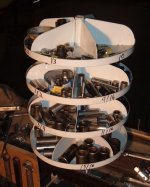
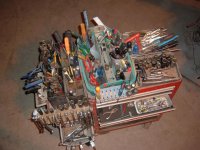
I agree with this and with some help it can find its own level.I have drawers for drive sizes - one drawer for my 1/2" drive tools, another for 3/8" and yet another for 1/4". It's a system that works for me. Someone else will likely come up with a system that's different, but it works for them.
Thank you for the useful information. Many people on here have misinterpreted the question and think that I am speaking about socket organization when in fact I am trying to address whether people find it an issue to determine the difference between an SAE and metric fastener. In the people I have spoken to face to face have expressed that this is in fact an issue they face and can possibly waste their time, which is something they cannot afford. I appreciate your thoughtful response as it will definitely help our team.Yes.
Yes; more so if I have to get back up off of the floor. I grew up SAE so I typically have no issue up to 1", and will just grab metric to either side of what I think it is since I'm not as used to judging the size. The problem arises when I think it should be standard and is metric.
No, the vice versa. Metric is pretty much a given or known since most of the world has gone with that. It's only on somewhat USA made stuff that I may assume standard when it is metric.
I should add the caveat that this typically only applies to nuts unless the bolt head is too rusted to see the markings. Metric bolt heads are easily distinguished nowadays by the markings. The ones that are old enough not to have the distinguishing markings don't matter because they will be on foreign vehicles which are metric, with a few exceptions (like Triumph). Pre-90 something American made stuff was all standard, so again, no issues.
I'm not sure where you're going with this, but there are already splined tools that cover both metric and SAE. They work decently in most applications but tend to scar nuts and bolts if highly torqued.
Additionally, once you get above about 13/16 or 20mm then metric/SAE doesn't really matter, and if not highly torqued or rusted then you can usually use metric on most anything below those sizes without rounding the head especially if you have flank drive sockets and wrenches.
If you're coming up with a better way to identify the actual nut or bolt, then go for it, but we don't need a new head/nut system because those are just adding to the hassle nowadays (though many on this forum may welcome the new expenditure on tools). Personally, I can't tell the difference by feel of an allen head versus a torx caliper bolt when it is in a blind spot and full of rust, and can't even tell the difference between a torx and xzn in low light when I'm looking right at it. So whatever you're coming up with, account for those issues as well; sometimes the mechanic is going by feel or limited sight.
A further complaint of the recent trend in bolt design is the use of low profile round heads with inset allen/torx/xzn or whatever method of turning. These designs **** for long term use that is exposed to any kind of elements (even just mud) or heat cycling applications. At least if a hex head bolt or nut rounds off there is still something to grab hold of with vise grips or a nut buster; the former require much more time. I've actually had to weld a nut to those type of bolts to remove them because drilling, using an easy out, and then chasing the threads wasn't feasible. These bolt designs are great for assembly, but should never be used on items that are intended to be taken apart again after being exposed to oxidizing elements. There is a reason the phillips head design (around for decades) was never used in such applications.
If I'm way off base and you're just developing some roomba type socket retriever for people, then disregard by fastener type rant....lol.
Thank you for the useful information. Many people on here have misinterpreted the question and think that I am speaking about socket organization when in fact I am trying to address whether people find it an issue to determine the difference between an SAE and metric fastener. In the people I have spoken to face to face have expressed that this is in fact an issue they face and can possibly waste their time, which is something they cannot afford. I appreciate your thoughtful response as it will definitely help our team.
Metric have an actual number, SAE have some kind of starfish. How hard is that?Thank you for the useful information. Many people on here have misinterpreted the question and think that I am speaking about socket organization when in fact I am trying to address whether people find it an issue to determine the difference between an SAE and metric fastener. In the people I have spoken to face to face have expressed that this is in fact an issue they face and can possibly waste their time, which is something they cannot afford. I appreciate your thoughtful response as it will definitely help our team.
 I don't deal with SAE much, but do have several sets in case I need to improvise. Some sizes overlap between between metric and SAE