To avoid these ads, REGISTER NOW!

SOLAR! sanity check please

ericm

Well-known member
Joined
Apr 17, 2016
Messages
1,963
Location
Southern Oregon
The only reason I can think to justify batteries is if your utility has a "no export" policy. then you'd want enough kWh of storage to time-shift your solar for daily self-consumption.

If you're on a plan like NEM 3.0, your credits for putting energy into the grid buy you only a small fraction of those Kwh when you take from the grid. Folks on those types of non net metering plans use batteries to time shift draws to cheaper TOU, or even run "grid as backup" where the batteries supply all the power at night and they only use the grid when there's been poor solar for a while.
 
To avoid these ads, REGISTER NOW!

u3b3rg33k

Well-known member
Joined
Dec 18, 2017
Messages
4,051
If you're on a plan like NEM 3.0, your credits for putting energy into the grid buy you only a small fraction of those Kwh when you take from the grid. Folks on those types of non net metering plans use batteries to time shift draws to cheaper TOU, or even run "grid as backup" where the batteries supply all the power at night and they only use the grid when there's been poor solar for a while.
yeah it entirely depends on rate plans
 

dcg9381

Well-known member
Joined
Jun 20, 2018
Messages
11,928
Location
Austin, TX
The only reason I can think to justify batteries is if your utility has a "no export" policy. then you'd want enough kWh of storage to time-shift your solar for daily self-consumption.

There's another use case: "time of use rates".
Buy low. Discharge high. If you have enough solar reserve in the batteries, you won't have to charge at all, but even with no PV panels, this shifts your "time of use" costs substantially. And you never have to "grid tie" as you don't feed power back.


it's simple, just 3x your array so you can use resistive heat!
That's not going to get it done. With 10Kwh in my cargo trailer, I can heat it with a 13.5k heat pump for 8-10 hours... More solar capacity will help, but it's the battery capacity that's critical.
 

u3b3rg33k

Well-known member
Joined
Dec 18, 2017
Messages
4,051
There's another use case: "time of use rates".
Buy low. Discharge high. If you have enough solar reserve in the batteries, you won't have to charge at all, but even with no PV panels, this shifts your "time of use" costs substantially. And you never have to "grid tie" as you don't feed power back.


That's not going to get it done. With 10Kwh in my cargo trailer, I can heat it with a 13.5k heat pump for 8-10 hours... More solar capacity will help, but it's the battery capacity that's critical.
when I priced that out the batteries wore out at about the same price as grid power. and exporting against wholesale was a losing proposition.

a VPP paying you $9-15 per event sure would though.
 

dcg9381

Well-known member
Joined
Jun 20, 2018
Messages
11,928
Location
Austin, TX
when I priced that out the batteries wore out at about the same price as grid power. and exporting against wholesale was a losing proposition.
The do degrade. Advertised lifespan is "4,000–15,000 cycles " but that does not account for degredation.

Math:
5kW battery, say using 70% of capacity per cycle (ambitious) * 7000 cycle = 24,500 kWh lifetime

$1200 battery / 24500 kWh lifetime = $0.0489 per kWh

Gets worse if you include inverter efficiency and cost of other hardware... Totally agree, it's hard to make the math work.
 

pembol

Well-known member
Joined
Feb 13, 2014
Messages
276
Having the cost pencil out is not always a requirement and may just be a bonus. I am planning a DIY install at the moment, and I am treating it like any other gararge project/hobby. The vast majority of these don't make any financial sense, but I do them because I enjoy learning new things, being useful and not being wasteful. There is kind of a weird double standard applied to energy/efficiency type projects relative to all the other ridiculous projects that we work on.

All right, off my soap box and back to fixing up my 1963 Optimus 8R mountaineering stove.....
 
Last edited:

dcg9381

Well-known member
Joined
Jun 20, 2018
Messages
11,928
Location
Austin, TX
The vast majority of these don't make any financial sense, but I do them because I enjoy learning new things, being useful and not being wasteful.
For sure.. 75% of my "solar/battery" work is science projects. Just another hobby that loses money but holds my interest.

There is kind of a weird double standard applied to energy/efficiency type projects relative to all the other ridiculous projects that we work on.
I think the deal is that often enough (perhaps not in the OPs case) that these projects are sold as money savers or things that pay back over time... Sanity checks are needed if that's why you're doing it.
 

pembol

Well-known member
Joined
Feb 13, 2014
Messages
276
For sure.. 75% of my "solar/battery" work is science projects. Just another hobby that loses money but holds my interest.


I think the deal is that often enough (perhaps not in the OPs case) that these projects are sold as money savers or things that pay back over time... Sanity checks are needed if that's why you're doing it.
For sure - if money is your only motivation for doing these things then the payback is important. But I think the starting assumption is that this is always the case, whereas many of us are doing it for the fun/satisfaction of it. When someone post about restoring their relic of a drill press, you don't get posts about the ROI being 138 years.
 
To avoid these ads, REGISTER NOW!

ericm

Well-known member
Joined
Apr 17, 2016
Messages
1,963
Location
Southern Oregon
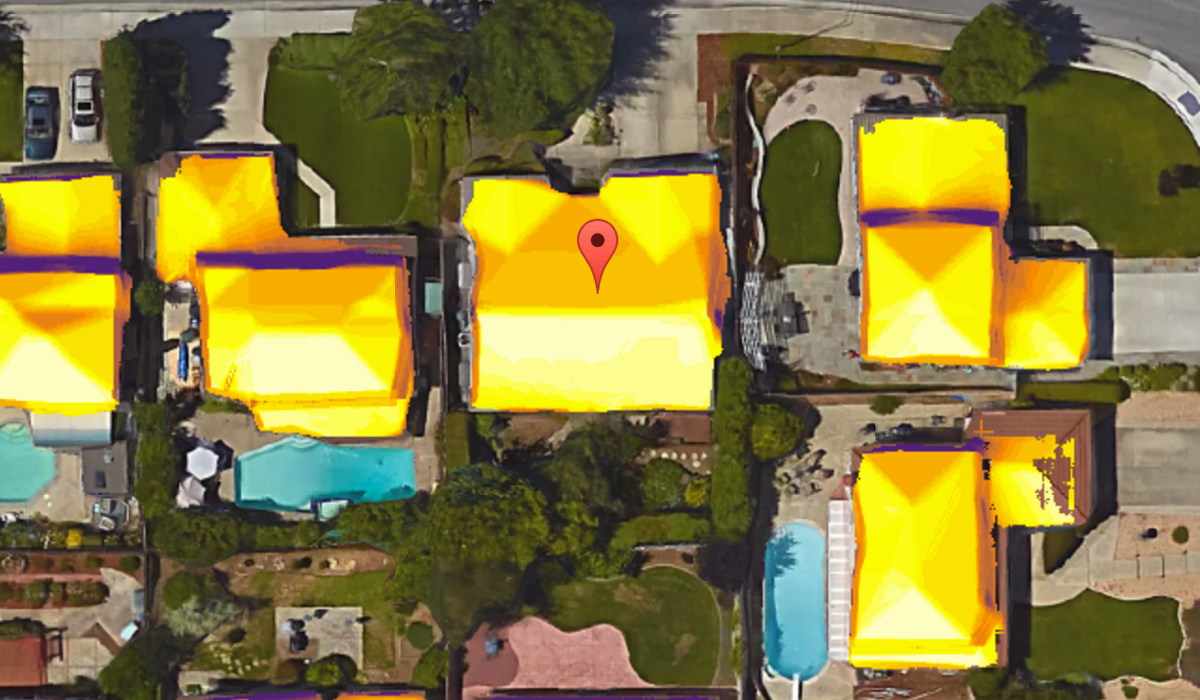
Google has a tool that calculates solar payback time. When I plugged the system we're in contract for, it doesn't pay back ever. The main reason is Oregon's reasonable power rates. But there's a couple mitigating factors. We speced a large battery bank because we're tired of dealing with generators for power outages. A generator would be cheaper but then we'd have to find a place for a propane tank and keep it filled, which can be a problem during a long outage. The second is that Google's tool assumes a 2.something percent per year rate increase. The utility in Oregon has had double digit rate increases for the last few years and is asking for over 20% for 2025. Power's not going to be reasonably priced there for long.
 

dcg9381

Well-known member
Joined
Jun 20, 2018
Messages
11,928
Location
Austin, TX
Google has a tool that calculates solar payback time. When I plugged the system we're in contract for, it doesn't pay back ever.
This thing?

It says 12 years until payback for me. I'm pretty darn sure that it's making "substantial" assumptions that do not account for "wholesale" net metering here...
 

u3b3rg33k

Well-known member
Joined
Dec 18, 2017
Messages
4,051
For sure - if money is your only motivation for doing these things then the payback is important. But I think the starting assumption is that this is always the case, whereas many of us are doing it for the fun/satisfaction of it. When someone post about restoring their relic of a drill press, you don't get posts about the ROI being 138 years.
Sure but that drill press restoration isn’t an alternative to putting $40k in my retirement account.
 

pembol

Well-known member
Joined
Feb 13, 2014
Messages
276
Sure but that drill press restoration isn’t an alternative to putting $40k in my retirement account.
Or maybe it is the 1975 Alfa Romeo GTV 1750 that we are talking about. Or it is building a detached garagemahal (heresy I know), which almost never makes financial sense. We hobbiests do all sorts of things that bring us entertainment or happiness with no hope of an ROI.
 

reader2580

Well-known member
Joined
Dec 31, 2014
Messages
14,574
Location
Minneapolis, MN
I figure around a ten year payback for my solar. It was mostly DIY with a little help from a solar electrician I know. I did lose about $150 worth of production last year when an inverter went bad and I didn't realize it for ten weeks. It took a month to get the inverter replaced under warranty. The inverter looked like it was still working until I looked at the display closer. I have multiple inverters so I didn't lose 100%, but this was my biggest inverter.
 

ipgenie

Well-known member
Joined
Jan 29, 2020
Messages
562
Location
Idaho
On an all electric house, 8kW roof mount solar will likely be a drop in the bucket saved compared to energy currently used. 8kW solar is only going to make about 10,000 real kWh per year at my house in Idaho, maybe a little more in KY. Losses involved with charging batteries and then discharging to convert to AC will reduce the overall production.

$0.08 per kWh * 10,000kWh is $800 per year savings before conversion losses. That's probably less than $65/month off the bill. I'd say the OP made a wise choice not to make that deal. Fine if it's disposable income spent on a hobby project for fun but not going to pay for itself financially.

Oops, edited to fix a math error.
 
Last edited:

dcg9381

Well-known member
Joined
Jun 20, 2018
Messages
11,928
Location
Austin, TX
On an all electric house, 8kW roof mount solar will likely be a drop in the bucket saved compared to energy currently used. 8kW solar is only going to make about 10,000 real kWh per year at my house in Idaho, maybe a little more in KY. Losses involved with charging batteries and then discharging to convert to AC will reduce the overall production.
I have a 6KW system, house is mostly electric. No battery system. MOST of the electricity gets used, but I can see "over production" during certain parts of the day. If you have a decent net metering arrangement (hopefully 1:1) this is the way to go because you can add more solar to drive your net bill down towards zero.

Without decent net metering, you're going to over produce sometimes and not be paid (very well, if at all) for it. IF that's the situation, you look at battery storage and an inverter that can be programmed for discharge conditions.
 

ToolsRCool

Well-known member
Joined
Dec 28, 2024
Messages
231
Location
Plymouth, MI
Huge DIY solar proponent here. Did mine and love it, 5.88kW rooftop array on detached garage. 1/4 of my total rooftop coverage supplies 100% of our power 10 of the 12 months a year here in MI, including running the A/C non-stop all summer long, 240v sprinkler pump, pool filter, etc.... No batteries, still grid-tied.

Batteries are typically not really justifiable on an ROI basis as long as utility power is present, unless you really just want to feel like you are sticking it to the man. I get it if so, then do it, but in your case, I would suggest you just stay grid connected for now, and do the solar panel, rack, and inverter part. Skip the batteries and charge controller for now. Get it up and running, monitor it closely, you solar performance and household loads will likely end up graphing out different than you expect, and you'll learn a lot more while doing this. You can always add batteries later if you really want.

But, I don't think there are any situations where you will be sorry you are harvesting free energy from the sun on a daily basis from a rooftop system, maintenance free. It is cool to see my digital smart meter reading negative on any summer day with our A/C running and dam near ice cold in the house. Works so well, it should really be nearly mandatory. Feels kind of crazy to not have to yell at the kids to shut lights off. We still do for good measure and training, but.....real stuff.

Net metering rules come and go. It is still worth doing just the panels as DIY and harvesting regardless.
 

reader2580

Well-known member
Joined
Dec 31, 2014
Messages
14,574
Location
Minneapolis, MN
My electric CO-OP charges $20 a month for customers with solar. We still have full net retail metering in Minnesota. I generate enough electricity to cover that $20 a month plus have a $300 to $400 credit for the year that I get a check for.
 

ipgenie

Well-known member
Joined
Jan 29, 2020
Messages
562
Location
Idaho
I have a 6KW system, house is mostly electric. No battery system. MOST of the electricity gets used, but I can see "over production" during certain parts of the day. If you have a decent net metering arrangement (hopefully 1:1) this is the way to go because you can add more solar to drive your net bill down towards zero.

Without decent net metering, you're going to over produce sometimes and not be paid (very well, if at all) for it. IF that's the situation, you look at battery storage and an inverter that can be programmed for discharge conditions.


I've got DIY solar, 25kW of grid tied inverters and a 30kW PV array. We have 1:1 net metering and it's awesome for us, heating, cooling and EV driving, even with our low energy rates ($0.07 per kWh delivered on last bill - total charges of $388 / 5357 kWh billed. This was the cost even with a solar production of 1035 kWh for the billing period.) 8kW wouldn't be close to enough for us to go off grid with our 2600 Sq ft house.

We build a lot of credit during the summer and use it in the winter. We do have mostly propane appliances but they use very little propane. I have a small emergency battery backup that I will likely expand to include some peak shaving this summer if a deal I found on some equipment works out.

Grid tie with 1:1 net metering credits that don't expire and a DIY install are the keys here. It makes financial sense for us, break even was just under 5 years. Take away the net metering and try to run it all with batteries and I'd have to give up the EV and go back to mostly propane heating and break even would be never after adding the cost of a lot of batteries. .

I'm very happy with our solar installation and am quick to recommend it for those who can financially benefit, but for the OP it would likely be a fun project that would not ever pay back. Nothing wrong with that if you go in knowing what to expect. $0.08 per kWh is a tough sell financially.
 
To avoid these ads, REGISTER NOW!
Top Bottom