To avoid these ads, REGISTER NOW!

SOLAR! sanity check please

teknikfrog

Well-known member
Joined
Apr 29, 2023
Messages
216
I'm looking into doing off-grid solar for my house. Yeah yeah this is garage journal, but in fairness I'll be putting the panels on my garage roof. Wanted to get a quick sanity check. Here's what I'm looking at buying:

Batteries:
5x EG4 LL-S Lithium Battery | 48V 100AH | Server Rack Battery ($1299) = $6495

Inverter / Charge Controller:
1x EG4 18kPV Hybrid Inverter | EG4-18kPV-12LV | 48V Split Phase 120/240VAC = $4898

Panels:
20x Sirius PV 415W Bifacial Solar Panel ($195) = $3900

= $15,293 (!!!)

My garage is a pole barn about 200ft from my house. I figure I'll pay a roofer to stick the panels on the roof, hire an electrician to wire everything up, stick a manual transfer switch on the breaker so I can go back to grid if need be, and then I'll either pay or do the trenching myself to run the wire the 200ft. I can rack the batteries myself and do a lot of the minor electrical work, so I'll basically just be my own GC.

ROI is under 4 years.

Am I missing anything? My math shows these batteries to be roughly equal to 2 powerwalls which I believe would easily run a house. I like the battery form factor since they use a normal 19" rack and they are easily expandable DIY.

 
To avoid these ads, REGISTER NOW!

dcg9381

Well-known member
Joined
Jun 20, 2018
Messages
11,928
Location
Austin, TX
You don't need a manual transfer switch. The inverter is your switch. It can simply pass grid power if that's what you want. And can charge from the grid. Dig in the details of programming for that inverter, because you're going to want it to "prefer solar" for charging. Make sure it can do what you want it to do.

Batteries are 100 lb each. They don't come with rails. You can't rack them in a normal server rack as there is no support under the battery or rail to tie in the rear. You need the battery rack which has rails in it. Their (signature solar) battery rack is pretty good and comes with bus bars.

EG-4 stuff has almost no support other than DIYSolar. You can make it work as is just with battery parameters, but setting up the battery coms (which gives the battery BMS control over the charge functions on the inverter) can be fun.

18000 watts / 48 volts = 375A that you'll need to be able to pass from the battery bus bar to the inverter. That's some fat copper. Maybe 2 x <fat copper>.
 
OP
T

teknikfrog

Well-known member
Joined
Apr 29, 2023
Messages
216
You don't need a manual transfer switch. The inverter is your switch. It can simply pass grid power if that's what you want. And can charge from the grid. Dig in the details of programming for that inverter, because you're going to want it to "prefer solar" for charging. Make sure it can do what you want it to do.
The inverter will need to be at the garage where all the batteries and solar panels are. I feel like raw DC to the house would be ill-advised and not to mention I still need power in the garage.

Also I'm fine with going 100% off-grid. I don't need any sort of grid charging, grid power rebates etc. I only plan on keeping my house meter, and paying the connection fee as a backup. It'll sit 'off' basically permanently. Being able to switch back to grid power as needed will be a nice luxury though, in the event of any sort of solar equipment failure.

Batteries are 100 lb each. They don't come with rails. You can't rack them in a normal server rack as there is no support under the battery or rail to tie in the rear. You need the battery rack which has rails in it. Their (signature solar) battery rack is pretty good and comes with bus bars.
That's cool. their rack is only like 500$. I might dig further into this topic though because I feel like 100lb on a (5u?) is no problem. I have a full height 42u rack in my house and several items in there are quite heavy and do have support rails.

EG-4 stuff has almost no support other than DIYSolar. You can make it work as is just with battery parameters, but setting up the battery coms (which gives the battery BMS control over the charge functions on the inverter) can be fun.

I'm fine with tinkering, especially on the low voltage control and software side.
 

dcg9381

Well-known member
Joined
Jun 20, 2018
Messages
11,928
Location
Austin, TX
I don't understand what you have where, but you can do this a couple of ways. You don't have to have it "grid tied" and that should keep permitting out of it it:

1738095762148.png

The issue is that you can easily see 7+ days with no solar power. So as long as you plan for that, you're good... But having "grid assist" charging, even if just a limited 120V @ 15A circuit is incredibly useful.


That's cool. their rack is only like 500$. I might dig further into this topic though because I feel like 100lb on a (5u?) is no problem. I have a full height 42u rack in my house and several items in there are quite heavy and do have support rails.
100 lb in a commercial server rack is no problem, but again, those systems have rails. The batteries only have the front "ears" and no support. If you can get "rails" in there, then you'll be fine.

I'm fine with tinkering, especially on the low voltage control and software side.
Dig over on DIYSolar on that inverter. I'm sure someone is using it and knows the quirks.
 
OP
T

teknikfrog

Well-known member
Joined
Apr 29, 2023
Messages
216
Cheers I appreciate the input.

And I think we can handle a cloudy week or two. Especially if the alternative is to *gasp* flip the xfer switch over to the grid we're already paying a connection fee for.
 

dcg9381

Well-known member
Joined
Jun 20, 2018
Messages
11,928
Location
Austin, TX
And I think we can handle a cloudy week or two. Especially if the alternative is to *gasp* flip the xfer switch over to the grid we're already paying a connection fee for.
Watch "idle draw" on EG-4... It's a thing.
You're about to get into the very muddy waters that go beyond KwH, monitoring this stuff, etc. But trust me, you want the ability to grid charge even if it's minimal.
 

walta

Well-known member
Joined
Jan 13, 2017
Messages
2,316
Location
Dutzow Missouri
Seems like buying and maintain batteries when a grid connection is on site would not be cost affective unless the grid is crazy expensive.

Is net metering a possibility in your location?

What do you pay for grid power per kWh?

Are the prices you showed before or after any incentives programs?

My math says the batteries will store 240 kWh does that sound right?

Seems like the inverter costing more than the panels is wrong but I have not been shopping.

Does the panel price include the mounting system and hardware?

The panels you linked to are Bi facial and mount vertically not generally done on roof mounts. I assumed they used microinverters as 50% of the panels are shaded at any moment. I thought any one shaded panel wired in series stopped the flow of current from the whole string.

Walta
 

BroncoAZ

Well-known member
Joined
Jun 23, 2018
Messages
2,679
Location
MA
I would do a grid connected system and skip the batteries. Spend the extra money on more panels and you’ll still never have an electric bill with the net metering. I’m sure you have your reasons for not wanting a grid connected system.

I installed a largish grid connected system a year ago, 14.58 kW DC from 36 405 watt panels. We went 195% of pervious need because I wanted the capacity to have an EV annd generally planning for the future. Electricity is currently 36.3 cents per kWh, down from 39 cents last year. I looked at doing it myself for about $18K in parts. I figured with the permitting, dealing with the utility, tying in my generac generator transfer switch, and wanting a warranty if my roof got screwed up I had a professional company handle it. I paid $50,500 installed and permitted, after tax credits my net cost will be $34,400. ROI is 5.6 years at 36.3 cents, was 5.2 years at 39 cents. Year one produced 16.8 MWh, or $6098 worth of electricity. We used 11.5 MWh and net metered the rest for credits of about $1700. We now have two EV’s and will end up burning probably 1 MWh more annually than 100% on the solar going forward so we will use the credits over time. I’m actually looking at adding more panels, shouldn’t cost too much since my controller looks like it can accept four circuits and I’m only using three.

Those batteries are 5.12 kWh each so the total would be around 25.5 kWh.
That might run my house for a single day in winter, and I have gas heat.
 

reader2580

Well-known member
Joined
Dec 31, 2014
Messages
14,574
Location
Minneapolis, MN
That might run my house for a single day in winter, and I have gas heat.
I have thought about doing batteries and ditching my grid connection, but that would require a ton of batteries in the winter. We had several periods of five to seven days of heavy overcast cloud cover this winter. My solar system was producing 100 to 200 watts during the peak of the day. I would be lucky to make 1 kWh for the whole day. A nice sunny day would be up around 7,000 watts production during the peak of the day. My best solar production days have been over 70 kWh.

I would need a lot of batteries to sustain my house for a week of days of only 1 kWh of solar production.
 
OP
T

teknikfrog

Well-known member
Joined
Apr 29, 2023
Messages
216
Seems like buying and maintain batteries when a grid connection is on site would not be cost affective unless the grid is crazy expensive.

Is net metering a possibility in your location?

What do you pay for grid power per kWh?

Are the prices you showed before or after any incentives programs?

My math says the batteries will store 240 kWh does that sound right?

Seems like the inverter costing more than the panels is wrong but I have not been shopping.

Does the panel price include the mounting system and hardware?

The panels you linked to are Bi facial and mount vertically not generally done on roof mounts. I assumed they used microinverters as 50% of the panels are shaded at any moment. I thought any one shaded panel wired in series stopped the flow of current from the whole string.

Walta
No net metering.

8 cents per kwh

I'm not aware of any incentives

Didn't realize those panels were not rooftop panels, good info thanks.
 
OP
T

teknikfrog

Well-known member
Joined
Apr 29, 2023
Messages
216
Man, so running the kwh numbers for heating and air totally kill this deal. I didn't realize how much energy they soak up.

Interestingly I was basing all this off a 2-powerwall setup which I had priced by a professional solar company for off grid use.

Obviously 2 powerwalls is not enough to run a house. Which means I'd have been absolutely screwed if I had signed the contract. Really dodged a bullet.

I think this deal is dead in the water unless I can get significantly more kwh battery storage. Seems like I'd need 300-500 kwh to be off grid. Sad.
 

pembol

Well-known member
Joined
Feb 13, 2014
Messages
276
This sounds like a fun project!

One question - does your utility support net metering? If so then the ROI is likely much higher and complexity is lower using a grid tie system over a battery system.

We have an all electric house (including heat and 2 EVs) and net metering. We designed the solar system to offset our annual usage and so our total monthly utility bill is a $7, which is just the connection fee. At that rate it would take > 50 years to offset the cost of the batteries.

There are other reasons to use batteries, but definitely try and use the built in smarts of your inverter to manage the combination of grid/solar/batteries. Just using a transfer switch is going to be far less efficient and reliable.
 
OP
T

teknikfrog

Well-known member
Joined
Apr 29, 2023
Messages
216
I really have no interest in dealing with net metering.

I think I'm going to revisit this in another year or two. I'd be willing to pay ~$8k for the system specced in the OP and let it run the majority of my needs and click over to the grid as needed. I'm not willing to pay the $16k figure though.

Prices keep dropping so perhaps soon the math will pencil out. I really did not realize how much of a power **** heating and cooling is.
 

pembol

Well-known member
Joined
Feb 13, 2014
Messages
276
If you have grid available, you don't need to design the system to be fully off grid (designing for the 99th percentile), you can design for the average case, and when you do have some cloudy days in a row, just use the grid.

In January, we average about 45kWh/day for all our energy and heat in our house. On a sunny January day our solar produces about this much power, so with a ~30kWh battery we could use zero energy on most days, particularly if we were smart about heating the house up during daytime hours. In sunny Colorado, we get sun 2/3 of the time, even in January, so a 30kWh battery would provide most of our power, and we would only need to use the grid on cloudy days or days when the panels are covered in snow. We have net metering, so we use that instead of a battery, but the point holds. You don't need to plan for a week of clouds (unless that is the normal weather in your area, in which case you really should move).

Where are you located and what is your weather like?
 

tool_scrounge

Well-known member
Joined
Jul 20, 2010
Messages
4,212
Location
Southern California
Man, so running the kwh numbers for heating and air totally kill this deal. I didn't realize how much energy they soak up.

Interestingly I was basing all this off a 2-powerwall setup which I had priced by a professional solar company for off grid use.

Obviously 2 powerwalls is not enough to run a house. Which means I'd have been absolutely screwed if I had signed the contract. Really dodged a bullet.

I think this deal is dead in the water unless I can get significantly more kwh battery storage. Seems like I'd need 300-500 kwh to be off grid. Sad.

I am in So Cal and two Powerwalls in plenty to run AC, heating, machinery in shop, etc. But ones location makes a lot of difference, which you have not posted.
 

pembol

Well-known member
Joined
Feb 13, 2014
Messages
276
I really have no interest in dealing with net metering.

I think I'm going to revisit this in another year or two. I'd be willing to pay ~$8k for the system specced in the OP and let it run the majority of my needs and click over to the grid as needed. I'm not willing to pay the $16k figure though.

Prices keep dropping so perhaps soon the math will pencil out. I really did not realize how much of a power **** heating and cooling is.

It sounds like Net metering isn't an option in your area. But if it is, it is really not a big deal - you can backfeed a breaker in your panel and the utility reprograms (or replaces) your meter to be bi-directional. There are some warning stickers that are also required. It is only if you have a really big system and need a separate production meter that it gets to be a little more complicated.
 

BroncoAZ

Well-known member
Joined
Jun 23, 2018
Messages
2,679
Location
MA
No net metering.

8 cents per kwh

I'm not aware of any incentives

Didn't realize those panels were not rooftop panels, good info thanks.
8 cents per kWh is very inexpensive, I wouldn’t bother with solar. If your system is producing 57% of what mine does it would be 9.56 MWh per year you’re saving $765 per year, the ROI for even the $8K you’d be willing to pay for the system is 10.45 years. In your first post you state that ROI at $15K is 4 years, I don’t see how that math works out at 8 cents per kWh.
 

dcg9381

Well-known member
Joined
Jun 20, 2018
Messages
11,928
Location
Austin, TX
Prices keep dropping so perhaps soon the math will pencil out. I really did not realize how much of a power **** heating and cooling is.
I don't see how they get much lower. Tariffs directly impact the price of this stuff and vendors will actually raise prices BEFORE any potential tariff goes into place. I'm not discussing the P-word, but it looks like the federal tax incentive is also going to be "reconsidered" - this is my personal speculation (and the speculation of others). With a new tariff of 10-20% and loss of tax credits, you could be looking at a swing of 40% or more in costs. So I'd be monitoring what's going on with legislation and be ready to pull the trigger before that happens.

I'm having a hard time reaching your ROI timeline on those number with an electricity cost of .08 per kWh (assuming that's the all-in price delivered). I'm not saying it's all about payback, it can absolutely be about learning to live off grid or disaster prep... Battery life, they say 10 years, but no one really knows for sure on these EG-4 products.
 
To avoid these ads, REGISTER NOW!

Shiftless

Well-known member
Joined
Mar 9, 2014
Messages
14,669
Location
East Bay SFO
8 cents per Kw/hr seems remarkably low. Are you sure that is your actual delivered cost of power?

Many of our neighbors have put solar panels on their roofs but the decision to go solar and the payback makes sense a lot more when our rates are about five times as high as your 8 cents.
 

manwithtools

ALLIANCE MEMBER
Joined
Aug 24, 2015
Messages
14,379
Location
Lebanon, TN
Wait, isn't the OP the same user that wants' to avid the complexity of a heat pump and install permanent resistance heat backup strips to heat his home? Can I run heat strips only, permanently?

I think you need to do a little more calculation on your true electrical loads before considering how solar might be your sole source of electricity. Also at anything below 15 cents per kwh, your payback is going to be a long time.
 

dcg9381

Well-known member
Joined
Jun 20, 2018
Messages
11,928
Location
Austin, TX
I think you need to do a little more calculation on your true electrical loads before considering how solar might be your sole source of electricity. Also at anything below 15 cents per kwh, your payback is going to be a long time.
And that assumes you can use 100% of the power you produce, which is usually not the case. Modern hybrid systems can help with that, but he doesn't want to grid tie.

I think what he's not counting on is how poor solar production can be when we get these fronts that create overcast skies.

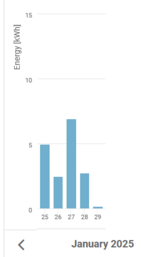
This is my 6kW (per hour) system. This is total production for the entire day, last 4 days due to overcast. We're going to continue to get another 3-4 days of overcast. Off grid, you need enough battery to make up for potentially a week (or more) of no or low production.. And this assumes you can clear panels and don't get snow on them. As long as you can "grid charge" it solves a lot of problems and allows you to expand / adjust your system:


1738172489875.png


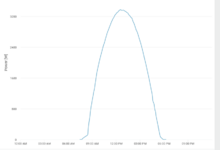
This is what solar production looks like on a "good" day - it's a nice curve.. (note, my panels are not adjusted for winter):

1738172644816.png

Here's a bad day:

1738172677265.png
 

u3b3rg33k

Well-known member
Joined
Dec 18, 2017
Messages
4,051
No net metering.

8 cents per kwh

I'm not aware of any incentives

Didn't realize those panels were not rooftop panels, good info thanks.
you should absolutely figure out ROI on your system. Batteries typically have terrible ROI unless you're part of a VPP/DERMs system where you can leverage them to your advantage. otherwise if you just want UPS style backup, that's fine, just know what you're paying for.
I really have no interest in dealing with net metering.

I think I'm going to revisit this in another year or two. I'd be willing to pay ~$8k for the system specced in the OP and let it run the majority of my needs and click over to the grid as needed. I'm not willing to pay the $16k figure though.

Prices keep dropping so perhaps soon the math will pencil out. I really did not realize how much of a power **** heating and cooling is.
you need to figure out what you're getting into. My utility does monthly "net" metering, and will credit overproduction at wholesale rate ($.04-.05/kWh).

I have TOU (on purpose) so it complicates the accounting by having two pricing "buckets" that do not interact. So I can end up overproducing during the day and still paying retail at night.
overproduction = account credit or if you go far enough they'll cut you a check. but good luck making that happen on a rooftop system.
I'm in Kentucky.
what utility?
 

reader2580

Well-known member
Joined
Dec 31, 2014
Messages
14,574
Location
Minneapolis, MN
I think this deal is dead in the water unless I can get significantly more kwh battery storage. Seems like I'd need 300-500 kwh to be off grid. Sad.
The number one recommendation when considering going off-grid is to evaluate your electricity usage, and find usage that can be cut. It is generally cheaper to cut consumption than to buy more solar panels, inverters, batteries, and so on.

I consider it crazy to be considering running resistance heat with solar. I don't exactly understand why you can't can't run your heat pump.
 

u3b3rg33k

Well-known member
Joined
Dec 18, 2017
Messages
4,051
The number one recommendation when considering going off-grid is to evaluate your electricity usage, and find usage that can be cut. It is generally cheaper to cut consumption than to buy more solar panels, inverters, batteries, and so on.

I consider it crazy to be considering running resistance heat with solar. I don't exactly understand why you can't can't run your heat pump.
it's simple, just 3x your array so you can use resistive heat!
 

reader2580

Well-known member
Joined
Dec 31, 2014
Messages
14,574
Location
Minneapolis, MN
it's simple, just 3x your array so you can use resistive heat!
Only 3x? I was using about 5000 kWh annually before adding solar. My house had resistance heat previously. The house was estimated to have used between 50,000 and 60,000 kWh annually when the house had resistance heat. I would need about ten times as much solar if I still had resistance heat.

It has been ten years since I bought the house and spent $22,000 on adding duct work, a gas furnace, and central A/C. Gas is so much cheaper that I have paid for the entire HVAC system in utility savings already.
 

sjvicker

Well-known member
Joined
Aug 9, 2014
Messages
606
Location
SW Washington
I'm building a similar system for off-grid. 4 - 6000xp's, 12 LL-S batteries, Aptos bi-facial panels. There's a lot of good advice above, here's what is also worth considering.

  1. double the cost of your panels and you then have a real ballpark cost. Wire, mounting, conduit, ground clamps all add up considerably. The 4/0 wire from your batteries to your inverters is probably going to be $350
  2. Bi facial panels work just fine on a roof, you just give up ever getting any real bi-facial gain.
  3. Consider doing 1 6000xp and 2 batteries to get your shop off-grid and learning what you really need to scale up from there.
  4. I'd never consider doing solar as a break-even or money-saving endeavor vs being grid tied. Inverters die, batteries die, panels die, you still have a monthly bill if you average repairs into your budget. My situation is an exception here. $40k to bring power to my driveway meant I could spend $40k on a solar system and "break even" on day one.
 

reader2580

Well-known member
Joined
Dec 31, 2014
Messages
14,574
Location
Minneapolis, MN
In today's solar world, the panels themselves are often the least expensive part of the system. Even more so if you go with used panels. There are a lot of used solar panels that are a great value.

I had an inverter die, but it has a 12 year warranty so they sent me a new one. The only hassle was waiting a month to get it.
 

u3b3rg33k

Well-known member
Joined
Dec 18, 2017
Messages
4,051
Only 3x? I was using about 5000 kWh annually before adding solar. My house had resistance heat previously. The house was estimated to have used between 50,000 and 60,000 kWh annually when the house had resistance heat. I would need about ten times as much solar if I still had resistance heat.

It has been ten years since I bought the house and spent $22,000 on adding duct work, a gas furnace, and central A/C. Gas is so much cheaper that I have paid for the entire HVAC system in utility savings already.
in theory resistive heat has a COP of 1 and heat pump is 2.5-3. so 3x the kWh as a rule-of-thumb.

I don't have resistive heat but I consumed about 18MWh last year, and imported about 11 MWh of that.
 

u3b3rg33k

Well-known member
Joined
Dec 18, 2017
Messages
4,051
I'm building a similar system for off-grid. 4 - 6000xp's, 12 LL-S batteries, Aptos bi-facial panels. There's a lot of good advice above, here's what is also worth considering.

  1. double the cost of your panels and you then have a real ballpark cost. Wire, mounting, conduit, ground clamps all add up considerably. The 4/0 wire from your batteries to your inverters is probably going to be $350
  2. Bi facial panels work just fine on a roof, you just give up ever getting any real bi-facial gain.
  3. Consider doing 1 6000xp and 2 batteries to get your shop off-grid and learning what you really need to scale up from there.
  4. I'd never consider doing solar as a break-even or money-saving endeavor vs being grid tied. Inverters die, batteries die, panels die, you still have a monthly bill if you average repairs into your budget. My situation is an exception here. $40k to bring power to my driveway meant I could spend $40k on a solar system and "break even" on day one.
FWIW panels are cheaper per square foot than fencing, AND they produce something you already buy (kWh). consider bifacial panels as fencing!
1738183985542.png
 

sjvicker

Well-known member
Joined
Aug 9, 2014
Messages
606
Location
SW Washington
FWIW panels are cheaper per square foot than fencing, AND they produce something you already buy (kWh). consider bifacial panels as fencing!
1738183985542.png
That's awesome! At this point panels are basically cheap commodity items so optimizing angle is less important than it was in the past.
 

u3b3rg33k

Well-known member
Joined
Dec 18, 2017
Messages
4,051
That's awesome! At this point panels are basically cheap commodity items so optimizing angle is less important than it was in the past.
my installer straight up said they don't do it on roofs at all anymore. whatever benefit could theoretically be gained is made up in a contiguous flat panel array parallel to the roofline, nevermind the added costs of racking. there are no seasonal self-shading issues with a flat array. plus almost everyone prefers the look.
 

WisJim

Well-known member
Joined
Dec 20, 2010
Messages
2,330
Location
Menomonie, WI
We were totally off grid for 12 years and then had grid back up for over 30 years at another place. Our first (totally off grid) place had wind and solar and had about 60 kWh of lead acid battery storage, which we used very conservatively. We had an extremely energy efficient super insulated house and minimal electrical usage and that size of battery was just adequate. A more modern house with AC, dishwasher, clothes dryer, kitchen appliances etc would need a LOT bigger battery, even considering that new batteries would probably be some kind of lithium. You (the OP) haven't mentioned how much electrical energy you actually use, and that needs to be used early in you calculations.
A week without sun or wind was not unheard of and actually happened most winters.
 
Last edited:

Kaizen

Well-known member
Joined
Jan 9, 2015
Messages
6,948
Location
New England
Without reading all of the above responses......I have this eg4 18k inverter with two approx 300ah batteries.
The extra's really add up in addition to what op listed above; panel mounts, wire to house panel, required external shut off at house meter for fire fighters, emergency shut off that stops all equipment.
I am going for a grid tied setup so i can roll the meter back if batteries are full. However i will need a 3 way shutoff thingy at over a thousand bucks.
This inverter will take from grid and feed to grid as instructed. So I can use the batteries at night before i take more power from grid. But if the house is connected to grid the power co will require permits and inspections galore. If they think you have a system feeding to the house without this permit i doubt you will get an electircain to make the connections. They also can lock out your meter until you undo what you have done.
I highly recommend the sense panel monitor with solar leads to anyone thinking about going solar. Its really important to see how many watts you are using on what and for how long. Pretty sure I can burn through both of my batteries if i do bodywork for 4 hours with my compressor and welder.
 
OP
T

teknikfrog

Well-known member
Joined
Apr 29, 2023
Messages
216
Just wanna say I really appreciate all the comments, even the ones that are subtly implying I'm a doofus (I am). This is very educational.
 
OP
T

teknikfrog

Well-known member
Joined
Apr 29, 2023
Messages
216
  1. Consider doing 1 6000xp and 2 batteries to get your shop off-grid and learning what you really need to scale up from there.
This is a good idea not for my shop but for my utility room. I don't know how many kwh my server rack consumes but its a lot. At least 400watt 24/7.
 

u3b3rg33k

Well-known member
Joined
Dec 18, 2017
Messages
4,051
Just wanna say I really appreciate all the comments, even the ones that are subtly implying I'm a doofus (I am). This is very educational.
FYI i switched to TOU for two reasons:
1: there are more cheap hours in a week than expensive
2: solar nukes the peak bucket nicely in the not winter quarter, so I basically only pay for off-peak power (a 60% discount off flat rate) and the solar payback is faster when calculated against power that's 70% more expensive (on peak).

batteries do not have ROI here, when the grid is a $0 capex battery, even if you arbitrage your own power against the cycle life of the batteries. a VPP/DERM program could change that overnight.

I even graphed out TOU vs theoretical flat rate. Y axis in dollars. that negative month doesn't factor in the wholesale buyback problem, so it's not a sweet deal like it looks.
1738195917070.png
 

inphx

Well-known member
Joined
Feb 23, 2012
Messages
1,298
Location
Phoenix/Scottsdale AZ
I think I'm going to revisit this in another year or two. I'd be willing to pay ~$8k for the system specced in the OP and let it run the majority of my needs and click over to the grid as needed. I'm not willing to pay the $16k figure though.
$16,000 * 30% = $4,800 .. dont forget the 30% fed tax credit, works on diy too. Maybe a state benefit.
 

u3b3rg33k

Well-known member
Joined
Dec 18, 2017
Messages
4,051
The only reason I can think to justify batteries is if your utility has a "no export" policy. then you'd want enough kWh of storage to time-shift your solar for daily self-consumption.
 
To avoid these ads, REGISTER NOW!
Top Bottom