To avoid these ads, REGISTER NOW!

solar

dcg9381

Well-known member
Joined
Jun 20, 2018
Messages
11,627
Location
Austin, TX
I agree on the battery based system being better. And it can run without the utility which is a big plus in my book. And I wouldn't have to jump through nearly as many hoops for approval. Not sure about tax rebates - might still be able to do those but likely would require getting a certified installer which could eat up a lot of the rebate. Just guessing here.

Also agree on the low pass filter for long lines with the VFD.

The issue is with batteries that they add a substantial amount of cost and do nothing to produce more energy. They just allow you to use the energy that would otherwise be pushed back into the grid that you potentially aren't being paid very well for. If you have a solar + battery system, likely it's grid tied and needs the same approval (unless 100% off grid).

The IRS does not require "certified installers" - just keep your receipts. The 30% rebate (or whatever it is coming up) - that's a big cost savings.
 
To avoid these ads, REGISTER NOW!

NakeDiesel

Well-known member
Joined
Sep 6, 2007
Messages
2,728
Location
oklahoma
Correct, you don't need a certified installer to get the tax rebate. Just keep all your receipts incase your audited.
 

Innovate1

Well-known member
Joined
Jul 28, 2014
Messages
4,274
Location
Illinois near St. Louis, Missouri
The issue is with batteries that they add a substantial amount of cost and do nothing to produce more energy. They just allow you to use the energy that would otherwise be pushed back into the grid that you potentially aren't being paid very well for. If you have a solar + battery system, likely it's grid tied and needs the same approval (unless 100% off grid).

The IRS does not require "certified installers" - just keep your receipts. The 30% rebate (or whatever it is coming up) - that's a big cost savings.
Thanks for that info. Will have to look into the details of the rebate.
 

NakeDiesel

Well-known member
Joined
Sep 6, 2007
Messages
2,728
Location
oklahoma
It's not the chemistry of lifepo4, it's with the company standing behind them and customers having issues. I'll look for the threads I saw over there.
 
To avoid these ads, REGISTER NOW!

u3b3rg33k

Well-known member
Joined
Dec 18, 2017
Messages
4,047
sounds like config problems, not actual battery problems. "everyone knows" lithium-iron batteries have much lower peak C rates than the more volatile chemistries. I'd be looking at a single 48V inverter and a handful of the 48V packs. stay within the continuous C rate not some iffy peak C rate.
 

Innovate1

Well-known member
Joined
Jul 28, 2014
Messages
4,274
Location
Illinois near St. Louis, Missouri
The issue is with batteries that they add a substantial amount of cost and do nothing to produce more energy. They just allow you to use the energy that would otherwise be pushed back into the grid that you potentially aren't being paid very well for. If you have a solar + battery system, likely it's grid tied and needs the same approval (unless 100% off grid).
I understand and agree on the batteries not doing anything for energy.

But I question the "same approval" for solar + battery system with grid connection. If it's a solar + battery system then the utility connection could be just for charging. If there is no flow back to the grid then the approval would be much easier. I would still call that "grid tied". I suppose you could have a battery system that can push to the grid but that seems like it would not be common as what's the point?

In my case selling power to the grid is a poor choice. I would like to have batteries for power outages. Thinking some sort of system that can charge batteries from solar and run some house systems off that (and just big enough for running some essential loads). Adding a way to charge the batteries during long periods of low solar would be a very easy, cheap addition that could be just a plug connection with no permits or approvals to get.

There is a coop meeting - kind of a coop fair in about a week. I am going to see what I can learn there.
 

NakeDiesel

Well-known member
Joined
Sep 6, 2007
Messages
2,728
Location
oklahoma
Finally got a response back from Current Connected. They recommend a bigger/higher quality inverter like victron or sol-ark, that an aims inverter wouldn't handle the load, that you can't believe the surge ratings on inverters. So a 5k sol-ark is 5000, looking at victron it would require 2 inverters to get 240 volts from what I've seen.

For batteries they recommended a fully loaded 25kWh SOK bank at 9k dollars.

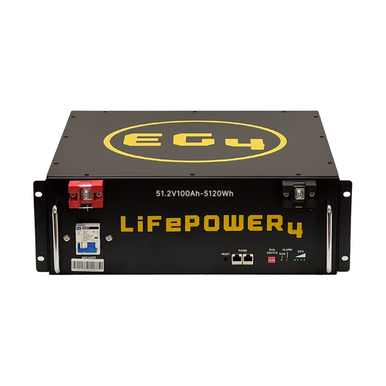
Aims thinks their 6k inverter would work well for this project, that their 4k would be right at the limit and the 6k wouldn't be stressed as much and more efficient. They recommended 4 12v 200Ah lifepo4 batteries at 1470.00 each in parallel to make a 48 volt system.
 

dcg9381

Well-known member
Joined
Jun 20, 2018
Messages
11,627
Location
Austin, TX
But I question the "same approval" for solar + battery system with grid connection. If it's a solar + battery system then the utility connection could be just for charging. If there is no flow back to the grid then the approval would be much easier. I would still call that "grid tied". I suppose you could have a battery system that can push to the grid but that seems like it would not be common as what's the point?
I'd argue that if your system is not grid-tied, which means the following:
  1. It does not feed back to the grid, period.
  2. It is not dependent upon syncing with grid frequency (this means it can't power your house or reduce your bill if the grid is also powering the same circuits)
  3. It has a transfer switch
I don't think I'd call it a "solar system" at all. I think it's a backup generator that's powered by independent solar..

But I think what we're talking about CAN provide power to the house while the grid is on along the same path... That's inherently grid tied - and "could" push power back. I'd treat that like grid-tie PV solar.
 

NakeDiesel

Well-known member
Joined
Sep 6, 2007
Messages
2,728
Location
oklahoma
If there is any grid connection at all it's grid tied. I can install all my system and be confident in it, but I have to find an electrician with a license number to submit all my paperwork with the poco when I put my Generator/ATS in and then again when I put my inverter in.
 

Innovate1

Well-known member
Joined
Jul 28, 2014
Messages
4,274
Location
Illinois near St. Louis, Missouri
I'd argue that if your system is not grid-tied, which means the following:
  1. It does not feed back to the grid, period.
  2. It is not dependent upon syncing with grid frequency (this means it can't power your house or reduce your bill if the grid is also powering the same circuits)
  3. It has a transfer switch
I don't think I'd call it a "solar system" at all. I think it's a backup generator that's powered by independent solar..

But I think what we're talking about CAN provide power to the house while the grid is on along the same path... That's inherently grid tied - and "could" push power back. I'd treat that like grid-tie PV solar.
1 is true. 2 is not - I could be providing some solar and some power from the grid to charge the batteries at the same time while powering stuff from the batteries. 3 isn't true - no transfer switch. That's how I envision it at least.

Really getting into the weeds here I think. Like it depends on what the meaning of the word "is" is... :)

I would say it's a solar system - it uses solar power and it is a system. Can't see how you can argue it isn't a solar system.

But I don't really care what it's called. I would be interested in details if anyone has setup such a system.
 

dcg9381

Well-known member
Joined
Jun 20, 2018
Messages
11,627
Location
Austin, TX
When it's "grid tied" that's what the ETJ will care about.

Can I see a system diagram? That'd get you more/better answers.

The only way I know where you can push power into the house while the grid is active and not be grid tied is to have those particular powered circuits isolated from the main. In a system like this, you're basically using the grid to charge a battery (when there isn't enough PV energy) - but the downstream circuits which are covered by the battery/PV are separate from the main.
 

jlv03

Well-known member
Joined
Jan 19, 2020
Messages
344
Location
SE IA
My first solar project here on the farm is to provide a solar solution to my water well. When I get my generator installed for the house, the well won't be on it. Eventually the house will have a sol-ark 15 or 2 on it with panels supplying it as well as a lifepo4 battery bank, but that's way further down the road.

I replaced the metal siding on the well and added trim and a new roof and removed the old batt insulation, 2 weekends ago. Installed a new 86 gallon pressure tank and new lines inside the well house this past weekend. I'm waiting on my closed cell foam kit to get here so I can insulate it.

Finally got my hobo data logger and current switch yesterday and put it on the well. It's been on there for 22 hours so far and has logged 9 minutes, 44 seconds of run time since install. Not much use in the next 2 hours, so that gives me a start baseline. I'll continue logging run times for the next 2 weeks to get a good summer average. Part of that usage is I irrigate my fruit and nut trees for 2 hours every evening, my wife's night bath in the garden tub, 2 load of dishes, etc... The irrigation won't be going on in winter so winter use will be dramatically reduced. Run time with the new 86 gallon pressure tank is 2 minutes 20 seconds from 30psi to 50psi.

So breaking down the math:

10.5 amps (running pump amps measured) * 240 volts = 2520 watts
2520 watts * .25 hours a day (rounded up to 15 minutes) = 630 watt/hours
630 watt/hours a day * 3 days backup = 1890 watt/hours
1890 watt/hours /48 vdc = 39.3 amp hours of storage needed
1890 watt/hours /24 vdc = 78.75 amp hours of storage needed.

2520 watts a day / 4 hours sun (think average is between 4.5 and 5 hours in my location) = 630 watts of panels needed minimum.
MPPT Charger size = 800 watts / 24 vdc =

I think my calculations are pretty spot on. Will collect run time data over the next 2 weeks to get an average.

But as of this info, plan is as follows:

1 - 4kw Aims 120/240 split phase inverter charger 24vdc
2 - 12v 100Ah lifepo4 batteries
1 - Aims 40 amp charge controller
800 or so watts of panels

plus wiring and disconnects, etc.

Any thoughts?

52286194061_53d0ed12ab_c.jpg

52302172834_a650fe2878_c.jpg

52304064149_f3361ab5f1_c.jpg
Do you "need" to irrigate if there is no grid power? I would think you could cut down on battery size if you could skip irrigation when there isn't a connection the grid.

Another thought - do you need pressurized water to irrigate? If you don't could you just fill a large tank during daylight hours and gravity feed out from the large tank at night to irrigate.
 

NakeDiesel

Well-known member
Joined
Sep 6, 2007
Messages
2,728
Location
oklahoma
The issue isn't run time of the pump, the issue is the startup amps the pump draws when it kicks on. That's where I'm having a hard time finding a battery that can support the surge amps. 455 amps at 24 volts or 227.5 amps at 48 volts
 

u3b3rg33k

Well-known member
Joined
Dec 18, 2017
Messages
4,047
The issue isn't run time of the pump, the issue is the startup amps the pump draws when it kicks on. That's where I'm having a hard time finding a battery that can support the surge amps. 455 amps at 24 volts or 227.5 amps at 48 volts
how long does the surge last? this is why capacitors were invented. they're not just for killer car audio systems.
 
To avoid these ads, REGISTER NOW!
Top Bottom