To avoid these ads, REGISTER NOW!

Soldering tips

edcantu9

Well-known member
Joined
Mar 2, 2013
Messages
607
Location
Southeastern Iowa
I am trying to solder some led strips together. I look at youtube and the solder melts so easy they just touch it and it melts.

I notice it melts quick when I do my test melts, then when I actually want to get down to it it doesnt melt as quick. It does melt but I have to hold it there for about 10 secs.

I messed around with it some more the exact same spot on the tip when it is shiny will burn the solder, then it will get black and then it will not burn the solder as quick, is this normal?

What am I doing wrong? It is a 30-35watt iron.:headscrat
 
Last edited:
To avoid these ads, REGISTER NOW!

Captain Spaulding

Well-known member
Joined
Feb 13, 2017
Messages
737
Location
Southern Indiana
You want your iron wetted with molten solder before starting so it transfers heat well to the material being soldered. You want to heat the material being soldered so it melts the solder. Often irons don't get hot enough because of corrosion where the tip attaches or a loose tip.
 

fsae0607

Well-known member
Joined
Aug 15, 2011
Messages
2,290
Location
San Fernando Valley, CA
For starters, you need a temp-controlled iron, like the Weller WES51. For circuit board work, I'd set the temp to about 500°F.

Use the smallest tip that envelopes your work. Screwdriver tips are good to use for all around work.

Put rosin flux on your work. For small circuit board work, maybe try a liquid flux applicator pen. Solder will literally flow to where the flux is.
 

Cuda416

Well-known member
Joined
Mar 18, 2012
Messages
289
Location
TX
Generally once you 'get it" it will become pretty obvious how it all works. First and foremost, you are heating the wire NOT the solder. Not saying that's what you are doing but many people make that mistake. Take the iron and hold it "under" the wire, let it heat up, touching the solder to the "wire" every so often. It will eventually go from solid, to plastic, to liquid and flow into the strands of the wire. Just a little bit, don't overdo it.

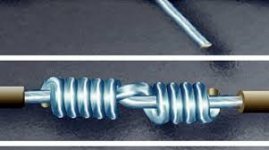
Personally, I usually put a piece of heat shrink on one wire first, then cross the wires, twisting one wire around the other. Not together like a twisty, but actually wrap one wire around the other.. Then solder the two together. It will never come apart. Once it's all good to go, slide the shrink over and heat it up. Done... good luck
 

Attachments

  • download.jpg
    download.jpg
    6.9 KB · Views: 134
OP
E

edcantu9

Well-known member
Joined
Mar 2, 2013
Messages
607
Location
Southeastern Iowa
For starters, you need a temp-controlled iron, like the Weller WES51. For circuit board work, I'd set the temp to about 500°F.

Use the smallest tip that envelopes your work. Screwdriver tips are good to use for all around work.

Put rosin flux on your work. For small circuit board work, maybe try a liquid flux applicator pen. Solder will literally flow to where the flux is.

I knew that someone would recommend I buy another more expensive solder. Sometimes we have to get done what we want without spending a bunch of you know. I use a solder once every five years.
 

CoogarXR

Well-known member
Joined
Jan 11, 2016
Messages
6,843
Location
Ohio
A shiny tip is your friend. When you are done soldering and the iron is still hot, twirl the tip on a junk wet sponge to get all the **** off of it.

When soldering wires, heat rises, so put the tip under the wire so heat rises through the wire. Then bring the solder down from the top, using the heated wire to melt the solder rather than the iron tip.

You want the tip, the wire, and the solder to all be relatively the same temperature for a good bond. Shiny solder is typically indicative of a good bond. Gray/cloudy solder joints went on cold and will crack.
 

dogdog

Well-known member
Joined
Nov 15, 2011
Messages
12,711
I always have a moist tissue or sponge next to my solder iron to clean it.... your only choice is to keep it clean, and have solder melt in the tip first before applying or attempting to heat the joints....
 

6PTsocket

Well-known member
Joined
Mar 12, 2014
Messages
4,593
And deoending where you are, if possible,don't use "no lead"solder

Sent from my SM-G900V using Tapatalk
 

6PTsocket

Well-known member
Joined
Mar 12, 2014
Messages
4,593
And deoending where you are, if possible,don't use "no lead"solder

Sent from my SM-G900V using Tapatalk
Opps! That was no lead solder, use regular 60/40 or better yet 63/37. Good brands like Kester or Multicore have good flux inside and there are less problems. You have to get the wires, board or terminal hot enough to melt the solder, not just puddle molten solder on them. A well tinned tip, with a little solder on it conducts the heat to what you are soldering and then when you apply solder it flows right on. That assumes the tip is clean and tight and what you are soldering is not oxidized. A little additional flux never hurts. Make sure it is for electrical work. Acid core flux will corrode the connections down the road.

Sent from my SM-G900V using Tapatalk
 

Boomer343

Well-known member
Joined
Mar 19, 2012
Messages
519
I like to use silver bearing solder, usually 2% for electronics and 6% for other applications.

Flux is usually the key along with a clean tip.
 

PhysicsDude

Well-known member
Joined
Jan 28, 2013
Messages
805
Location
Dallas, TX
All the advice here is good..

You don't /need/ a temperature controlled soldering iron, but they make the work 200% easier and faster. The videos you mentioned watching with the solder melting quickly, they're almost definitely using a temperature controlled iron.

Your 35W iron will work, it will just take longer, like you've observed.

A clean tip, some patience, and keeping the iron on your wire/solder point is all you need. Even with a good quality soldering iron, it can take a bit to heat up whatever you're soldering. Largish wire or something like a surface mount LED can soak up a lot of heat and take a while to solder.

I always use a wire tip cleaner, MUCH easier to use than a wet sponge, IMO. You can get one for $5-10 on amazon or a electronics/hobby store.

https://www.amazon.com/dp/B005C789EU/?tag=atomicindus08-20
 

kspwski

Well-known member
Joined
Dec 22, 2011
Messages
56
Location
Central Iowa
Using flux is probably another 200% improvement. I use a15$ temp controlled (ish) iron from parts-express, clean tip, flux and have great success.
 

GirchyGirchy

Well-known member
Joined
Nov 14, 2011
Messages
9,813
Location
Central Indiana
I knew that someone would recommend I buy another more expensive solder. Sometimes we have to get done what we want without spending a bunch of you know. I use a solder once every five years.

Look, it's another "help me do this" thread where the OP shoots down what might be the best advice.

Cheap solder *****. If you're going to bother messing with it, just get something decent. For as little as you use it, a Kester Pocket Pack for $3.50 on eBay would be plenty.
 

flippin

Well-known member
Joined
May 24, 2010
Messages
740
Location
Montreal - Ottawa
Look, it's another "help me do this" thread where the OP shoots down what might be the best advice.

Cheap solder *****. If you're going to bother messing with it, just get something decent. For as little as you use it, a Kester Pocket Pack for $3.50 on eBay would be plenty.

I think the op was referring to purchasing a temp controlled soldering iron not just the solder even though he referenced it as such.
 
To avoid these ads, REGISTER NOW!

Dimitri

Well-known member
Joined
Feb 28, 2013
Messages
250
Location
Toronto
Yes, about the solder station. Which honestly isn't needed. A regular pen soldering iron works fine with some practice 90% of the time.

Dimitri
 

Throbbin Rods

Well-known member
Joined
Dec 17, 2013
Messages
801
Location
Lebanon, NH
Generally once you 'get it" it will become pretty obvious how it all works. First and foremost, you are heating the wire NOT the solder. Not saying that's what you are doing but many people make that mistake. Take the iron and hold it "under" the wire, let it heat up, touching the solder to the "wire" every so often. It will eventually go from solid, to plastic, to liquid and flow into the strands of the wire. Just a little bit, don't overdo it.

Personally, I usually put a piece of heat shrink on one wire first, then cross the wires, twisting one wire around the other. Not together like a twisty, but actually wrap one wire around the other.. Then solder the two together. It will never come apart. Once it's all good to go, slide the shrink over and heat it up. Done... good luck

This
 

Davefr

Well-known member
Joined
Jan 7, 2010
Messages
11,815
Location
OR
Unless your soldering iron tip is nice and clean/shiny, it won't conduct heat very well.

If it's black, then you need to clean it with a block of sal ammoniac. After that you need to coat it with tip tinner. (both can be bought at Amazon)

Whenever you're done soldering, coat the tip with solder to preserve the tip.

Like others have said, Kester "44" 60/40 and separate flux make a big difference.
 

Mancino

Well-known member
Joined
Mar 30, 2017
Messages
120
Location
Upstate NY
As others have said, a clean tip is very important. I use the brass balls that look like brillo pads...

They actually say using wet sponges is not good for the tips because its a drastic temperature change and won't clean them as well. A few wipes along the brass pad and they tip will shine like new. Then dab a little solder on the tip to help the heat transfer...even a old crappy preset temp iron will do good work if you follow this approach.

Not saying I'm the all pro solderer here, but I've been soldering for over 10 years on almost a daily basis at my jobs. It's what's works for me.
 

graffix000

Well-known member
Joined
Nov 23, 2007
Messages
872
Location
Philly
All the advice here is good..

You don't /need/ a temperature controlled soldering iron, but they make the work 200% easier and faster. The videos you mentioned watching with the solder melting quickly, they're almost definitely using a temperature controlled iron.

Your 35W iron will work, it will just take longer, like you've observed.

A clean tip, some patience, and keeping the iron on your wire/solder point is all you need. Even with a good quality soldering iron, it can take a bit to heat up whatever you're soldering. Largish wire or something like a surface mount LED can soak up a lot of heat and take a while to solder.

I always use a wire tip cleaner, MUCH easier to use than a wet sponge, IMO. You can get one for $5-10 on amazon or a electronics/hobby store.

https://www.amazon.com/dp/B005C789EU/?tag=atomicindus08-20

I second the tip cleaner. Makes cleaning the tip much easier.
 

nes999

Well-known member
Joined
Aug 1, 2014
Messages
1,602
Location
IL
Personally I think its the iron doesn't have enough power. The expensive irons are a lot more powerful. Thus keeping up the temperature. I disagree that you need a temperature controlled unit. I would suggest a butane powered iron. They heat up ans recover fast. The last one I bought was 20 or 30 bucks from lowes for my wife.


Remember you are heating up the wire to melt and draw the solder into the joint. That takes a little bit of heat depending on the gauge wire.


Sent from my VS988 using Tapatalk
 

xyster101

Well-known member
Joined
Jul 3, 2013
Messages
640
Location
Upstate NY
A 35 watt iron will take longer. Deal with it. I did for years. Then I spent $15 and bought a 60 watt. So much better. It heats the wire quicker which means that overall the rest of the wire doesn't get as hot because the contact time is so short with the iron.

Have shiny solder. I tried to use 10 year old dull solder and it would not stick. Keep the solder away from the air if you only solder once a year.

Keep the tip clean as others have said. Make sure the tip is tight.

It will be slower then youtube because your iron is half the power of what people use.
 

Dimitri

Well-known member
Joined
Feb 28, 2013
Messages
250
Location
Toronto
My original iron, like many young kids who got into electronics was an orange 25W Weller.

Only problem is the way they use the tiny screws to hold it together. Eventually due to the thermal cycles the threads melt. Their commercial irons don't have this issue.

But bigger isn't always better.

Dimitri
 

niget2002

Well-known member
Joined
Oct 2, 2012
Messages
11,112
Location
Josephine, TX
I just got finished wiring a bunch of those myself.

The + and - pads take quite a bit of heat to get solder to flow on them because they run the full length of the strip. That's a lot of metal sucking the heat away from what you're trying to heat.

I started by tinning both the wire and the pads. Get the pads warmed up and get a little solder on them. Then do the same with the end of the wire. That way when you put the two together, the iron can melt the two solders and it sort of '*****' the wire into the top of the pad.

Another problem I had is that the pads on those LED strips were really weak. Too much pressure and the wires would rip the pads right off. I got to where I would recut a new strip and cut it so that I had the full pad available instead of cutting it on the cut line. Those joints held up a lot better.

I probably wasted 10-15 of those silly little LEDs on my project due to messed up solder joints.
 

Chaznsc

Well-known member
Joined
Apr 9, 2013
Messages
6,526
Location
SC
My dad can solder like a tig welder. I do too, but like a BLIND tig welder.
 

Cword

Well-known member
Joined
May 25, 2006
Messages
294
Location
Calgary, Alberta
don't take any tips from this woman
stock-photo-beautiful-woman-repair-soldering-a-printed-circuit-board-204001492.jpg
 
To avoid these ads, REGISTER NOW!
Top Bottom