To avoid these ads, REGISTER NOW!

Sound proofing from traffic noise.

Slowgsr

Well-known member
Joined
Nov 14, 2014
Messages
610
Location
Southern ontario
Sorry this is off topic a bit, but I'm trying to soundproof my garage from traffic noise

Here's what's existing, double pane, double hung windows, and 2x4 stick frame, single brick exterior and interior is old 70s durock basically concrete board. Fiberglass batt insulation.

The plan. I ordered new laminated glass high end windows that are awning, so they seal tightly on a gasket, stc of 38.

For the walls I really don't want to demo to put in roxul since the fiberglass is already there and demoing these concrete walls is very messy.

So overtop I plan to use either 1 layer of 5/8 type x drywall with green glue, then green glue around all edges and window jam.

Or should I use a sound resistant drywall like quiet rock rather then the 5/8?

The existing brick and concrete board structure has good mass and probably blocks sound well, I feel like most of the noise is coming in the windows, but I feel like going through the expense of changing the windows out I should go the extra bit and do what I can to the walls too.

Any feedback here? Thanks
 
To avoid these ads, REGISTER NOW!

CombatNinja

Well-known member
Joined
Aug 24, 2013
Messages
1,456
Agree with The Cobbler on this one. Do the windows and see from there. The majority of your noise is going to be solved with better windows.

You gave us the specs on a lot of stuff, but what kind of garage door do you have? Size, material, insulation, does it face the street, etc.?
 

wssix99

Well-known member
Joined
Mar 2, 2011
Messages
5,153
Location
Chicago, IL
I grew up next to a super highway. As they widened it, we had to do something. We added a second interior 2X4 insulated wall with an air gap between the two. (So vibrations don't get transmitted.) The place was dead silent.
 

mepstein

Well-known member
Joined
Sep 17, 2010
Messages
1,280
Maybe have a portable panel or blanket to hang over the windows or set in front of them when you are making a lot of noise.
 

CombatNinja

Well-known member
Joined
Aug 24, 2013
Messages
1,456
Way to read the original post, mepstein. He is trying to reduce the noise from traffic outside his shop, not diminish noise coming from his shop.
 

rlitman

Well-known member
Joined
Oct 18, 2010
Messages
24,576
Location
Long Island
Way to read the original post, mepstein. He is trying to reduce the noise from traffic outside his shop, not diminish noise coming from his shop.

To be fair, noise transmission and reduction works both ways.

For my part, I'm agreeing with Cobbler. You're not going to improve the walls a whole lot over the brick.

Aside from the windows, seal up any cracks you can find.

Are you trying to make this into a sound stage or something? How crazy are we going here? Sound blocking curtains could help too.
 
OP
S

Slowgsr

Well-known member
Joined
Nov 14, 2014
Messages
610
Location
Southern ontario
A portion of the garage is the office, and this is the office space, the other walls are all interior to the shop and fairly quiet, the problem with the windows is, when they set the windows they will set the jam extension flush with the face of the inside wall and flash out. To keep the window closer to the warm side, if I decide after I'll have to rip my own jam extension to accommodate for the wall thickness, which wouldn't be a big deal I guess.

The work of doing the sound barrier on the wall, and the taping, painting etc would be done by myself, so no labour expense.
 

Crfdell

Well-known member
Joined
Dec 22, 2012
Messages
103
Location
Cambridge Ontario Canada
Triple pane windows I have found to work extreme well in terms of reducing noise thru windows.

Recommend resilient Channel to attach dry wall to, ensure the proper length screw are used you don’t want the screw thru the channel to the wall as it defeats the purpose.
 

qdvuu

Well-known member
Joined
Feb 8, 2008
Messages
608
Location
Norcal
I was investigating some upgrades to my company's offices and looked at using glass walls for a new conference room. Noise transmission in both directions was a concern and the best glass walls were not only double-paned, but used different thicknesses of glass since they attenuate different frequencies. Also, they had some gas sealed inside but I don't recall what it was. So, since you're going with multi-paned windows, look into various thicknesses.
 

Youngandfree

Well-known member
Joined
Dec 29, 2020
Messages
877
Location
VA
I grew up next to a super highway. As they widened it, we had to do something. We added a second interior 2X4 insulated wall with an air gap between the two. (So vibrations don't get transmitted.) The place was dead silent.

This is the answer plus windows.
 
To avoid these ads, REGISTER NOW!

Copymutt

Well-known member
Joined
Sep 3, 2016
Messages
3,381
Location
Colorado
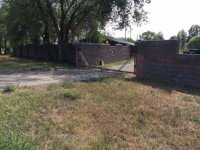
We live on a state hwy. heavy traffic including lots of big trucks. Instead of changing up the building structures we built a 7’ tall split face block wall.Not cheap, but effective. Pic shows gate in progress.DC78B6E2-3061-4C30-A6BD-1266EC86F0AD.jpg
 

BukitCase

Well-known member
Joined
Apr 11, 2017
Messages
1,075
Location
Oregon
"Recommend resilient Channel to attach dry wall to, ensure the proper length screw are used you don’t want the screw thru the channel to the wall as it defeats the purpose"

No, the resilient channel would already defeat the purpose (in THIS case, that is) - the OP stated that he has

"For the walls I really don't want to demo to put in roxul since the fiberglass is already there and demoing these concrete walls is very messy.

So overtop I plan to use either 1 layer of 5/8 type x drywall with green glue, then green glue around all edges and window jam.

Or should I use a sound resistant drywall like quiet rock rather then the 5/8?"


Resilient channel should NEVER be used as an ADD-ON to an already 2-leaf wall - the brick is a leaf, the cement board is the second one - together, along with whatever insulation is already inside, forms a mass-air-mass construct that is the MOST EFFICIENT use of materials possible.

If you add resilient channel to the above and hang ANY other material on the channel, you've just created a TRIPLE leaf wall, which = a mass-air-mass-air-mass construct - the third leaf and associated air gap only serves to WEAKEN the walls TL (Transmission Loss) - the OP's thought to add more mass to the ALREADY THERE mass is the most effective way to improve TL - the Green Glue will minimise or eliminate any chance of another UN-WANTED air gap.

Last time I looked, Quiet Rock cost enough to pay for about 4 layers of 5/8" rock; and the 4 layers worked out to somewhere around 16-18 dB BETTER sound reduction, depending on frequency.

I agree with the comments about doing the windows FIRST; you will probably find that's all you need. If you can find dissimilar thickness double pane, that's what you should do - that "Triple leaf is bad" thing works there too, better to find a more separated 2-leaf wall OR window than just throw more EXPENSIVE material at it.

Here's a good explanation of leaves, air spaces, and why -

https://www.tmsoundproofing.com/triple-leaf-effect.html

BTW, if you're looking for FULL RANGE sound control you should IGNORE STC ratings (mostly) - that rating is still all over the net, because the numbers look good and it's a simple ONE NUMBER rating - but it ONLY considers human VOICE transmission - if you wanna contain or eliminate stuff like subwoofers, trains, planes, etc, you should be looking at Transmission Loss at those noises' SPECIFIC frequencies - Yeah, it's more complex math but you're a LOT less likely to be disappointed in the results.

There's more, but it's late; HTH... Steve
 

wafer

Well-known member
Joined
Jan 27, 2009
Messages
395
Location
TX, USA
This is an interesting thread. Thanks OP.
Do better windows do a good job eliminating the vibrations from today's super-powerful subwoofers in some cars & trucks? They can sometimes shake an entire house, and the low frequency sound travels better than most traffic noise, I think.
 
Last edited:

nadogail

Well-known member
Joined
Jan 23, 2009
Messages
31,894
Location
Coronado, CA
Poured concrete sound walls have been found to be effective in blocking the transmission of traffic noise from Southern California Freeways.
 

gtsgarage

Well-known member
Joined
Oct 31, 2017
Messages
482
Location
California
We replaced all the windows in our home and went with different thickness in the panes in our master bedroom which faces the street specifically to lessen street noise. It’s a huge difference. Honestly the cost wasn’t so much more I wish we had don’t it throughout the house. Not a big deal in the other rooms but you can tell the difference.

I would do the wall now and then do the windows. Easier to have the farmed and casings correct.
 
Joined
Dec 26, 2020
Messages
13
Location
portland or
I'm a woodworker by trade and have gotten quite used to wearing protective gear pretty much all the time in the shop. We have obnoxious neighbor kids as well, so when I'm in the garage (uninsulated) I frequently put on hearing protection (muffs), sometimes with my bluetooth earbuds underneath.
 
OP
S

Slowgsr

Well-known member
Joined
Nov 14, 2014
Messages
610
Location
Southern ontario
Hi thanks for the info everyone and to elaborate on the windows I ordered they are double pane, and the panes are of different thickness, the outside pane is over twice the thickness of the inside pane and is a laminated type glass, which is like a windshield of a car, has that extra layer between. From reviews online, reading up on, etc thses type of windows are superior for blocking sound vs triple pane. Triple pane are more for energy savings which isn't as much of a concern. I'm glad to hear others have noticed a good improvement from these type of windows.

I don't have the space to add 4 layers of type X vs doing the quiet rock since it begins to take up room space, Mainly the opening of one of my closets.

So I'll just go with the drywall layer and green glue, and seal around the edges and window casing prior to trim and taping. It won't cost a whole lot extra and just under 12 feet, so only 3 sheets.

I used resilient channel in my basement on the ceiling when I finished it. Along with fiberglass sound insulation and 5/8 type X it seemed like the best bang for my buck since roxul I feel is overpriced and the marketing helps it sell and since I wasn't separating hvac anytbing else I do wouldn't be worth the extra cost.
 

BukitCase

Well-known member
Joined
Apr 11, 2017
Messages
1,075
Location
Oregon
Given the options you DON'T have (space, not wanting to DEMO and start over) you've made the best choices.

The RC for the ceiling is hopefully NOT fastened to an already existing layer of drywall but directly to the joists - otherwise it may have created a triple leaf construct, which would've actually DECREASED sound attenuation at a couple of frequencies (sometimes hard to tell without involved testing) -

IF you're not already tired of thinking about this stuff you might wanna re-read the info in my previous link. Otherwise I would recommend doing exactly what you said - I would also suggest finding some ACOUSTIC caulk (doesn't shrink, so not likely to dry out and crack) - that can slightly (or more) help improve low frequency performance in a wall, not to mention possibly lessening air infiltration. The tiniest crack in a sound wall can make a measurable difference in bass attenuation.

In case you're wondering if you should believe what I say, THIS writer

https://www.amazon.com/dp/143545717X/?tag=atomicindus08-20

is one of several online friends/mentors I was fortunate enough to know; we used to BS on the phone every other Sunday - another (sadly deceased almost 7 years ago) was Eric DeSart - best known as the lead designer for Galaxy Studios (Belgium) - still known among pro's as the world's quietest recording studio (not quietest room; whole different deal, 45 minutes in THAT place will land you in a rubber room)

For more, google Knightfly Steve (Knightfly is my screen name for all things acoustic/musical)

Best of luck... Steve
 

Steve W.

Well-known member
Joined
Mar 27, 2019
Messages
1,240
Location
Southwest oHIo
The previous responders probably have a lot more experience and training, I can only relate MY experience in a residential setting.

Our house is set back 70 feet from the curb of a reasonably-busy street. Yeah, the speed limit is officially only 35 mph, but just past my property line, it's 45. That means that they might have slowed down to 50 by the time they go past my house. It's mostly light(weight) traffic, but there is the usual mix of landscapers, service trucks and a few semis, as there is a shopping center and plenty of fast food places just around the corner. Evening rush hour (4p to 7p) is the worst time.

When we moved in, the windows were typical from when the house was built (1957); aluminum framed single-pane windows. We installed vinyl-framed double-pane windows and could not belive the difference. We can still hear sirens go by (we are in the middle of three fire stations, each within 2 miles) and the occasional low rumble of a semi going by, but the constant swish of tires is GONE.

House has 2x4 framing and a brick face. Insulation used to be non-existant, I am in the process of re-wiring the house and installing R-13 in all the walls.

I would suggest concentrating on the windows. Of course, if the windows are open, there will be NO sound reduction, we are assuming that you are probably using them more for light, and have the HVAC system handle the interior weather.

.
 

Denwood

Well-known member
Joined
Sep 22, 2014
Messages
4,180
Location
Thunder Bay, Ontario, Canada
Laminated glass (or triple pane) and going to an awning type window is half your battle. I'd also agree with a layer of 5/8 typeX and green glue. I used this product extensively in my home theatre setup and it works quite well. It will make a big difference, but remember you'll have sound flanking from other areas like HVAC, attic, side walls etc. If your attic is vented and not insulated (or insulated with glass), then layering the traffic adjacent wall etc. won't work as well as you'd like. In our film/sound studio (dedicated STC 80 rated space) we used dense packed cellulose in the attic and floor below which is very effective at dampening noise...so is a solution for your attic potentially that is quite cheap and easy to do DIY. I designed that studio with isolated HVAC, isolated double walls etc, dual doors so it was a very quiet space indeed at about 900 square feet.

Some ideas in my theatre thread (using Green Glue) here might help you. I took sound measurements throughout the build and include details on DIY duct mufflers etc. https://www.avsforum.com/threads/measured-before-after-results-with-green-glue.2929668/

Don't bother with green glue at the corners...the same company has acoustic sealer which is the correct product for air sealing. Again, though, air sealing that wall will be pointless if you don't consider the flanking noise issues. Also consider the door(s) and air sealing for treatment. You can add mass layers with green glue to doors ..and pay close attention to air sealing.
 
To avoid these ads, REGISTER NOW!
Top Bottom