OccupantRJ
Well-known member
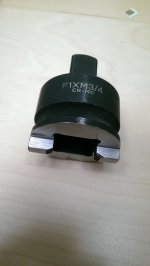
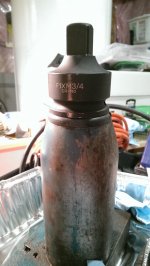
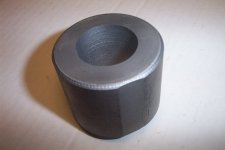
I tore down an old Walker 1-1/2 ton floor jack for a rebuild, and needed to get the spanner nut out of the top of the fluid reservoir. I had a slug of hot rolled steel in my contingency materials bin, so it got voted for the job. The ends were faced off in the lathe, then an 1-1/4" hole was drilled through. this overdrilled a bit, which was just the right diameter to slip over the jack's ram.
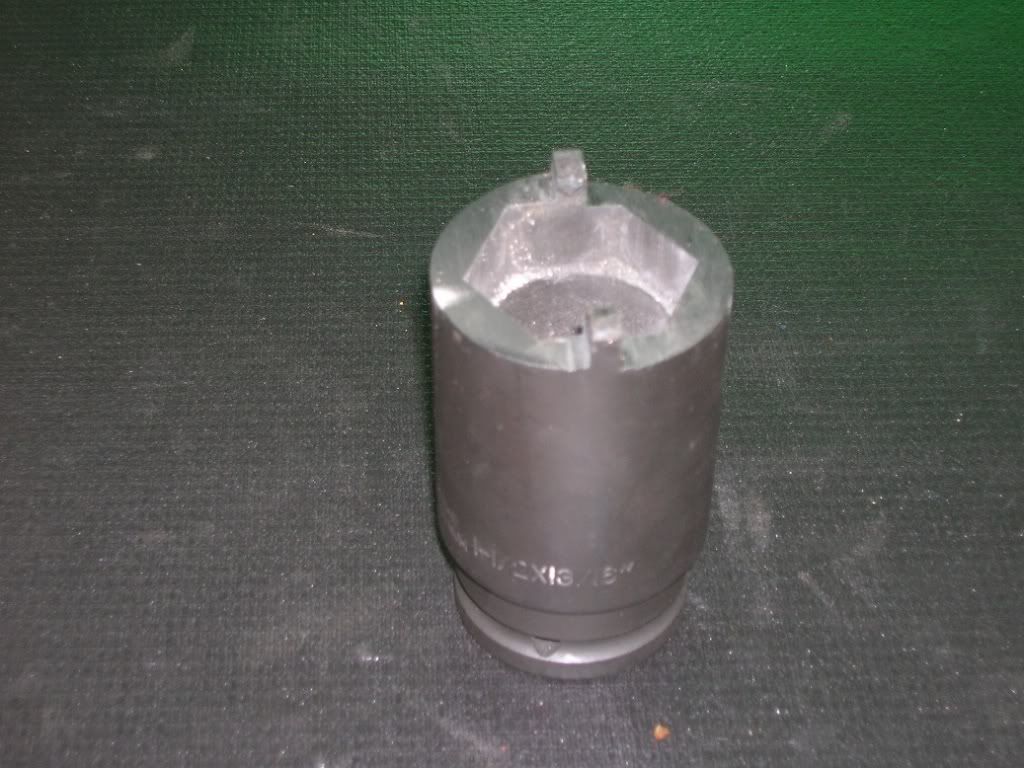
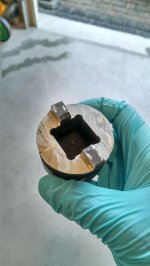
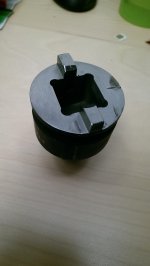
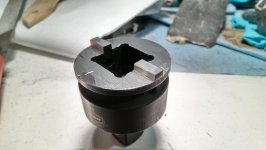
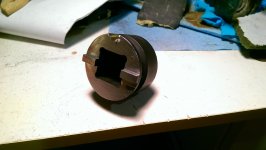
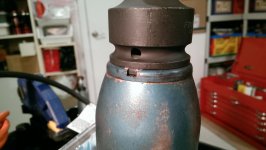
The piece was then placed in the Bridgeport on it's side so two flats could be milled. These were used later to index the part to the vise to cut the drive dogs, and also to provide a grip area for a pipe wrench. Once the flats were cut, the part was placed upright in the vise and the two .244 width drive dogs were cut to size, at a depth of .165. The slots in the spanner nut measured out to .251 in width, so the .244 would allow the socket to engage the slots properly. A little beadblasting removed the mill scale to make things somewhat presentable.
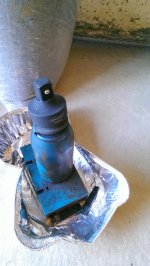
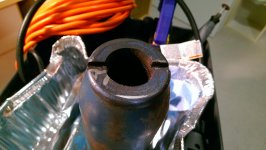
The jack unit was drained of oil, then the ram was pulled out a couple inches to provide guidance for the socket, and to make sure it stayed engaged properly during wrenching. A 4 foot pipe wrench and a couple of grunts later, and the spanner nut was off easy as pie. Ignore the small hole in the side of the socket, as it was already drilled in the drop.
The piece was then placed in the Bridgeport on it's side so two flats could be milled. These were used later to index the part to the vise to cut the drive dogs, and also to provide a grip area for a pipe wrench. Once the flats were cut, the part was placed upright in the vise and the two .244 width drive dogs were cut to size, at a depth of .165. The slots in the spanner nut measured out to .251 in width, so the .244 would allow the socket to engage the slots properly. A little beadblasting removed the mill scale to make things somewhat presentable.
The jack unit was drained of oil, then the ram was pulled out a couple inches to provide guidance for the socket, and to make sure it stayed engaged properly during wrenching. A 4 foot pipe wrench and a couple of grunts later, and the spanner nut was off easy as pie. Ignore the small hole in the side of the socket, as it was already drilled in the drop.
Attachments


Last edited: