To avoid these ads, REGISTER NOW!

Bad Habit

Well-known member
Joined
Mar 19, 2014
Messages
1,977
Location
Chumstick WA
Actually, looks like NASA just used Western Union's procedure. Ma Bell may have been a monopoly, but they sure did a great job of defining standards still in use today throughout many industries.
 

Falcon67

Well-known member
Joined
Jun 11, 2009
Messages
18,371
Location
Merkel, TX
I had forgotten about the WU splice technique. That's robust for sure. Good splice for race car wiring if you have the room.
 

cvairwerks

Well-known member
Joined
Aug 12, 2016
Messages
7,187
Location
Within hearing distance of Texas Motor Speedway
The running lockstitch hasn't been an approved process for a lot of years now in DoD aircraft production. I think we had it outlawed at work back in the 90's. Everything is single position tied. A good string tie person can do the clove hitch to start the tie, on the backside of a bundle without even being able see what they are doing....blows the minds of the new kids at work when you do it.:bounce:

Also, for almost anything we build post F-16, solder isn't an approved process anymore. Crimp rules for production, but I prefer solder joints.
 

ransil

Well-known member
Joined
Jul 22, 2018
Messages
313
Location
pa
Did she use solid wire?

Sent from my SM-G960U1 using Tapatalk
 

Lassen Forge

Well-known member
Joined
Apr 26, 2014
Messages
15,023
Location
The romantic hills of central Umbria, Italy,
Wow, that's how I was taught to solder wires together from dear old dad (who was a Ma Bell employee)... now I know where he got it.

My electronics teacher used to tell me it was overkill.

Now if I can find something to show me how to do the waxed twine wire harness bundle...
 

Farmall450

Well-known member
Joined
Dec 23, 2011
Messages
13,354
Location
Marengo, Illinois
The running lockstitch hasn't been an approved process for a lot of years now in DoD aircraft production. I think we had it outlawed at work back in the 90's. Everything is single position tied. A good string tie person can do the clove hitch to start the tie, on the backside of a bundle without even being able see what they are doing....blows the minds of the new kids at work when you do it.:bounce:

Also, for almost anything we build post F-16, solder isn't an approved process anymore. Crimp rules for production, but I prefer solder joints.

Funny how things change...not necessarily for honest reasons.
 

cvairwerks

Well-known member
Joined
Aug 12, 2016
Messages
7,187
Location
Within hearing distance of Texas Motor Speedway
Lassen: AC21-99, Section 2, Chapter 8, Item 26 shows basic single point string tying a harness. Waxed cord is rarely used anymore, normally it's flat lacing cord these days. Some of the old antique restorations will use the wax cord, but most don't anymore. Running ties are no longer approved in what I deal with, spot ties only.
 
OP
R

Ryan

Administrator
Staff member
Joined
Jan 26, 2006
Messages
5,695
Location
Texas/Hawaii
A good string tie person can do the clove hitch to start the tie, on the backside of a bundle without even being able see what they are doing....blows the minds of the new kids at work when you do it.

Can you explain this like I'm an idiot? Cuz, I am... and this sounds cool.
 

cvairwerks

Well-known member
Joined
Aug 12, 2016
Messages
7,187
Location
Within hearing distance of Texas Motor Speedway
Ryan: Think of having a section of a wire harness running in front of you... the knots have to be tied on the opposite side of the harness from you, and it has to be done while you are blindfolded.... We often have to do ties in areas on the aircraft where we have very limited access and at times, have to do it by feel, as we can't see because of everything in front of us. I've actually had to replace some ties, where I had to do the knots using a pair of hemostats instead of my fingers.:shocking:

For fun, try tying a regular shoelace knot with a piece of rope around your other half's waist, while you are standing behind her. The knot has to be where a belt buckle would normally be, and you can't look over her shoulder, then try tying a clove hitch....:bounce:
 
Last edited:

Heel2toe

Well-known member
Joined
Dec 11, 2013
Messages
266
Location
Massachusetts
Soldered connections are not an approved method in motorsports these days either and a proper mechanical crimp is the preferred method. Issues with cracks from vibration, excess solder increasing resistance and a big thing is the solder wicking up past the joint then causing the wire to become brittle in places that dont have proper strain relief.
 

^&right

Well-known member
Joined
May 27, 2013
Messages
426
Location
Indiana
This is very similar to how I was taught to splice 7 strand wire in the Army, but it started with trying a square knot.
 

smokeysevin

Well-known member
Joined
Aug 17, 2013
Messages
131
Location
Houston
Soldered connections are not an approved method in motorsports these days either and a proper mechanical crimp is the preferred method. Issues with cracks from vibration, excess solder increasing resistance and a big thing is the solder wicking up past the joint then causing the wire to become brittle in places that dont have proper strain relief.

Even knowing all that (I agree 100% with you both in the reason and the results), I still prefer to use tinned ends for connectors in marine/damp/powersports applications.

Too many times I have had to cut back huge lengths of wire where "sealed" connectors have allowed water to wick up the cable after prolonged use.

I could count on one hand the number of times I have had a solder joint cause a problem, I couldn't count the number of times I have had to replace part/all of a harness because of corrosion wicking.

Sean
 

ZRX61

Well-known member
Joined
Aug 15, 2006
Messages
28,716
Location
Solar Blight Valley, SoCal
The running lockstitch hasn't been an approved process for a lot of years now in DoD aircraft production. I think we had it outlawed at work back in the 90's. Everything is single position tied. A good string tie person can do the clove hitch to start the tie, on the backside of a bundle without even being able see what they are doing....blows the minds of the new kids at work when you do it.:bounce:


Was working on my ZRX11 last week & was going to replace two zip ties on some wires with string but couldn't find it. Only reason was the wires were going to the TPS on the #4 carb & are visible.
 

sberry

Banned
Joined
Jun 18, 2005
Messages
35,747
Location
Brethren, Michigan
The wicking is theproblem. We spray penetrating, sometimes with the little straw on/in crimped fittings and wires and even wire nuts. If they are covered they really last a long time,, way better than a Shrinky thingy that has wicked water in.
 

toplessHO

Well-known member
Joined
Oct 20, 2014
Messages
14,007
Location
central florida
12 cord is what the waxed lacing is called.
The old timers called it this because it has 12 strands.
The process is called lacing. I remember doing electrical panels also until time is money overcame the pride in workmanship.
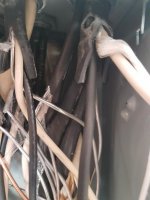
Now I open up a panel and its an absolute nightmare to see what the new generation is calling good workmanship.
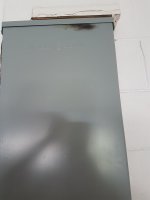
Heres an example I helped a neighbor with today. New panel put in by some jackleg
already shorted out one circuit when he opened the panel cover. Deadfront bowed to clear the cable coming in the top,that GE(the manufacturer) should have never supplied prepunched holes for.Absolute mess.
 

Attachments

  • 20200506_110116.jpg
    20200506_110116.jpg
    31.7 KB · Views: 297
  • 20200506_112004.jpg
    20200506_112004.jpg
    80.5 KB · Views: 415
  • 20200506_112009.jpg
    20200506_112009.jpg
    66 KB · Views: 385
  • 20200506_122750.jpg
    20200506_122750.jpg
    71.6 KB · Views: 311

EMD710

Active member
Joined
May 6, 2020
Messages
25
Location
WA
boy this makes all the motorhome and bus builders bean counters cringe. those people use 5 **** connectors per foot it seems like!
 
To avoid these ads, REGISTER NOW!

ddawg16

Well-known member
Joined
Jul 11, 2008
Messages
21,005
Location
S. California
The wicking is theproblem. We spray penetrating, sometimes with the little straw on/in crimped fittings and wires and even wire nuts. If they are covered they really last a long time,, way better than a Shrinky thingy that has wicked water in.

That ^^ is the reason.

When soldering wires, you are not supposed to let solder wick up inside the insulation of the wire. It creates a stress point...and the wire can break right at the point of where the solder ends.

Crimp connections have come a long ways....but requires the right tool.
 

Heel2toe

Well-known member
Joined
Dec 11, 2013
Messages
266
Location
Massachusetts
^Thats what I meant by wicking. Of course moisture is always a concern from a corrosion perspective too.

And yes a proper mechanical crimp is how OEMs do it as it is very reliable. Of course it comes at a high entry cost to have the proper crimpers for the specific pins so at a homeowner level it can often be cost prohibitive.
 

Bad Habit

Well-known member
Joined
Mar 19, 2014
Messages
1,977
Location
Chumstick WA
Wow, that's how I was taught to solder wires together from dear old dad (who was a Ma Bell employee)... now I know where he got it.

My electronics teacher used to tell me it was overkill.

Now if I can find something to show me how to do the waxed twine wire harness bundle...
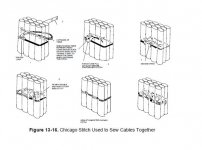
Kansas City Stitch or Chicago stitch? Still used in most Central Offices, they really frown on zipties. Think it's a little different than wire harnesses for aircraft, etc.
 

Attachments

  • KC Stitch.JPG
    KC Stitch.JPG
    76.5 KB · Views: 354
  • Chicago stitch.JPG
    Chicago stitch.JPG
    45.7 KB · Views: 285

Kevin54

MEMBER EMERITUS
Joined
Jan 12, 2005
Messages
29,341
Location
Urbana, Ohio
Her first mistake.....you never strip a wire like she did. Especially for something going into space. You are never supposed to cut completely through the coating because you can nick the wire. Secondly, you never use the strippers to pull the coating off of the wire. My wife worked on some Gemini and Apollo projects.
 

kursplat

Well-known member
Joined
Jun 7, 2010
Messages
911
Location
S.Cal
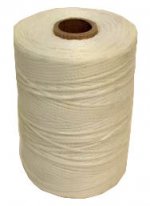
still quite a few WU splices in the power lines in los angeles. i don't think anyone has ever seen one that failed. when they get cut out for any reason, someone usually want's to take it home. we still use the waxed string too. main purpose is for tying off the paper insulation in lead cable when making a splice
 

Attachments

  • WaxedString1.jpg
    WaxedString1.jpg
    6.7 KB · Views: 67
Last edited:

laser3kw

Well-known member
Joined
Nov 17, 2012
Messages
7,276
Location
northen IL
Her first mistake.....you never strip a wire like she did. Especially for something going into space. You are never supposed to cut completely through the coating because you can nick the wire. Secondly, you never use the strippers to pull the coating off of the wire. My wife worked on some Gemini and Apollo projects.

Cool! :thumbup:
 

kald

Well-known member
Joined
Mar 31, 2012
Messages
670
Location
Central Fl
Soldered connections are not an approved method in motorsports these days either and a proper mechanical crimp is the preferred method. Issues with cracks from vibration, excess solder increasing resistance and a big thing is the solder wicking up past the joint then causing the wire to become brittle in places that dont have proper strain relief.
How would excess solder increase resistance?
 

MBfreak

MEMBER EMERITUS
Joined
Dec 10, 2010
Messages
2,301
Location
Linkoping , Sweden
My input from High Power/Voltage, Nuclear and Railroad industries.

For control and power cables nothing but crimping with calibrated and tested crimp tools operated by licensed people.
For really high current ( > 15000 A) cables and bus ducts TIG welding by licensed welders.
Tubular aluminium busbars in and outdoor, some welding but mostly clamps.

The railroad industry here does not permit screw terminal blocks, must be push in!
Forbidden everywhere else in high power electrical control wiring?
Go figure.
Soldering? Never.
Only on PCB , never on wires or cables.

Ola
 

Heel2toe

Well-known member
Joined
Dec 11, 2013
Messages
266
Location
Massachusetts
How would excess solder increase resistance?

Sorry, I guess I shouldn't say excess solder per se. Lets go back to basics for a second. The electrical conductivity of solder is less than that of copper, of course it depends on the type of solder used but regardless of that its not as conductive as copper.

A proper soldered connection should have a mechanical bond, i.e twisting of wires, linesman splice etc etc. This mechanical bond gives it strength and is what should be transferring the current and then the solder is sorta the glue if you will to keep it together.

When someone isnt that competent at soldering, often times too much solder is used and there isnt a proper mechanical bond thus the resistance is increased. From there you get heat which can melt the solder and eventually you have a failed connection.

At the end of the day a poor crimp also *****. But there is a huge difference from a standard universal pick your color barrel crimp connected like a **** connector for example vs a Delphi/Molex style more specialized crimping tool. OEMs use crimps exclusively but those tools are almost always cost prohibitive but good results can be had with cheaper crimpers.
 

steve410

Active member
Joined
Dec 27, 2005
Messages
31
Location
Mill Creek, Wa.
I personally don't like splices. When possible I replace the wire

That's the right answer. They should be avoided at just about all cost. Every termination adds resistance to the wire. They can be a system trouble shooting nightmare when they've been added as a repair because they're not shown on diagrams.... so you don't know that you're even searching for one when trouble shooting. On an airplane a wire can be hundreds of inches long and buried deep within the airplane. Also like other repairs, splices can require additional in-service inspections.
 

theoldwizard1

Well-known member
Joined
Feb 22, 2011
Messages
43,077
Location
SE MI
The original Western Union splice did not involve soldering.

Aircraft guys help me out. I though soldering was verboten especially on stranded wire. The place were the solder wicking stop became a high failure point.

In the automotive world (at least 10-15 years ago), they just twisted the bare copper strands over each other, (I think) the minimum was 1.5 turns. Back then they were still using adhesive impregnated cloth tape (friction tape, 3M 1755), with some kind of outer covering.

Observation - That procedure is a problem for "field" repairs. If the repair is from a break/nick, you will have to cut part of that section out and install a much longer piece of wire in order to do all of the twists. 18 gauge (or larger diameter) tinned, stranded wire is difficult to twist with just your fingers.
 
Last edited:

cvairwerks

Well-known member
Joined
Aug 12, 2016
Messages
7,187
Location
Within hearing distance of Texas Motor Speedway
Wiz: It depends on what is being done. On the F-16, almost everything is soldered. The exception was our flight test harnesses. Almost everything on them was crimped. Within those, all shields and interconnects known as wireties, were either solder or solder sleeves. F-35, nothing but shields have solder sleeves, everything else is crimped. All of the crimp dies and pin/socket positioners are considered calibrated tools and have to be checked every so often.
 
To avoid these ads, REGISTER NOW!
Top Bottom