
You are using an out of date browser. It may not display this or other websites correctly.
You should upgrade or use an alternative browser.
You should upgrade or use an alternative browser.
Spreading the Bonney affliction!
- Thread starter bonneyman
- Start date


Oldtuleguy
Well-known member
- Joined
- Nov 4, 2017
- Messages
- 10,488
Looks like an m
Oldtuleguy
Well-known member
- Joined
- Nov 4, 2017
- Messages
- 10,488
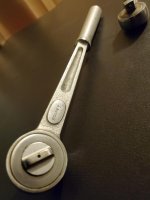

What’s the model number on that ratchet, OTG?
My catalog coverage is skimpy from the 40s to the 50s, but I can see Bonney was making tweaks along the way. The ‘47 shows the 4098, the ‘50 lists a 4080, but the illustration looks like yours or that A700, then the ‘57 shows the A701 with the cross-shaped selector.
I don’t own a ratchet between 4098 and A701.
My catalog coverage is skimpy from the 40s to the 50s, but I can see Bonney was making tweaks along the way. The ‘47 shows the 4098, the ‘50 lists a 4080, but the illustration looks like yours or that A700, then the ‘57 shows the A701 with the cross-shaped selector.
I don’t own a ratchet between 4098 and A701.
Oldtuleguy
Well-known member
- Joined
- Nov 4, 2017
- Messages
- 10,488

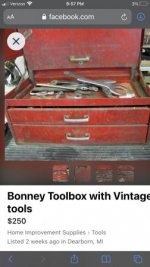
Waiting to recieve this Hercules 4293 3/4" drive ratchet i scored on FB. Its a big'ole mammaluke! Hers some pics (sellers pics)....


husband poems funny
husband poems funny
Private Lugnutz
Well-known member
HAHA! Yeah it is. Welcome to the Club Club.Its a big'ole mammaluke!

And you won't want to miss the jealousy-fit-inducing entire set that LNKMK8 found a few years ago. See page 111, post #2209.
Attachments

ooba tooba
Well-known member
- Joined
- Jan 13, 2014
- Messages
- 747
Posted to Marketplace in Dearborn. I did a template for a guy there with the same name about 5 yrs ago.
https://www.facebook.com/marketplac...wse_serp:ffb1cc08-482d-435f-8fb7-b250682838d5
https://www.facebook.com/marketplac...wse_serp:ffb1cc08-482d-435f-8fb7-b250682838d5
Attachments
Oldtuleguy
Well-known member
- Joined
- Nov 4, 2017
- Messages
- 10,488
Pretty cool
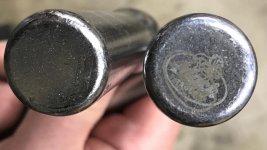
I was a little perturbed with myself for buying a redundant 3/8dr T742, thinking I needed it instead of the 1/2dr version I actually need.
But cleaning it up today, I discovered a Mack Truck etch on the knob. Now I finally have started a dual-brand collection.
But cleaning it up today, I discovered a Mack Truck etch on the knob. Now I finally have started a dual-brand collection.
Attachments

Last edited:
3baygarage
Well-known member
That’s interesting. Looks double stamped too.
Private Lugnutz
Well-known member
And now you need to dual-post it. Mack thread linked here.Now I finally have started a dual-brand collection.
Dennis Leigh Henry
Well-known member
Good morning.. I picked these up at a flea market like estate overflow sale...$2 ea. One needed some TLC rust clean up, otherwise fairly decent shape. Dont really need them for use but couldn't pass them up...


Last edited:
Mikeske
Well-known member
Good morning.. I picked these up at a flea market like estate overflow sale...$2 ea. One needed some TLC rust clean up, otherwise fairly decent shape. Dont really need them for use but couldn't pass them up...
View media item 111434
View media item 111435
OH the most used ones will be those small side cutters on the right side in the last picture. I use something similar and use them for years in garage and home they are super handy and can really do a great job of stripping and cutting smaller wires.
Funny, how the smallest things can command our fullest attention...

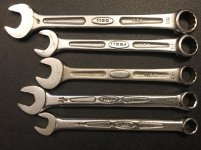
Yesterday’s flea outing brought me my smallest Bonney combo: 1/4” (1158) Outline. The single-hex box ends are specified for the two smallest sizes in catalogs for Streamline, so that is not a change in Outline.

I have tried to accumulate SAE in Streamline, and metric in Outline, but as in this case, I have had to compromise on both. The 1957 catalog lists head widths and lengths for combos
1160...27/32” x 4-1/2”
1159A.25/32” x 3-3/4”
1159...25/32” x 3-3/4”
1158A.19/32” x 3”
1158...19/32” x 3”

but there is clearly some variation from year to year (more significantly with the transition from Streamline to Outline). Of my examples, the 1159 is oldest (1952), then 1160 (1957), 1159A (1958).
Examining the two Outlines proved more puzzling, forcing me to study chronology details that have been pretty vague to me. Of the Outlines, I think the 1158 is the older, but I’m having some difficulty bracketing the years. It has no date code, a U-gullet, no Triangle stamp. My notes suggest Outline tools begin as early as 1959, but do not appear in catalogs until 1962. Date codes begin phasing out from combos in 1959(W), end completely in 1966(P). So I guess the 1158 is 1959-1967 (early 1967, because I think V-gullets take over shortly afterward, as explored below).
The 1158A has no date code, a V-gullet, a Triangle stamp. Triangle formed in September 1967, but Full-Polish combos begin early 1967. I suppose the Triangle stamp could have been added to existing stock prior to chrome, or Full-Polish was phased in with larger sizes first. Anyway, the 1158A must be from late 1967 or shortly afterward (whenever Full-Polish would have replaced it in this model number). Now I think I have to re-examine all my Outline combos for V-gullets and Full-Polish for U-gullets!
I have wondered if the V-gullet was really influenced more by the unification with Herbrand, or earlier by production shift to Ohio. Bonney opened the Alliance OH plant in 1956 and “closed” it in 1964, with the acquistion by Kelsey-Hayes, which had acquired Herbrand in 1961.
Since Full-Polish also began with U-gullets, I think these few combos support the conventional view - that V-gullets on later Bonney wrenches do, indeed, date from after the 1964 unification with Herbrand under Kelsey-Hayes; but furthermore, after reorganization under Triangle - after 1967. Full-Polish also do not include Loc-Rite lobed broaches at first. It seems to indicate that it was under Triangle management that the various physical features of Kelsey-Hayes brands were integrated across the lines.
Yesterday’s flea outing brought me my smallest Bonney combo: 1/4” (1158) Outline. The single-hex box ends are specified for the two smallest sizes in catalogs for Streamline, so that is not a change in Outline.
I have tried to accumulate SAE in Streamline, and metric in Outline, but as in this case, I have had to compromise on both. The 1957 catalog lists head widths and lengths for combos
1160...27/32” x 4-1/2”
1159A.25/32” x 3-3/4”
1159...25/32” x 3-3/4”
1158A.19/32” x 3”
1158...19/32” x 3”
but there is clearly some variation from year to year (more significantly with the transition from Streamline to Outline). Of my examples, the 1159 is oldest (1952), then 1160 (1957), 1159A (1958).
Examining the two Outlines proved more puzzling, forcing me to study chronology details that have been pretty vague to me. Of the Outlines, I think the 1158 is the older, but I’m having some difficulty bracketing the years. It has no date code, a U-gullet, no Triangle stamp. My notes suggest Outline tools begin as early as 1959, but do not appear in catalogs until 1962. Date codes begin phasing out from combos in 1959(W), end completely in 1966(P). So I guess the 1158 is 1959-1967 (early 1967, because I think V-gullets take over shortly afterward, as explored below).
The 1158A has no date code, a V-gullet, a Triangle stamp. Triangle formed in September 1967, but Full-Polish combos begin early 1967. I suppose the Triangle stamp could have been added to existing stock prior to chrome, or Full-Polish was phased in with larger sizes first. Anyway, the 1158A must be from late 1967 or shortly afterward (whenever Full-Polish would have replaced it in this model number). Now I think I have to re-examine all my Outline combos for V-gullets and Full-Polish for U-gullets!
I have wondered if the V-gullet was really influenced more by the unification with Herbrand, or earlier by production shift to Ohio. Bonney opened the Alliance OH plant in 1956 and “closed” it in 1964, with the acquistion by Kelsey-Hayes, which had acquired Herbrand in 1961.
Since Full-Polish also began with U-gullets, I think these few combos support the conventional view - that V-gullets on later Bonney wrenches do, indeed, date from after the 1964 unification with Herbrand under Kelsey-Hayes; but furthermore, after reorganization under Triangle - after 1967. Full-Polish also do not include Loc-Rite lobed broaches at first. It seems to indicate that it was under Triangle management that the various physical features of Kelsey-Hayes brands were integrated across the lines.
Attachments


Last edited:


outofbounds
Well-known member
I ended up grabbing that box that OobaTooba posted up. Should be here in a few days....
This box and tools was on FB here in Detroit for a long time. Sounds like casting a wider net paid off for the seller.
That box of tools is awesome.
—————————
Following up my examination of Streamline and Outline combos...
I find Streamline underwent a subtle change from sharp corners along the grip to radiused corners in the last quarter of 1951. I have nine examples I judge to have sharp edges, eight of which have date codes AN(Jan1950)to LO(Dec1951). My lone outlier seems to be an HP(Aug1952), but the radiused-corner examples typically have more finishing, which can make forged-in detail like date codes less distinct, and what constitutes a sharp or radiused corner is subjective.
Twenty-eight examples have radiused corners, ranging from LO(Dec1951) to LW (Dec1959). Six more have radiused corners and no discernable date codes, which I take to indicate possible production after Feb1960.
I have eight Outline combos with date codes. On smaller sizes, the eponymious stamp can partially obliterate the forged-in date code, because of its location. Nevertheless, five of those eight are, or appear to be, AX(Jan1960). One is BX, and two more are X, with the first letter obliterated. All of these have U-gullets. Four more Outline combos also have U-gullets, but no trace of date codes.
I have three Outline combos with V-gullets. One has no other feature of interest, but the other two (1158A and 1159A) have a Triangle stamp, indicating production after Aug1967. One problem with my sample of Outline is, I just don’t buy them. They are mostly just a cost-reduction version of Streamline. One thing I do like about them: if you hang them by their box ends from hooks, pegs or nails, the size stamp is oriented so you can read it.
Yes, exactly. I’m trying to get a statistical handle on some things I’ve either ignored or taken for granted. I’d call it fact-checking, but my sample size is not huge, and is probably skewed by conscious and unconscious buying prejudices. Despite the “leave no Bonney behind” rule, I often do. I’m currently wrestling with a sighting of a big pile of post-WWII 3/4dr rats, breakers & sockets. I have absolutely no need for anything like that, so I didn’t even ask a price...but...LesserSon, by the comparison of V to U gullets, are you speaking about the head of the open end?
I’d like to see those. I have only one Full-Polish combo with a U-gullet (it also lacks Loc-Rite lobed broach.) I suspect it to be later than my twenty-one other F-Ps, all of which have V-gullets and Loc-Rite box ends.I have a set of full polish metric combo's which are a mix of both.
There’s a good argument for the V-gullet fitting snugly around hex heads and nuts. For wrenches made after WWII, it’s probably best. For early alloys and carbon steel, though, those sharp inside corners are a weak point that splays or tears under heavy torque. And pre-WWII, square heads and nuts were more common. (I actually think the square head/nut is superior for fastening flat components, as it spreads a load over more area, reducing deformation around the hole, and thereby less likely to pull through.)That said, i prefer the V- gullets.
—————————
Following up my examination of Streamline and Outline combos...
I find Streamline underwent a subtle change from sharp corners along the grip to radiused corners in the last quarter of 1951. I have nine examples I judge to have sharp edges, eight of which have date codes AN(Jan1950)to LO(Dec1951). My lone outlier seems to be an HP(Aug1952), but the radiused-corner examples typically have more finishing, which can make forged-in detail like date codes less distinct, and what constitutes a sharp or radiused corner is subjective.
Twenty-eight examples have radiused corners, ranging from LO(Dec1951) to LW (Dec1959). Six more have radiused corners and no discernable date codes, which I take to indicate possible production after Feb1960.
I have eight Outline combos with date codes. On smaller sizes, the eponymious stamp can partially obliterate the forged-in date code, because of its location. Nevertheless, five of those eight are, or appear to be, AX(Jan1960). One is BX, and two more are X, with the first letter obliterated. All of these have U-gullets. Four more Outline combos also have U-gullets, but no trace of date codes.
I have three Outline combos with V-gullets. One has no other feature of interest, but the other two (1158A and 1159A) have a Triangle stamp, indicating production after Aug1967. One problem with my sample of Outline is, I just don’t buy them. They are mostly just a cost-reduction version of Streamline. One thing I do like about them: if you hang them by their box ends from hooks, pegs or nails, the size stamp is oriented so you can read it.
Last edited:


Oldtuleguy
Well-known member
- Joined
- Nov 4, 2017
- Messages
- 10,488
Spectacular wrench sets! Snapped up an old 4093 and a 4094
Attachments


JjKk40-
Thanks for posting those. OTG is right - spectacular.
I see what you mean about about plain broaches on most of them. From the examples I can recall, it does seem V-gullets pair with either lobed or standard broaches, but U-gullets always pair with standard broaches, creating three Full-Polish sub-patterns. I don’t know how the three sub-patterns would sequence. I would guess they would fall into slots around corporate reorganization: 1967-1970-ish, 1970-1990s-ish, 1990s-ish. Someone who owned them in those decades might know when Full-Polish changed openings patterns, or else catalogs might tell the tale. Other than wear, there’s not much to indicate relative age among them. From what I’ve seen, it looks like lobed might be sandwiched between two periods of standard broaching. Less certain about U-gullet position in the chronology, but I think it might have been at the very end.
Thanks for posting those. OTG is right - spectacular.
I see what you mean about about plain broaches on most of them. From the examples I can recall, it does seem V-gullets pair with either lobed or standard broaches, but U-gullets always pair with standard broaches, creating three Full-Polish sub-patterns. I don’t know how the three sub-patterns would sequence. I would guess they would fall into slots around corporate reorganization: 1967-1970-ish, 1970-1990s-ish, 1990s-ish. Someone who owned them in those decades might know when Full-Polish changed openings patterns, or else catalogs might tell the tale. Other than wear, there’s not much to indicate relative age among them. From what I’ve seen, it looks like lobed might be sandwiched between two periods of standard broaching. Less certain about U-gullet position in the chronology, but I think it might have been at the very end.
Last edited:
Mikeske
Well-known member
Then there is also the full polish and black anodized finish as I have a set I bought off ebay a couple years ago that has the black anodized finish on the metric short wrenches with the v-gullet and my metric longs are v-gullet full polish along with the rest of my mostly complete set that I got in the early 1980's. There is always is a wrench that get thrown into the works.JjKk40-
Thanks for posting those. OTG is right, spectacular.
I see what you mean about about plain broaches on most of them. From the examples I can recall, it does seem V-gullets pair with either lobed or standard broaches, but U-gullets always pair standard broaches, creating three Full-Polish sub-patterns. I don’t know how the three sub-patterns would sequence. I would guess they would fall into slots around corporate reorganization: 1967-1970-ish, 1970-1990s-ish, 1990s-ish. Someone who owned them in those decades might know when Full-Polish changed openings patterns, or else catalogs might tell the tale. Other than wear, there’s not much to indicate relative age among them. From what I’ve seen, it looks like lobed might be sandwiched between two periods of standard broaching. Less certain about U-gullet position in the chronology, but I think it might have been at the very end.

Ha-ha!
I have a few of the black metric shorties. I think they represent a sort of pinnacle of aesthetically-pleasing practicality. An oxide finish is easy and cheap to maintain or restore, is relatively nontoxic, doesn’t cast off abrasive/hazardous chips of plated finish. If you wipe it down with an oiled rag after each use, like a blued firearm, it will keep its sober good looks indefinitely.
But I’m not concerned about finish. I don’t see a way (or a reason) to establish a chronology that accounts for it. Despite the catalogs claiming “chrome” finishes on most everything, there are examples of plain steel, chrome, cadmium, chrome & cadmium combined, nickel, and I think zinc scattered throughout the timeline. Probably more I don’t know.
I was just considering the ranges of particular patterns.
I have a few of the black metric shorties. I think they represent a sort of pinnacle of aesthetically-pleasing practicality. An oxide finish is easy and cheap to maintain or restore, is relatively nontoxic, doesn’t cast off abrasive/hazardous chips of plated finish. If you wipe it down with an oiled rag after each use, like a blued firearm, it will keep its sober good looks indefinitely.
But I’m not concerned about finish. I don’t see a way (or a reason) to establish a chronology that accounts for it. Despite the catalogs claiming “chrome” finishes on most everything, there are examples of plain steel, chrome, cadmium, chrome & cadmium combined, nickel, and I think zinc scattered throughout the timeline. Probably more I don’t know.
I was just considering the ranges of particular patterns.
Just wanted to give @Mikeske a huge thanks for selling me his spare Bonney TLH16 3/8" deep 1/2" 6 point socket. After months of futile searching I private messaged him a question and as a side note said I was looking for that 1/2" socket and a MTLH13 deep 13mm. Found it surprising that with his huge Bonney inventory he's also missing the 13mm. LOL
Been getting somewhat lucky on eBay lately. Scored this single offset box wrench set including roll and only missing the 2816 1/2" for $29+ shipping.
https://www.ebay.com/itm/Vintage-Bo...nch-Set-2814-2818-2820-2822-2824/384063534232
Got a seller offer for $20 + shipping for a 2816 and 2826 that also included two short box wrenches.
https://www.ebay.com/itm/4-Vintage-BONNEY-Offset-Double-Box-Wrench-USA/153424067907
Last month bought a 1/2" drive SAE deep 6 point (3/8" through 1") that was missing the 13/16" that I found new for $8. Bonney sockets are very heavy compared to others I've used. Some day I'll make a weight comparison with a digital scale. Heads up to keep an eye on this eBay seller. Some giveaway deals come up at random. Problem is he sells EVERYTHING in lots with one low resolution pic and no description or contents.
https://www.ebay.com/itm/Vintage-Lot-Tools-Bonney-1-2-Deep-Sockets-1476/333922181597
Been getting somewhat lucky on eBay lately. Scored this single offset box wrench set including roll and only missing the 2816 1/2" for $29+ shipping.
https://www.ebay.com/itm/Vintage-Bo...nch-Set-2814-2818-2820-2822-2824/384063534232
Got a seller offer for $20 + shipping for a 2816 and 2826 that also included two short box wrenches.
https://www.ebay.com/itm/4-Vintage-BONNEY-Offset-Double-Box-Wrench-USA/153424067907
Last month bought a 1/2" drive SAE deep 6 point (3/8" through 1") that was missing the 13/16" that I found new for $8. Bonney sockets are very heavy compared to others I've used. Some day I'll make a weight comparison with a digital scale. Heads up to keep an eye on this eBay seller. Some giveaway deals come up at random. Problem is he sells EVERYTHING in lots with one low resolution pic and no description or contents.
https://www.ebay.com/itm/Vintage-Lot-Tools-Bonney-1-2-Deep-Sockets-1476/333922181597
Last edited:
Mikeske
Well-known member
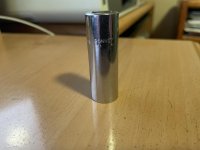
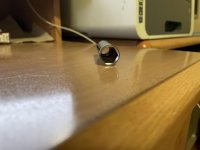
Your welcome and glad I could add to your collection. This is the socket I sentJust wanted to give @Mikeske a huge thanks for selling me his spare Bonney LTH16 3/8" drive 1/2" deep 6 point socket. After months of futile searching PM'd him a question and as a side note said I was looking for it and also an MTLH13 deep 13mm 6 pointer. Found it surprising that with his humongous Bonney inventory he's also missing the 13mm. LOL
Been getting somewhat lucky on eBay lately. Scored this single offset box wrench set including roll and only missing the 2816 1/2" for $29+ shipping.
https://www.ebay.com/itm/Vintage-Bo...nch-Set-2814-2818-2820-2822-2824/384063534232
Got a seller offer for $20 + shipping for a 2816 and 2826 that also included two short box wrenches.
https://www.ebay.com/itm/4-Vintage-BONNEY-Offset-Double-Box-Wrench-USA/153424067907
Last month bought a 1/2" deep SAE deep 6 point 3/8" thru 1" only missing the 13/16" that I found new for $8. Bonney sockets are heavy compared to others I've used. Some day I'll make a weight comparison with a digital scale. heads up to keep an eye on this eBay seller. Some giveaway deals come up at random. Problem is he sells EVERYTHING in lots with one low resolution pic and no lot description or contents.
https://www.ebay.com/itm/Vintage-Lot-Tools-Bonney-1-2-Deep-Sockets-1476/333922181597
Attachments
Last edited:
Provincial
Well-known member
Mike is a great guy! 
Mikeske
Well-known member
It is hard to resist the urge of buying from eBay. Oh well the latest additions from eBay a MT13 a 13 MM shallow socket and a AT5 wobble foot long 3/8ths extension.
Attachments


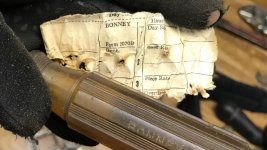
I was gloating over this Bonney screwdriver handle padded to hold a slim taper Black Diamond triangular file I picked up today.
The file came out easily, but the roll of paper tore when I tried pulling it. I further damaged the paper with a dental pick. Finally, my brain engaged, and I used a long screw to uncork it.
WOE IS ME!
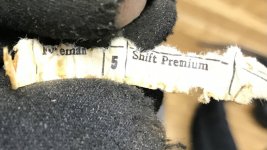
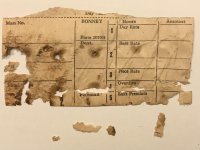
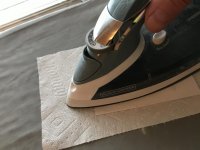
The paper is a blank Bonney employee time card! How many of those are there left in the world? This tool must have worked at Bonney Forge once upon a time. I’ll try to flatten the card out to see what mysteries it may reveal. (I don’t see any date-codes decoder.)
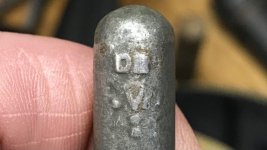
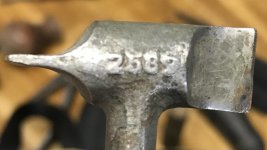
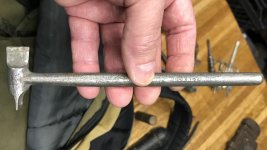
My other Bonney prize is an offset screwdriver. No timecards hidden with it. No2589 brake & steering adjustment tool, 1939 catalog, p58. I think the date code may be DR (Apr1940).
The file came out easily, but the roll of paper tore when I tried pulling it. I further damaged the paper with a dental pick. Finally, my brain engaged, and I used a long screw to uncork it.
WOE IS ME!
The paper is a blank Bonney employee time card! How many of those are there left in the world? This tool must have worked at Bonney Forge once upon a time. I’ll try to flatten the card out to see what mysteries it may reveal. (I don’t see any date-codes decoder.)
My other Bonney prize is an offset screwdriver. No timecards hidden with it. No2589 brake & steering adjustment tool, 1939 catalog, p58. I think the date code may be DR (Apr1940).
Attachments
-
 59C7F43A-C63B-45C5-96DF-59D91A663C9B.jpg149.6 KB · Views: 22
 -
 B56C0065-DA44-4CDE-8946-F4F3029D9290.jpg135.5 KB · Views: 20
 -
 FA982609-0877-4EE5-B539-1ECC9F8C070B.jpg150.7 KB · Views: 20
 -
 F9FBED0C-88CF-493E-B7A2-A9467A4B1BFA.jpg68.6 KB · Views: 19
 -
 AF7FAAD0-44CB-45B9-AFD1-31A4C5EE0785.jpg100.1 KB · Views: 18
 -
 CFCE5215-A0A5-4B74-B951-E920BD982B3C.jpg115.5 KB · Views: 19
Last edited:
Private Lugnutz
Well-known member
Unless I am mistaken, both FOAKs for this thread!The paper is a blank Bonney employee time card!
My other Bonney prize is an offset screwdriver.
^ Interesting you posted this, I was wondering the same thing. I also have a mixed MEB set with the 6-7-8-12-14-17-19 being conventional open ends without V-gullets. Matco WC11M2 in there because I already had it, and it's a size I almost never use.Here's the set I have of FP. I have a few dbls which are 19mm and14mm. The only lobed- broached i see is the V- Gullet 19mm. The other V's are regular. Heres some pics.


Last edited:
Thought I'd bump this.

A different but longer MEB10 with Hex Fit open end and conventional non Loc-Rite broaching.

Bought this unusually short Bonney MEB10 shown in the middle to complete a set. Measures around 4-1/2" long. 1967 and 1977 on line catalogs list the MEB10 length at 5-3/16" (131.8mm). Is it possible Bonney used an MEB9 blank for the middle wrench?
A different but longer MEB10 with Hex Fit open end and conventional non Loc-Rite broaching.
Last edited:
A blank is a blank is a blank. But yes, very possible. It happens. Sometimes the catalogs record a length change, sometimes it’s probably due to a temporary shortage of a certain size blank during production. Arbitrary fluctuations from specs are not unique to Bonney. My MEB10 is 4-9/16”
As you say, the 1967 and 1977 catalogs both say 4-1/16” for MEB9 and 5-3/16” for MEB10 and MEB11.
Your other MEB10 is earlier (or later?). Note the U-gullet and standard (non-LocRite) broach of the box end. I think V-gullet/LocRite is distictive of Triangle-era Bonney combos. But with only two catalogs and no date codes, who knows?
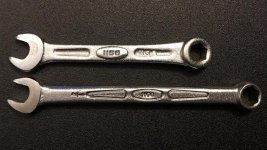
EDIT - adding a couple pics of small SAE combos. Not sure they really illustrate the discussion, but they do show variation in a size.
As you say, the 1967 and 1977 catalogs both say 4-1/16” for MEB9 and 5-3/16” for MEB10 and MEB11.
Your other MEB10 is earlier (or later?). Note the U-gullet and standard (non-LocRite) broach of the box end. I think V-gullet/LocRite is distictive of Triangle-era Bonney combos. But with only two catalogs and no date codes, who knows?
EDIT - adding a couple pics of small SAE combos. Not sure they really illustrate the discussion, but they do show variation in a size.
Attachments



Last edited:
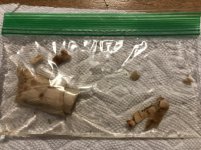
Phew! - I don’t think the time card was complete anyway. Here’s what I recovered.

I think there is a fragment from the poems of Sappho and another from the Dead Sea scrolls mixed in there.
I think there is a fragment from the poems of Sappho and another from the Dead Sea scrolls mixed in there.
Attachments
Private Lugnutz
Well-known member
Piece Rate: 1 extra shekel for each bronze adze headI think there is a fragment from the poems of Sappho and another from the Dead Sea scrolls mixed in there.
