To avoid these ads, REGISTER NOW!

Standby generator for whole house

Mesozoic

Well-known member
Joined
Oct 8, 2012
Messages
213
Location
Tucson, AZ
I'm considering installing a standby generator for my residence and running the unit off of the LNG service to my house. Is LNG a commonly used fuel source for a standby generator? The idea would be to supply whole house/lab power without any interruption, but I'm curious whether this is even possible based on the fuel and starter capabilities. Power outages are not usually lengthy affairs, but intermittent outages are frequent.
 
To avoid these ads, REGISTER NOW!

mm08822

Well-known member
Joined
Jan 13, 2012
Messages
6,021
Location
NJ
Can you be more specific about "without any interruption" and "LNG"?
 

PCustoms

Well-known member
Joined
Jul 23, 2011
Messages
23,276
Location
VT
Can you be more specific about "without any interruption" and "LNG"?
I read it as he wants his lights to stay on during an outage and has a natural gas supply?

@Mesozoic there's about a 30 second delay in most transfer switches while the generator senses the outage and starts. For truly uninterrupted power you'd need some sort of battery bank tied in.
 

Stuart in MN

Well-known member
Joined
Sep 8, 2005
Messages
23,145
Location
Minneapolis
By LNG I assume you mean liquified natural gas? I'm not familiar with that form of natural gas being used for residential, typically it's, well, in gaseous form. As far as that goes it's very typical to use the gas service to power a standby generator. As mentioned, there's a short delay before the generator fires up and is online, so if you have electrical things that must stay on continuously they'll need battery backup.
 

BillK

Well-known member
Joined
Aug 24, 2006
Messages
9,352
Location
Beautiful Southern Maryland
I dont know if what you are calling Liquified Natural Gas is the same as what most of us are thinking about. "Normal" natural gas is certainly used as a fuel supply for generators.

Like PC said if you need a truly uninterruptible supply you need a battery bank also.
 

mm08822

Well-known member
Joined
Jan 13, 2012
Messages
6,021
Location
NJ
I read it as he wants his lights to stay on during an outage and has a natural gas supply?
I could have assumed both of those too. But it make more sense for the OP to tell us.

Needing a UPS and a gen vs tolerating a 60 sec outage on gen startup are 2 different needs. What is the criticality for the lab?

Natural gas or liquefied propane gas or ?
 

Firebrick43

Well-known member
Joined
May 12, 2015
Messages
14,149
Location
West central Indiana
There isn’t any long distance LNG pipelines so it has to be mislabel of just regular gaseous NG.

Many use NG as a fuel source. There is the issue of depending where you are and what the disaster is that the a NG line will be shut down for safety as well.

The other common option is propane, fuel storage is onsite so that concern is eliminated but it will cost more than NG.
 

wyliesdiesels

Well-known member
Joined
Aug 14, 2012
Messages
20,061
Location
Modesto, CA
I'm considering installing a standby generator for my residence and running the unit off of the LNG service to my house. Is LNG a commonly used fuel source for a standby generator? The idea would be to supply whole house/lab power without any interruption, but I'm curious whether this is even possible based on the fuel and starter capabilities. Power outages are not usually lengthy affairs, but intermittent outages are frequent.
not possible with a generator. If you need power without interruption then you will need a battery supply

also what is LNG? liquified natural gas? doesnt exist for residential...
 

dcg9381

Well-known member
Joined
Jun 20, 2018
Messages
11,848
Location
Austin, TX
The idea would be to supply whole house/lab power without any interruption, but I'm curious whether this is even possible based on the fuel and starter capabilities. Power outages are not usually lengthy affairs, but intermittent outages are frequent.
Natural Gas and Propane are common power sources for residential "whole house" generators.

If you want to power your "whole house" without interruption, that's going to be a challenge. When the power drops out, it takes a bit for the ATS to detect it, engage the generator start process, spin up the generator, then transfer the load.

On the "lab" side for my house, everything is on a UPS. So all of our network, internet, security, wifi - all of that stays up as the UPS covers network switch, POE devices, etc.

The small data centers that I've seen - they handle temporary power hand off to generators via UPS also.


I am told that some of the modern inverter (battery) technologies (like Tesla) are so fast that you won't notice a power outage, but they do "switch" - so I don't think that it's guaranteed.
 

scooby074

Well-known member
Joined
Oct 26, 2008
Messages
5,259
Location
Nova Scotia
Sure its possible. Dad has frequent outages and has a propane Kohler generator with ATS. 99% of the time, it switches so fast that you dont have to even reset clocks. Usually there are a few fluctuations in the power before the complete outage and the genset is spun up and the transfer occurs before mains power is lost.

If you need 100% guaranteed, no drop out power, you'll need some sort of battery backup that can provide instant power until the generator is ready.
 

dcg9381

Well-known member
Joined
Jun 20, 2018
Messages
11,848
Location
Austin, TX
Sure its possible. Dad has frequent outages and has a propane Kohler generator with ATS. 99% of the time, it switches so fast that you dont have to even reset clocks. Usually there are a few fluctuations in the power before the complete outage and the genset is spun up and the transfer occurs before mains power is lost.
How the heck does that work? Ahh.. you mentioned that the ATS is detecting "instability" and is spinning up the generator in advance.

I can tell you that either we have different outage conditions here or Generac's ATS is not that ambitious. It's usually about 15-30 seconds between the main power going offline and the generator taking the load for the home.
 

scooby074

Well-known member
Joined
Oct 26, 2008
Messages
5,259
Location
Nova Scotia
How the heck does that work? Ahh.. you mentioned that the ATS is detecting "instability" and is spinning up the generator in advance.

I can tell you that either we have different outage conditions here or Generac's ATS is not that ambitious. It's usually about 15-30 seconds between the main power going offline and the generator taking the load for the home.

Usually there is a period of say 30 seconds of voltage drops before the power completely goes out. Most outages are a result of wind gusts, so short of a tree falling with no notice, usually there is a bit of warning. Generator is well spooled up by the time its needed. Once started, even if the power doesnt go out, it will stay running maybe 10 minutes before shutting down. Id say the ATS is very aggressive in watching for fluctuations, even the slightest dip and it starts the gen to have it on standby.
 

mm08822

Well-known member
Joined
Jan 13, 2012
Messages
6,021
Location
NJ
Usually there is a period of say 30 seconds of voltage drops before the power completely goes out. Most outages are a result of wind gusts, so short of a tree falling with no notice, usually there is a bit of warning. Generator is well spooled up by the time its needed. Once started, even if the power doesnt go out, it will stay running maybe 10 minutes before shutting down. Id say the ATS is very aggressive in watching for fluctuations, even the slightest dip and it starts the gen to have it on standby.
That is more of the exception than the norm in my area. Usually it is fallen tree, ice covered lines downed or a car that takes out a pole......basically no warning.

Also, there are also configurable voltage thresholds and time windows before the controller will start the gen. There are programming range limits as well, so not entirely configurable.
Even once the gen is started, there is a warmup period before transferring the load on to the gen.
 

mm08822

Well-known member
Joined
Jan 13, 2012
Messages
6,021
Location
NJ
Sure its possible. Dad has frequent outages and has a propane Kohler generator with ATS. 99% of the time, it switches so fast that you dont have to even reset clocks. Usually there are a few fluctuations in the power before the complete outage and the genset is spun up and the transfer occurs before mains power is lost.

If you need 100% guaranteed, no drop out power, you'll need some sort of battery backup that can provide instant power until the generator is ready.
Generally, when grid power resumes, it must be above the min voltage threshold for a specific time and then the xfer sw will transfer. That is usually a "bumpless transfer". That is not the case when the grid goes down.
 

dcg9381

Well-known member
Joined
Jun 20, 2018
Messages
11,848
Location
Austin, TX
That is more of the exception than the norm in my area. Usually it is fallen tree, ice covered lines downed or a car that takes out a pole......basically no warning.
Same here. I'm not actively monitoring voltage/frequency, so I don't know exactly what's going on, but you cannot assume the grid gives enough "warning" to effectively spool up the generator if you "need" seamless power transfer. Anything that I consider "critical" is on UPS. The rest can wait for the generator to pick up the power generation.
 

SlappyWhite

Well-known member
Joined
Oct 3, 2012
Messages
1,819
Location
Upper Canada
You need a battery UPS to cover the time between the power outage start and the genny taking over.

To limit UPS size as others noted only critical systems that cannot go down and up should be on it. UPS must be compatible with the genny, some cheap ones are not.
 
OP
M

Mesozoic

Well-known member
Joined
Oct 8, 2012
Messages
213
Location
Tucson, AZ
Sorry about the use of LNG for simple, residential grade natural gas. I thought it was liquified in the pipes leading up to the main meter!

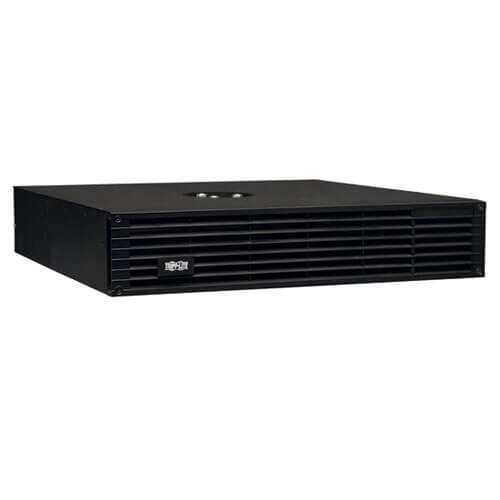
Understood, that the generator will take some time to fire up. Bridging this gap with a UPS sounds like an industrial grade unit. I do happen to have one that is not currently in use. It is a 6kVA system made by Tripplite (generally garbage), but has an auxiliary battery pack for additional run capacity. I believe the main unit is this one.

Would it be possible to use this system for residential power purposes? The main concerns I have with it includes the 200-240V input (single phase) and how that would tie into the 110VAC nominal voltage of the house.
 

mike93lx

ALLIANCE MEMBER
Joined
Dec 9, 2013
Messages
37,795
Location
Richmond, VA
Sorry about the use of LNG for simple, residential grade natural gas. I thought it was liquified in the pipes leading up to the main meter!

Understood, that the generator will take some time to fire up. Bridging this gap with a UPS sounds like an industrial grade unit. I do happen to have one that is not currently in use. It is a 6kVA system made by Tripplite (generally garbage), but has an auxiliary battery pack for additional run capacity. I believe the main unit is this one.

Would it be possible to use this system for residential power purposes? The main concerns I have with it includes the 200-240V input (single phase) and how that would tie into the 110VAC nominal voltage of the house.
That Ups is 240V only, no 120V output, so you can't just tie it into the service. They're designed to go into a rack to feed a piece of equipment, like a server.

What devices are you looking to have uninterrupted power for?
 

nadogail

Well-known member
Joined
Jan 23, 2009
Messages
32,024
Location
Coronado, CA
Technical Material Corportion built the “No Break at a former assignment, it had a large motor and a generator. The motor was powered by the utility and directly coupled to the generator that supplied the load. There was a 7 ton flywheel that provided the energy to keep the generator spinning while the magnetic clutch engaged and started the 12V71 GM Diesel.

Once we had an Engine Start Failure and it took over three hours before the fluorescent lights started to flicker.
 

dcg9381

Well-known member
Joined
Jun 20, 2018
Messages
11,848
Location
Austin, TX
Technical Material Corportion built the “No Break at a former assignment, it had a large motor and a generator. The motor was powered by the utility and directly coupled to the generator that supplied the load. There was a 7 ton flywheel that provided the energy to keep the generator spinning while the magnetic clutch engaged and started the 12V71 GM Diesel.
Back before commecial data centers were a common thing, that's how we used to roll.. Big flywheel!
 
To avoid these ads, REGISTER NOW!

larry4406

Well-known member
Joined
Jan 27, 2006
Messages
19,472
Location
Northern Virginia
I want a small household UPS to feed certain circuits with electronics on them to buffer the grid and bide time for the generator.
 
OP
M

Mesozoic

Well-known member
Joined
Oct 8, 2012
Messages
213
Location
Tucson, AZ
That Ups is 240V only, no 120V output, so you can't just tie it into the service. They're designed to go into a rack to feed a piece of equipment, like a server.

What devices are you looking to have uninterrupted power for?
Mainly just IoT stuff, but potentially an HVAC unit, if possible with that size of UPS. Tripplite does sell a stepdown isolation transformer for that UPS that brings it down to 120V and has hardwire capability, but still not sure if that is practical for implementation.


dcg9381

Well-known member
Joined
Jun 20, 2018
Messages
11,848
Location
Austin, TX
I want a small household UPS to feed certain circuits with electronics on them to buffer the grid and bide time for the generator.
Most UPS and certainly "household" UPS are really designed to buffer at a specific location. I know that in the commercial space in our datacenter, we have upstream UPS that buffer a whole circuit. When you're talking about a UPS that can do multiple branches - I'm not sure that's the droid you're looking for at home.

I think you're better off using multiple "residential" UPS in the locations where those electronics are. That's how I do it. There are 2 UPS - one in the AV closet, the other in the data closet. The data closet is next to my desk, so I cheat and run my PCs power through the wall.

To do what you want - to protect several circuits at a residence, the way I know to do that is to use an inverter (typically solar hybird) and put some battery storage on it. Your protected circuits are down stream from that on their own sub-panel. These inverters have "power preference" so you can tell them to power from the grid first and fail to battery second. 6000 watts, 120V only... At the very cheapest you're looking at about ~$6500 in inverter and 2 5kWh 48V batteries. And they do have a "switch time" - it's fast, but I've never measured how fast.
 

Hohn

Well-known member
Joined
Aug 25, 2016
Messages
2,693
Location
Diesel Central, Indiana
Back before commecial data centers were a common thing, that's how we used to roll.. Big flywheel!
You might be surprised to learn that Google, Facebook, Apple and many other large datacenters are indeed using huge flywheels for UPS.
Imagine something like this but with a flywheel 10ft in diameter:


My company sells a huge amount of standby generators to these household name companies, and per NFPA 110 we have to have them online in < 10 seconds. But those 10 seconds are a crucial gap to fill, and inertial UPSs seem to be the smarter choice vs battery or capacitors.
 
Last edited:

Hohn

Well-known member
Joined
Aug 25, 2016
Messages
2,693
Location
Diesel Central, Indiana
I have some knowledge in this area, but because so many smart GJers have posted to this thread, there's precious little I can add beyond encouragement to get a quality ATS that can respond quickly. Quicker response here means smaller, less expensive UPSs everywhere else.
 

imagineer

Well-known member
Joined
Dec 13, 2015
Messages
1,018
Location
Ohio
Probably a non-issue, but keep in mind that you'll get less wattage from a generator running natural gas than the same generator on propane. My recently install Generac 24,000 watt unit is only rated for 21,000 when running on natural gas.
 

Hohn

Well-known member
Joined
Aug 25, 2016
Messages
2,693
Location
Diesel Central, Indiana
Probably a non-issue, but keep in mind that you'll get less wattage from a generator running natural gas than the same generator on propane. My recently install Generac 24,000 watt unit is only rated for 21,000 when running on natural gas.
True, but the flip side is that it will run cooler and cleaner. NG is cleaner than propane.
 

wyliesdiesels

Well-known member
Joined
Aug 14, 2012
Messages
20,061
Location
Modesto, CA
Mainly just IoT stuff, but potentially an HVAC unit, if possible with that size of UPS. Tripplite does sell a stepdown isolation transformer for that UPS that brings it down to 120V and has hardwire capability, but still not sure if that is practical for implementation.

I would not run HVAC off of a UPS, especially not a consumer or light commercial grade one
 

wyliesdiesels

Well-known member
Joined
Aug 14, 2012
Messages
20,061
Location
Modesto, CA
You might be surprised to learn that Google, Facebook, Apple and many other large datacenters are indeed using huge flywheels for UPS.
Imagine something like this but with a flywheel 10ft in diameter:


My company sells a huge amount of standby generators to these household name companies, and per NFPA 110 we have to have them online in < 10 seconds. But those 10 seconds are a crucial gap to fill, and inertial UPSs seem to be the smarter choice vs battery or capacitors.
wow thats cool
 
OP
M

Mesozoic

Well-known member
Joined
Oct 8, 2012
Messages
213
Location
Tucson, AZ
I would not run HVAC off of a UPS, especially not a consumer or light commercial grade one
I think the UPS equipment I've linked is definitely on the industrial side of the fence, definitely not consumer grade. While I agree that it's not ideal to attempt running the HVAC merely due to the high loads, the UPS would only be used to bridge the gap in time between a full power outage and when the generator fires up and is able to take over.
 

mike93lx

ALLIANCE MEMBER
Joined
Dec 9, 2013
Messages
37,795
Location
Richmond, VA
Someone fill me in on why we care that our HVAC goes off for a few minutes while the generator spools up?
I'm not advocating for battery backup on hvac, but hopefully the system has a lockout timer. Shutting down suddenly and firing back up 30 seconds later won't be great
 

dcg9381

Well-known member
Joined
Jun 20, 2018
Messages
11,848
Location
Austin, TX
I'm not advocating for battery backup on hvac, but hopefully the system has a lockout timer. Shutting down suddenly and firing back up 30 seconds later won't be great
I put 2 AC systems on generac's "load shed" devices. I dunno what HVAC does internally if you flip the breaker on/off, but the load shed devices let you set a timer that makes sure high load devices don't suddenly come back on at the same time. They're remarkably "dumb" - they are a magnetic contractor relay with a circuit board control that has a fixed timer and AC frequency check (low frequency = generator overload).
 

mike93lx

ALLIANCE MEMBER
Joined
Dec 9, 2013
Messages
37,795
Location
Richmond, VA
I put 2 AC systems on generac's "load shed" devices. I dunno what HVAC does internally if you flip the breaker on/off, but the load shed devices let you set a timer that makes sure high load devices don't suddenly come back on at the same time. They're remarkably "dumb" - they are a magnetic contractor relay with a circuit board control that has a fixed timer and AC frequency check (low frequency = generator overload).
A modern thermostat should have a compressor delay too. Should.

I get there are ways to mitigate the damage, just throwing out one reason where the system briefly shutting down is not great
 

wyliesdiesels

Well-known member
Joined
Aug 14, 2012
Messages
20,061
Location
Modesto, CA
I think the UPS equipment I've linked is definitely on the industrial side of the fence, definitely not consumer grade. While I agree that it's not ideal to attempt running the HVAC merely due to the high loads, the UPS would only be used to bridge the gap in time between a full power outage and when the generator fires up and is able to take over.
make sure its rated for that kind of load. and im not just talking about the draw
 

SlappyWhite

Well-known member
Joined
Oct 3, 2012
Messages
1,819
Location
Upper Canada
For HVAC, around the world "modern" power grids use reclosers on the high voltage lines that trip and automatically reset that is why you will see the power drop and come back on fairly quickly... sometimes to only drop again (if the short is still there). The HVAC systems are not all blowing up all over the place when this happens. Is it ideal, probably no, is the sky falling, no.

HVAC uses a lot of power and will mean a much larger UPS. The cooling and heat can be off for the amount of time it takes the generator to be online. Sure the power goes down then up... see paragraph above. No need to over think this for home use.

If you want to spend more money, sure put the HVAC on the UPS and not just the generator.
 
OP
M

Mesozoic

Well-known member
Joined
Oct 8, 2012
Messages
213
Location
Tucson, AZ
I've also seen that UPS' are not designed for inductive loads, so there's that. One of the 200A panels that I'm interested in supplying uninterrupted power to has a few HVAC system components wired through it (the air handler portions) - the compressor and condenser portions are wired on their own breakers outside of the building. While the air handlers constitute a significant load, I don't believe it's anywhere near as high as the outdoor units. Regardless, segregating the air handler power sourcing from this panel is not practical, but I believe the HVAC controller board is designed to handle abrupt power cut and will automatically turn off when the outdoor compressor portions become non-responsive due to an outage as well.
 

IRQVET

Well-known member
Joined
Jun 29, 2015
Messages
1,188
Location
Forgotten Coast (FL)
Went this route a few years ago. First is to determine who in your area does: Sales, Service, and Installation. Getting someone who does all three is extremely important, unless you want the electrician pointing fingers at the generator company, who is pointing fingers at the gas company when something goes wrong. It's easier to have a one stop shop that will just own any issues no matter who/how they were created. Any electrician will install a unit, but they won't come around after the initial job is complete if an issue arrises. 💯

I know when I was generator shopping, I had a certain make/ model in mind. This was completely blown out of the water when I found out there were no companies in my area supporting that brand. (See point #1 about who's in your local area and what brands they support).

Only two manufacturers were supported in my area (Generac and Cummins), so I only needed to compare these two and pick what I felt was best for my needs.


Cummins 2.jpeg
 
Last edited:

IRQVET

Well-known member
Joined
Jun 29, 2015
Messages
1,188
Location
Forgotten Coast (FL)
Another point to mention. I purchased two specific add on's when purchasing my unit:

1. 5 Years of Extended Warranty (Taking the initial 5 year factory warranty, and adding another 5, punching it out to 10 years of total warranty)
2. Remote Monitoring (By Cummins)

Now if/ when my generator fails to start (for whatever reason) my generator essentially contacts Cummins and orders its own repair. It provides me piece of mind, and insures there is no possible way I can void my warranties. As it's always a Cummins Technician, and only when my unit determines it needs to be serviced and/or repaired.

I've had this unit almost 2 years. It currently has 68 hours on it. It has failed to start 3 times. Each time it was a gas regulator issue, one time in the generator unit itself, the other two were associated with the gas company and their crappy external gas regulators.

Mine kicks on an restores power within 5-6 seconds of a power outage. I do have to reset clocks, but if that is the biggest inconvienece, so be it.
 
To avoid these ads, REGISTER NOW!
Top Bottom