All,
I'm an automotive enthusiast and I love spending time in the garage, and I'm going to be starting my garage project to get my space fully functional.
For background, I have a 900 sq ft 3-car attached garage in a house built in 2008 (well built, I might add). I'm located in central PA. I keep one truck, one SUV, and one car in the garage year-round.
The attic space above the garage is well insulated, as are the walls. The garage is fully finished and painted, with baseboard moldings and all. I have two drains in the garage floor (which should be good as I like washing my cars in the winter, looking to eventually be able to do this in the garage).
The garage is always about 20-25 degrees warmer than outside conditions in the winter. It never gets to freezing (32), but it gets close (38) on days where we have sub-freezing temperatures for a stretch. Most of the time it's a little too cool to work comfortably in the winter (and too warm to work comfortably in the hottest part of summer).
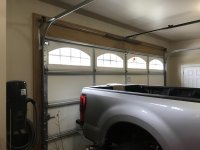
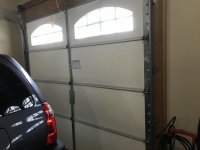
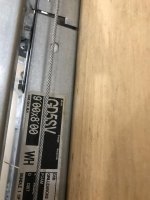
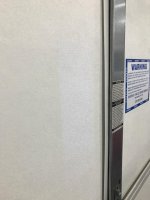
My first step is heat and insulation. I have one 16' and one 8' Clopay door. I called Clopay today to find out that they are their entry-level insulated doors, with an R-value of 6.3. There are foam boards on the back of the door, but they don't appear to be very thick (there's at least 1/4" of additional depth in the door cavities and the foam flops a bit.
I have on order the brush seals for the inside edge of the doors. The doors are well fitted, and the seals on the outside are tight, but the door does move a little in the wind and I can see some daylight near the bottom corners of the doors. For $100, I thought this would be a sensible upgrade.
I am seriously contemplating a mini-split heat pump for the garage, but I'm concerning myself with the insulation first, particularly the door.
The cost of two new doors is much higher than my budget allows, so I am looking for those who have experience adding insulation to an already insulated door.
Would you remove the current foam panels and replace them with something thicker (higher R-value)?
Would you add the "bubble wrap" Reflectix roll insulation (looks like it could be cut to fit neatly in to the cavities) as an alternative?
Or just go with the heat the way it is?
Thanks in advance for any thoughts.
I'm an automotive enthusiast and I love spending time in the garage, and I'm going to be starting my garage project to get my space fully functional.
For background, I have a 900 sq ft 3-car attached garage in a house built in 2008 (well built, I might add). I'm located in central PA. I keep one truck, one SUV, and one car in the garage year-round.
The attic space above the garage is well insulated, as are the walls. The garage is fully finished and painted, with baseboard moldings and all. I have two drains in the garage floor (which should be good as I like washing my cars in the winter, looking to eventually be able to do this in the garage).
The garage is always about 20-25 degrees warmer than outside conditions in the winter. It never gets to freezing (32), but it gets close (38) on days where we have sub-freezing temperatures for a stretch. Most of the time it's a little too cool to work comfortably in the winter (and too warm to work comfortably in the hottest part of summer).
My first step is heat and insulation. I have one 16' and one 8' Clopay door. I called Clopay today to find out that they are their entry-level insulated doors, with an R-value of 6.3. There are foam boards on the back of the door, but they don't appear to be very thick (there's at least 1/4" of additional depth in the door cavities and the foam flops a bit.
I have on order the brush seals for the inside edge of the doors. The doors are well fitted, and the seals on the outside are tight, but the door does move a little in the wind and I can see some daylight near the bottom corners of the doors. For $100, I thought this would be a sensible upgrade.
I am seriously contemplating a mini-split heat pump for the garage, but I'm concerning myself with the insulation first, particularly the door.
The cost of two new doors is much higher than my budget allows, so I am looking for those who have experience adding insulation to an already insulated door.
Would you remove the current foam panels and replace them with something thicker (higher R-value)?
Would you add the "bubble wrap" Reflectix roll insulation (looks like it could be cut to fit neatly in to the cavities) as an alternative?
Or just go with the heat the way it is?
Thanks in advance for any thoughts.