

I finally bought a pole saw this morning, something I’ve been meaning to do for years.
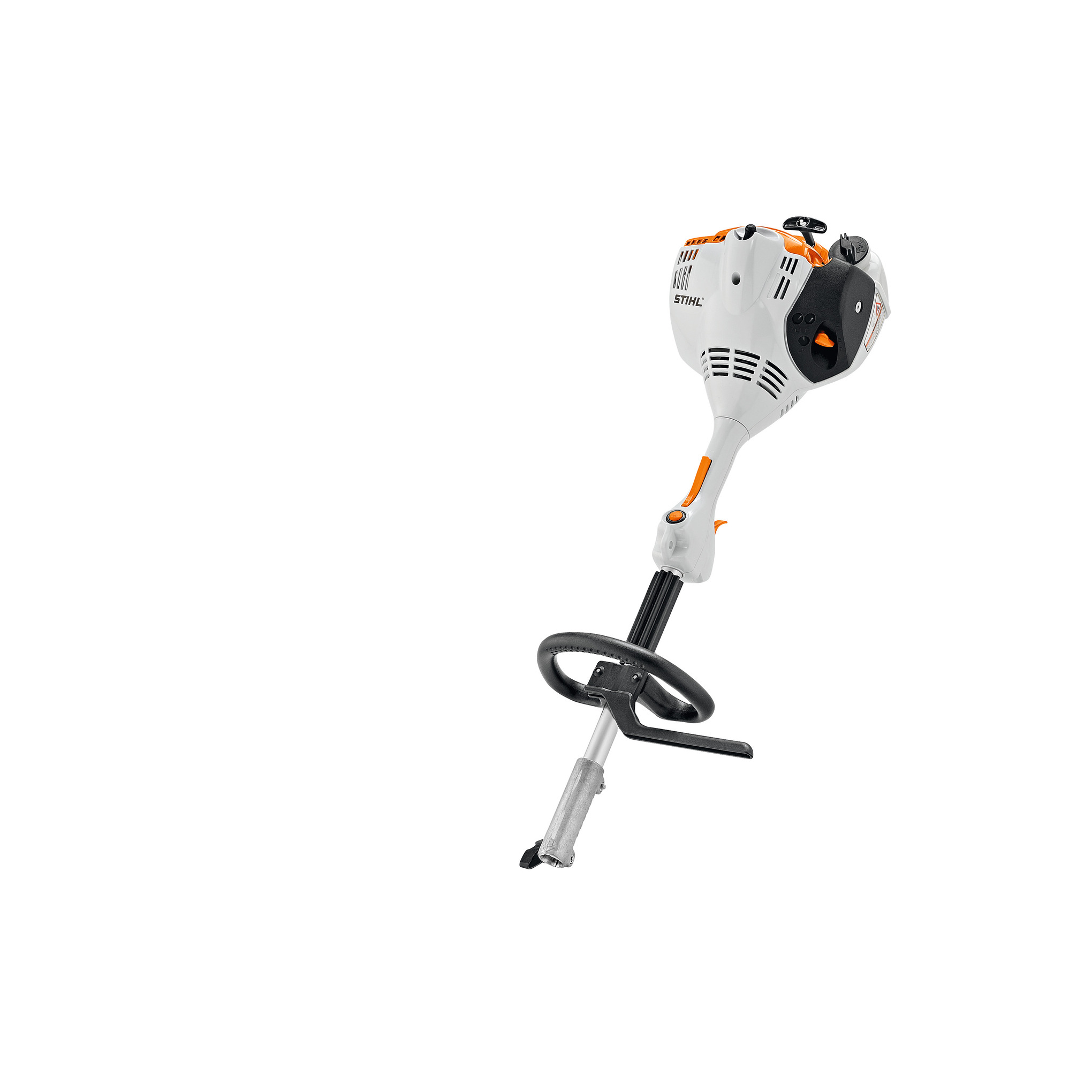
When I bought a KM 56 RC-E Combi powerhead many years back, it was originally bought to run the hedger attachment. I then added the trimmer and edger attachments, with intentions of adding the chainsaw to the mix as well.
 www.stihl.com.au
The issue I found with running the Combi system was excessive weight, be the powerhead or the attachments. For example, the line trimmer felt very unbalanced, that combo being 5.8kg. My Husqvarna 522L trimmer is only 4.2 kg. With a combined 6.5 kg, the pivoting hedger attachment was uncomfortable to use and caused a lot of shoulder and neck pain. And I never even used the edger attachment as I ended up buying a Honda powered Atom. Because of the above, I wasn’t in a hurry to get the chainsaw attachment, and having used petrol powered pole saws in the past, I really didn’t like how heavy and cumbersome they were. So, early last year I sold the Kombi with the three attachments to one of my bosses. (Those numbers might not sound much, but trust me, with regular extended use, they really do put unnatural stress on your body.)
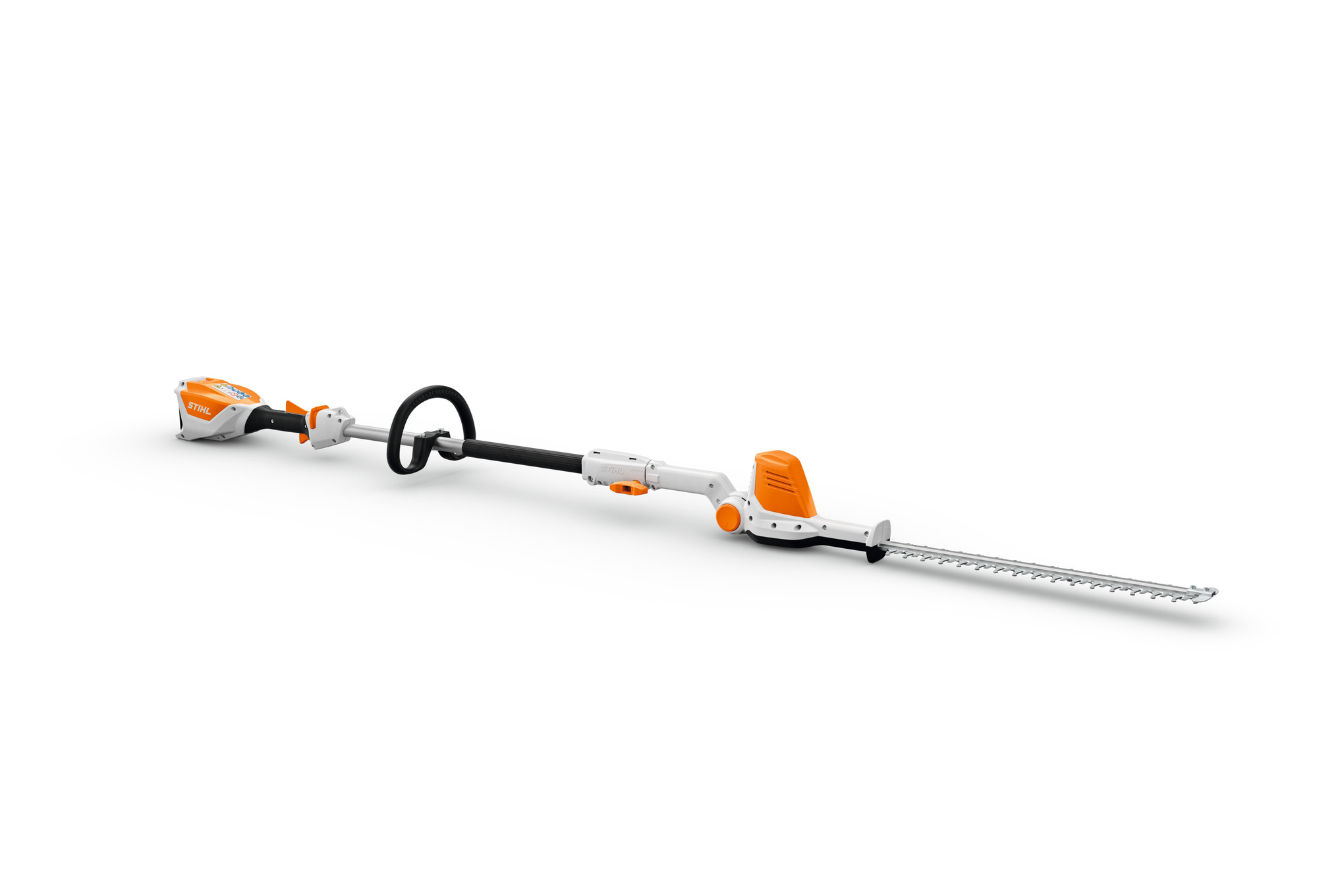
Another reason why I had held out on a pole saw, I was kinda hoping Stihl would create an attachment for the HLA 56 pole hedger that I bought a few years ago. The split-boom design would have made adding a saw an easy and logical solution, but Stihl obviously want you to another unit entirely.
 www.stihl.com.au

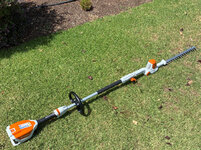
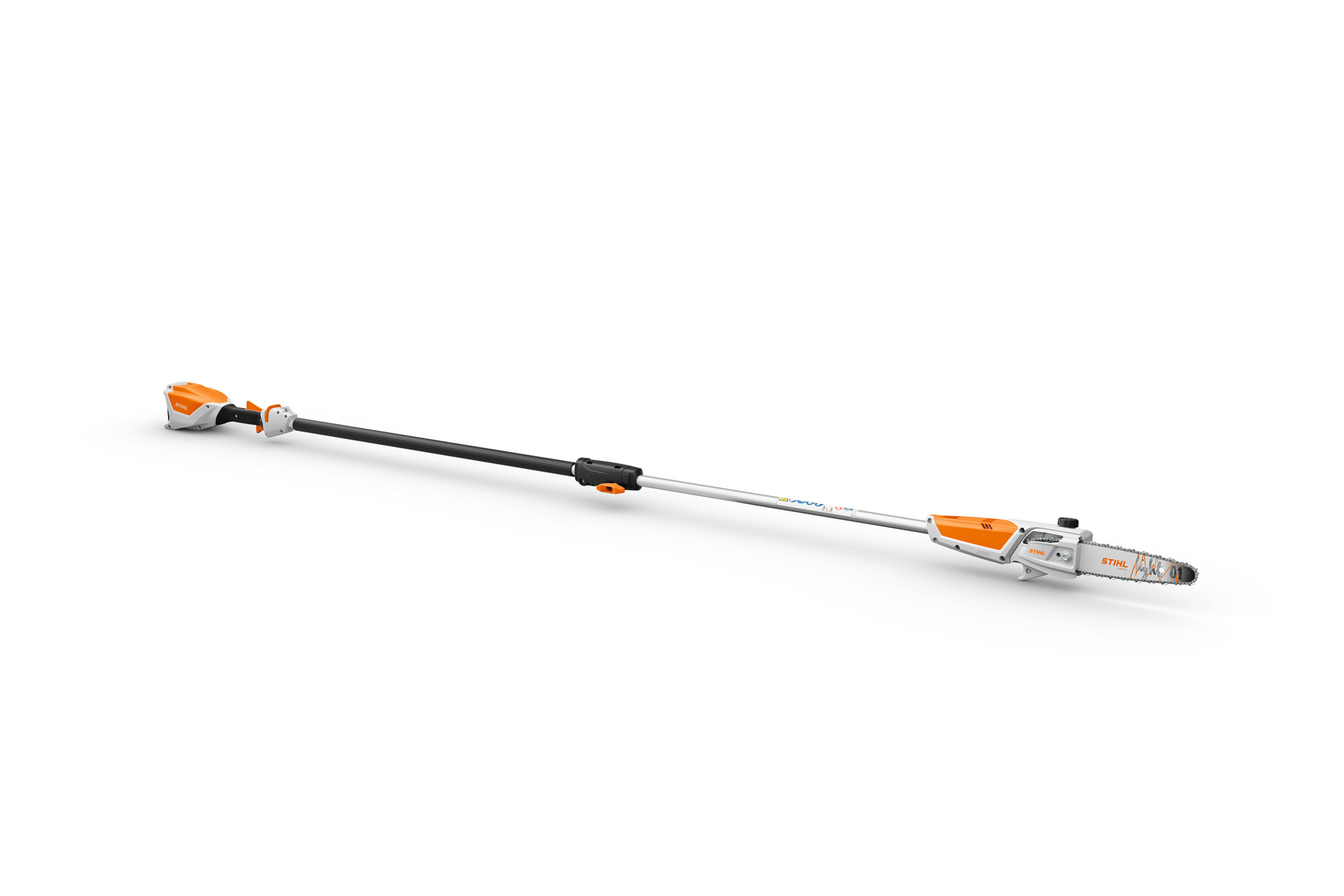
And so, the HTA 50 pole saw enters the equation. This uses the same mid-tier AK battery system that I use in the HSA 56 and HLA 56 hedge trimmers, a MS 140C chainsaw and the (crappy) BGA 56 leaf blower. The AK10 and AK20 batteries are now over 6-years old and are (touch wood) still doing the job.
 www.stihl.com.au
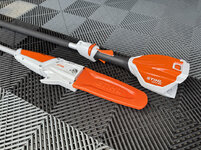

The key to these battery powered units is the reduction in weight and vastly superior weight distribution. A petrol-powered unit has the majority of the weight at the engine. On an electric, the battery is at one end and the motor at the other. So while the battery is heavy, it’s balanced by having the motor at the end of the shaft. They can also run a smaller, more efficient motor as there is no power loss from a long driveshaft and clutch. The actual weight figures paint the rest of the picture..........................
The HTA 50 comes in at a claimed 3.6 kg. This figure is vague as it doesn’t indicate if it includes the battery, I would assume not because its being sold as a skin. What’s stupid is that the number doesn’t include a bar and chain, despite the unit being sold with both. If I add the weight of the AK10 (0.8kg) or AK20 battery (1.2kg), the numbers become 4.4 kg or 4.8 kg.
The combined weight of the KM 56 Combi head (4.2 kg) with the HT chainsaw attachment (1.9 kg) comes in at 6.1 kg. As mentioned earlier, it's not just the added weight, but rather how it forces your body to compensate for the weight being concentrated at one end.
The HTA and HLA both share a very similar battery/throttle/handle end, so I’m not entirely sure why they didn’t create an attachment for the HLA, other than wanting to extract more money from the sale of another tool.

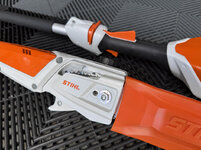
This unit uses a 10-inch bar with a ¼-inch PM3 chain. Note the “branch hook” extending down from the “clutch cover”, which is to aid removal of stuck branches. The transparent oil tank is nice to have as well.


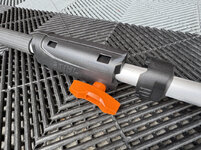
Unlike some pole saws, the HTA 50 is not telescoping. That means a total length fixed at 280cm, but there is also an optional 50cm extension shaft to push that out to 330cm, I probably won’t bother.
In no way will this HTA 50 out cut a petrol powered equivalent, or even the AP professional battery series from Stihl or the excellent Husqvarna battery gear. Having said that, other than the blower, I’ve been pleased with the rest AK-powered tools in my arsenal.
When I bought a KM 56 RC-E Combi powerhead many years back, it was originally bought to run the hedger attachment. I then added the trimmer and edger attachments, with intentions of adding the chainsaw to the mix as well.
KM 56 RC-E KombiSystem Engine | STIHL Australia
The lightest STIHL KombiEngine for use around the house and garden. With STIHL Easy2Start and simplified starting system for easy starting.
The issue I found with running the Combi system was excessive weight, be the powerhead or the attachments. For example, the line trimmer felt very unbalanced, that combo being 5.8kg. My Husqvarna 522L trimmer is only 4.2 kg. With a combined 6.5 kg, the pivoting hedger attachment was uncomfortable to use and caused a lot of shoulder and neck pain. And I never even used the edger attachment as I ended up buying a Honda powered Atom. Because of the above, I wasn’t in a hurry to get the chainsaw attachment, and having used petrol powered pole saws in the past, I really didn’t like how heavy and cumbersome they were. So, early last year I sold the Kombi with the three attachments to one of my bosses. (Those numbers might not sound much, but trust me, with regular extended use, they really do put unnatural stress on your body.)
Another reason why I had held out on a pole saw, I was kinda hoping Stihl would create an attachment for the HLA 56 pole hedger that I bought a few years ago. The split-boom design would have made adding a saw an easy and logical solution, but Stihl obviously want you to another unit entirely.
HLA 56 Battery Long-Reach Hedge Trimmer | STIHL Australia
Cut tall hedges and shrubs ✓ Low-noise, single-sided cutting blade and a total length of 2.1 m! ➤ Discover now!
And so, the HTA 50 pole saw enters the equation. This uses the same mid-tier AK battery system that I use in the HSA 56 and HLA 56 hedge trimmers, a MS 140C chainsaw and the (crappy) BGA 56 leaf blower. The AK10 and AK20 batteries are now over 6-years old and are (touch wood) still doing the job.
HTA 50 Battery Pole Pruner | STIHL Australia
The STIHL HTA 50 cordless pole pruner is 2.8 m long, powerful & quiet, for pruning high branches ✓ ➤ Buy now!
The key to these battery powered units is the reduction in weight and vastly superior weight distribution. A petrol-powered unit has the majority of the weight at the engine. On an electric, the battery is at one end and the motor at the other. So while the battery is heavy, it’s balanced by having the motor at the end of the shaft. They can also run a smaller, more efficient motor as there is no power loss from a long driveshaft and clutch. The actual weight figures paint the rest of the picture..........................
The HTA 50 comes in at a claimed 3.6 kg. This figure is vague as it doesn’t indicate if it includes the battery, I would assume not because its being sold as a skin. What’s stupid is that the number doesn’t include a bar and chain, despite the unit being sold with both. If I add the weight of the AK10 (0.8kg) or AK20 battery (1.2kg), the numbers become 4.4 kg or 4.8 kg.
The combined weight of the KM 56 Combi head (4.2 kg) with the HT chainsaw attachment (1.9 kg) comes in at 6.1 kg. As mentioned earlier, it's not just the added weight, but rather how it forces your body to compensate for the weight being concentrated at one end.
The HTA and HLA both share a very similar battery/throttle/handle end, so I’m not entirely sure why they didn’t create an attachment for the HLA, other than wanting to extract more money from the sale of another tool.
This unit uses a 10-inch bar with a ¼-inch PM3 chain. Note the “branch hook” extending down from the “clutch cover”, which is to aid removal of stuck branches. The transparent oil tank is nice to have as well.
Unlike some pole saws, the HTA 50 is not telescoping. That means a total length fixed at 280cm, but there is also an optional 50cm extension shaft to push that out to 330cm, I probably won’t bother.
In no way will this HTA 50 out cut a petrol powered equivalent, or even the AP professional battery series from Stihl or the excellent Husqvarna battery gear. Having said that, other than the blower, I’ve been pleased with the rest AK-powered tools in my arsenal.
