OP... you are not overthinking this at all... kudo's to you for ensuring capacity before moving forward.
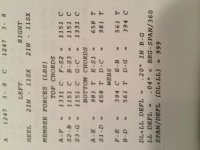
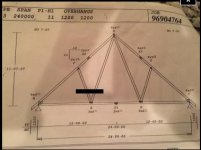
Based on the data you provided above the truss bottom chord is designed for a 10 lb/sq-ft loading already.
How much weight are you wanting to put up there?
That is incorrect.
The Dead Load is the load of the structure itself.
There is zero live load in the design of that bottom chord. You shouldn't really even add a drywall ceiling.
There are a bunch of contributing factors at play here. There is an accounting for the top chords to carry a snow load, and there is a safety factor built in, and the dead load might not actually be 10#/SF.
If you have open trusses with no drywall on the bottom chord to worry about cracking and nail pops, and if you are using lightweight plywood, mostly near the walls, and you are storing only lightweight stuff, with the long skinny stuff near the eaves and the larger bulkier, but still very light stuff further towards the middle where you have more height. And if you don't get a bug wet heavy snow, and there isn't 2 or 3 layers of heavy Architectural shingles, and the trusses were properly constructed.
Then, using some common sense, use the space. But overload it and it will deflect more, and given a worse case scenario with snow loads and maybe a wind condition, and everything might add up to negative results.
When the live loads (Stuff stored) gets great or nearer the center of spans, and you have lots of space up there and access to walk around and maybe you want to put a drywall ceiling up, then you need to add structural capability.
Now, an engineer can tell you how to add a member to the existing truss bottom chords to do whatever it is you need to accommodate.
But my preference is to make this a separate system from the trusses. That way it acts independently to the loads imposed.
Do you ever want to insulate and install a ceiling? If so, and there is space, I would install ceiling joists (Dimensional or engineered depending on span and loads) spaced between the existing trusses, deep enough to allow insulation and a plywood deck for storage. Add 1x strapping to the bottoms of these members to make sure the ceiling is below the existing trusses.
But then you are working in between the existing trusses and usually the roof slope is too low to allow much space anyway.
I'd just add a shed.
Edit: I see you have 12/12 pitch. Just lay some 7/16" plywood along the walls in the corners of the attic and use it for the light stuff listed. Spread the load so it is as uniform as possible. You'll be OK as long as you don't go hog wild.
Also note that dimensional lumber won't span those distances and support itself, much less any load worth mention.
BTW, you don't have a drywall ceiling, do you?
Bill