To avoid these ads, REGISTER NOW!

Switch Distance from Shower

Paulski

Well-known member
Joined
Sep 29, 2017
Messages
119
Is there a min distance a wall switch needs to be from the shower? I want to install an electric towel warmer on the wall next to the shower, and put the timer switch on the same wall, just above the towel warmer - this would be on the 30" wall in the picture.

For the wiring, I plan to pull the circuit to the switch, then down to the GFCI receptacle. This would make the switch not protected by the GFCI, is that ok? Or is there a better way to wire it?

I could install a GFCI breaker in the main panel - I was going to tie in to an existing 20 amp circuit that has 5-6 led lights and a few bedroom outlets on it, and oddly enough, also the microwave receptacle. Not sure that would cause problems with the GFCI breaker. The towel warmer pulls 150w.

 

Attachments

  • IMG_3635.jpg
    IMG_3635.jpg
    305.7 KB · Views: 21
To avoid these ads, REGISTER NOW!
OP
P

Paulski

Well-known member
Joined
Sep 29, 2017
Messages
119
If I pull off the load side of the GFCI to the switch, wouldn't the GFCI receptacle have power all the time, and not be switched?

Other way I thought of is to change the receptacle that I plan to pull power from in the adjacent room to a GFCI.

Adjacent room GFCI ---> timer switch ----> towel warmer receptacle

But looking at the Leviton link, I cannot put the switch and towel warmer receptacle on the 30" wall due to not being 3' away horizontally from the shower edge.

It would take a little more work - I can move the switch to 21" wall by the countertop, with the other room switches. The problem is the receptacle for the towel warmer needs to be on the 30" wall so a cord isn't crossing the walk way.
 

rharman

Well-known member
Joined
Apr 22, 2012
Messages
8,741
Location
SoCal
We have two switches right outside our shower - 6 inches from the door. One for the light in the shower and the other for the exhaust fan just outside. Both fed from GFCI receptacle. Light above the tub is also on that circuit.
 

Junkman

Well-known member
Joined
Dec 18, 2006
Messages
6,608
Location
Northeastern CT
In doing a complete renovation of a small home we own, I decided to upgrade to a 200-amp service. I can't explain why it is less expensive to purchase the arc-fault/GFCI circuit breakers than just the arc-fault breakers. When the building inspector came to approve the electrical service, he questioned why there were so many GFCI breakers in the panel. I told him that they were less expensive and left it at that. There are a couple of items the manufacturers specifically instructed not to be on an arc-fault circuit, but he didn't question that usage.
 
To avoid these ads, REGISTER NOW!

tankzilla

New member
Joined
Mar 17, 2011
Messages
3
Location
Missouri
Even with gfi move the switch as far as possible. Was on a job where the electrical code says one thing and the inspector said otherwise. The inspector won. Idea is there is not way possible to be in tub or shower with water one and then being able to touch a switch/source of electric. Still check local code.
 

larry4406

Well-known member
Joined
Jan 27, 2006
Messages
19,055
Location
Northern Virginia
Get a different towel bar and direct wire it.

When direct wired, there is no receptacle.

The current code prohibits receptacles (not switches) from being within 3' of a shower.

I would feed the circuit via a GFCI and make sure the towel bar is wet rated.

I looked into doing this for our master bath project. I had difficulty finding units that were UL rated and wet rated. I bailed.
 

Chuckster in NJ

Well-known member
Joined
Jan 26, 2010
Messages
2,278
Location
Hunterdon County NJ
There is NO DISTANCE measurement for a switch from a shower……. The code says a switch shall not be installed inside a shower.

NOT to derail this thread but the most misunderstood hazard in a bathroom is: glazing…….. YES, windows in a bathroom that are required to be tempered glass. (EG: A contractor installs a tub in front of a picture window or a window is installed near a tub)
 

yatg

Well-known member
Joined
Aug 16, 2019
Messages
2,753
Location
Southern Oregon
There is NO DISTANCE measurement for a switch from a shower……. The code says a switch shall not be installed inside a shower.
Switch isn't the code issue, its the switch(timer) controlled receptacle the towel bar plugs into.

ETA:
Seems like a nanny code. Some idiot plugged in a space heater while they were in the shower and got zapped now there can't be receptacles within reaching distance.
If it was my house, I would have no problem adding a GFCI protected timer and receptacle on that wall to plug in the towel rack.
"it was always there".

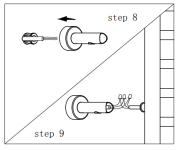
Anyway, the crappy instructions show it can be hard wired.
Bring the feed through the back of the leg and make the connection in the leg.


1780935581196.png
 
Last edited:

rlitman

Well-known member
Joined
Oct 18, 2010
Messages
24,580
Location
Long Island
In this day and age of "smart" switches, one option is to install the wired switch further from the shower and install a remote "switch" wherever you want. I have some remote "switches" that the pressure from clicking on and off generates all the power it needs to send the signal to the base. No batteries required. I'm not sure how it would hold up to moisture, but I am sure it's not going to hurt you.
 
OP
P

Paulski

Well-known member
Joined
Sep 29, 2017
Messages
119
Anyway, the crappy instructions show it can be hard wired.
Bring the feed through the back of the leg and make the connection in the leg.
I saw the hard wire instructions, but looks easier said than done, they didn't leave much room. Drilling the hole for the wires right next to the mounting knob while simultaneously running the wires into the center of the mounting knob seems like it would compromise the screw holding the mounting knob to the wall. Than trying to fit 3 wire nuts in the tube seems tight. But might give it a shot and see how it goes.

What size/type wire would i run from the switch to the towel warmer for hard wiring? I have 12/2 NM up to the timer switch, I dont think i could squeeze 12/2 into the warmer mounting bar, but it only pulls 150w so 12g seems over kill to go form the switch to the warmer.
 

yatg

Well-known member
Joined
Aug 16, 2019
Messages
2,753
Location
Southern Oregon
I saw the hard wire instructions, but looks easier said than done, they didn't leave much room. Drilling the hole for the wires right next to the mounting knob while simultaneously running the wires into the center of the mounting knob seems like it would compromise the screw holding the mounting knob to the wall. Than trying to fit 3 wire nuts in the tube seems tight. But might give it a shot and see how it goes.

What size/type wire would i run from the switch to the towel warmer for hard wiring? I have 12/2 NM up to the timer switch, I dont think i could squeeze 12/2 into the warmer mounting bar, but it only pulls 150w so 12g seems over kill to go form the switch to the warmer.

The instructions said to secure at least two of the mounting posts into a stud. If the power feed is on the right, mount the two left posts to a stud or use some type of heavy duty drywall anchor. Same for the top post on the power feed side. Even if you can't use the same fastener type on the power post, the other 3 points should be enough to keep the rack mounted on the wall.

You have to run 12/2NM from the timer to the rack. Its a 20A circuit.

I'd try to source some type of inline connectors and stagger the connections in the post. The Wagos look more compact.

I don't like that the wire just goes through the wall and into the post, and the post is left open.
I'd at least put some duct putty in the open end.
 
OP
P

Paulski

Well-known member
Joined
Sep 29, 2017
Messages
119
Thanks for linking the inline splices, those would make it easier. The tube post is 7/8" diameter x 3 3/4 long.

I'm sure having 3 mounting points will more than hold it, i was concerned about it rattling without the 4th post being secure, but it should be fine as long as nobody pulls on that lower corner.

I'm thinking of putting a j box in the wall where the post mounts to the wall, and mounting the cover directly to the tube. Than run the wires though the cover so I can make the splices in the Jbox in the wall.
 
To avoid these ads, REGISTER NOW!
Top Bottom