To avoid these ads, REGISTER NOW!

Switches and Outlets Falling Apart???

DawgPaw

Well-known member
Joined
Mar 8, 2014
Messages
313
Location
USA
We have a 12 year old house that was built during that time when they stamped them out as fast and cheap as possible. We got it as a foreclosure 8 years ago.

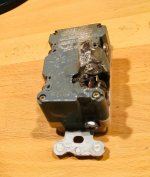
A couple of days ago I noticed one of the outlets in our master bathroom had brown on it. I open it up, and the thing was completely melted. This outlet never gets used, but it jumps to an outlet that gets heavy use (my wife’s hair dryer and straightener). It has 12 gauge wire and goes through a GFCI in the other bathroom.

Two days later and the light switch goes bad in our spare bedroom. I see a loose wire so I pull it out and the clamp where you jam a wire in has come out. As in the plastic broke and the clamp fell out. In the process I knock the same wire out of the fan switch next to it. This switch lost an entire corner including the terminal screw.

Do switches normally fall apart? These are some of the least used outlets and switches in the house. Do I need to expect to replace all of them now?
 
To avoid these ads, REGISTER NOW!

On-Wheel

Well-known member
Joined
Oct 6, 2014
Messages
487
Get an infra red heat gun and check for higher heat,after inspecting the others.Thats what I do.Ive had a light switch,gfi and an outlet melt in the same year.The gfi had a high heat reading so I pulled it out and found ,probably a loose wire that got hot and melted some of the plastic.
 

raddksn

Well-known member
Joined
Oct 3, 2011
Messages
1,304
Location
south central upper peninsula michigan
Yes expect exactly that! Buy quality spec grade devices and use the terminals not the “back stab” ! Also don’t use the receptical as a splice, if your going to feed something down stream (a GFCI would be an exception)make a splice in the box!
 
Last edited:

Shiftless

Well-known member
Joined
Mar 9, 2014
Messages
14,550
Location
East Bay SFO
Did yours look as bad as this GFCI I pulled out of a friends outbuilding? Gee, I wonder why the downstream receptacles went dead? :dunno:
 

Attachments

  • 461DF00D-6217-4D84-8E81-FFCD1BFAA28A.jpg
    461DF00D-6217-4D84-8E81-FFCD1BFAA28A.jpg
    88.9 KB · Views: 184

Bruce 993 SEA

Well-known member
Joined
Oct 22, 2016
Messages
1,033
Location
La Conner, WA
You have "builder" grade receptacles and switches and you have found their life expectancy.

They are worth the 68 cents they cost...

As stated, upgrade to some of the outlets that have a brass clamp on the side, great for making the junction for downstream devices. They do not take very much more time to install that the push in back wire type. Additionally, you can accommodate 12 ga wire.

Been there, done that!
 

ddawg16

Well-known member
Joined
Jul 11, 2008
Messages
21,005
Location
S. California
Your outlet is suffering from a lazy installer.

Even with a cheap outlet, if you do pigtails, you can greatly improve the reliability.

A pigtail is where you take the incoming and outgoing lines and wire them together with a short 4-5" pigtail off them. That pigtail goes on the outlet. The rest of the bundle gets pushed to the back of the box and should never be disturbed again.

Basically, this setup lets all the 'pass through' current go straight through and not depend on the outlet as the junction connection.

Additionally, it's a lot easier to move an outlet around with only 3 wires vs 6 wires.
 

mm08822

Well-known member
Joined
Jan 13, 2012
Messages
5,941
Location
NJ
Back stabbed devices can be an ongoing nightmare depending upon how large a load each device is subjected to.
Make this a "fun decorator project" to change out all recepts and switches to new style/color/wall plates, etc. at the same time and most importantly eliminating all back stabs.
 

mm08822

Well-known member
Joined
Jan 13, 2012
Messages
5,941
Location
NJ
I used, installed 1000+ cheap outlets, can't even remember if and when ib ever replace one. Some of them used in ruff service.

Cheap outlets using screws to wrap conductors under is one thing.

Cheap outlets back-stabbed is another story.
 

wyliesdiesels

Well-known member
Joined
Aug 14, 2012
Messages
20,021
Location
Modesto, CA
We have a 12 year old house that was built during that time when they stamped them out as fast and cheap as possible. We got it as a foreclosure 8 years ago.

A couple of days ago I noticed one of the outlets in our master bathroom had brown on it. I open it up, and the thing was completely melted. This outlet never gets used, but it jumps to an outlet that gets heavy use (my wife’s hair dryer and straightener). It has 12 gauge wire and goes through a GFCI in the other bathroom.

Two days later and the light switch goes bad in our spare bedroom. I see a loose wire so I pull it out and the clamp where you jam a wire in has come out. As in the plastic broke and the clamp fell out. In the process I knock the same wire out of the fan switch next to it. This switch lost an entire corner including the terminal screw.

Do switches normally fall apart?
These are some of the least used outlets and switches in the house. Do I need to expect to replace all of them now?

Sounds like the push-wire aka "back-stabbed" connections were used and due to high resistance, the device terminals overheated causing the plastic to become brittle and break easily. I see it all the time.

Yes expect exactly that! Buy quality spec grade devices and use the terminals not the “back stab”! Also, don’t use the receptacle as a splice, if your going to feed something down stream (a GFCI would be an exception)make a splice in the box!

Yeah, even some spec grade devices have push-wire aka "
back-stab" connections. I was surprised to see this recently.

I used, installed 1000+ cheap outlets, can't even remember if and when i ever replace one. Some of them used in ruff service.

And how did you connect them?

Push-wire or wrap around the screw?
 
Last edited:

38 Dodge Coupe

ALLIANCE MEMBER
Joined
Mar 19, 2013
Messages
419
Location
Delaware Ohio
Our house was built in 1997 and recently I have seen the same thing. Many of the switches are going bad and all were back stab installed. I bought a box of upgraded switches and am replacing all of the original switches and attaching the wires on the side screws. So far no problems.
 

MikeF2316

Well-known member
Joined
Dec 29, 2012
Messages
9,605
Location
Thornhill, ON
I had one of the cheap switches in my house break around the rivet holding the switch body together. That's why I only buy the more expensive (around $7) switches and outlets. There's nothing like hearing arcing and having a loose switch toggle in your hands to appreciate spending the extra $5.
 

NUTTSGT

Super Moderator
Staff member
Joined
Sep 14, 2009
Messages
50,966
Location
Northern Central Ohio
Back stabbed devices can be an ongoing nightmare depending upon how large a load each device is subjected to.
Make this a "fun decorator project" to change out all recepts and switches to new style/color/wall plates, etc. at the same time and most importantly eliminating all back stabs.

If you swap everything out, you might want to consider writing the breaker number with a Sharpie on the back of the outlet or switch cover for a quick reference.
 

sberry

Banned
Joined
Jun 18, 2005
Messages
35,747
Location
Brethren, Michigan
I wrap, always. A lot of stabs last a long time though. I had a call on one recently, heavy load, long time, stupid wire routing on old mobile. Failed on neutral.
 
Last edited:

Marctrees

Well-known member
Joined
Mar 5, 2015
Messages
6,265
Location
TX/LA border - Toledo Bend
The problem is the back stab connecton, especially in a through current rather than pigtail use...

WAY more than "Cheap" receptacles.

Most often seen on higher load ckts such as Kitchen and Bath 1500 w blow dryer uses.


This was a good part of the reason I got out of new home wiring... bidding against the didn't give a **** and/ or stupid types.

It's the installer, the installation method .. not so much the particular grade of device.

Marc
 

Jim greengo

Well-known member
Joined
Sep 3, 2018
Messages
7,415
Location
Behind my house
The problem is the back stab connecton, especially in a through current rather than pigtail use...

WAY more than "Cheap" receptacles.

Most often seen on higher load ckts such as Kitchen and Bath 1500 w blow dryer uses.


This was a good part of the reason I got out of new home wiring... bidding against the didn't give a **** and/ or stupid types.

It's the installer, the installation method .. not so much the particular grade of device.

Marc

Exactly.:beer::beer::beer::beer:
 
To avoid these ads, REGISTER NOW!

egdede

ALLIANCE MEMBER
Joined
Dec 20, 2009
Messages
2,087
Be careful. Another way builders save money is by pulling shared neutral 'multi-wire' circuits. Specifically, a double pole breaker feeds 2 hots which are on different 110v legs both share a single neutral. It is OK and even a good thing if all neutrals are pig-tailed. But, if neutrals are passed through outlets then a loose neutral connection at an outlet can send 220v through part of the circuit.

So, if crappy back-stabs are passing neutral wires through outlets in shared neutral circuits, there can be hell to pay!!!
 
Last edited:

benjamintmiller

Well-known member
Joined
Feb 8, 2011
Messages
284
Location
IA
I don't think backstabs are *that* unsafe... they wouldn't be UL listed if they were. Less reliable than screw terminals, perhaps, but isn't the entire point of an electrical box to contain any hazard should something malfunction? Also, we use spring terminals on the other end of the outlet without too much trouble.

How many of us here use a torque screwdriver when installing outlets like we're supposed to? An improperly torqued screw is equally likely to fail over many years.
 

Shiftless

Well-known member
Joined
Mar 9, 2014
Messages
14,550
Location
East Bay SFO
Yes
It was an improperly torqued screw that led to this meltdown.
(Wires were under the screws in this case and not in the back stab holes)
.
.
.
 

Attachments

  • 57AA30C1-7F56-45A7-B8E4-10DB74135F88.jpg
    57AA30C1-7F56-45A7-B8E4-10DB74135F88.jpg
    88.9 KB · Views: 45
Last edited:

wyliesdiesels

Well-known member
Joined
Aug 14, 2012
Messages
20,021
Location
Modesto, CA
Yes
It was an improperly torqued screw that led to this meltdown.
(Wires were under the screws in this case and not in the back stab holes)
.
.
.

GFCI's do not have back stabs aka push-wire terminals.

They have pressure plates behind the holes and those are very good. Same design as spec grade outlets.

Whoever installed it wasted more time wrapping then inserting into the pressure plate and tightening.
 

Milton Shaw

Well-known member
Joined
Feb 11, 2011
Messages
4,838
Back stabs are probably the reason they now require ARC Fault breakers on just about everything. If the wiring was done right in the first place they would not have ever been needed. Cheap wiring has made codes require more expensive protection to keep from burning houses down.
 

SickSpeedMonte

Well-known member
Joined
Feb 28, 2017
Messages
81
Location
MD
GFCI's do not have back stabs aka push-wire terminals.

They have pressure plates behind the holes and those are very good. Same design as spec grade outlets.

Whoever installed it wasted more time wrapping then inserting into the pressure plate and tightening.

Rookie here...

So when you guys say "back stab", you are referring to the style where you simply push a wire into the back of the outlet and don't tighten a screw, wherein the little teeth hold onto the wire?

I just re-installed a series of outlets in a backsplash. I inserted the wires into holes in the back of each outlet (which remained loose) and tightened the screws which pulled a plate up against the wire and held them securely. There were quite a few in series, so now you guys have me thinking I should pigtail them.

There were 3 GFCI outlets in series as well... should I change the downstream GFCI's to standard outlets? I wouldn't pigtail the GFCI so that the downstream outlets remain protected. Any reason not to just leave them all GFCI?
 

acer66

Well-known member
Joined
Dec 4, 2010
Messages
4,418
Location
Western North Carolina
Rookie here...

1.So when you guys say "back stab", you are referring to the style where you simply push a wire into the back of the outlet and don't tighten a screw, wherein the little teeth hold onto the wire?

2.I just re-installed a series of outlets in a backsplash. I inserted the wires into holes in the back of each outlet (which remained loose) and tightened the screws which pulled a plate up against the wire and held them securely. There were quite a few in series, so now you guys have me thinking I should pigtail them.

3.There were 3 GFCI outlets in series as well... should I change the downstream GFCI's to standard outlets? I wouldn't pigtail the GFCI so that the downstream outlets remain protected. Any reason not to just leave them all GFCI?

1. Yes.

2. I would get into the habit to pig tail them.

3. Depends how they are wired, some people do not like to have one gfci to protect all the receptacles downstream and install a gfci in every j box.

http://www.melevsreef.com/pics/07/06/gfci_black.jpg
 
Last edited:

SickSpeedMonte

Well-known member
Joined
Feb 28, 2017
Messages
81
Location
MD
Thank you! I guess since I have them anyway, I'd might as well pigtail each one and let each GFCI just protect itself.
 
Last edited:

alfredeneuman

Well-known member
Joined
Mar 3, 2011
Messages
4,580
Location
Fullerton, CA
Another way builders save money is by pulling shared neutral 'multi-wire' circuits.....So, if crappy back-stabs are passing neutral wires through outlets in shared neutral circuits, there can be hell to pay!!!

It's against the Code for multiwire circuits to interrupt the neutral connections by the removal of a single device.
All neutrals of a MWBC should be pigtailed.
 

Norcal

Well-known member
Joined
Mar 16, 2008
Messages
13,758
GFCI's do not have back stabs aka push-wire terminals.

They have pressure plates behind the holes and those are very good. Same design as spec grade outlets.

Whoever installed it wasted more time wrapping then inserting into the pressure plate and tightening.

I pulled a P&S GFCI receptacle that was a backstab connection had to cut it out because it did not want to release the conductors.
 

nsula_country

Well-known member
Joined
May 23, 2013
Messages
1,534
Location
Northwestern Louisiana
Sounds like the push-wire aka "back-stabbed" connections were used and due to high resistance, the device terminals overheated causing the plastic to become brittle and break easily. I see it all the time.


Yeah, even some spec grade devices have push-wire aka "
back-stab" connections. I was surprised to see this recently.


And how did you connect them?

Push-wire or wrap around the screw?

When using a non-spec grade device, this is my preferred method. Solid wire, wrap. Stranded wire stak-on fork. Blue for 15A, yellow for 20A. Learned this from many commercial and industrial electricians. Much more secure way to get a tight connection with stranded wire.

CT
 

rlitman

Well-known member
Joined
Oct 18, 2010
Messages
24,609
Location
Long Island
I don't think backstabs are *that* unsafe... they wouldn't be UL listed if they were. Less reliable than screw terminals, perhaps, but isn't the entire point of an electrical box to contain any hazard should something malfunction? Also, we use spring terminals on the other end of the outlet without too much trouble.

How many of us here use a torque screwdriver when installing outlets like we're supposed to? An improperly torqued screw is equally likely to fail over many years.

Code allows push in wire connectors too, and nobody is complaining about those.

I think that the backstab outlets have earned their bad reputation, because most of us have seen them fail at one time or another.

Here's a personal example from a previous thread.
attachment.php


So why is it that backstabbed outlets fail, when other spring loaded push-in connectors don't? I have my own beliefs as to why, and suspect that several issues are at hand, but in any case, overall failure rates of copper wires held under screw tension are much lower, so we just prefer to do things that way.
 

checkthisout

Well-known member
Joined
Sep 5, 2008
Messages
5,232
FYI, current electrical code requires you to upgrade the circuit to afci if you replace any outlets.

Neat huh?

You have to either upgrade the breaker or replace the first outlet I the chain with an afci outlet.
 

acer66

Well-known member
Joined
Dec 4, 2010
Messages
4,418
Location
Western North Carolina
Code allows push in wire connectors too, and nobody is complaining about those.

There was quite a bit of complaining when they first came out
and the almost usual being hesitant against the new technology.

I do not know the exact schematics but push in connectors
are build different than backstabbeable receptacles.
 

rlitman

Well-known member
Joined
Oct 18, 2010
Messages
24,609
Location
Long Island
There was quite a bit of complaining when they first came out
and the almost usual being hesitant against the new technology.

I do not know the exact schematics but push in connectors
are build different than backstabbeable receptacles.

People will always find a reason to complain, but I have seen no legitimate claims that they are less reliable than a twist on connector.

Yes, I believe that the construction is different. At least, when comparing the current clear bodied push in connectors with the back stab mechanisms I've seen from cheap outlets I've smashed apart in years past.
 

wyliesdiesels

Well-known member
Joined
Aug 14, 2012
Messages
20,021
Location
Modesto, CA
Rookie here...

So when you guys say "back stab", you are referring to the style where you simply push a wire into the back of the outlet and don't tighten a screw, wherein the little teeth hold onto the wire?

yes the manu. term is 'push-wire'.

I just re-installed a series of outlets in a backsplash. I inserted the wires into holes in the back of each outlet (which remained loose) and tightened the screws which pulled a plate up against the wire and held them securely. There were quite a few in series, so now you guys have me thinking I should pigtail them.

Those style are NOT 'push-wire' terminals. Those are called spec grade. The plate holds the wire and is a much better design than 'push-wire/back-stab spring terminal connections.

There were 3 GFCI outlets in series as well... should I change the downstream GFCI's to standard outlets? I wouldn't pigtail the GFCI so that the downstream outlets remain protected. Any reason not to just leave them all GFCI?

It really depends on whether you want a fault to kill power to all outlets or just the one where the fault occurred.

Is this in a kitchen?
 
Last edited:

malibu101

Well-known member
Joined
Jul 1, 2005
Messages
3,908
Location
Walnutport PA
FYI, current electrical code requires you to upgrade the circuit to afci if you replace any outlets.

Neat huh?

You have to either upgrade the breaker or replace the first outlet I the chain with an afci outlet.

Yeah it is. Check out 2014 version of NEC 210.12 (A) (5)
Summary- If the job allows NM cable and your using an arc fault outlet to protect the rest of the circuit......
The run from the panel to the first outlet can not be NM. It must be MC, conduit, sealtite, etc. The rest of the run after the first AFCI outlet can then be NM.

A jurisdiction near me just upgraded what code cycle they are enforcing.
This bit us on a recent job.
 

Jim greengo

Well-known member
Joined
Sep 3, 2018
Messages
7,415
Location
Behind my house
Be careful. Another way builders save money is by pulling shared neutral 'multi-wire' circuits. Specifically, a double pole breaker feeds 2 hots which are on different 110v legs both share a single neutral. It is OK and even a good thing if all neutrals are pig-tailed. But. if neutrals are passed through outlets then a loose neutral connection at an outlet can send 220v through part of the circuit.

So, if crappy back-stabs are passing neutral wires through outlets in shared neutral circuits, there can be hell to pay!!!
Depending on when the house was built common neutrals used to be code.
 

Jim greengo

Well-known member
Joined
Sep 3, 2018
Messages
7,415
Location
Behind my house
I don't think backstabs are *that* unsafe... they wouldn't be UL listed if they were. Less reliable than screw terminals, perhaps, but isn't the entire point of an electrical box to contain any hazard should something malfunction? Also, we use spring terminals on the other end of the outlet without too much trouble.

How many of us here use a torque screwdriver when installing outlets like we're supposed to? An improperly torqued screw is equally likely to fail over many years.

I've been around a long time,but I've never seen a body torque the screws on an outlet or switch.
 
To avoid these ads, REGISTER NOW!
Top Bottom