To avoid these ads, REGISTER NOW!

Table saw and miter saw blade recommendations

ron in sc

Well-known member
Joined
Mar 19, 2006
Messages
1,071
Location
Charleston, SC
I need to get new blades for a couple of saws; table saw needs 10" and miter saw needs 12".

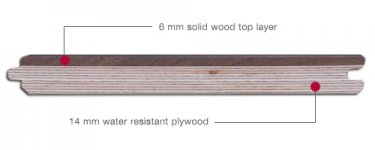
The material I'm cutting is engineered wood flooring, 3/4" total thickness, with the European Oak wear layer being 1/4". It is prefinished so I want to cut as clean as possible where I do need to cut it.

Will be ripping with tablesaw and crosscutting with miter. Sometimes high priced blades are not what they are supposed to be and sometimes they are.

So any recommendations as to brand, type or number of teeth and the like would be helpful.
 
To avoid these ads, REGISTER NOW!

dxdexter

Well-known member
Joined
Aug 1, 2006
Messages
1,923
I've always had great results with Freud blades. My table saw and Miter saw are both 10" so I am unfamiliar with 12" products. For your purpose a 10", 50 tooth, thin kerf combination should should do the trick.

You could go with an 80 tooth laminate/plywood blade for cleaner crosscuts , but the added expense is probably not warranted. They tend to heat up when cutting solids (incorrect profile and too many teeth in the cut) so they must be switched out prior to ripping hardwoods.

These blades (50T) are not exactly cheap and run around $60 or $70 up here in Canada. In the past when making glued-up panels, these blades have ripped hardwood so smooth that no jointing was required prior to gluing.

They should be available at Home Depot.
 
Last edited:

SteveU

Well-known member
Joined
Nov 20, 2006
Messages
1,243
Location
Michigan
I have the CMT blades on mine, use a 80 tooth crosscut for fine work & a 50 tooth for general cuts either rip or crosscut and have a dedicated rip blade 24 tooth if I remember right. Depending on your saw you may benefit from a thin kerf blade, contractor saws benefit more than cabinet saws. For all around blades the Forrest WoodWorker II blade is one of the better ones but will run around 100.00 +-
 

mulepackin

Well-known member
Joined
Dec 13, 2006
Messages
909
Location
Montana
Ditto the Freuds. I've done a lot of cabinet work using mine. Cutting melamine, standard IPB, and plastic laminates, as well as hardwood plywood and dimensional stock. Check their website and you should be able to figure out which one(s) to go with. I also have a lot of regard for Forrest blades, but they are a fair bit more, so unless doing high end work, routinely, I would not probably go that route.
 

Abodyracer

Well-known member
Joined
Jan 20, 2007
Messages
531
Location
Lincoln, NE
I'll give my praise for the Freud as well, though not from personal usage experiance but more from woodworking customers that come into my store. They all ask for Freud blades when looking for replacements.
 

dxdexter

Well-known member
Joined
Aug 1, 2006
Messages
1,923
Because the product you are cutting is a composite of materials, a combination blade is probably the best choice. It works well in a variety of materials, while not excelling in any one material. It is in fact a compromise blade.

As noted there are many great blade manufacturers and price ranges. the key is not to buy the cheapest blade on the shelf. My experience has shown me that the cheaper blades tend to need stabilizers added to cut cleaner (and then not always), where the better quality blades tend to perform well "out of the box".

Here is a link to the Freud product that may suit your needs: http://www.freudtools.com/p-32-combinationbr-nbsp.aspx

You may also find CMT or Forrest products that suit your needs. I have never used these manufacturers, but I'm sure they also make a quality product.

I don't think Snap-on makes wood saw blades , so we don't have to go down that road. THANK GOD.:)
 

justinking060310

Well-known member
Joined
Nov 2, 2006
Messages
126
Ill cast my vote for the Forrest Woodworker II for fine work, and I use a Dewalt contractor grade for most rough work. I thought Freud was wonderful until I put the Woodworker II blade on the saw.

J
 

le6920

Well-known member
Joined
Jan 17, 2008
Messages
266
Ill cast my vote for the Forrest Woodworker II for fine work, and I use a Dewalt contractor grade for most rough work. I thought Freud was wonderful until I put the Woodworker II blade on the saw.

J


I'll agree the Forrest and Ridge blades are top of the line. I disagree that a combination blade is the way to go on your miter box. You are looking for a very smooth cut. In birch plywoods, melamine and hardwoods you are looking for glass smooth cuts combination blade is not as good as a fine tooth carbide on your box. I would use a 80+ tooth carbide blade. Cut smoothly, make sure you miter box supports the material at the end under the blade. You can make a jig out of hardwood to set on if your opening is too large, similar to how you make your zero clearance table saw ones. You don't want a really big gap to encourage tearout. Also after you miter box goes through the piece, slide it away from the blade slightly before bringing the saw back up.

The Freud blades are excellent blades, along with CMT, but the Forrest are better, it'll hit your pocketbook. Sometimes the mission calls for the best blade.

A high quality combination blade (50+ tooth) would be ok on your table saw, if you are going to do a lot of ripping on the material.

You cannot go wrong with the high end Forrest or Ridge blades.

http://www.forrestblades.com/

http://www.ridgecarbidetool.com
 

dxdexter

Well-known member
Joined
Aug 1, 2006
Messages
1,923
I disagree that a combination blade is the way to go on your miter box.

Not to be argumentative, but the OP has a 12" miter saw and a 10" table saw. As stated in my first post I know nothing of the 12" blades, so I assumed he would know I was recommending for the table saw. I guess I should have been more clear.

A good 80T "compound miter " blade is of course an excellent choice . It is the blade I run in my 10" saw and works well for cross cuts, but not so great for ripping.

I recommended a 50T combination blade only because the material he wishes to cut is an engineered flooring. In my neck of the woods it consists of a solid wood top adhered to a relatively dimensionally stable backing ie. plywoods, HDF or similar products. Sometimes you have to make a compromise in order cover all aspects of the job without breaking the bank

If the material was monolithic then a product specific blade would be in order.
 
Last edited:

le6920

Well-known member
Joined
Jan 17, 2008
Messages
266
Not to be argumentative, but the OP has a 12" miter saw and a 10" table saw. As stated in my first post I know nothing of the 12" blades, so I assumed he would know I was recommending for the table saw. I guess I should have been more clear.

A good 80T "compound miter " blade is of course an excellent choice . It is the blade I run in my 10" saw and works well for cross cuts, but not so great for ripping.

I recommended a 50T combination blade only because the material he wishes to cut is an engineered flooring. In my neck of the woods it consists of a solid wood top adhered to a relatively dimensionally stable backing ie. plywoods, HDF or similar products. Sometimes you have to make a compromise in order cover all aspects of the job without breaking the bank

If the material was monolithic then a product specific blade would be in order.

I am not arguing that a 50T quality combo blade would work on the table saw.

I have had good excellent results using a 80T 10 fine carbide on both the radial, miter and table saw, but that is one advantage of having all 10" machines. You can break out the high dollar blade for use on any of them when you need it and run a 'cheaper' blade when it will work. :beer:
 
OP
R

ron in sc

Well-known member
Joined
Mar 19, 2006
Messages
1,071
Location
Charleston, SC
As usual selecting the right tool for the application is never as simple as one would like it to be.

While the material is engineered see photo, I am most concerned about keeping the oak veneer in as good of shape as possible. The material is prefinished. All boads are 6' 11" long and are 9 1/2" wide. They all are tonuge and groove on all four sides. To install so they have a random pattern we will cut the ends off of some of the board and use the cut ends against the wall. We may want to put some shorter board in the middle and if so I'll have to do a little cutting. That's where I want a very good functioning blade The wood was $14 per square ft., and very difficult to find so I think it's worth getting a very good blade for the crosscutting.


As far as the ripping goes; those cuts will be covered by quarter round moulding so I don't think I need the best blade for that.

Given the size and type of board and recommendation on which Forrest blade would be best.

I did a search on the Forrest blades and they seem the way to go for my crosscutting needs.
 

Attachments

  • Construction-Image.jpg
    Construction-Image.jpg
    36 KB · Views: 12
To avoid these ads, REGISTER NOW!

dxdexter

Well-known member
Joined
Aug 1, 2006
Messages
1,923
The wood was $14 per square ft., and very difficult to find so I think it's worth getting a very good blade for the crosscutting.


Given the size and type of board and recommendation on which Forrest blade would be best.

I did a search on the Forrest blades and they seem the way to go for my crosscutting needs.

Wow, $14/ft. and I thought flooring materials were expensive up here in Canada.

Which ever blade you choose , I'm sure you will be happy. Best of luck.
 

justinking060310

Well-known member
Joined
Nov 2, 2006
Messages
126
I'll agree the Forrest and Ridge blades are top of the line. I disagree that a combination blade is the way to go on your miter box. You are looking for a very smooth cut. In birch plywoods, melamine and hardwoods you are looking for glass smooth cuts combination blade is not as good as a fine tooth carbide on your box. I would use a 80+ tooth carbide blade. Cut smoothly, make sure you miter box supports the material at the end under the blade. You can make a jig out of hardwood to set on if your opening is too large, similar to how you make your zero clearance table saw ones. You don't want a really big gap to encourage tearout. Also after you miter box goes through the piece, slide it away from the blade slightly before bringing the saw back up.

The Freud blades are excellent blades, along with CMT, but the Forrest are better, it'll hit your pocketbook. Sometimes the mission calls for the best blade.

A high quality combination blade (50+ tooth) would be ok on your table saw, if you are going to do a lot of ripping on the material.

You cannot go wrong with the high end Forrest or Ridge blades.

http://www.forrestblades.com/

http://www.ridgecarbidetool.com

LE6920: I said rough and I meant rough. I usually only cut rough cut lumber on the miter box. I use the table saw almost exclusively for all miter cuts and ripping, as well as cross cutting. This is the reason for my blade recommendation. I should have been more clear in my original post.

To the OP:
If you have a good table saw that is precise, I would recommend using a good miter gauge for your precision cuts. I would agree that every cut counts with your lumber. My recommendation is the Woodworker II. I have used this blade for a long time, and most of the time I get glue-line rips with it. Manufacturer's info can be found here.
http://www.forrestblades.com/woodworker_2.htm

A nice Incra miter gauge will set you back less than $200, that could well be worth a couple screw ups on your cuts. And you will have an excellent piece of machinery left over. This is not to say you can not get accurate cuts without it, but I need all the help I can get, hence my recommendation.
 

Mike F

Well-known member
Joined
Jan 28, 2006
Messages
197
Location
Long Island, NY
Let me throw in my vote for the Forrest WoodWorker II blades here. In my opinion they are truly premium blades. I've been using them for quite some time and have never had a problem. I use a thin kerf blade, but also use stiffeners on the arbor and they cut mirror smooth. This is, of course, on the tablesaw. I haven't used them, but have heard very good reviews about the CMT as well.
 
OP
R

ron in sc

Well-known member
Joined
Mar 19, 2006
Messages
1,071
Location
Charleston, SC
A nice Incra miter gauge will set you back less than $200, that could well be worth a couple screw ups on your cuts. And you will have an excellent piece of machinery left over. This is not to say you can not get accurate cuts without it, but I need all the help I can get, hence my recommendation
.

Well, I figured out I will not be able to use my 12" cuttoff/miter saw one the planks. The saw will only cut boards as wide as 7", so with the planks being 9 1/2" wide I'll have to use my 21 year old Delta 10" table saw.

I would like to get a miter gauge that's nicer than what I have as well as some table extensions to help support the planks as I cut them.
 

dxdexter

Well-known member
Joined
Aug 1, 2006
Messages
1,923
I would just make a simple crosscut sled. The ones here are good examples, and should give very accurate cuts that would suit your needs.
http://www.thewoodshop.20m.com/howto_crosscut.htm

I second that. A little effort into the making of a cross cut sled will be well worth the effort. The one pictured below has made dozens of sets of kitchen cabinets and gives extremely accurate results. You may even have enough scrap around your shop to make it for nothing.

Tablesaw003.jpg
 

justinking060310

Well-known member
Joined
Nov 2, 2006
Messages
126
I would just make a simple crosscut sled. The ones here are good examples, and should give very accurate cuts that would suit your needs.
http://www.thewoodshop.20m.com/howto_crosscut.htm

I will third this! I just went back and reread the OP, and realized he only needs to cross-cut. I was thinking that he needed make miter cuts. There are tons of designs for cross-cut sleds on the web. I have one as well. Very good option. Make sure you get nice slides(available locally at Woodcraft) and use the t-track on both sides of the blade.

J
 

l_bilyk

Well-known member
Joined
Mar 11, 2005
Messages
1,773
Location
Ontario, Canada
All of my blades are freud, but I use a combination blade for general stuff, a glueline rip blade for ripping, and a fine 80T for an cross grain or miter cuts. The 80T will produce a glass-like finish but if you get the feed rate wrong it will burn. If you're only buying one, the 40T woodworker II is the preferred general purpose blade.
 

Vicegrip

Well-known member
Joined
Mar 9, 2007
Messages
1,187
Location
NoVA.
Look at the tooth type as well. # of teeth is one thing but the tooth cut is also important. Alternate top bevel, triple chip or other? Read up on the manufactures recomendations and look at the teeth.
A combo blade is most often comprised of 3 teeth in standard hight Alternate Top Bevel format followed by a Flat Tooth (FT) raker that has a large gullet. Not good for fine work regardless of tooth # as the FT can chip hard surfaces.

For hard surfaces like laminates including high density engineered flooring look for a Triple Chip Grind with a Raker. (TCG+R) In this case the raker is shoulder cut on the sides some and only rakes the center of the cut to clear the kerf.

For engineered flooring that is made from plywood with a laminate surface look for HiATB High Alternate Bevel. No raker and very good surface finish. With a HiATB all considerations to cut quality are given to leaving glass like kerf sides and no stress to the surface layer.

Once you get away from general purpose hardware store blades the number of teeth will often be determined by the blade size and tooth type employed.

I like to use a HiATB in a compound slide miter saw for flooring. 10 inch blade but can cut a 10 inch plank. Table saws are too hard to use on long stock when tweaking off the last little shaving to get a plank to fit just right.


A sliding compound miter saw might be the answer to the 9 inch board.
 
Last edited:

Vinko

Well-known member
Joined
Jul 7, 2008
Messages
5,829
Location
Los Angeles
Last edited:
To avoid these ads, REGISTER NOW!
Top Bottom