too humid for thatCan you install a swamp cooler?

You are using an out of date browser. It may not display this or other websites correctly.
You should upgrade or use an alternative browser.
You should upgrade or use an alternative browser.
Temporary a/c fix?
- Thread starter ybnormal
- Start date
chris142
Well-known member
Bummertoo humid for that
Its all we use here.
I trimmed off the usual BS, here it is below.I'm not really a fan of their quote. I would want a model #, especially if you have that may different units being quoted.
There's no description of the work to be done. Is it just the outdoor unit, air handler, maybe line set and connect to existing duct? Or redoing some duct?
The variable speed compressor is nice. I don't really need it for cooling but they are great for heating in Midwest winters. Heating probably isn't the bigger concern for you. You are locked into their thermostat.
Nice thing about the 1 and 2 stage units is simpler to troubleshoot and repair. Generally don't heat as well as low temperature.
100% Satisfaction Guarantee
Installation Workmanship Guarantee
Better Than We Found It Guarantee
No Change Order Guarantee
Lowest Price Guarantee
Exclusive "No Lemons" Guarantee
All installs will be permitted and brought up to code.
as for temperatures here in Austin? here's a graph of all of last years temps from National Weather Service. ignore red/light blue, those are historical high/lows. the dark blue is the daily temps for 2023 alone, as you can see it went from about 28F in February to highs over 100F in June-July-Aug-Sep. they claim the "green" band behind the dark blue is the average.( I think we can safely say that using averages in regional temps is useless.)

as for the features? I have found over the last 29 yrs in this house that I prefer a programmable t-stat set by ME, not the stupid learning stuff or internet programmable ****.
and as for the units, it would be a complete replacement of inside and outside units. no doubt they are using the existing lines which run through the slab. went back and looked at the quote and nowhere did they mention the models, just showed pictures, of which 4 out of 5 are matching pictures (which means nothing)
bluedog225
Well-known member
Hey neighbor. Wow. Those units are expensive. I keep thinking my central air is “brand new” but I had it installed in 1995 for $5,000.
pretty sure I’m going mini split or window units when it dies.
till then, they can have my mercury thermostat when they pry it out of my cold, dead, hands.
pretty sure I’m going mini split or window units when it dies.
till then, they can have my mercury thermostat when they pry it out of my cold, dead, hands.
you're also at 2900ft of elevation in a semi-arid environment that gets 14" annual rainfall, we're at 650ft getting 38" annual rainfall. elevation makes a huge differenceBummer
Its all we use here.
For the high seer models, will they even get rated seer coupled with your existing duct work? Advertised seer is only with ideal conditions. If you choke the air flow efficiency goes down.
I know for my area those quotes would be high for just swapping out equipment.
I know for my area those quotes would be high for just swapping out equipment.
Hey neighbor. Wow. Those units are expensive. I keep thinking my central air is “brand new” but I had it installed in 1995 for $5,000.
pretty sure I’m going mini split or window units when it dies.
till then, they can have my mercury thermostat when they pry it out of my cold, dead, hands.
since I just got back from my extended trip, I haven't had time to contact any other vendors. but I will be checking with other installers and seeing what kind of packages they are offering.Damn 9K?!! I put in a new unit for 5500 in my home 2Ksqft Cape back in 2019, but seems crazy they would jump 4K in that time, but the "C" word did weird things.
our only power source is electric, no gas/propane for heating or cooking.
what also ***** is we have no shade. my house sits about 14' above the street with a clear unobstructed view facing east with no trees in front (which couldn't really grow there anyway due to the rock). here's a pic from back in April on a Wed morning at about 9am. and that lasts all day until about 8pm when the trees on the back property line finally start blocking the lowering sun to the first floor windows.

chris142
Well-known member
3109 ft actully. I didnt know your area was so wetyou're also at 2900ft of elevation in a semi-arid environment that gets 14" annual rainfall, we're at 650ft getting 38" annual rainfall. elevation makes a huge difference
the mountain range south and west of you prevents most of that ocean water from reaching you as rain. here, it's just a gradual slope up from the gulf 150 miles away. at least it ain't Houston with all that humidity3109 ft actully. I didnt know your area was so wet
Snapped-off
Well-known member
I'd avoid the variable speed stuff. 2 stage would be nice though.
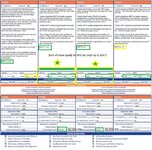
ok, so I requested estimates online and 4 a/c companies responded. gave each one the exact same info about the house, age of unit, plans to sell house so probably just need Good & Better not Best, whether system is eligible for the IRS $2k write-off, etc, and these are the responses I got.
I've stripped out i.d.'ing info from the estimates so as to not embarrass any one company. I'm interested in what our GJ forum members who are HVAC professionals think of these estimates, the equipment being spec'd, and whether I am missing something I should be asking about. If relevant, locale for the pricing given is Central Texas.
I've stripped out i.d.'ing info from the estimates so as to not embarrass any one company. I'm interested in what our GJ forum members who are HVAC professionals think of these estimates, the equipment being spec'd, and whether I am missing something I should be asking about. If relevant, locale for the pricing given is Central Texas.
Attachments



Last edited:
Snapped-off
Well-known member
Looks like Atlas is the cheapest by a longshot.ok, so I requested estimates online and 4 a/c companies responded. gave each one the exact same info about the house, age of unit, plans to sell house so probably just need Good & Better not Best, whether system is eligible for the IRS $2k write-off, etc, and these are the responses I got.
I've stripped out i.d.'ing info from the estimates so as to not embarrass any one company. I'm interested in what our GJ forum members who are HVAC professionals think of these estimates, the equipment being spec'd, and whether I am missing something I should be asking about. If relevant, locale for the pricing given is Central Texas.
danski0224
Well-known member
ok, so I requested estimates online and 4 a/c companies responded. gave each one the exact same info about the house, age of unit, plans to sell house so probably just need Good & Better not Best, whether system is eligible for the IRS $2k write-off, etc, and these are the responses I got.
I've stripped out i.d.'ing info from the estimates so as to not embarrass any one company. I'm interested in what our GJ forum members who are HVAC professionals think of these estimates, the equipment being spec'd, and whether I am missing something I should be asking about. If relevant, locale for the pricing given is Central Texas.
Those are all standard "box swap" quotes.
Where's the load calculation?
Some manufacturers have lineset tables in the equipment specs that do allow the use of "undersized" linesets in some applications. Length is the issue. There is some capacity loss.
You can spend a bunch of time futzing through the AHRI website with some of the information provided to get the actual tested capacity.
The SEER **** is meaningless if the ductwork cannot handle the airflow. It looks like they are matching the evaporator coil to the equipment size, and one normally needs to go at least 0.5 tons larger and a larger blower to even get close to the claimed SEER numbers.
Do not buy high SEER unless they provide you with an AHRI match certificate, and verify the model numbers. Again, if the ductwork is undersized, you won't get the claimed SEER number, no matter what the certificate says.
And because Four Seasons Heating and Cooling near Chicago will **** you out of your 10 year parts warranty if you do not get the equipment serviced annually by them, you better check the fine print on that stuff. You also need to check equipment registration yourself. You would get an email stating that it is registered (customer info is required during the registration process). Do NOT assume that they will do it for you.
There is normally a web address for registration in the factory warranty lingo, easily found.
Looks like Atlas is the cheapest by a longshot.
yeah, but they also gave me practically no info even though I clearly stipulated in my RFP that it should be indicated whether or not the system qualifies for the EnergyStar tax credit of up to $2k. (aside from the fact they only provided one model when I also mentioned needing a Good, Better, Best set of options)
Those are all standard "box swap" quotes.
Where's the load calculation?
is a load calculation required if simply doing a box swap?
Some manufacturers have lineset tables in the equipment specs that do allow the use of "undersized" linesets in some applications. Length is the issue. There is some capacity loss.
I spoke to one of the other companies on a followup and mentioned the "linesize" item pointed out by the other contractor. He stated that on a larger 4-5 ton install he has seen a performance loss but only of a couple percentage points. On a 2-ton unit it should be negligible. my understanding is the line size is what contributes to not delivering enough freon/coolant flow and this causes the performance loss. correct?
my guess on the length of that line is around 15-20ft max through the slab for this ground-floor unit.
You can spend a bunch of time futzing through the AHRI website with some of the information provided to get the actual tested capacity.
so you're saying take the provided model info and go thru the AHRI website to see actual tested capacity? does this mean they don't actually test the specific units, but in reality just derive the calculated SEER #'s etc from design specs?
The SEER **** is meaningless if the ductwork cannot handle the airflow. It looks like they are matching the evaporator coil to the equipment size, and one normally needs to go at least 0.5 tons larger and a larger blower to even get close to the claimed SEER numbers.
Do not buy high SEER unless they provide you with an AHRI match certificate, and verify the model numbers. Again, if the ductwork is undersized, you won't get the claimed SEER number, no matter what the certificate says.
why would the ductwork not be able to handle the airflow if I'm simply replacing like-for-like (assuming it was done properly 40 yrs ago)? and if I get the AHRI certificate, whether I get the claimed SEER or not, I'm guessing the IRS will still approve a tax credit on my tax return?

Energy Efficient Home Improvement Credit | Internal Revenue Service
If you make home improvements for energy efficiency, you may qualify for an annual tax credit up to $3,200.
And because Four Seasons Heating and Cooling near Chicago will **** you out of your 10 year parts warranty if you do not get the equipment serviced annually by them, you better check the fine print on that stuff. You also need to check equipment registration yourself. You would get an email stating that it is registered (customer info is required during the registration process). Do NOT assume that they will do it for you.
yeah a "No Lemon" guarantee is worthless unless the company stands behind it. I've already been looking at multiple sites for reviews of these companies and have seen some of the "gotchas" people are complaining about. I look at the reviews, I look at the responses by the company, I throw out the obvious ******** stuff to come up with a "true review profile", which is usually a lower average than what the site shows.
as for warranty transferability, my one callback so far mentioned that Texas passed a law a few years ago that requires a warranty to be transferable to the new homeowner. I'll be verifying that and if not true that company will have points deducted from my selection process. Though they did say the company would need to be notified of new owner if home is sold.
There is normally a web address for registration in the factory warranty lingo, easily found.

danski0224
Well-known member
Not sure if it is "required". Some places it might be.is a load calculation required if simply doing a box swap?
In any event, why not?
Refrigerant flow would be less.I spoke to one of the other companies on a followup and mentioned the "linesize" item pointed out by the other contractor. He stated that on a larger 4-5 ton install he has seen a performance loss but only of a couple percentage points. On a 2-ton unit it should be negligible. my understanding is the line size is what contributes to not delivering enough freon/coolant flow and this causes the performance loss. correct?
my guess on the length of that line is around 15-20ft max through the slab for this ground-floor unit.
The manufacturer spec would tell if the configuration is allowed, or not.
As I understand it, they actually test equipment combinations.so you're saying take the provided model info and go thru the AHRI website to see actual tested capacity? does this mean they don't actually test the specific units, but in reality just derive the calculated SEER #'s etc from design specs?
Problem area is in bold.why would the ductwork not be able to handle the airflow if I'm simply replacing like-for-like (assuming it was done properly 40 yrs ago)?
Government rebates do not care if the equipment is installed properly or not. California ended Title 24 rebates years ago that were based upon paper matches because actual energy consumption went up, not down, due to ****** installs. Now there are test in, test out requirements. These reports need to be generated by the test equipment to eliminate or at least make it really hard to forge results.and if I get the AHRI certificate, whether I get the claimed SEER or not, I'm guessing the IRS will still approve a tax credit on my tax return?
Energy Efficient Home Improvement Credit | Internal Revenue Service
If you make home improvements for energy efficiency, you may qualify for an annual tax credit up to $3,200.www.irs.gov
The equipment may not actually need to be installed, either. Depends on requirements to get the gubment cheese.
It isn't just "No Lemon".yeah a "No Lemon" guarantee is worthless unless the company stands behind it. I've already been looking at multiple sites for reviews of these companies and have seen some of the "gotchas" people are complaining about. I look at the reviews, I look at the responses by the company, I throw out the obvious ******** stuff to come up with a "true review profile", which is usually a lower average than what the site shows.
as for warranty transferability, my one callback so far mentioned that Texas passed a law a few years ago that requires a warranty to be transferable to the new homeowner. I'll be verifying that and if not true that company will have points deducted from my selection process. Though they did say the company would need to be notified of new owner if home is sold.
Some companies will void the manufacturer parts warranty if you do not have annual service visits. Four Seasons (Chicago) is one of those ****** companies.
Manufacturer warranty verbiage does not normally void parts coverage if annual visits are not performed... but there is usually room to do so, IF they choose.
In my experience, it is up to the wholesaler.
Last I heard, Sid Harvey's was the supplier for Four Seasons, and I do not know what they would do if I tried to warranty a Lennox part there out of equipment that was sold by Four Seasons. That company moves a lot of boxes, so there might be some pull.
That said, performing warranty service on "foreign" equipment (stuff I did not install) is a pain. Many wholesalers will do it, but on a pay for part and get refunded later basis. Sometimes, the refund is a credit, which can ****. "Later" can be a while, and some parts are actually sent back to the manufacturer and checked before credit is issued. Some will charge a fee to the contractor to do a warranty part exchange if they did not sell the equipment. Customers do not want to pay now and maybe get refunded later, so that ends a lot of warranty part discussions.
one of the guys that showed up was the owner/installer. I know he has a crew but whether he would be there personally I do not know. suppose I could always make it a condition of the contract that HE has to be there.Honestly the good, better, best thing doesn't appeal to me. The first and last quote just seem like a lot of marketing.
I want a quote done by the guy installing and servicing equipment. Not a salesman.
is a load calculation required if simply doing a box swap?
Not sure if it is "required". Some places it might be. In any event, why not?
I'm narrowing my list down and will check with each company if they would do a load calculation
I spoke to one of the other companies on a followup and mentioned the "linesize" item pointed out by the other contractor. He stated that on a larger 4-5 ton install he has seen a performance loss but only of a couple percentage points. On a 2-ton unit it should be negligible. my understanding is the line size is what contributes to not delivering enough freon/coolant flow and this causes the performance loss. correct?
my guess on the length of that line is around 15-20ft max through the slab for this ground-floor unit.
hmmm, is it possible for me as a consumer to call up the manufacturer and ask these questions?Refrigerant flow would be less.
The manufacturer spec would tell if the configuration is allowed, or not.
why would the ductwork not be able to handle the airflow if I'm simply replacing like-for-like (assuming it was done properly 40 yrs ago)?
I can't remember if it was checked last time system was replaced in '99. I've slept since thenProblem area is in bold.
 and if I get the AHRI certificate, whether I get the claimed SEER or not, I'm guessing the IRS will still approve a tax credit on my tax return?
Government rebates do not care if the equipment is installed properly or not. California ended Title 24 rebates years ago that were based upon paper matches because actual energy consumption went up, not down, due to ****** installs. Now there are test in, test out requirements. These reports need to be generated by the test equipment to eliminate or at least make it really hard to forge results.
The equipment may not actually need to be installed, either. Depends on requirements to get the gubment cheese.
well, it's not a rebate, it's a credit that comes off the income taxes. but I'll be checking into the evidence requirements so it'll be right if an audit ever rolls around
It isn't just "No Lemon".
Some companies will void the manufacturer parts warranty if you do not have annual service visits. Four Seasons (Chicago) is one of those ****** companies.
Manufacturer warranty verbiage does not normally void parts coverage if annual visits are not performed... but there is usually room to do so, IF they choose.
good to know. I'll be following up with questions in the vein of "is a maintenance contract required? is proof of annual visits required? etc"
you mention "wholesalers". I assume this term is equivalent to HVAC retailer/installer who obtains the part from the manufacturer?That said, performing warranty service on "foreign" equipment (stuff I did not install) is a pain. Many wholesalers will do it, but on a pay for part and get refunded later basis. Sometimes, the refund is a credit, which can ****. "Later" can be a while, and some parts are actually sent back to the manufacturer and checked before credit is issued. Some will charge a fee to the contractor to do a warranty part exchange if they did not sell the equipment. Customers do not want to pay now and maybe get refunded later, so that ends a lot of warranty part discussions.
danski0224
Well-known member
hmmm, is it possible for me as a consumer to call up the manufacturer and ask these questions?
I seriously doubt that a manufacturer would talk to a homeowner.
However, the information is typically located in the specifications or capacity charts, which can be found with Google Fu.
does a client normally pay for it to be done? assuming it was done properly 40 yrs ago, and there have been no remodels, etc, is there any reason for the load to change?A load calculation would be great. If you are having 4 companies quote then I would expect to pay for the load calculation.
danski0224
Well-known member
no doubt they are using the existing lines which run through the slab.
Missed this.
That could **** badly.
I wouldn't warranty that part of the job, if the lineset was reused.
Can also cause major issues from cooling the vapor line, giving the compressor liquid back.
I'd replace the lineset, and make sure that there aren't any concealed joints. It will require drywall work.
Can be hidden on the exterior with a lineset cover.
danski0224
Well-known member
does a client normally pay for it to be done? assuming it was done properly 40 yrs ago, and there have been no remodels, etc, is there any reason for the load to change?
I don't do it unless I get the job, and specify this.
If the person wants a load calculation, I can do it for a fee, and take that off of the job.
Unless your municipality requires Manual J, S and D as part of the permit process, no residential contractor does it. No one did that stuff here, until fairly recently. And now only because code requires it... which just may be because of ****** work...
Last edited:
If I was the only one quoting the job then I wouldn't charge for it separately.does a client normally pay for it to be done? assuming it was done properly 40 yrs ago, and there have been no remodels, etc, is there any reason for the load to change?
I would say the chances of everything being sized properly 40 years ago are slim. That's what I notice in my area anyway.
Even if the duct was sized properly for the old equipment, the new stuff will usually need more airflow if you want it to meet it's efficiency rating. The only good part is that the old equipment was usually oversized, hopefully with duct to match. So when you put in smaller new equipment you have a chance at having enough duct
Last edited:
the original units in 1984 were Lennox , SEER 9, that's all I know. apparently that was good for back then. considering our neighborhood was built outside city ETJ and was considered upscale, I wouldn't be surprised if those were high-end units then.If I was the only one quoting the job then I wouldn't charge for it separately.
I would say the chances of everything being sized properly 40 years ago are slim. That's what I notice in my area anyway.
Even if the duct was sized properly for the old equipment, the new stuff will usually need more airflow if you want it to meet it's efficiency rating. The only good part is that the old equipment was usually oversized, hopefully with duct to match. So when you put in smaller new equipment you have a chance at having enough duct
don't know if required but none of the respondents mentioned it. I'll check with local code. if required, ok, if not then tell the winner it's required as part of the deal. if we have to upsize equipment at that point, ok.I don't do it unless I get the job, and specify this.
If the person wants a load calculation, I can do it for a fee, and take that off of the job.
Unless your municipality requires Manual J, S and D as part of the permit process, no residential contractor does it. No one did that stuff here, until fairly recently. And now only because code requires it... which just may be because of ****** work...
I do know (because it happened to us a few years ago on the attic unit) that if you replace ducting they require a load balance test if more than X% is replaced. and not a lot of installers were doing that at the time in Austin.
@Bert_ @danski0224
do either of you have any comments on the specific models being quoted? Lennox Merit series vs Carrier vs Daikin vs American Standard, etc?
like auto parts, I don't want bottom of the barrel but just solid reliable standard stuff
do either of you have any comments on the specific models being quoted? Lennox Merit series vs Carrier vs Daikin vs American Standard, etc?
like auto parts, I don't want bottom of the barrel but just solid reliable standard stuff
probably originalSo i saw mention of the line sets run in the slab?
How much life is left in those, are they corroded and about to let go?
pretty sure it runs thru the slab and not the drywallMissed this.
That could **** badly.
I wouldn't warranty that part of the job, if the lineset was reused.
Can also cause major issues from cooling the vapor line, giving the compressor liquid back.
I'd replace the lineset, and make sure that there aren't any concealed joints. It will require drywall work.
Can be hidden on the exterior with a lineset cover.

danski0224
Well-known member
Which is why the whole system needs to be evaluated for a proper job.The only good part is that the old equipment was usually oversized, hopefully with duct to match.
danski0224
Well-known member
You will want to replace this, if it is run through the slab.pretty sure it runs thru the slab and not the drywall
Easy to tell, because the lineset will be sticking up from the floor.
Last edited:
danski0224
Well-known member
do either of you have any comments on the specific models being quoted? Lennox Merit series vs Carrier vs Daikin vs American Standard, etc?
Honestly, it really comes down to the installation.
A poorly installed platinum plated HVAC system will fail much sooner than a plain Jane one.
Goodman gets a bad rap because literally anyone can buy it online, while it is much harder to impossible to buy Lennox, Trane, American Standard, etc. outside of normal HVAC wholesaler channels. And even then, there are equipment tiers (Carrier/Bryant, American Standard/Trane/Ameristar, Lennox/AirEase/Ducane) within "brands". Not anyone can become an American Standard dealer, and the same is true of the other upper marketing tiers. Even if I could sell a million dollars a month of American Standard equipment, the territory is locked out in my area.
And the big name "Comfort Experts" or "Platinum Dealers" is just a title attained by reaching a monthly sales target of box sales. It has absolutely ZERO to do with quality of workmanship.
After a few Bosch equipment installs, I prefer it over the other stuff I have installed. Yes, it is made in China. However, the standards/specifications are top notch. It appears to be very well made. As I understand it, it is made by Midea.
And if you get into the equipment matches and capacities with the Bosch inverter equipment, you can put a 3ton condenser on a 2 ton evaporator and get oodles of heat out of it. Can't do that with non-inverter stuff.
Last edited:
danski0224
Well-known member
I'm guessing the IRS will still approve a tax credit on my tax return?
well, it's not a rebate, it's a credit that comes off the income taxes. but I'll be checking into the evidence requirements so it'll be right if an audit ever rolls around
If the installation meets the rebate or credit requirements, then nothing else matters. The Federal stuff is based upon paper matches and specs, so if the AHRI certificate meets the stated credit requirements, and if you have a receipt/invoice for the work performed, that's all that matters.
Model and serial numbers should be on the invoice, and the model numbers there will match the AHRI certificate. Golden.
phantoms01TC
Member
- Joined
- Jan 19, 2016
- Messages
- 8
A window unit might be the quickest fix. It won't be perfect, but it could help keep things cool enough in the downstairs area. Just make sure it’s rated for a 1200 sqft space. If you can get it set up before you leave, it might be your best bet for peace of mind.
1949 caddyman
Well-known member
This is great info for me as our roof top unit is 20 years old & will be replaced this fall
ratflinger
Well-known member
Just so you know - Equipment cost is less than $4600, cause that's what I can get it for off the street. (I'm not in the business)also got the quotes from them for various system options...and yes, these are heat pumps. I've never heard of the Daikin brand until now. it seems they bought out Goodman in 2012
https://www.building-center.org/goodman-hvac-age/
old system being replaced is a Goodman A24-08 (inside air handler built May 1999) and Goodman CPKE24-1AB (outside built May of 1998) 2-ton unit
going to check with my electric provider to see if they have any rebates for certain SEER levels.
minor differences in scope of work between each quote highlighted in bold blue, system specs are already obvious differences
danski0224
Well-known member
And hvac work is only worth $19 an hour...Just so you know - Equipment cost is less than $4600, cause that's what I can get it for off the street. (I'm not in the business)
we've already been and back. window unit still running now. called our electric co-op and they were able to tell me how much 'leccy we been using. as near as I can figure, our bill will be almost double for this time period. the window unit never shuts off, the regular t-stat shows constant at 78F, and we have 3 ceiling fans running 24/7.A window unit might be the quickest fix. It won't be perfect, but it could help keep things cool enough in the downstairs area. Just make sure it’s rated for a 1200 sqft space. If you can get it set up before you leave, it might be your best bet for peace of mind.
I figured on that. I've seen prior threads on GJ about this issue and had already determined price wasn't the differentiator. The trick is in identifying the good installers and the only way I know how to do that is to ask you guys questions about the systems being proposed because you should be able to spot the BS right off the bat in answers provided by installers.Honestly, it really comes down to the installation.
A poorly installed platinum plated HVAC system will fail much sooner than a plain Jane one.
if my old trusted HVAC guys were around I'd be talking to them most likely, but they retired and sold the company. they serviced our stuff for 26 yrs, no issues, reasonable pricing. they installed the Goodman we are currently replacing.
Goodman gets a bad rap because literally anyone can buy it online, while it is much harder to impossible to buy Lennox, Trane, American Standard, etc. outside of normal HVAC wholesaler channels. And even then, there are equipment tiers (Carrier/Bryant, American Standard/Trane/Ameristar, Lennox/AirEase/Ducane) within "brands". Not anyone can become an American Standard dealer, and the same is true of the other upper marketing tiers. Even if I could sell a million dollars a month of American Standard equipment, the territory is locked out in my area.

yep, I know enough to dismiss claims of that sort because they are irrelevant to customer satisfaction surveys/reviews.And the big name "Comfort Experts" or "Platinum Dealers" is just a title attained by reaching a monthly sales target of box sales. It has absolutely ZERO to do with quality of workmanship.
no one here has responded with a Bosch model, which could either mean there is no local support for it (which can be an issue) or the vendors that responded were luck-of-the-draw in that none of them deal with it.After a few Bosch equipment installs, I prefer it over the other stuff I have installed. Yes, it is made in China. However, the standards/specifications are top notch. It appears to be very well made. As I understand it, it is made by Midea.
And if you get into the equipment matches and capacities with the Bosch inverter equipment, you can put a 3ton condenser on a 2 ton evaporator and get oodles of heat out of it. Can't do that with non-inverter stuff.
but as you said, it boils down to the quality of the install.
danski0224
Well-known member
no one here has responded with a Bosch model, which could either mean there is no local support for it (which can be an issue) or the vendors that responded were luck-of-the-draw in that none of them deal with it.
There's also competitor issues.
An American Standard dealer can lose their dealer status if word gets out that they are installing something else.
The supplier I use is privately held, and they brought on the Bosch line due to supplier issues with their main line.
A good move on their part.
I can still be a dealer for the main line, but I also have the Bosch option.