Found this thread after looking for it ….
Lots of good info in here !! I use almost exclusively Platinum Tools branded EZRJ45 crimps as well as their crimp tool.
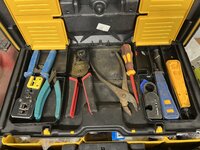
My “go box” has a Platinum Tools 100054C named Carla and she’s been with me for a loooooong time. Next to it are a pair of Panduit CWST snips. They are the best money can buy in my eyes. Then a Platinum 100061C EXO crimp frame and EZex die for 10G stuff. Pliers, electrical screwdriver and then a German built Weldmuller IE-CST cable stripper which is an amazing tool for non standard and shielded cables. Then a pair of Fluke 10051501 D914 punch down tools. One setup for 110 and one for 66 blocks. I’ve been through dozens of tools in dozens of brands and these are the ones that have stuck around.
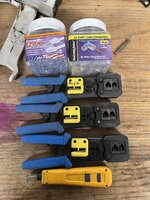
EZRJ45 ends in Cat6 and Cat5e. The Cat6 ends are staggered and allow for larger wire gauges but the 5e ones work with most brands of Cat6 cables without issues. No performance issues I’ve ever been able to detect. Having spare tools is always a good thing lol. Angie is a bit finicky so she gets to live in the spare tools box along with the unnamed spares.
Lots of more expensive brands of stuff out there but it’s been Cable Matters stuff that’s been used the most. Economical and I haven’t had a lick of issues with any of it and I’ve installed thousands of keystone jacks of theirs. I carry a lot of blank plugs because I can’t stand empty spaces in a keystone patch panel lol

Four micro nippers that have been too good to toss but not good enough to be daily users. The bottom one is a Klien brand.

If the budget allows the Fluke CableIQ Qualification Tester is top notch without being a full blown OTDR. The WiFi Texas POE tester is a great tool to see if your POE stuff is doing what it’s suppose to.


