To avoid these ads, REGISTER NOW!

Terrible white staining (efflorescence?) on new slab

Falcon67

Well-known member
Joined
Jun 11, 2009
Messages
18,371
Location
Merkel, TX
Before finish here
Floor2.jpg


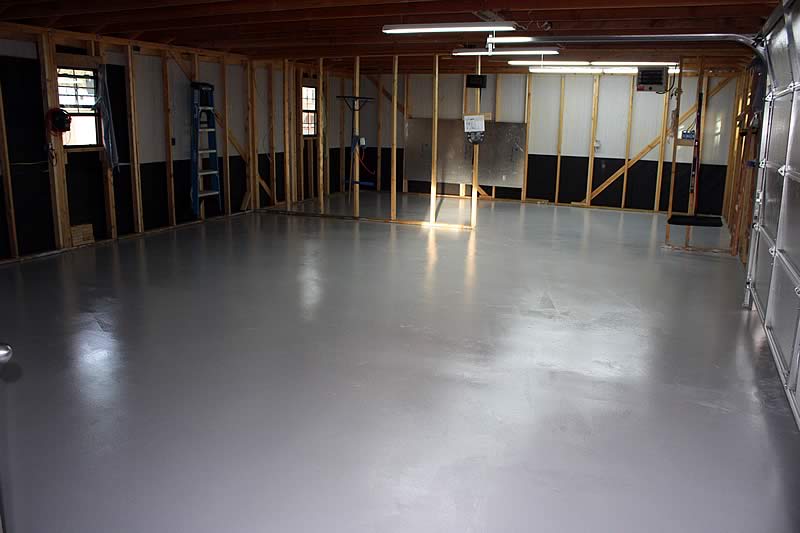
After - cure it, epoxy it, go on about it LOL
Floor3.jpg
 
To avoid these ads, REGISTER NOW!
OP
M

Mike_72

Well-known member
Joined
Jun 12, 2017
Messages
161
Well a few days have passed and my slab was starting to look pretty darn good. Nice uniform shade of light grey with no sign of any crazing to be seen. Until......

We had some rain over night yesterday so when I got home from work today I decided to squeegee the remaining water sitting in the low spots on the slab. First swipe with the squeegee and I nearly fell flat on my a$$ as the water passed over the dry slab. Clearly the entire surface of my slab is covered in crazing. As soon as it dries it goes back to normal. Should I be going after my concrete guy for compensation at this point as it is pretty clear there is an issue with the slab?

attachment.php
 

Attachments

  • 864ADF48-53F6-45DE-A499-ACF5BEC7523A.jpg
    864ADF48-53F6-45DE-A499-ACF5BEC7523A.jpg
    146.5 KB · Views: 119

ConCretin

Well-known member
Joined
Jan 20, 2011
Messages
3,379
Location
Central Maine
The crazing isn't going to come and go. It consists of tiny shrinkage cracks in the surface layer of cement paste. It's unsightly but it isn't structural and doesn't usually affect durability of the surface.

As I mentioned in a prior post, crazing is most often associated with excess water. This can too much mix water i.e. high slump, bleed water still present during finishing or water added during finishing. Crazing can also be caused by inadequate curing - not the problem in your case or some placing techniques that bring a lot of 'cream' to the surface.

I really think you can stop worrying about your slab. Other than aesthetics, there don't seem top be any major issues that will affect the long term performance of your slab. Unfortunately the issues you're experiencing are common in residential construction where tradesmen aren't educated in or motivated to use proper techniques.
 
To avoid these ads, REGISTER NOW!

spudley

Well-known member
Joined
Dec 27, 2016
Messages
702
Location
Northeast Wisconsin
Well a few days have passed and my slab was starting to look pretty darn good. Nice uniform shade of light grey with no sign of any crazing to be seen. Until......

We had some rain over night yesterday so when I got home from work today I decided to squeegee the remaining water sitting in the low spots on the slab. First swipe with the squeegee and I nearly fell flat on my a$$ as the water passed over the dry slab. Clearly the entire surface of my slab is covered in crazing. As soon as it dries it goes back to normal. Should I be going after my concrete guy for compensation at this point as it is pretty clear there is an issue with the slab?
Your slab looks exactly how mine looks. We poured last July, so far so good.

The crazing isn't going to come and go. It consists of tiny shrinkage cracks in the surface layer of cement paste. It's unsightly but it isn't structural and doesn't usually affect durability of the surface.

As I mentioned in a prior post, crazing is most often associated with excess water. This can too much mix water i.e. high slump, bleed water still present during finishing or water added during finishing. Crazing can also be caused by inadequate curing - not the problem in your case or some placing techniques that bring a lot of 'cream' to the surface.

I really think you can stop worrying about your slab. Other than aesthetics, there don't seem top be any major issues that will affect the long term performance of your slab. Unfortunately the issues you're experiencing are common in residential construction where tradesmen aren't educated in or motivated to use proper techniques.
So when a bunch of old decrepit non tradesmen (me included) poured my 24 x 40 slab last summer I ordered low slump and told the driver no extra water. I damn near killed our guys as that made things tougher but I listened to good advice on GJ. I did hire a pro for finishing and he was extremely patient before getting on. He showed up at 8AM as the second truck was unloading, spent most of the day (70 degrees, partial shade) and came back that evening to cut joints. I kept watering for a week followed by another week of rain.
Still have barely noticeable shrinkage cracks but I'm very pleased with the finish.
I think you're going to be fine Mike_72.
 

ConCretin

Well-known member
Joined
Jan 20, 2011
Messages
3,379
Location
Central Maine
Your slab looks exactly how mine looks. We poured last July, so far so good.

So when a bunch of old decrepit non tradesmen (me included) poured my 24 x 40 slab last summer I ordered low slump and told the driver no extra water. I damn near killed our guys as that made things tougher but I listened to good advice on GJ. I did hire a pro for finishing and he was extremely patient before getting on. He showed up at 8AM as the second truck was unloading, spent most of the day (70 degrees, partial shade) and came back that evening to cut joints. I kept watering for a week followed by another week of rain.
Still have barely noticeable shrinkage cracks but I'm very pleased with the finish.
I think you're going to be fine Mike_72.

Sounds like you did better than most of the pros out there. :beer: Next time ask for a mid range water reducer. It will give you a nice workable 5-6" slump with less water than a typical mix with a 4" slump.
 

rayra

Well-known member
Joined
Dec 1, 2014
Messages
4,724
Location
Escaped from Los Angeles
Little too much water in the initial mix / slurry, a little overworked resulting in too much 'cream' to the top. And resulting in the superficial crazing. None of which is any real cause for concern. It's a concrete slab, not the ceiling of the Sistine Chapel.

'Town' vs 'well' has little bearing on whether your local tapwater is 'hard'.

These are all superficial issues for a concrete slab. There doesn't seem to be anything fundamentally wrong with your slab. OP keeps focusing on superficialities. The OP's underinformed expectations and OCD are more of the problem than any issues of environment or craftsmanship.

Concrete has a sort of asymptotic hardening rate. A great deal in a short time, most of the rest of the way in 7-28 days and 'forever' for the last few %. You can pull forms very shortly after finishing the surface, with a proper mix and conditions. 3days to a week you can do just about anything on it, frame your building, etc. But if you want to put some wedge bolt anchors or some other high-stress work to it, I'd suggest waiting all the time you can spare in your schedule, to let it get as hard as it can.
 
To avoid these ads, REGISTER NOW!
Top Bottom