To avoid these ads, REGISTER NOW!

Between 265 & 485 SQ/FT The 12-Gauge Garage

Workspaces sized between 265 and 485 squarefeet.

BLACK-PHOSPHATE

New member
Joined
May 6, 2012
Messages
1
HI Jack, I have a Wilton I am cleaning up, and am wondering if you could tell me what shade of grey you used on these? Thanks!

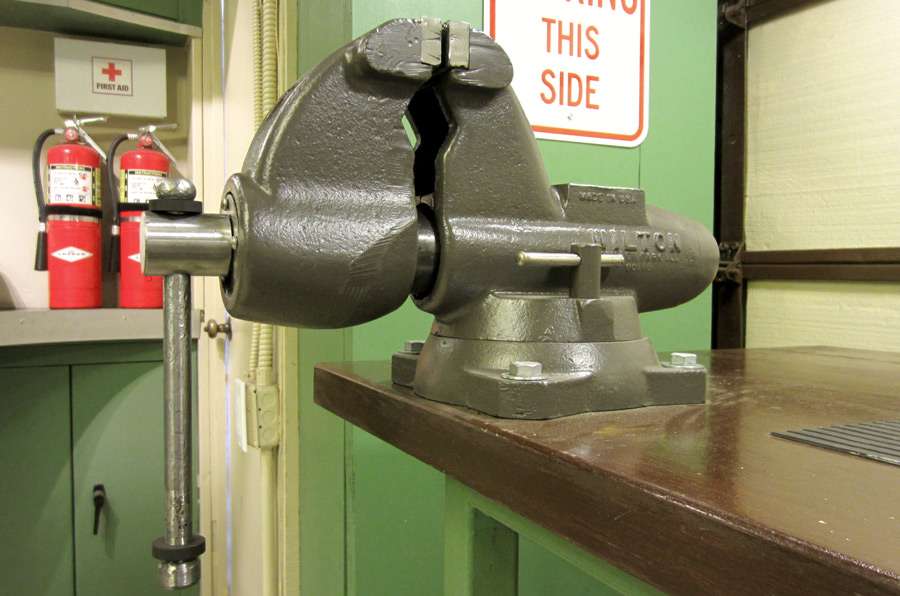
The three vises are all second-hand Wiltons that I cleaned up and repainted.

The biggest is a 1765, which was made in 2004 and has 6-1/2" jaws.

1765t.jpg


The ugliest of the bunch is a C1 with 4-1/2" jaws. I think it's from 1989.

70475179.jpg


The best looking one (am I really talking about the looks of a vise?) is a 9450, which also has 4-1/2" jaws and was made in 1973.

9450n.jpg


The bad thing about Wiltons is that they've become kind of over-valued on the market. There are other good American-made vises that won't command the high 'fad' prices Wilton's are getting now. The good thing about Wiltons is that they're a pretty good American-made vise, and they have a cool and distinct design to them.
 
To avoid these ads, REGISTER NOW!
OP
J

Jack Olsen

Super Moderator
Staff member
Joined
Mar 22, 2009
Messages
6,678
Location
Los Angeles
Or you're turning faster laps in denser air. ;)

I'll see if I can locate some proper edging for CF honeycomb sheets.

Well, Googling "honeycomb edging" does produce a plethora of results. One of the best reads was here.
That looks cool. But I suspect it would burst my $10/upright budget. If I ever dedicate a rear decklid to the cause, with a permanently attached wing, then this would be the way to go.

Jack, you have to remember the wing is providing downward force not necessarily the twisting force you are intuitively thinking.

11 deg is not a really radical wing angle. We used MUCH steeper wing angles on the super-modifieds when I was racing, and we would sometimes see compression damage even on the front wing mounts.
11° is not my angle of attack. It's the angle the airflow is coming toward the wing at, relative to horizontal. That said, my wing works best with an AOA between 12° and 18°.

Something to consider on the leading edges of the new supports: take a soft easily bent aluminum, and have someone fold a 1 or 1-1/2" strip in half with just enough gap to slip onto the leading edges of the front support and the leading edges of the middle and back supports. (you may need to make them a bit straighter), then slip this on and form them to the remaining curve. This provides both stiffness and a more aerodynamic leading edge. Attach with JB Weld. I don't think it would go anywhere.

Another option is to cut two 1/2" strips the same thickness of each vertical strut to he same curve, then drill and use both JB weld and a few aircraft rivets (Flush) to bond them on each side of the leading edge. Then get your small round over router bit and round both leading corners. You can also belt sand the trailing edges of the two strips prior to mounting to minimize the turbulence (drag) the "square" edge leaves.
That's the line I was thinking along. Although it still makes me crazy that the ugly set of 10 gauge uprights is still responsible for my fastest lap and six years of not bending. I'm going to try and peel the contact paper off and see if the alloy is printed on it.

My guess is that the new uprights suffered for having narrower, curved 'legs', moderately-less-aggressive triangulation, and maybe a softer alloy.

I think Jack means that the air flow over the roof is coming at the wing 11 degrees downward. I don't see the wing tilted at 11 * but that is effectively what the wing pressure is.

OK, maybe I see what you're saying. A front wing at 11* in virgin air is doing what a level wing is doing when the air is conforming to the body.
Yes. For my wing to run at 12°, it appears to be only angled 1° from level.

Just from a fluid dynamic point of view, the lift force acts about where the wing is bolted to the support (a little further back by eye). Because you have a cambered (asymetric) airfoil, there is a moment (twist) that is, in your case, pulling the leading edge up. It is very important to remember that the force does not act evenly over the surface, it is more at the center and is a suction force pulling the wing down, more than a lifting force pushing down. Also, the flow over the back of the car is almost certainly turbulent, and not following the rear deck that closely, but a reasonable place to start.

THe compression of the struts is part of the problem, looking at the video, the problem comes from a side force. If you have never tried it, a 200+lb man can stand, carefully on an empty coke can and it will support the weight until there is a side force or disturbance applied, at which point the can fails completely. That is, I think, what is going on with your struts. The force is near that limit and the side force of ~1G lateral, acting on the wing produced a force of about, what , 15 lbs (~ weight of the wing), acting at the top of the strut, horizontally. The combination of the compression and sideforce caused the strut to fail (buckle), either force on their own would not have been a problem.

A little extra thickness, from whatever method, and tempered (heat treated) aluminum might help this out. Annealed aluminum is much easier to work, but the stiffness (look at yield strength: for example, 6061 annealed yields at ~50MPa, 6061 T6 yields at 255 MPa, a 5x increase from the heat treating process). I don't know exactly what you used, and the results vary by alloy, but in all metals, the heat treatment vastly increases the yield strength.
This is good to know. As I said, my current thinking is that the new uprights suffered for having narrower, curved 'legs', moderately-less-aggressive support triangulation, and then maybe a softer alloy was a factor.

WOW...talk about moving a thread to the end of the line. Jack started a thread about an IKEA shelf, and it finds its' way to the back of the line. Anyway, I've got one of those Hazet Assisstents in my shop...had to dig it out to take a pic. You did a great job, Jack. I've never been to an IKEA, but I heard they are a good place to go.
Thanks. I hope it's not too annoying when I fold in separate threads into the main one. I know fewer people will click on a long-in-the-tooth thread that's not even in the General Garage Discussion area -- so a new one makes sense for a new project. At the same time, I think that one day decades from now my son (or somebody out there) might happen upon an archive of this thread and for that reason it's nice to keep it all in one place.

Jack:

Hazet Assistent caught my eye, too, since I love German stuff. But ya know what? Who cares if it collapses? I think the guys in that pic with the ancient aircooled VW's? That was their one and only tool box! Collapsing it was their way of locking up at the end of the day.

The main feature such a thing has is waist-high, flat surface on wheels to plop your tools and parts on near where you're working. Now, I spent many years working in parking lots, and I had to use the lid to a printer copier box on top of an old wooden chair, but now that I'm indoors and all civilized, about a year ago I purchased a Craftsman roller cart, and wow, HOW do people live without this?! And don't I want a third shelf? (I quickly got over the yearning for a middle shelf.)

Given the size of your shop, your Ikea beats a standard sized roller cart.

I also thought, what do you care about a waist-high roller cart? Your car's motor is so low you're either rolling around on your back or sitting cross-legged or kneeling on the floor and and peering in the hatch. But then I remembered, oh yeah, he has a lift now. :thumbup:

You will find yourself wondering how you lived without it in about two weeks.
I hope that's the case. It will certainly reduce the incidence of accidentally kicking tools into the lift pit.

And there you have it, folks. One thing, too, is that Jack's cameras are always well mounted and don't shake. That doesn't mean there isn't some violence. I have been in that car as a passenger and I can tell you between the modified suspension and the condition of the track surface, there is a lot of shaking going on.

Combine the loads Doc describes with the stress of being shaken back and forth and you will find a breaking point if it's in range. I think in the video, Jack had passed the point on the track where he hits the maximum speed. Not by very far, but he does drive into and through T8 at somewhere around 130 MPH. After a short bit of straight line braking, he enters T9 at about 90.

I'll look again, but I think the uprights collapsed at the beginning of that braking point. Not breaking point. ;) :D
They collapsed just after the curve of turn 8 -- which (along with the turrn's washboard-like bumps) probably contributed enough to the lateral load to start the wobbling. I'm pretty sure it happened at 4:40 in this video:


I see an opener but have I missed the beverage fridge ?
No room for it. And I'm not a big proponent of drinking until everything is finished. So I have to walk to the kitchen -- the price of a small, crammed garage. :spit:

Jack,

Sorry in advance if this post lands in the wrong spot, but, who made your current tool chests, and are you happy with them? It looks like I'm heading for round three on tool boxes.

I've got a mix now of Equipto (under the red/black bench), Vidmar (under the center island) and Lista (for the tool stack that's also red/black). I like them all -- partly because I got them all second-hand. The newer ones (Vidmar and the Equipto) have a 400# capacity per drawer. The older Listas have a lower per-drawer capacity, but are more overbuilt when it comes to the box itself. Either way, both are very strong -- even compared to high-end tool boxes. They can be put on casters, but are not really mobile in the same way a (shallower) high end roller would be.

HI Jack, I have a Wilton I am cleaning up, and am wondering if you could tell me what shade of grey you used on these? Thanks!

It's Rustoleum Anodized Bronze, which is a semigloss color of theirs. It's a color that always looks a little different depending on the lighting and the color of stuff around it. But it's a gray with a little bit of brown in it.

Amazing restoration work on the vises!!!
Thanks!
 
OP
J

Jack Olsen

Super Moderator
Staff member
Joined
Mar 22, 2009
Messages
6,678
Location
Los Angeles
Update on why California is still a great place to live. It's 68° and I just got back from an afternoon sprint down Mullholland Drive. I snapped a quick picture at the end of the line, right near Highland.

Mulholland+Nov25+20121353879314.jpg
 

xXSanderXx

Active member
Joined
Nov 6, 2012
Messages
26
Location
Netherlands
Nice pic Jack!

I live in The Netherlands but I like California very much.
I hope one day I visit one of the nicest states in the world.

I like your garage, I read your hole topic maybe 3 times.
You are write for living right? Where do you learn al the technical stuff? From your dad?
It's amazing to see how you make old tools as new with less money.

Sorry for my bad English.

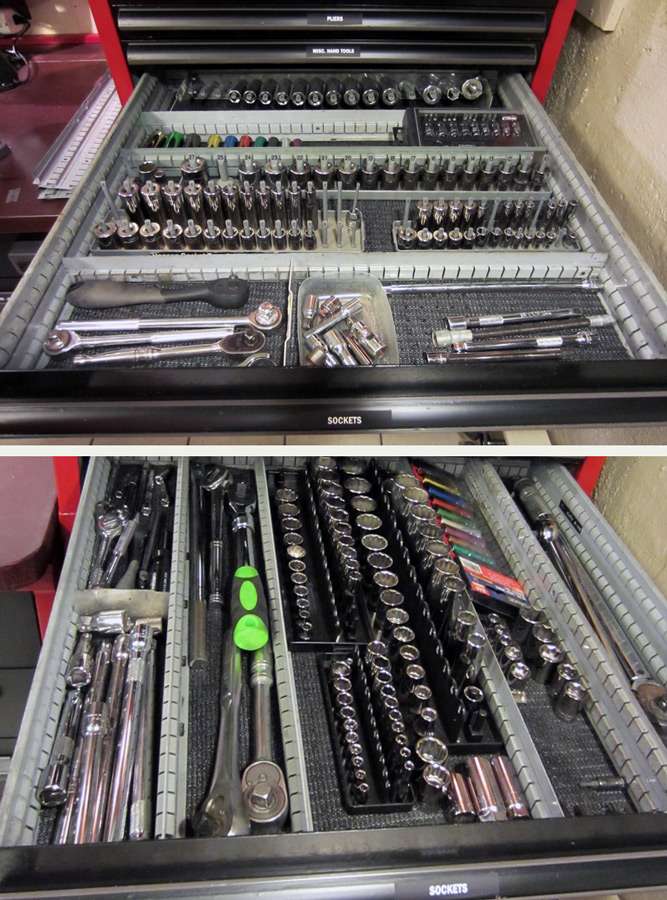
P.s. do you have a pic from your socket drawer?
 
Last edited:

964haus

Well-known member
Joined
Nov 1, 2010
Messages
498
Location
Vancouver, BC
Update on why California is still a great place to live. It's 68° and I just got back from an afternoon sprint down Mullholland Drive. I snapped a quick picture at the end of the line, right near Highland.

Mulholland+Nov25+20121353879314.jpg

...so many things to be jealous of in this picture.....
 
OP
J

Jack Olsen

Super Moderator
Staff member
Joined
Mar 22, 2009
Messages
6,678
Location
Los Angeles
Thanks.

You are write for living right? Where do you learn al the technical stuff? From your dad?
It's amazing to see how you make old tools as new with less money.

Sorry for my bad English.

P.s. do you have a pic from your socket drawer?

Your English is much better than my Dutch. :)

My father and older brother are both engineers, so there was some exposure to that as I grew up. But having studied Philosophy in school, I'm largely self-taught on just about everything I've learned. I could call it Google University.

My tool drawers aren't any kind of great model of organization, but here you go:

socketdrawers.jpg


Hey Jack. Do you know Magnus Walker?
Seams like you have rear lights by him

I've known Magnus for a long time -- he's been a fixture on the local canyon-driving and club racing scene as long as I can remember. He's a very nice guy -- my car has a piece of sheet metal on it that he'd cut off one of his. I couldn't get him to take any money for it.

My R-style tail lights date back to before you could get them as aftermarket parts. A guy in South Africa had made his own molds, and when I contacted him about them he agreed to make me a set. They're odd-looking, especially if you're not familiar with the early factory lightweight cars. But they're also much lighter than the factory assemblies.
 

Fatandre

Well-known member
Joined
Mar 2, 2011
Messages
332
Location
Iceland
Well. I truly like them. As for Magnus he is a great guy. We exchanged few emails and he gave me some tips for my e31.
Keep up the good work.
 
OP
J

Jack Olsen

Super Moderator
Staff member
Joined
Mar 22, 2009
Messages
6,678
Location
Los Angeles
Thanks.

For those of you following the failure of the car's uprights, here's the new design I've come up with. There are three main improvements I've made. It's a little bit shorter than the previous version. The cutouts are smaller, so the 'legs' of the thing are thicker, and span smaller cutaways. And -- on the suggestion of a GJ member who's also an engineer -- I've switched from 6061 (probably) aluminum alloy to a piece of much stiffer 7075 that I picked up today. The thickness is the same.

uprightcomparo.jpg


Remember: the ones represented on the left never failed -- in six years of hard use. The one in the middle is a plywood cutout of the shape I'm planning on using. It's slightly narrower at the top than the previous (failed) one, which also shortens the spans. The trade-off is that funny lump near the top, part of the mechanism for adjusting the angle of attack.

The one on the right is the one that failed. It has the thinnest 'legs' making the longest spans. (Please forgive my non-engineer's language for this stuff.)

Thoughts?
 
Last edited:

sayteller

New member
Joined
Nov 20, 2008
Messages
1
Its been a while since I dropped by the forum. I have to say I have seen some pretty impressive large scale elaborate garages but inch for inch yours is one of my favorites. The use of space is stunning. The craftsmanship look and feel of the benches and cabinets that is going on in there makes for a productive environment i'm sure. Excellent work. Oh and the car doesn't hurt either ;)
 

Zeke

Well-known member
Joined
Aug 13, 2009
Messages
17,176
Location
Long Beach CA, the sewer by the sea.
Thanks.

For those of you following the failure of the car's uprights, here's the new design I've come up with. There are three main improvements I've made. It's a little bit shorter than the previous version. The cutouts are smaller, so the 'legs' of the thing are thicker, and span smaller cutaways. And -- on the suggestion of a GJ member who's also an engineer -- I've switched from 6061 (probably) aluminum alloy to a piece of much stiffer 7075 that I picked up today. The thickness is the same.

Remember: the ones represented on the left never failed -- in six years of hard use. The one in the middle is a plywood cutout of the shape I'm planning on using. It's slightly narrower at the top than the previous (failed) one, which also shortens the spans. The trade-off is that funny lump near the top, part of the mechanism for adjusting the angle of attack.

The one on the right is the one that failed. It has the thinnest 'legs' making the longest spans. (Please forgive my non-engineer's language for this stuff.)

Thoughts?
That looks to be the perfect blend of the 2 designs. You have captured the aesthetics of the curved version while staying closer to the proven design. And, it sounds like you have added some strength in your choice of alloy (I think I mentioned that ;) ).

Given all the info here about this and that with regard to aerodynamics, strength, etc., I'd like to see the final product edges eased with a round over bit. I think by using your same template below the part you can get the follower bearing to travel on the wood. I'm guessing that would be an 1/8th R bit.

I don't rout AL, but I have used a band saw to cut AL. I found info that said the same speed as one would with wood will work. More info said to slow the cutting speed down, but not drastically. Otherwise, the metal being cut gets hotter? I didn't follow that logic. Seems to me it was recommended to use wax on the cut and cutting tool.

Does the router bit tend to load up? If it does, some type of release like the wax might aid the cutting process. There is a discussion on this on the sister site:
http://www.jalopyjournal.com/forum/archive/index.php/t-203318.html

Jack, if you get time to experiment with cutting speeds using a speed control, I'd like to hear about it. AFA as circular blades, one just uses a smaller diameter, e.g., a 7 1/4" blade in a 10" saw. That reduces the tooth speed by 27%.
 

Huxley

Well-known member
Joined
Mar 4, 2008
Messages
210
Location
Colorado
Zeke might be saying... Make sure you don't ruin the heat treating of the alloy by getting it too hot when you cut it.
 

Outlawmws

Well-known member
Joined
Aug 9, 2011
Messages
39,232
Location
The Badlands
Thanks.

For those of you following the failure of the car's uprights, here's the new design I've come up with. There are three main improvements I've made. It's a little bit shorter than the previous version. The cutouts are smaller, so the 'legs' of the thing are thicker, and span smaller cutaways. And -- on the suggestion of a GJ member who's also an engineer -- I've switched from 6061 (probably) aluminum alloy to a piece of much stiffer 7075 that I picked up today. The thickness is the same.
SNI

Thoughts?

Jack, IMO the key on the materials is the temper. 6061-T6 is intended for free machining properties, does not bend easily, and is much stiffer as a consequence. T2 (or lower) is by contrast much easier to bend, but does not cut as cleanly.

You didn't mention a temper on the 7075, or whether it was annealed. So hard to guess if its better or worse. (50XX series you do not want in this application as its intended for either bending or welding and is soft and "gummy" so does not machine well) Tempering can make or break the alloy for what it is used for. The basic strength of 7075 is better than 6061, but that is only part of the story...

I think the design looks good, but you said it's still thinner that the originals. And the thickness is the other key to keeping it from folding over again. In any case, I'd reconsider the single diagonal brace in favor of an "X".

One possibility for this is very thin SS cable on each brace, and use black electrician's tape to make them into a more "aerodynamic" shape. 1/2" wide tape folded over 1/16 (or smaller) cable, and the back "tail" should reduce the turbulence of the round cable, as that is where most of the drag is on a round shape... (Back side turbulence)
 
Last edited:

Outlawmws

Well-known member
Joined
Aug 9, 2011
Messages
39,232
Location
The Badlands
SNIP

Does the router bit tend to load up? If it does, some type of release like the wax might aid the cutting process.

Snip

Aluminum machining properties are one part the breed of aluminum and three parts it's temper generally. If you need free machining properties, then you need a high temper, the lower the temper the lower the machining properties in general.

Zeke might be saying... Make sure you don't ruin the heat treating of the alloy by getting it too hot when you cut it.


Unlikely to affect the temper of an aluminum alloy with cutting temps for the time involved in cutting.
 

alpinewhite

Well-known member
Joined
Aug 4, 2012
Messages
1,315
Location
Orange County, California, USA
Jack,

The 3 basic things I see that make your garage so appealing:

1. Absence of clutter (my, and other people's, biggest hurdle). Everything is behind a door.

2. The soft lighting (you don't use flash for your photos). As a photographer, I know that soft ambient lighting is way better than lightning-like flash photos.

3. The color scheme.

Question: How do you prevent your wife and yourself from using the garage as the dumping ground for things like suitcases, empty boxes, holiday decorations, extra furniture, etc?
 
Last edited:
To avoid these ads, REGISTER NOW!

utahdog2003

Well-known member
Joined
Feb 7, 2006
Messages
118
Location
down at the rec center watchin' folks swim
Foldable duffle bags instead of suitcases. Recycle the boxes and donate the furniture. Keep 3-4 flats of ornaments and a couple strands of lights that all fit in a small box and nothing more.

I like the 12 Guage thread because it offers quality solutions to living in a smaller (by more modern construction standards) house. Jack may get into the weeds a bit with the finish work, at least for my tastes, but the garage is obviously as much a hubby for him as the car so I say good work to that. The best part about the thread though, is that if something isn't needed, or doesn't have a space, then it goes out the door. You don't need 12,000 sq/ft to have a great work space and many folks could benefit from that lesson.

Good work, Jack!

Back to lurking...
 
OP
J

Jack Olsen

Super Moderator
Staff member
Joined
Mar 22, 2009
Messages
6,678
Location
Los Angeles
Thanks for the kind words and the input!

Jack,

The 3 basic things I see that make your garage so appealing:

1. Absence of clutter (my, and other people's, biggest hurdle). Everything is behind a door.

2. The soft lighting (you don't use flash for your photos). As a photographer, I know that soft ambient lighting is way better than lightning-like flash photos.

3. The color scheme.

Question: How do you prevent your wife and yourself from using the garage as the dumping ground for things like suitcases, empty boxes, holiday decorations, extra furniture, etc?
Thanks! I think you're right. And add to that the fact that I take a LOT of pictures. And (speaking as a non-photographer) I think I've gotten it down so that I can take decent-looking pictures of this place.

Especially at this time of year, there's usually a bench that starts filling up with gifts for the kids. You may spot some 'sitting there' stuff in the background of some pictures. And I do keep four or five suitcases up in one of the soffit-area cabinets. And there are some holiday decorations stored above the sink. But they're out of sight, thankfully.

Foldable duffle bags instead of suitcases. Recycle the boxes and donate the furniture. Keep 3-4 flats of ornaments and a couple strands of lights that all fit in a small box and nothing more.

I like the 12 Guage thread because it offers quality solutions to living in a smaller (by more modern construction standards) house. Jack may get into the weeds a bit with the finish work, at least for my tastes, but the garage is obviously as much a hubby for him as the car so I say good work to that. The best part about the thread though, is that if something isn't needed, or doesn't have a space, then it goes out the door. You don't need 12,000 sq/ft to have a great work space and many folks could benefit from that lesson.

Good work, Jack!

Back to lurking...
Thanks. Having a small space DOES force you to be pretty brutal when it comes to what stuff you keep. And I'm a pack rat through and through, so it's tough for me. But knowing other people are going to see the place in these pictures is a very effective motivator to keep it from getting too messy.

That looks to be the perfect blend of the 2 designs. You have captured the aesthetics of the curved version while staying closer to the proven design. And, it sounds like you have added some strength in your choice of alloy (I think I mentioned that ;) ).

Given all the info here about this and that with regard to aerodynamics, strength, etc., I'd like to see the final product edges eased with a round over bit. I think by using your same template below the part you can get the follower bearing to travel on the wood. I'm guessing that would be an 1/8th R bit.

Thanks, Zeke. I think this design will be strong enough. The original version never even bent -- and that was with six years of use. It turns out I've been working with a few different thicknesses. The original (and still-working) uprights were .1345" thick. The set that immediately collapsed above 100 mph were .90". The ones that lasted most of the day and then collapsed were .125". My new set is also .125", but it's a stronger alloy (7075 as opposed to 6061).

And here's one characteristic of 7075. It cuts with a very sharp edge. So a roundover router bit makes sense both from an aero point of view and also as a solution for all these little cuts I've gotten from the times I've handled this stuff without gloves in the course of cutting it. As the stock is only 1/8" thick, I tried a 1/16" roundover bit. It worked, although the rounding gets lopsided from the fact that when you round off the first side, you also take away the guide for the bearing thing for the pass to cut the second side. Still, a slight lopside to the curve is fine.

Here's a picture that shows one piece smoother over, and one that hasn't had it done yet.

13routeredsmoothedge.jpg


I would bet that there's a better way to machine a curved edge on these pieces -- but I didn't figure that out before finishing them off yesterday.

Jack, IMO the key on the materials is the temper. 6061-T6 is intended for free machining properties, does not bend easily, and is much stiffer as a consequence. T2 (or lower) is by contrast much easier to bend, but does not cut as cleanly.

You didn't mention a temper on the 7075, or whether it was annealed. So hard to guess if its better or worse. (50XX series you do not want in this application as its intended for either bending or welding and is soft and "gummy" so does not machine well) Tempering can make or break the alloy for what it is used for. The basic strength of 7075 is better than 6061, but that is only part of the story...

I think the design looks good, but you said it's still thinner that the originals. And the thickness is the other key to keeping it from folding over again. In any case, I'd reconsider the single diagonal brace in favor of an "X".

One possibility for this is very thin SS cable on each brace, and use black electrician's tape to make them into a more "aerodynamic" shape. 1/2" wide tape folded over 1/16 (or smaller) cable, and the back "tail" should reduce the turbulence of the round cable, as that is where most of the drag is on a round shape... (Back side turbulence)
Both the old 6061 and the new 7075 are T6. I assume that with the temper being equal, the 7075 is stronger?

I'm up in the air about whether two diagonals are necessary on this. I'm planning on shooting some video to see if there's much flexing going on. I think two things were working against me on the last iteration of the uprights. One was that I was using a shorter diagonal, so there was a decent amount of space above the diagonal where there wasn't anything preventing the upright from flexing. I think this allowed a kind of wave motion in the aluminum to send a bend from the unreinforced part of the wing (above the diagonal's mount) down to the section below the mount. I had also neglected to put any adhesive into the diagonal on the last version. I use a length of allthread for the diagonal, but since that has a tendency to bow and flex, I jacket it with a steel sleeve (which also allows me to form the aero shape). On my original diagonal, I used an adhesive all along the inside length of the sleeve, which I think made the thing more rigid. When I made the diagonal for the recent (failing) set, I skipped the adhesive. This time, I've used it again.
 
OP
J

Jack Olsen

Super Moderator
Staff member
Joined
Mar 22, 2009
Messages
6,678
Location
Los Angeles
Today I finished up the upright project.

I'm hoping to run some straight-line tests later this month if I can get a half a day to sneak out to the Mojave in the car.

I've already documented making uprights a couple of times in this thread. But in case you missed it, I'm going to do it one more time. If nothing else, it gives me a reference to come back to if it turns out these new uprights fail.

01designa.jpg


This (in the center) is the initial design I cut out of plywood. It's a two part thing. The 'shoe' up at the top is what attaches to the wing. I've combined the rear wing mounting point with the rear shoe-to-upright junction because I think it's a stronger way to go. In front, the wing attaches to the shoe, and then the shoe attaches to the upright through one of four holes. Each hole gives me a slightly different angle of attack for the wing, with the shoe-and-wing-assembly pivoting on the rear mounts.

That lump in the shoe is necessary for the row of holes for changing the angle of the wing. But in looking at the plywood version, I came up with another place for the lump which I thought would be a little better looking. I also decided to make the junction points in the upright a little beefier -- to not have the angles on the two triangles not be so sharply cut.

04designb.jpg


So here (to the right of the old, failed upright) is my revision of the new design, cut into particle board instead of plywood (hey, you use what you've got sitting around). Now the lump is part of the lower piece, and it looks like it's part of the upper triangle of the design. Why am I worrying about aesthetics on something that will always be ugly? I don't know, but I am. :dunno:

057075isexpensive.jpg


These are the pieces traced out on the 7075 aluminum. You can see I was stingy in purchasing the stuff. It's expensive.

06cuttingsetup.jpg


And here's the cutting. The idea is to cut outside of the lines, so there's extra material that can be taken away for the finishing cuts.

03selfportrait.jpg


Here's the guy doing the cutting. With the router, I'll wear a full face shield. But for this part, I've got eye protection, hearing protection, and a headlamp. I'm hooked on the headlamp, these days.

02roughcut.jpg


Quick and dirty. Here's the roughly-cut upright.

routerbp.jpg


This is a picture from the last set of uprights I made, but it gives you the idea. You adhere the rough-cut aluminum to the more-accurately-cut plywood, and then use the wood as a guide for an ordinary router to trim the rough cut piece to the same shape as the plywood.

thecut.jpg


Nice and smooth. I wouldn't be able to do that with my skills and a jig saw.

07routered.jpg


Here's a routered one on the left and a ready-for-the-router piece on the right.

08messyshop.jpg


A step back. I've got holes in the fold-down table that keep the router in a fixed place. There's sawdust and metal shavings everywhere, but it still looks pretty clean, doesn't it?

09sawdust.jpg


Here's what the router leaves behind. You have to wear a face shield, because these things shoot off the router blade at a pretty good clip.

10adjustmentholes.jpg


These are the marks for the angles I'm using for the mounting holes. I later added one more below the two on the left. There are two mounting holes on the corresponding piece, which is why I didn't have to put all four holes in a row.

11testfit.jpg


This is the test fitting of the new setup. I get the car perfectly level, and then I can measure and re-check everything before drilling the mounting holes.

12allthread.jpg


There's the allthread diagonal -- no steel sheath covering it yet. I used to run a horizontal piece between the bottom end of the uprights, but decided it was unnecessary this time. (I hope I'm right.) On the right side of the picture, you can see that there's still a sharp edge to the upright.

13routeredsmoothedge.jpg


Here are the two 'shoe' pieces. The one on the right still has the sharp edge and the one on the left has had that edge rounded off. No more cuts to my hands and fingers.

15paintedupright.jpg


Here's one of the uprights, painted and reinstalled. If you look for it, you can see the way all the edges are rounded off, now.

14painta.jpg


This is the whole thing put together. The diagonal has the aerodynamic sleeve on it now.

16adjustmentholesothers.jpg


This is a closer look at how the adjustment holes work.

17diagonal.jpg


And here's a final look at it.

Next up? Testing to see how the downforce changes at each angle-of-attack setting, with a simultaneous look at whether there's any flexing when the thing is running at triple-digit speeds.
 

akdiesel

Well-known member
Joined
Aug 8, 2008
Messages
2,617
Location
Wasilla, AK
Great craftsmanship. Hope this one works out for ya.
Could the original whale tail create any air turbulence with the new wing?
 

blackblade

New member
Joined
Dec 5, 2012
Messages
1
Any questions?
Naw, not really...but if you were a girl, then I´ve been asking you to marry me!
You´re so spot on when it comes to use of space, and soft colors..whatever..no problems for me to live in that space, not at all!
And I easily admit that if we have some things in common, it´s been taken to another level in your garage.

I was a little bit suspicous for a long time, until you said that "it could get really dirty now and then"....puuh!
Seriously, it´s easy to get my own feelig back...quite pleased, and the way I want it, just looking at the pictures.
At first it just looked perfect, and that´s ok by me, but then i saw the legs of that "table" att the front.....then i was hooked.

I´ve had my own, where the paintboot have been painted like a typical Swedish countryhouse on the outside, down to grass and some flowers "in front of it", and windows with the right style..etc etc.
The corner where my bikes had their surgery taken care of, quite often actually...hmm...??
Ooops, ok, anyway...it was painted like a forest on one side, and with some alps that could be seen if you....

I really don´t like the cold and sterile industrial feeling, soo...why not?
The costumers had some big eyes from time to time, since i worked with the biggest insurance-companies in Scandinavia and so on, but most of them had already been told by some friend, to expect something extra...sort of...

"Where do i do the painting", that was a quite normal question.
"In the summerhouse of course!"

Not saying that it´s the same thing, on any level, but that feeling of: "Yeah, I like it here", it came to me when I started to see the small things, with that extra time spent on them.
And the foldabel benches on the wall, thats where i really started to "feel at home".
The time spent on making it in the same height, and fitting together, that´s where i can see the pleasure of doing things later on, in an easygoing way!

And on top of all that, no commercial ****..(sorry...) in sight!!
together with the best answer in a long time, to that thing.
It´s a lot of respect for some other time in your life!

My father was also my best friend, and I do some things in the same way!
Maybe the words that made the biggest impact on me, and it´s a nice way of thinking...no doubt!

Thanks for the pictures, and the words behind them!
Halleluja, I´m not alone!
ha ha..
And good luck, with future "small adjustments"...
"Right" beats "Biggest and Most Expensive", every time!
And that´s not because i´m poor, or dislike money, or flash and so on, but for me and myself, in my life...!!
And it´s relly nice to see someone taking that idee "a little bit longer".
JP
 

alpinewhite

Well-known member
Joined
Aug 4, 2012
Messages
1,315
Location
Orange County, California, USA
Compliance+Station1254984045.jpg


Sharp eyes might notice that the new Strong Hold one will extend out as far as the Strong Hold one under the big piece of steel -- which will mean that in order to fit the new one I'm going to need to bring the soffit cabinets up above out another 3" or so. A lot of work for a very minor change.

Jack,

Sorry if I missed the answer to my question. How did you address this 3-inch dilemma you had with the soffit cabinets being too shallow for the new Strong Hold cabinet?
 

my58

Well-known member
Joined
Apr 12, 2005
Messages
238
Location
Ventura County California
Jack,

Love the shop and I always enjoy following along on your projects.

I have a quick question on something you said during the upright project.

You said "You adhere the rough-cut aluminum to the more-accurately-cut plywood"

How are you doing that? Some form of contact cement or screwing it down some how?

Thanks
 

Bogdan M.

Well-known member
Joined
Dec 4, 2012
Messages
999
Location
Bucharest, Romania
Hello Jack!
Congrats on your garage, I thing is one of the most beautiful, but especially practical one I have ever seen.
The colours are very stylish, mainly because you didn't use the traditional garage colours (red and black - that's what you see most of the time) and everything has a nice retro touch and fits the car perfectly.
I work in a auto workshop, it's my first business and I must say that a lot of you guys on GJ amaze me.
I have a question for you. I have mounted drywall in my garage when I refurbished it not so many months ago and now I want to hang cabinets on the walls like you did because that way I would take advantage of the space at a maximum level.
What would be the best way to hang some cabinets on drywall? If it matters, it's drywall mounted on metal stud framing.
Thanks!
 

Huxley

Well-known member
Joined
Mar 4, 2008
Messages
210
Location
Colorado
The new uprights look nice but I think you will want some more lateral support. Only running one diagonal brace allows the "box" (framed by the car, uprights and wing) to collapse along the single diagonal. In other words, the all-thread will be much, much stronger in tension than in compression. Judging by the failure video, this is how the last one died.

The uprights are acting as columns primarily and are very slender. Not my favorite reference below but it contains the basics, Euler, slenderness ratio, EI, etc.
http://en.wikipedia.org/wiki/Buckling

I have yet to see a close-up of one of the old reliable uprights. They appear to have a flanged edge - maybe just wishful thinking by me and other posters. This adds a significant amount of reinforcement by the way of the moment of inertia or "I" in the equations.

Alternatively, two sheets of carbon fiber cloth separated by a few mm thickness of foam (or honeycomb) could make a very worthy upright. The sandwich could be worked in a similar manner to your current production methods. With the bonus excuse to buy a diamond router bit.

No affiliation or endorsement, just the top Google hit...
http://www.toolstoday.com/p-5831-diamond-coated-fiberglass-carbonfiber-material-flush-trim-router-bits.aspx
 
Last edited:

Squankum

Well-known member
Joined
Mar 28, 2011
Messages
7,707
Location
Southeast
Headlamps are the best! Look, with no hands!

Any headlamp beats no headlamp. I started with a $14 Wal-Mart special. Later got a $42ish Petzl. Only tip I have is that some types (all?) the light gets dimmer as the batteries fade, and unlike an incandescent flashlight, the light doesn't get any yellower, you don't quite realize what light you don't have until you put new batteries in. (Just like shock absorbers, and so many other things that slowly go.)

I don't know how people live without them. Flashlight in the mouth? Bah. For many years, I used a NiteIze strap to put a AA Maglite on the side of my cranium. Not bad, but LED headlamp it ain't!
 
Last edited:
OP
J

Jack Olsen

Super Moderator
Staff member
Joined
Mar 22, 2009
Messages
6,678
Location
Los Angeles
That would be the right stuff for your application. :thumbup:
Thanks! Slowly, I'm getting a slightly better handle on this stuff.

Great craftsmanship. Hope this one works out for ya.
Could the original whale tail create any air turbulence with the new wing?
Thanks. By whale tail do you mean the big wing/spoiler thing that was sometimes on the 1980s models?

lastwash21224930165.jpg


If so, the answer is 'I don't know.' I've got a ducktail on the back of mine, which functions as a spoiler, but not as a wing. It does increase turbulence, locally, and also helps to prevent the passing air from adhering to the 'fastback' part of the car, which would (does) cause lift. In my case, I don't think there's actually much interaction between the spoiler and the wing (although both work to keep the tail of the car planted in high speed corners). The spoiler does change the direction of the airflow over the back of the car slightly. But the air up by the wing itself is pretty clean -- although its path is not flat (it follows the shape of the rear end of the car, coming down at about 11°.

How do I know this? Because I've done tests with wool tufts. (Doesn't every car owner do that? :willy_nil )

Wing+U+16+51159142240.jpg


LikeThis1149880518.jpg


Any questions?
Naw, not really...but if you were a girl, then I´ve been asking you to marry me!
You´re so spot on when it comes to use of space, and soft colors..whatever..no problems for me to live in that space, not at all!
And I easily admit that if we have some things in common, it´s been taken to another level in your garage.

I was a little bit suspicous for a long time, until you said that "it could get really dirty now and then"....puuh!
Seriously, it´s easy to get my own feelig back...quite pleased, and the way I want it, just looking at the pictures.
At first it just looked perfect, and that´s ok by me, but then i saw the legs of that "table" att the front.....then i was hooked.

I´ve had my own, where the paintboot have been painted like a typical Swedish countryhouse on the outside, down to grass and some flowers "in front of it", and windows with the right style..etc etc.
The corner where my bikes had their surgery taken care of, quite often actually...hmm...??
Ooops, ok, anyway...it was painted like a forest on one side, and with some alps that could be seen if you....

I really don´t like the cold and sterile industrial feeling, soo...why not?
The costumers had some big eyes from time to time, since i worked with the biggest insurance-companies in Scandinavia and so on, but most of them had already been told by some friend, to expect something extra...sort of...

"Where do i do the painting", that was a quite normal question.
"In the summerhouse of course!"

Not saying that it´s the same thing, on any level, but that feeling of: "Yeah, I like it here", it came to me when I started to see the small things, with that extra time spent on them.
And the foldabel benches on the wall, thats where i really started to "feel at home".
The time spent on making it in the same height, and fitting together, that´s where i can see the pleasure of doing things later on, in an easygoing way!

And on top of all that, no commercial ****..(sorry...) in sight!!
together with the best answer in a long time, to that thing.
It´s a lot of respect for some other time in your life!

My father was also my best friend, and I do some things in the same way!
Maybe the words that made the biggest impact on me, and it´s a nice way of thinking...no doubt!

Thanks for the pictures, and the words behind them!
Halleluja, I´m not alone!
ha ha..
And good luck, with future "small adjustments"...
"Right" beats "Biggest and Most Expensive", every time!
And that´s not because i´m poor, or dislike money, or flash and so on, but for me and myself, in my life...!!
And it´s relly nice to see someone taking that idee "a little bit longer".
JP
Thank you! We're definitely similar in our way of thinking. And who knows, we could be related. My grandmother was from Sweden (and oddly, she married a Norwegian).

Love the headlamp, what brand name is that?
The headlamp is a Zebralight - an excellent choice.
Thanks. Yes, it's a Zebralight -- although I changed the link you posted to the model I have, which I picked both for its warm light color and also its 120° wide beam. I paid $69 for it -- which is a lot for a flashlight. But it makes more sense as a cheap alternative to under-the-lift lighting.

Sorry if I missed the answer to my question. How did you address this 3-inch dilemma you had with the soffit cabinets being too shallow for the new Strong Hold cabinet?
Laziness won out. I ended up using the Strong Hold I'd bought for that position as the donor for my sink area. I made the two short cabinets and also the counter top and upper mailbox-style cabinets out of the one Strong Hold.

sinkareaagain.jpg


The Lyon is still sitting next to the steel bench. It wasn't as deep as a Strong Hold, so it fit in the space.

compliance.jpg


Except... it was too tall. So I had to shorten it in order to fit there. Here's the link to the story of shortening the cabinet.

Jack,

Love the shop and I always enjoy following along on your projects.

I have a quick question on something you said during the upright project.

You said "You adhere the rough-cut aluminum to the more-accurately-cut plywood"

How are you doing that? Some form of contact cement or screwing it down some how?
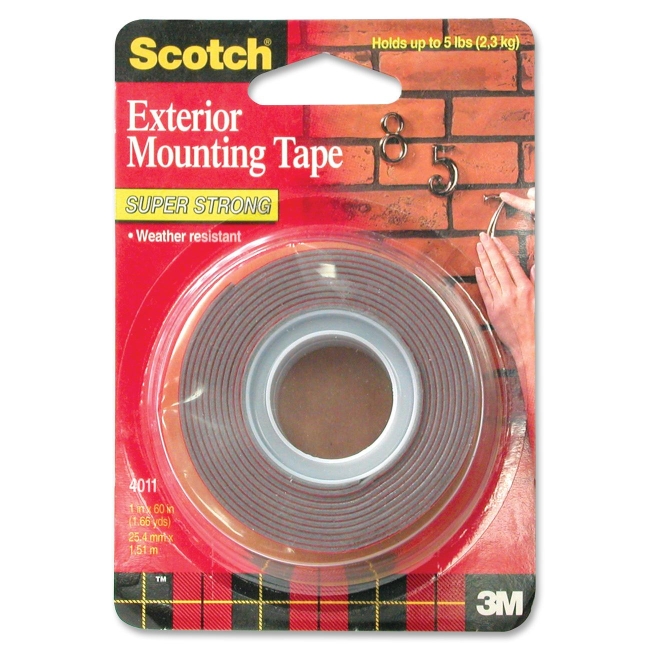
It's simpler than that. I use two-sided adhesive tape. It's the spongy kind.

2169953_large.jpg


I apply it to about six different points, and it keeps the two pieces from slipping out of alignment.

Hello Jack!
Congrats on your garage, I thing is one of the most beautiful, but especially practical one I have ever seen.
The colours are very stylish, mainly because you didn't use the traditional garage colours (red and black - that's what you see most of the time) and everything has a nice retro touch and fits the car perfectly.
I work in a auto workshop, it's my first business and I must say that a lot of you guys on GJ amaze me.
I have a question for you. I have mounted drywall in my garage when I refurbished it not so many months ago and now I want to hang cabinets on the walls like you did because that way I would take advantage of the space at a maximum level.
What would be the best way to hang some cabinets on drywall? If it matters, it's drywall mounted on metal stud framing.
Thanks!
Thanks! For mounting cabinets, I would look into self-tapping screws (maybe 2"?) and have them go into the steel studs. Some construction adhesive would help, too.
 
OP
J

Jack Olsen

Super Moderator
Staff member
Joined
Mar 22, 2009
Messages
6,678
Location
Los Angeles
The new uprights look nice but I think you will want some more lateral support. Only running one diagonal brace allows the "box" (framed by the car, uprights and wing) to collapse along the single diagonal. In other words, the all-thread will be much, much stronger in tension than in compression. Judging by the failure video, this is how the last one died.

The uprights are acting as columns primarily and are very slender. Not my favorite reference below but it contains the basics, Euler, slenderness ratio, EI, etc.
http://en.wikipedia.org/wiki/Buckling

I have yet to see a close-up of one of the old reliable uprights. They appear to have a flanged edge - maybe just wishful thinking by me and other posters. This adds a significant amount of reinforcement by the way of the moment of inertia or "I" in the equations.

Alternatively, two sheets of carbon fiber cloth separated by a few mm thickness of foam (or honeycomb) could make a very worthy upright. The sandwich could be worked in a similar manner to your current production methods. With the bonus excuse to buy a diamond router bit.

No affiliation or endorsement, just the top Google hit...
http://www.toolstoday.com/p-5831-diamond-coated-fiberglass-carbonfiber-material-flush-trim-router-bits.aspx
Thanks. I'm still thinking about using a thin piece of aircraft cable to keep the lower/rear portion from separating at high speeds. And it might make sense to run a second diagonal in the opposite direction -- maybe also with aircraft cable.

The previous wing was just flat stock. It was was slightly thicker -- .1345 as opposed to .125 -- but it also was taller, had less mass (by a few ounces) and was 6061 as opposed to 7075. The first set never showed any signs of fatigue or failure with the single diagonal, although at one point it did shear the end off of the diagonal, I'm assuming from metal fatigue.

I'll keep thinking about ways to make the whole assembly stronger. And of course I'm ready to listen to any input from guys who actually know what they're doing -- like yourself.

Here's another look at the unbreakable set.

73+RSR+OlsenSep022b12857048641316050267.jpg


Headlamps are the best! Look, with no hands!

Any headlamp beats no headlamp. I started with a $14 Wal-Mart special. Later got a $42ish Petzl. Only tip I have is that some types (all?) the light gets dimmer as the batteries fade, and unlike an incandescent flashlight, the light doesn't get any yellower, you don't quite realize what light you don't have until you put new batteries in. (Just like shock absorbers, and so many other things that slowly go.)

I don't know how people live without them. Flashlight in the mouth? Bah. For many years, I used a NiteIze strap to put a AA Maglite on the side of my cranium. Not bad, but LED headlamp it ain't!

I agree! The only one I'd had before was from Harbor Freight and it wasn't very good at staying in place. The one I got eats batteries up -- partly because I tend to keep it on the brightest setting, and then forget I have it on. But I got a dedicated set of rechargeable batteries, so the thing's appetite doesn't cause me any inconvenience.
 
Joined
Dec 6, 2011
Messages
6
Location
Oregon
some types (all?) the light gets dimmer as the batteries fade, and unlike an incandescent flashlight, the light doesn't get any yellower, you don't quite realize what light you don't have until you put new batteries in.
Modern, quality LED flashlights and headlamps (Zebralight included) are regulated, so they'll give the same brightness as long as the batteries have enough power to do so, then the light will either step down to the next brightness level, or shut off completely, like shown in this graph.
 

akdiesel

Well-known member
Joined
Aug 8, 2008
Messages
2,617
Location
Wasilla, AK
Jack

Sorry about the name. Not sure what it's correct name was but yes that is the one I was refereing to.
Nice work on the research for air flow. It looks like the factor tail would be hard to remove anyway since it looks like it is incorporated into the rear lid.
As for the air flow it looked like the "ducktail" position would push the air up to the bottom of the new wing resulting in less down force on new wing.
With the multi-hole design you have incorporated into the mounts, allows you to play with the approach. To bad you could not get some sort of tattle tail device to let you know of the maximum down force at high speeds. A poor boy set up would be to use a dial indicator for the last depth record that is used on a lathe or mill, not sure what they are called.
 
OP
J

Jack Olsen

Super Moderator
Staff member
Joined
Mar 22, 2009
Messages
6,678
Location
Los Angeles
Modern, quality LED flashlights and headlamps (Zebralight included) are regulated, so they'll give the same brightness as long as the batteries have enough power to do so, then the light will either step down to the next brightness level, or shut off completely, like shown in this graph.

That's how mine works. It knocks down a step at a time.

Jack

Sorry about the name. Not sure what it's correct name was but yes that is the one I was refereing to. Nice work on the research for air flow. It looks like the factor tail would be hard to remove anyway since it looks like it is incorporated into the rear lid.
As for the air flow it looked like the "ducktail" position would push the air up to the bottom of the new wing resulting in less down force on new wing.
With the multi-hole design you have incorporated into the mounts, allows you to play with the approach. To bad you could not get some sort of tattle tail device to let you know of the maximum down force at high speeds. A poor boy set up would be to use a dial indicator for the last depth record that is used on a lathe or mill, not sure what they are called.

No need to apologize. The wings are called all sorts of different things. A picture is usually the only way to sort it out.

The ducktail is probably working in my favor. I say that not with a whole lot of knowledge to back it up, but because it's the way the factory is doing it on the current 911 race models.

2010-porsche-911-gt3-cup-2-600x399.jpg


And I apologize for the off-the-garage-topic stuff eating up space, but I love this stuff, and there actually are some ways to test what the wing is doing -- even when wind tunnel rental time is not in the budget. I use wool tufts to track where the air is moving -

Tufts1149651248.jpg


- but the more-useful tool is a pair of 1995 Lincoln Continental ride-height sensors, scored for $5 each on Ebay and attached to my front and rear suspension components. They let me track differences in the ride height of the car with the little computer in my car's data logger.

RideHeight1159215051.jpg


Here's a graph from the data logger. This was when I found a very remote stretch of empty highway where I could bring the car up to a set speed (100 mph) for a few seconds -- then exit at the next exit and do the same thing in the other direction. So the graph shows two 100-mph pieces (the top section is car speed, the lower two sections are front and rear ride height), and also some not-useful data in between where I'm speeding up, slowing down, or turning around at the exit. But I repeated this with the wing set at different angles, so I could see if the wing was changing the car's ride height with the different wing angles at the 100-mph test speed.

Data1159630646.jpg


Here's a detail segment where I've labeled the different wing angles.

WingAnglesPlusSplitOnly1159630700.jpg


Once I get the support structure issues worked out again for these new uprights, I want to go out and do the same type of testing with this newer wing and the four different angles it can run at.

But back to the new uprights.

I think it might make sense to add some cables, so that the allthread will really only be asked to work in tension (not compression), and a horizontal cable will also eliminate any squat-and-spread between the rear 'legs' of the uprights when the wing is pushing down the most.

Any stuff I can put right behind the ducktail would (I assume) come with less of a drag penalty. So one idea is to try and keep the new diagonal on the lower part of the upright, like this:

Option A

opt1i.jpg


But that might mean too much of a compromise in terms of strength. So another way to go would be to take the drag hit and run it in the strongest position.

Option B

opt2b.jpg


But then, that gets me thinking that maybe I eliminate the allthread and its weight, and just go with two cables, each providing strength in tension -- and crossed over each other so that compression is less of an issue.

opt3.jpg


I like the idea of using a tape wrap to create something like an aerodynamic shape for the cable, but in thinking about it I also imagine it could flap like crazy in the wind and actually produce more drag. But then, I don't actually know very much of this stuff. Maybe the drag from a 1/8" (or thinner) wire rope would simply not be worth worrying about.

Opinions?
 

luvit

Well-known member
Joined
Jul 11, 2011
Messages
1,580
And I apologize for the off-the-garage-topic stuff eating up space, but I love this stuff, ..
so you have a nice finished, but yet, evolving garage..
it's a working garage and you get to prove it here. :thumbup:
maybe we'd roll our eyes if you were making stilts out of 2x4s.. maybe

.
 

DocRocket

Well-known member
Joined
Feb 24, 2011
Messages
278
I like the idea of using a tape wrap to create something like an aerodynamic shape for the cable, but in thinking about it I also imagine it could flap like crazy in the wind and actually produce more drag. But then, I don't actually know very much of this stuff. Maybe the drag from a 1/8" (or thinner) wire rope would simply not be worth worrying about.

Opinions?

I teach aerodynamics, and I think it would flap around quite a bit and create more drag, as well as fatiguing the cable and uprights with the vibration. One thing to try, if you look at many radio antennas on cars, the mast has a spiral wrap around it. The raised wrap is about 5-10% of the mast diameter. This does a couple of things. 1) it breaks up the von Karmann vortex shedding to reduce vibration, and 2) at many speeds, with the small diameter cylinders, tripping the flow to become turbulent is less drag than laminar flow would be (less separation, thus less vacuum on the back of the cylinder). That would probably be a way to go. I agree that the horizontal cable below the spoiler on your car would probably not have a significant drag penalty, and I would definitely make the "X" of cables symetric from top on one side to bottom on the other.
 
To avoid these ads, REGISTER NOW!
Top Bottom