To avoid these ads, REGISTER NOW!

The conspiracy theory about ratcheting wrenches

qqzj

Well-known member
Joined
Nov 28, 2017
Messages
3,747
Given ratcheting wrenches have more than 72 teeth nowadays typically, it’s often the case that people are confused why most of them are 12 points or even spline drive. Easy fitment on fasteners is not a good explanation because that doesn’t explain why most sockets are 6 points, especially for 3/8 drive which has most overlap with wrenches.

My guess is that ratcheting wrenches are not 6 points as a protection for themselves and for tool makers to avoid paying too much for warranties. Given a tough bolt, they want you to break it free with a socket or regular wrench. Otherwise, they d rather you to strip the bolt, instead of getting the ratcheting wrenches busted
 
To avoid these ads, REGISTER NOW!
OP
Q

qqzj

Well-known member
Joined
Nov 28, 2017
Messages
3,747
I remember I post it in the tool forum. How come it shows up here?
 

rmmiller

Well-known member
Joined
Nov 24, 2012
Messages
2,410
Location
Kennewick, WA
I was given a set of Titan ratcheting wrenches (12 point) by our tool rep, absolute garbage. Stripped the teeth on a bolt that was already broken loose but coming out tough. I'll get a better set when the mood strikes me but will still be leery of immanent failure!
 

Fix Until Broke

Well-known member
Joined
Feb 21, 2016
Messages
794
Location
SE Wisconsin
Interesting theory, but I don't think it holds water.

From an engineering standpoint, a higher quantity of smaller teeth is stronger and therefore likely less warranty. Same thing with traditional square drive ratchets - the industry is going to higher tooth counts there as well. Manufacturing costs have come down and customer expectations have gone up. I've see a few toothless designs that use a roller sprag similar to what is in automatic transmissions.

I'd guess that they're 12 point or spline because that makes them more universal and therefore more people will buy them. You can get 6 point ratcheting wrenches, but they're not very common.

Fixed box end wrenches are typically 12 point for placement/accessibility reasons since they don't ratchet. I do agree with the idea that with a high tooth count on the ratchet mechanism, a 6 point makes more sense. Almost all of my sockets are 6 point so it would make sense that my ratcheting wrenches are too.
 

Fedwrench

ALLIANCE MEMBER
Joined
Dec 9, 2007
Messages
14,952
Location
Valley of the sun
Given ratcheting wrenches have more than 72 teeth nowadays typically, it’s often the case that people are confused why most of them are 12 points or even spline drive. Easy fitment on fasteners is not a good explanation because that doesn’t explain why most sockets are 6 points, especially for 3/8 drive which has most overlap with wrenches.

My guess is that ratcheting wrenches are not 6 points as a protection for themselves and for tool makers to avoid paying too much for warranties. Given a tough bolt, they want you to break it free with a socket or regular wrench. Otherwise, they d rather you to strip the bolt, instead of getting the ratcheting wrenches busted
It's just a matter of marketing. Many people have a huge mental block against wrenches that aren't 12 point. It's documented in countless posts within the pages of the Journal. It matters not, that you can move the ratcheting boxed end a few degrees to engage any fastener from a multitude of angles in a matter of seconds :wtf:
As for spline, I can remember the early SK branded, Kabo made G Pro series of long pattern locking flex head ratcheting wrenches that were the first to market the benefits of the spline boxed end, being able to work on six different types of fasteners. A spline boxed end is very strong but, is also very unforgiving on a fastener's head should you err in selecting the correct wrench size :wtf: I think more people might despise the spline boxed end than hate six point ratcheting wrenches :lol:
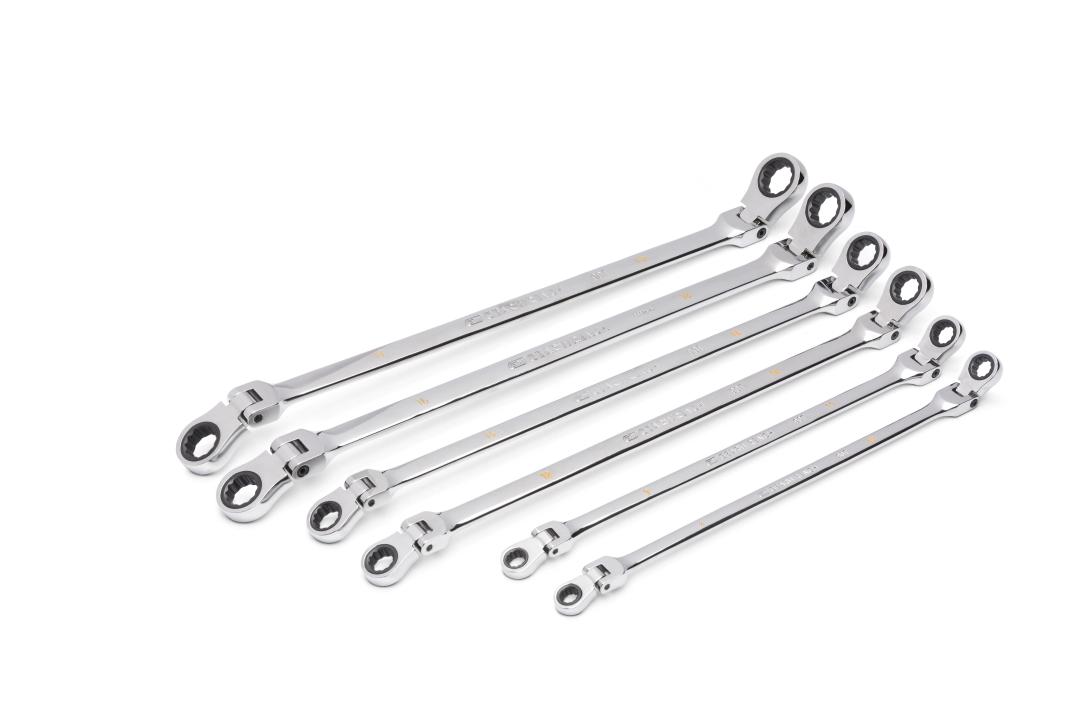
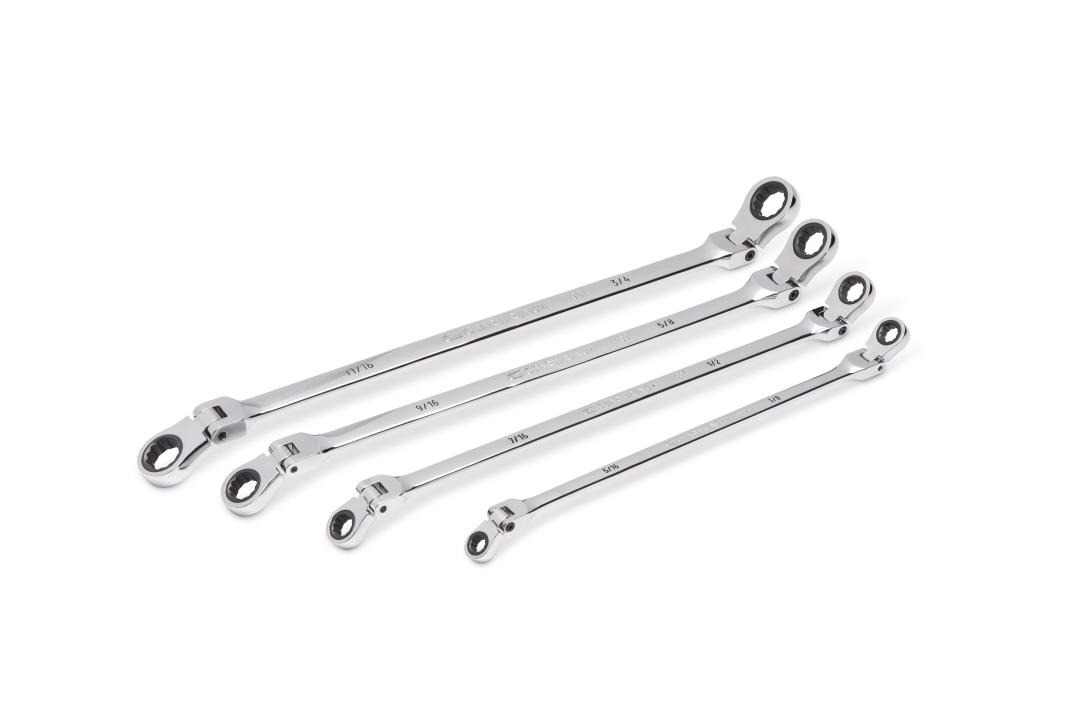
By the way, I see Gearwrench has finally joined the extra long flex head ratcheting wrench set party with their new double flex ratcheting wrench sets in metric & SAE. Gearwrench made their metric set a six piece set including 9 X 11 which most sets omit. They also opted for 12 point boxed ends with a 90 tooth ratcheting action. :beer:


zendriver

Well-known member
Joined
Dec 10, 2014
Messages
29,839
Location
Indiana
Most times I use ratchet wrenches in tight areas so 12 point makes easier to get on the loosened fastener.

I would suspect pro mechanics have both 12 and 6 pt sockets for the same reason.
 

unslow1

Well-known member
Joined
Mar 3, 2012
Messages
7,880
Location
Illinois
I have 6pt ratcheting wrenches somewhere but I never use them. The 12pt I use all the time. Generally I also only use 12pt sockets unless I expect a problem. Most people I know don't even own 6pt sockets. It would be interesting in seeing what the ratio of 6pt to 12pt sockets being made is. I would bet at least 3 to 1 more being 12pt. I wonder if any manufacturer has publicized that.
 

jd_1138

Well-known member
Joined
May 8, 2013
Messages
17,047
Location
NE Ohio
You're supposed to use a regular wrench or a socket on a breaker bar to loosen tight fasteners. Ratchets/ratcheting wrenches are not meant/made for breaking loose heavily torqued fasteners.

The warranty language for ratchets and ratcheting wrenches probably states that it's abuse.
 

Fedwrench

ALLIANCE MEMBER
Joined
Dec 9, 2007
Messages
14,952
Location
Valley of the sun
You're supposed to use a regular wrench or a socket on a breaker bar to loosen tight fasteners. Ratchets/ratcheting wrenches are not meant/made for breaking loose heavily torqued fasteners.

The warranty language for ratchets and ratcheting wrenches probably states that it's abuse.
Perhaps, that's why my favorite ratcheting wrench is the old Matco proswing series that has a zero offset, 72 toothed ratcheting boxed end on one side and a fixed 15 degree offset boxed end on the other side in standard length. You can use the fixed boxed end to break a fastener loose or for final tightening, while using the ratcheting boxed end to speed it off & on. :thumbup:
However, with long and extra long versions of ratchets with floating pawl heads, and extra long ratcheting wrenches available today, I'm sure many people often use them as a breaker bar. I know I do at times.:beer:
 

ecotec

Well-known member
Joined
Oct 5, 2010
Messages
5,435
You're supposed to use a regular wrench or a socket on a breaker bar to loosen tight fasteners. Ratchets/ratcheting wrenches are not meant/made for breaking loose heavily torqued fasteners.

The warranty language for ratchets and ratcheting wrenches probably states that it's abuse.
The torque ratings for new ratchet (think Dual80) are probably higher than a breaker bar from 30-40 years ago. I really do not sweat using ratchets to loosen bolts. If it gets crazy sketchy, I can go up to a 40” 3/4” breaker bar.

I don’t even have combination wrenches in my hand box for work. I just use my older Gearwrench ratcheting wrenches. There are plenty of times where I am working by feel. 6 point would be a pain in the *** to backwrench hardware that you are not actually looking at. Could it be done? Of course it could, but you would be moving your wrist around a lot more positioning the wrench.

I have not broken any of my older Gearwrench ratcheting wrenches. I had to replace one because I misplaced it, or someone wanted it more than I did. I just grabbed a Husky from Home Depot (7/16”? maybe).

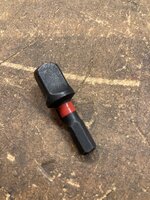
I do not sweat using ratcheting wrenches to backwrench a 1/4” impact driver… at all. I have done this thousands of times. Every once in a while, the 1/4” hex drive to 3/8” socket adapters break if the torque is set too high. The foremen give us a replacement if we break them, but I carry a spare so I don’t have to stop working… other than sometimes having to search for the broken adapter and socket. I use the adapter with a chrome deep 9/16” because it fits inside Unistrut, whereas an impact socket doesn’t. Anyways… the adapter breaks a couple times a year or so, but the ratcheting wrench never does.
 

Attachments

  • 6A24BCE6-50E2-43A9-AE9F-27D50AA04B52.jpeg
    6A24BCE6-50E2-43A9-AE9F-27D50AA04B52.jpeg
    1 MB · Views: 44
Last edited:

Dakotadadv8

Well-known member
Joined
May 30, 2021
Messages
1,483
I am old school same as jd_1138, standard combo wrench/breaker bar for breaking loose fasteners but good to know Dual 80 can do the job.
 

finn

Well-known member
Joined
Mar 27, 2005
Messages
16,227
Location
The UP, God's country
I would challenge your opening statement where you assert most sockets are six point rather than 12 point.

A quick scan of my five or more socket sets in five different locations debunks that claim. Twelve point sockets, whiteout doing an actual count, outnumber six point sockets by at least three to one.
 
OP
Q

qqzj

Well-known member
Joined
Nov 28, 2017
Messages
3,747
I would challenge your opening statement where you assert most sockets are six point rather than 12 point.

A quick scan of my five or more socket sets in five different locations debunks that claim. Twelve point sockets, whiteout doing an actual count, outnumber six point sockets by at least three to one.
Just go to any big box store and check their 3/8 set. Almost all of them are 6 points sockets.
 

ecotec

Well-known member
Joined
Oct 5, 2010
Messages
5,435
I would challenge your opening statement where you assert most sockets are six point rather than 12 point.

A quick scan of my five or more socket sets in five different locations debunks that claim. Twelve point sockets, whiteout doing an actual count, outnumber six point sockets by at least three to one.
I’m not saying that you are being obtuse… but I would say that the average American 50 or under, that did not inherit his tools or buy used, has a majority of 6pt sockets.

I have bought some 12pt sets in my day, but they were well under $10. A local industrial supplier, had a **** ton of NOS USA Duro-Indestro and French Facom 12pt SAE 3/8” socket sets in the cellophane… so I bought one of each.

In my metric drawer, I do have a 1/2” 12pt set, a 30mm 1/2” deep impact and a few others.

In my work tools, I keep a 3/8” drive 3/8” 12pt for beam clamps with square set screws.

I have all of the 12pt sets, except for 1/4” drive metric, but I don’t really use them.
 

Attachments

  • 985DA8CF-DF88-4CE9-8CEA-0C3442A7B3E3.jpeg
    985DA8CF-DF88-4CE9-8CEA-0C3442A7B3E3.jpeg
    1.2 MB · Views: 39
Last edited:

ecotec

Well-known member
Joined
Oct 5, 2010
Messages
5,435
I do want to point out that garage and estate sales of the greatest generation and some baby boomers have **** tons of 12pt (mostly SAE).

It is common enough that I consider them almost free… SAE, in general, can be had for almost nothing.
 

Ole Slewfoot

Well-known member
Joined
Feb 22, 2016
Messages
5,098
Location
Freedom, CA
I have not broken any of my older Gearwrench ratcheting wrenches. I had to replace one because I misplaced it, or someone wanted it more than I did. I just grabbed a Husky from Home Depot (7/16”? maybe).

I too go straight for the gearwrench. I broke my 14, bit I had my back braces on the tire and was pushing with both feet so I didn't blame it.
Then I broke out the grinder and all was well In the world.
 

Mr_B

Well-known member
Joined
Nov 21, 2016
Messages
5,374
Location
Reading
the plus with 12 point is easier wiggle on a crusty/coated hex in limited access work versus 6 point .
alignment easier too but sure for ratchet wrenches you can twist the hex ring to overcome this but i wouldn't want be using 6 points on ratchet wrenches unless needs must, most times when hex that rusted or damaged it needs a 6 point tool, that tool won't be a ratchet wrench as the job already escalated beyond ratchet wrench use.
Useful to have 6 point ratchet wrenches as sometimes it going be only thing that gets the bite but a decent set of 6 point combo wrenches be better buy for those not on the tools daily .
 
To avoid these ads, REGISTER NOW!

bonneyman

Well-known member
Joined
Apr 22, 2010
Messages
8,789
Location
Desert SW
Many people have a huge mental block against wrenches that aren't 12 point.
I hate to admit this Fedwrench but I think you're right. And I'm one of them!

Back when I was building my tool set (1980's) I had a basic Bonney wrench set and Bonney socket set. I was sold on the Loc-Rite broaching, which was only available on their 12 point stuff. I don't recall anybody doing enhanced broaching on 6 point tools then. (Maybe Snap-On). Anyways because of this I didn't even look at 6 point tools - I'd been conditioned against them. (Though I did have some 6 point impacts - were told they were stronger).
Now just about everybody has 6 and 12 point tools with enhanced broaching. So I've finally "grown up" and started grabbing sockets with good 6 point broaching. But I still catch myself passing over 6 point tools for the "better" 12 pointers. Old habits die hard.
 
OP
Q

qqzj

Well-known member
Joined
Nov 28, 2017
Messages
3,747
the plus with 12 point is easier wiggle on a crusty/coated hex in limited access work versus 6 point .
alignment easier too but sure for ratchet wrenches you can twist the hex ring to overcome this but i wouldn't want be using 6 points on ratchet wrenches unless needs must, most times when hex that rusted or damaged it needs a 6 point tool, that tool won't be a ratchet wrench as the job already escalated beyond ratchet wrench use.
Useful to have 6 point ratchet wrenches as sometimes it going be only thing that gets the bite but a decent set of 6 point combo wrenches be better buy for those not on the tools daily .
You can just randomly spin a 6 point wrench a couple times to find a position that fits. Sure it might be slightly inconvenient but the possibility of this need is infinitely exaggerated. I would not look at 12 point as long as something 6 point can work
 

Bubba Fett

Well-known member
Joined
Jun 11, 2018
Messages
1,516
Location
Eastern NC
You shouldn't be using ratcheting wrenches to break a bolt free. Use a regular box end, and then move to a ratcheting wrench to finish. Using a ratcheting wrench to break a bolt free is asking for trouble.

Most box wrenches (ratcheting or not) are 12-point because that makes it easier to engage a bolt in places where space is limited.

12-point wrenches are compatible with 6-point bolts, but can also be used on 12-point fasteners. Spline wrenches work with 6-point, 12-point, square, and spline fasteners. They can also be used on rounded fasteners in some cases.

Most people can't afford to buy 6-point, 12-point, spline, and ratcheting versions of the same tools, so it makes sense for wrenches to cover as much ground as possible. Since a ratcheting wrench should only be used to spin (and not break loose) a bolt or nut, then I would say this is fine.

Obviously tool companies don't want people to abuse their tools and then warranty them. What tool company would, and why is it a conspiracy to want to stay in business?
 

JradM

Well-known member
Joined
Sep 4, 2019
Messages
1,816
Location
Alberta
the plus with 12 point is easier wiggle on a crusty/coated hex in limited access work versus 6 point .
alignment easier too [...]
I was going to suggest the same thing. E.g. there are also ADVANTAGES to 12pt.

Sure, many of us might prefer a set of 6pt, given the option, to achieve max torque, but 12pt isn't an obviously inferior design. It depends on what you're trying to achieve.

For example, if a bolt is in a tight spot where a wrench is a better choice than a ratchet, if you attempt to put your wrench on it but the 6pt flats don't quite line up, it might not be much hassle to pull the wrench out, spin a few degrees with your fingers and try to line up again. However, it's still easier if you don't need to. A 12pt box end is more likely to line up.
 

zmotorsports

ALLIANCE MEMBER
Joined
Oct 20, 2009
Messages
21,372
Location
Northern Utah
You're supposed to use a regular wrench or a socket on a breaker bar to loosen tight fasteners. Ratchets/ratcheting wrenches are not meant/made for breaking loose heavily torqued fasteners.

The warranty language for ratchets and ratcheting wrenches probably states that it's abuse.

Exactly. I use a standard box end to break the fastener loose and then swap over to the ratcheting wrench. I love my Matco ratcheting wrenches for this very reason as they have a 15-degree standard box end on the end opposite the ratcheting end. I have co-workers who are constantly breaking theirs and can't seem to understand they should be breaking them loose with a standard wrench or socket. They just say "it's warranted". But in my opinion that's abusing the tool plus the time wasted to warranty said tool. It makes more sense to me to just use the tool as designed and not abuse it.


Perhaps, that's why my favorite ratcheting wrench is the old Matco proswing series that has a zero offset, 72 toothed ratcheting boxed end on one side and a fixed 15 degree offset boxed end on the other side in standard length. You can use the fixed boxed end to break a fastener loose or for final tightening, while using the ratcheting boxed end to speed it off & on. :thumbup:
However, with long and extra long versions of ratchets with floating pawl heads, and extra long ratcheting wrenches available today, I'm sure many people often use them as a breaker bar. I know I do at times.:beer:

Agreed. My favorite ratcheting wrench is the Matco proswing as well. My first set of ratcheting wrenches. The only downside is that you have to pay close attention to the fasteners and clearance when using them as I've gotten into a situation twice now where I couldn't get the wrench off. I like my Snap-on combination ratcheting wrenches as well with the open end on the opposite but there's something about grabbing those Matco wrenches and having the rigid box end on one side then flip the wrench to use the ratcheting mechanism that is just satisfying and quick.
 

Xcursion88

Well-known member
Joined
Apr 18, 2013
Messages
785
SK X-frames...
The best ratcheting wrenches of all time...
6 point
The tiniest swing you'd ever experience on a ratcheting wrench...

No switch though so you need foresight that you don't get stuck between fastener head and other object
 

Mr_B

Well-known member
Joined
Nov 21, 2016
Messages
5,374
Location
Reading
You can just randomly spin a 6 point wrench a couple times to find a position that fits. Sure it might be slightly inconvenient but the possibility of this need is infinitely exaggerated. I would not look at 12 point as long as something 6 point can work
Yes I know and mentioned that you can turn the ring.
Thing is on cruddy hex fasteners that you can't reach right into to deal with sometimes a 6 point hard get on due to coatings/dirt/rust but a 12 point will wiggle on as scrapes off any hindering coating/dirt easily .
With wrenches I generally always using 12 point unless 6 point looks only way likely get enough bite & in those cases the ratchet wrench not likely candidate for use all but once in a blue moon .
 
Last edited:

shawhite

Well-known member
Joined
May 28, 2014
Messages
1,519
For the people who use a ratchet or beaker bar to break a bolt loose, why switch over to a wrench when a ratchet will obviously fit. Personally I have no problem using my snap-on ratcheting wrenches to break a bolt loose but if I feel like I may break the wrench I just use the open end. 12 point ratcheting end just allow me to use it on more fasteners 6pt, 12pt, square.
 

jd_1138

Well-known member
Joined
May 8, 2013
Messages
17,047
Location
NE Ohio
Exactly. I use a standard box end to break the fastener loose and then swap over to the ratcheting wrench. I love my Matco ratcheting wrenches for this very reason as they have a 15-degree standard box end on the end opposite the ratcheting end. I have co-workers who are constantly breaking theirs and can't seem to understand they should be breaking them loose with a standard wrench or socket. They just say "it's warranted". But in my opinion that's abusing the tool plus the time wasted to warranty said tool. It makes more sense to me to just use the tool as designed and not abuse it.

Those knuckleheads should really think about their antics while being deprived of their ratcheting wrenches for awhile while waiting for the tool dealer to show up. Unless the tool dealer is super reliable and comes every few days, which kinda ***** that y'all have a reliable tool truck driver and he has to warranty tool abuse.

That drives up the cost of quality tools for everyone -- even the ones who don't abuse tools. *****.
 

jd_1138

Well-known member
Joined
May 8, 2013
Messages
17,047
Location
NE Ohio
For the people who use a ratchet or beaker bar to break a bolt loose, why switch over to a wrench when a ratchet will obviously fit. Personally I have no problem using my snap-on ratcheting wrenches to break a bolt loose but if I feel like I may break the wrench I just use the open end. 12 point ratcheting end just allow me to use it on more fasteners 6pt, 12pt, square.

Really shouldn't be using a ratchet either to break a tight fastener. Breaker bars exist. But of course, you can't use a breaker bar to speed off the fastener, so at that point, I'd switch to a ratchet/socket or a ratcheting wrench.

They sell them in a lot of sizes from like 6 inches all way to 4 feet. Ratchet sets used to include them. I wish everyone owned an HF 25-inch $12 breaker bar to loosen tight lug nuts. A lot of people at work call off because they have flats and can't get lugs off. Or heck it may be a lie/excuse, but I bet it does happen a lot. That crappy 10-inch pressed steel tire tool that came with the car *****.

Also, another benefit is that breaker bars have tilt heads, so access/leverage can be easier if space is limited. Well, some ratcheting wrenches have tilt heads too. And if there's enough space, a longer breaker bar can be way easier to loses a tight fastener with than a relatively short ratcheting wrench.

1AF43_AS01?$adapimg$&hei=536&wid=536.jpg
 

zmotorsports

ALLIANCE MEMBER
Joined
Oct 20, 2009
Messages
21,372
Location
Northern Utah
Those knuckleheads should really think about their antics while being deprived of their ratcheting wrenches for awhile while waiting for the tool dealer to show up. Unless the tool dealer is super reliable and comes every few days, which kinda ***** that y'all have a reliable tool truck driver and he has to warranty tool abuse.

That drives up the cost of quality tools for everyone -- even the ones who don't abuse tools. *****.

Agreed, but it's not just their ratcheting wrenches, I see it across the board as far as hand tools. I have one co-worker who has arms like a freakin' gorilla but no connection between his arms and that lump that sits on his shoulders. I have NEVER seen anyone break tools like he does and his answer is ALWAYS the same, "that's why I buy tools with a warranty". I've tried explaining that he is only driving costs up for not only the rest of us but also his future tool purchases when he continuously pushes his tools to their breaking point. He doesn't seem to get it. Using a 3' pipe on his 1/2" Snap-on ratchet or pushing on his 3/8" extended length ratchet with his foot are common sites in our shop. He seems to be the village idiot if you will and although people laugh at him and joke about it, he simply doesn't get it.
 

PelicanPines

ALLIANCE MEMBER
Joined
Apr 30, 2014
Messages
38,110
Location
New Jersey, USA, Earth, My own reality
Some fasteners are 12 point....
Excellent point. But I would not build or store my whole toolbox(s) based on the rare 12pt fastener. I prefer 6 point sockets, box wrenches etc. I never found a valid reason to use a 12 point beyond those few 12 point bolt heads I have bumped into.

6 Point Rules !!!

I would never use a ratcheting wrench to BREAK loose a stuck anything.
 

jd_1138

Well-known member
Joined
May 8, 2013
Messages
17,047
Location
NE Ohio
Agreed, but it's not just their ratcheting wrenches, I see it across the board as far as hand tools. I have one co-worker who has arms like a freakin' gorilla but no connection between his arms and that lump that sits on his shoulders. I have NEVER seen anyone break tools like he does and his answer is ALWAYS the same, "that's why I buy tools with a warranty". I've tried explaining that he is only driving costs up for not only the rest of us but also his future tool purchases when he continuously pushes his tools to their breaking point. He doesn't seem to get it. Using a 3' pipe on his 1/2" Snap-on ratchet or pushing on his 3/8" extended length ratchet with his foot are common sites in our shop. He seems to be the village idiot if you will and although people laugh at him and joke about it, he simply doesn't get it.
You guys should record him abusing tools and show it to your various tool truck dealers. :) That'd be fun.

He'd get the hell outta Dodge (or Ford or Toyota) dealership:


shawhite

Well-known member
Joined
May 28, 2014
Messages
1,519
Really shouldn't be using a ratchet either to break a tight fastener. Breaker bars exist. But of course, you can't use a breaker bar to speed off the fastener, so at that point, I'd switch to a ratchet/socket or a ratcheting wrench.

They sell them in a lot of sizes from like 6 inches all way to 4 feet. Ratchet sets used to include them. I wish everyone owned an HF 25-inch $12 breaker bar to loosen tight lug nuts. A lot of people at work call off because they have flats and can't get lugs off. Or heck it may be a lie/excuse, but I bet it does happen a lot. That crappy 10-inch pressed steel tire tool that came with the car *****.

Also, another benefit is that breaker bars have tilt heads, so access/leverage can be easier if space is limited. Well, some ratcheting wrenches have tilt heads too. And if there's enough space, a longer breaker bar can be way easier to loses a tight fastener with than a relatively short ratcheting wrench.

1AF43_AS01?$adapimg$&hei=536&wid=536.jpg
Actually lug nuts should be put on with a torque wrench so they aren’t over tightened and that wrench that comes with fewer cars these days will take the lugs off. I have a breaker bar but haven’t used it in years. Long handle flex head ratchet is all I use.
 

jd_1138

Well-known member
Joined
May 8, 2013
Messages
17,047
Location
NE Ohio
Actually lug nuts should be put on with a torque wrench so they aren’t over tightened and that wrench that comes with fewer cars these days will take the lugs off. I have a breaker bar but haven’t used it in years. Long handle flex head ratchet is all I use.
I never said to use the 25 inch breaker bar to put the lugs back on. I said to break 'em loose with it, then at that point use the included factory small tool. But yes ideally a torque wrench should be used to get the lugs to exactly the foot pounds the manual states.

I changed so many wheels, I can get it pretty close without a torque wrench, but I do carry a cheap HF torque wrench in my trunk so I don't have to guess.

Most people are lucky to get the lugs off, put the small temp spare on, then tighten the lugs and then drive it to Walmart for a flat repair or a new tire. Most people don't even own a 12 dollar breaker bar from HF let alone own and/or carry a long handle flex head ratchet in their cars.

I am just speaking of the general ignorance among the average person these days. Not sure what included tire tools from factory you've seen but the few I have seen are rubbish -- 8 inches made from pressed steel. Some factory ones are better than others. I helped a lady change a flat in her PT Cruiser and the tire tool warped as I manhandled it to get the lugs off. What a chore. I happened to be in a car I just bought and hadn't had time to put a 25 inch breaker bar in it yet.
 

shawhite

Well-known member
Joined
May 28, 2014
Messages
1,519
I never said to use the 25 inch breaker bar to put the lugs back on. I said to break 'em loose with it, then at that point use the included factory small tool. But yes ideally a torque wrench should be used to get the lugs to exactly the foot pounds the manual states.

I changed so many wheels, I can get it pretty close without a torque wrench, but I do carry a cheap HF torque wrench in my trunk so I don't have to guess.

Most people are lucky to get the lugs off, put the small temp spare on, then tighten the lugs and then drive it to Walmart for a flat repair or a new tire. Most people don't even own a 12 dollar breaker bar from HF let alone own and/or carry a long handle flex head ratchet in their cars.

I am just speaking of the general ignorance among the average person these days. Not sure what included tire tools from factory you've seen but the few I have seen are rubbish -- 8 inches made from pressed steel. Some factory ones are better than others. I helped a lady change a flat in her PT Cruiser and the tire tool warped as I manhandled it to get the lugs off. What a chore. I happened to be in a car I just bought and hadn't had time to put a 25 inch breaker bar in it yet.
You do realize most cars don’t come with spare tires now right?
 

jd_1138

Well-known member
Joined
May 8, 2013
Messages
17,047
Location
NE Ohio
You do realize most cars don’t come with spare tires now right?

Yeah, I've been mostly talking about the cars people drive now -- 2010 to 2018 -- most of which have at least temp spares with a jack/tire tool. I wouldn't own a car without a spare. My '21 Venue came with the spare option -- I think $150, and it came with a full size spare with a rim like the other 4 and a jack/tire tool.

Though I carry a HF breaker bar and torque wrench. I also carry a small 12V air compressor. I mostly use them on relatives/friends cars. lol
 
To avoid these ads, REGISTER NOW!
Top Bottom