To avoid these ads, REGISTER NOW!

The Industrial Maintenance Man

lookin4fun79

Member
Joined
Oct 13, 2018
Messages
8
Location
back of the house
Industrial Maintenance Tech, for a large food supplier. We cover everything as a mechanic from 13K electric down to 5VDC. Almost any and all repairs on equipment. We no longer repair elevators due to state liability laws. Our buildings are over 100 years old. When i started working here 20 years ago we still used machines K rations were made on! We supply most of our own tools, company buys specialty tools and replaces our broken tools.
 
To avoid these ads, REGISTER NOW!

PhantomEB

Well-known member
Joined
Feb 6, 2006
Messages
6,751
Location
Medicine Hat, AB, Canuckistan
I also am a Union Millwright, 7 years now, 5 with the hall. Done everything from conveyors, to SuperPumps to Turbines, lots of overhauls, RnR, layout and install. Nothing with hydraulics or PLCs....YET.

Tired of being on the road working everything from 3 day Jobs 8 hours from home to month long plus away from home also. Now seriously lookin at taking a paycut along with cut in hours, just to do maintenance around home. Didn’t get on with the airport 10min from home but now trying my luck with Pepsi, would be another union gig but different local.

I know in the food industry I will have to practice my TIG but looking forward to that!
 
Last edited:

jagwinn

Well-known member
Joined
Apr 10, 2013
Messages
487
Location
Virden, Illinois
Tired of being on the road working everything from 3 day Jobs 8 hours from home to month long plus away from home also. Now seriously lookin at taking a paycut along with cut in hours, just to do maintenance around home.

@phantomEB, Understand that! I had great job with Starbucks Roasting in South Carolina, but it was 14 hours from my family in Illinois. I left SC and moved back to IL, for 1/2 the pay. Worked 3 years then retired. Family First.
John
 

Kellybass921

New member
Joined
Jul 16, 2019
Messages
2
Location
12x12 shed and a ez-up tent, still shade tree for
It is fun, always something different, I can rebuild a hydraulic pump one day, fab some odd time saver/back saver for production the next and be a pipe fitter the next. The only thing more eclectic is being a farmer.

I couldn’t have said it any better myself. Pm/em coverage when needed at the Wilson Bridgestone tire plant here, we do it all and then some
 

Downwindtracker 2

Well-known member
Joined
Jun 13, 2019
Messages
1,715
Location
BC
I haven't seen this thread before, so here goes.

In Canada , it's trade unto itself, complete with exams and papers, millwright . It's a four year apprenticeship then we write a provincial exam and a interprovincial exam. They require 70% to pass.

I've worked in sawmills, breweries, coffee roasting and packaging, pulp and paper mills, which BTW are the world's most expensive industrial plants, grain elevators, and I ended up in a wire mill. My motto was " A chunk of iron is a chunk of iron" Machinery is pretty universal. If there is a machine, there has to be a millwright to install, repair, modify or even design and build. Now, it hurts me to say this, but industrial electricians are even more important then us.

Since we are so important to industry and not part of the retail trade, we are at the top of the pay scale. We do a good deal better than auto mechanics.

I've rarely seem Snap-on tools. I'm not sure they would do well in the land of the big snipe(cheater). When something goes down, the costs can be enormous , it's not the time to baby tools. The classic tools were Williams and Proto, in Canada we also had Gray. Having Gray and Proto, I was considered a bit of a tool snob. We also used dial indicators and mics.

The word mechanic at the turn of the last century referred to a tradesman. carpenters were considered mechanics. I was high praise. So the use of the old term Millwright, builder of mills is just old fashioned English. A more modern term would be industrial mechanic, but that would not in compass the everything that expected of us.
 
Last edited:

lis2323

Well-known member
Joined
Dec 25, 2016
Messages
3,234
Just found this old thread. Glad it got revived or I never would have seen it. [emoji481]


Sent from my iPad using Tapatalk
 

sberry

Banned
Joined
Jun 18, 2005
Messages
35,747
Location
Brethren, Michigan
I have been in a few plants. Some with the best and some where the maint dept pretty much stood there all day. Plenty with no training, didn't know squat and management want any better. Some of these were not small outfits, lots of stuff going by at limping speed.
 

ive

Well-known member
Joined
Mar 8, 2011
Messages
1,532
Location
Canada
I haven't seen this thread before, so here goes.

In Canada , it's trade unto itself, complete with exams and papers, millwright . It's a four year apprenticeship then we write a provincial exam and a interprovincial exam. They require 70% to pass.

I've worked in sawmills, breweries, coffee roasting and packaging, pulp and paper mills, which BTW are the world's most expensive industrial plants, grain elevators, and I ended up in a wire mill. My motto was " A chunk of iron is a chunk of iron" Machinery is pretty universal. If there is a machine, there has to be a millwright to install, repair, modify or even design and build. Now, it hurts me to say this, but industrial electricians are even more important then us.

Since we are so important to industry and not part of the retail trade, we are at the top of the pay scale. We do a good deal better than auto mechanics.

I've rarely seem Snap-on tools. I'm not sure they would do well in the land of the big snipe(cheater). When something goes down, the costs can be enormous , it's not the time to baby tools. The classic tools were Williams and Proto, in Canada we also had Gray. Having Gray and Proto, I was considered a bit of a tool snob. We also used dial indicators and mics.

The word mechanic at the turn of the last century referred to a tradesman. carpenters were considered mechanics. I was high praise. So the use of the old term Millwright, builder of mills is just old fashioned English. A more modern term would be industrial mechanic, but that would not in compass the everything that expected of us.

Hi.

I worked as a Union maintenance welder in central British Columbia at a sawmill and did lots of assisting the millwrights, incredibly smart people. I’ve always looked up to them.

Unfortunately I don’t live in BC now, but when I did it was 80% to pass the millwright exam and you only had 3 attempts a year.

As for tools, hand tools you bought yourself. As well as a tool cart and chest. Air and electrical tools were provide as well as over size stuff. Metric tools were provided by the company. Ppe, speedglas welding helmets were bought by the company, as well as consumables.

There was even a clause in the collective agreement that lost millwright tools would be replaced by the employer. .
 
Last edited:

Downwindtracker 2

Well-known member
Joined
Jun 13, 2019
Messages
1,715
Location
BC
Maybe you're right about the pass level. I was well above it. Company replacement was where some of my Proto came from. When I bought my large wrenches, Proto , it was Canadian made in those days, were an affordable choice !

I have been retired now, for 5 years. I still putter around with machinery, woodworking, small outboards,machine tools and lapidary equipment. After all " A chunk of iron is a chunk of iron." I'm still learning, I've been honing my machining skills and I recently learned how to TIG aluminum.
 

Earp69

Well-known member
Joined
Sep 20, 2016
Messages
859
just came across this thread on a whim. might as well bring it back from the dead as im sure there's more of us maintenance folks out there. Worked 4 years as a GMM or "General Maintenance Mechanic" at an automotive glass plant. You did everything from rebuilding machinery,welding,machining,plc's,drives,tons of automation. i got to work with some really great old timers that taught me a ton in a short amount of time. i left there to work at the steel mill as an electrician because the pay is substantially more and the majority of the old timers to learn from had retired at my old job. ive been at the steel mill for 5 years now.

the old job we had to bring all our own tools in,and got a $250 dollar a year tool allowance(big whoop). The floors were so rough you had to build a frame for your toolbox because it would destroy a regular tool box in no time. we rolled our toolboxes to each line when they would shut down for pm's. otherwise we road around in trikes or golf carts with our tools. We had a awesome maintenance shop and it really spoiled me,now my goal is to build my own shop simalar but on a smaller scale.

the steel mill provides us with all the tools we need,mostly all proto,williams,armtstrong,klein,greenlee. we work swing shift which ***** but we get paid well for it. my plan is to finish my shop,finish paying my house off and hopefully turn my shop into something so that i can work for myself.

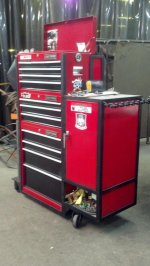
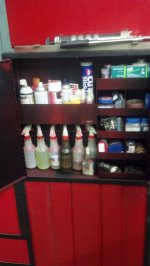
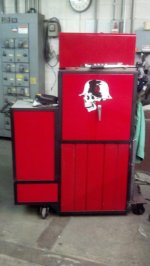
EDIT:found a couple pictures of my box while i was in the process of building it,its not finished here but is about 85% done. its got plenty of bruises and bumps by now but for a 300 dollar box it sure has treated me well:beer:
 

Attachments

  • IMG_20140806_020800_640.jpg
    IMG_20140806_020800_640.jpg
    66.2 KB · Views: 257
  • IMG_20140806_020549_913.jpg
    IMG_20140806_020549_913.jpg
    57.1 KB · Views: 205
  • IMG_20140806_020454_127.jpg
    IMG_20140806_020454_127.jpg
    50.7 KB · Views: 202
Last edited:

lardy1

Well-known member
Joined
Mar 17, 2019
Messages
3,399
Location
Michigan
You maintenance guys would enjoy spending a few days in the "engine room" of a freighter.
 

TOTO

Well-known member
Joined
Mar 21, 2018
Messages
146
Location
Campbell County, Va
You maintenance guys would enjoy spending a few days in the "engine room" of a freighter.

I think it would open their eyes as to how good they have it. Try to keep everything running with minimal resources. No running to the local supplier. Are you talking Diesel or Steam. I spent 5 yrs on Tankers back in the early 80's. All steam except for one diesel. We had to change a piston out at sea. Fun for all. :lol_hitti
 

RTM

Well-known member
Joined
May 13, 2019
Messages
13,137
Location
SF Bay Area
You maintenance guys would enjoy spending a few days in the "engine room" of a freighter.

When I worked in a brewery, one of our engineers was ex merchant marine, and a large portion of our physical plant guys were off ships or nuclear subs. Nothing like being on a dead ship to inspire fast maintenance practices. We were in the thousands of dollars per hour per packaging line for downtime back then, no idea what it was for the brewing line, but it would shutdown all eight packaging lines, 21+ days later. Fermentation, aging and cold storage wasn’t as bad, we had surge space there.
 

lardy1

Well-known member
Joined
Mar 17, 2019
Messages
3,399
Location
Michigan
I never worked on a steamer. Always diesel. The part I was getting at is the broad range covered by the engine dept. They don't just keep those diesel drive motors humming. There are multiple generating systems, all the electrical, plumbing, machining, hydraulics, refrigeration, every form of pump imaginable and on and on. Everything mechanical on the ship other than a handful of things the deck dept. covers falls on them. Some very talented folks out there.
 

Lassen Forge

Well-known member
Joined
Apr 26, 2014
Messages
15,139
Location
The romantic hills of central Umbria, Italy,
I'm recastering (for the 3rd time) my 70's Craftsman stack that has served me well from hell to highwater... everything from vehicle shops to facility maintenance. I'm currently torn between building a dolly for it and its twin, but I also like the mobility of a short box... What I really like the add-ons to yours, were those sourced or did you build them / have them built?
 

MattT

Well-known member
Joined
Feb 20, 2010
Messages
3,201
I think it would open their eyes as to how good they have it. Try to keep everything running with minimal resources. No running to the local supplier.

Industrial guys ain't got it near as good as you think. It ain't like working on a 1/2 ton chevy. Overnite is usually best case and some parts can take months to get.

Foreign machinery is the worst. The foreign OEMs don't care if you're line is down. They're not gonna get a hurry to send parts out. And their tech support is just as bad. "It's 5 o'clock here. I'm off to the bar." CLICK:wtf: Got told once the guy I needed to talk to had just gone out on vacation, for 4 weeks:wtf:

There's lots of make it work with whatever you can find in the junk pile. And the 5S nazis want you to scrap the junkpile. I know of several plants that've built, or rented, buildings off site to hide the junk pile in.
 

Downwindtracker 2

Well-known member
Joined
Jun 13, 2019
Messages
1,715
Location
BC
That cart design is pretty standard, most of our millwrights used it. In the old section in our mill had the machines on concrete bases, but between the machines, it was asphalt pavement . Likely hand placed and packed with small machines, in other words very rough. I get a laugh about the quality of boxes, no box on it's own could stand the twist and racking for long. I preferred to use a 4000# fork lift to move mine around, pushing 1100#, even on 8" casters is hard work.
 

Downwindtracker 2

Well-known member
Joined
Jun 13, 2019
Messages
1,715
Location
BC
Industrial guys ain't got it near as good as you think. It ain't like working on a 1/2 ton chevy. Overnite is usually best case and some parts can take months to get.

Foreign machinery is the worst. The foreign OEMs don't care if you're line is down. They're not gonna get a hurry to send parts out. And their tech support is just as bad. "It's 5 o'clock here. I'm off to the bar." CLICK:wtf: Got told once the guy I needed to talk to had just gone out on vacation, for 4 weeks:wtf:

There's lots of make it work with whatever you can find in the junk pile. And the 5S nazis want you to scrap the junkpile. I know of several plants that've built, or rented, buildings off site to hide the junk pile in.

Almost all our machinery was imported, Japan, Germany, USA, and even England. It was both cheaper and much faster to get a local jobber to make it or repair and modify it with the changes so we didn't have to do it again in six months. I think management got kick backs, so our maintenance shop was kept pretty lean on machine tools.
 
To avoid these ads, REGISTER NOW!

MattT

Well-known member
Joined
Feb 20, 2010
Messages
3,201
I think management got kick backs, so our maintenance shop was kept pretty lean on machine tools.

Dunno about cash money kick backs but I'm sure management were getting some freebies.

Also here in the States adding machine tools to a maintenance shop can cause a lot of management headaches. Not easy finding mechanics who can run them. A lot of them don't even know how to use a drill motor properly.

Even if you're a big enough operation to justify hiring machinists, finding any competent ones can be challenging.

Maybe not an issue up in Canada where you seem to have a decent apprenticeship system. Do millright apprenticeships include any machining up there?
 

Dingleburry

Well-known member
Joined
Mar 2, 2016
Messages
593
Location
Great white north in an igloo
If i remember correctly, 2 weeks for machining. Only lathes and milling machines. No fancy **** like shapers, or rotary tables, surface grinders, complex machining/CNC. Etc.

Looked at a few diff provinces and i seen from 60hrs-140hrs on machining.
 
Last edited:

humpty

Well-known member
Joined
Dec 4, 2008
Messages
547
Location
Minneapolis, MN
Foreign machinery is the worst. .

I agree to a point...the majority of my mechanic days was in medical device manufacturing and 95% of our machines were foreign.

Swiss machines - Citizen, Star, Tsugami

Lathes - Nakamura, Nomura, Mazak

Mills - Mazak, Matsuura, Fadal, Fanuc

The list goes on and on. We had a healthy parts stock and we had a really good couple of local reps that helped us with parts. For the most part we could overnight stuff in but sometimes **** had to sit, which is bad news for lean manufacturing.

All in all I wouldn't have changed my career though. Working in high precision med device meant nice climate controlled, clean environments.
Sure beats working in the heat treat department in July.

humpty
 

willbird

Well-known member
Joined
Dec 24, 2019
Messages
65
Location
NNWW Ohio
Industrial Maintenance Technician here. I was a cnc/tool/jigs and fixtures Machinist from 1983-2008. 2008 everything automotive in NW Ohio augured in. Took a job I could find and then applied (some would call it "bid" but we are non union) into jobs with more responsibility that led to Maintenance.

Work brought technical college in and taught us motors, controls, fluid power, a little HVAC.

Kind of a put down from our supervisor would be to be classified as a "mechanic"....a person who is not deemed to be competent to work on anything above 24 volts. An "electrician" does all of the above and 480VAC stuff.

We have molding press up to 2500 tons, heated process which heats the tooling to 350F or so. Plenty of new machinery mixed with old stuff which we have no electrical schematics for. Really nice stock of spare parts well inventoried using a software system.

I'm working my way into the Engineering-Controls side.

I'm coming up on a decade with this co and this year I made more than twice the $$ I made my first year so upward mobility has worked out :). 4 years on paper in Industrial Maintenance so head hunters starting to bug me but I'm happy where I am with my 4 weeks and 2 days paid vacation :).

Used Craftsman stuff all my life but IMHO it has taken the poop now, they do not even make a 1/4" ratchet worth buying now IMHO. Lots of the stuff I do 3/8" drive will suffice, but I have 1/2" and use 3/4" now and then. Ratchet combination wrenches rock for a lot of stuff. I will use a crescent as the second wrench because I only carry 1 of each size for reactive work.

Bill
 

Downwindtracker 2

Well-known member
Joined
Jun 13, 2019
Messages
1,715
Location
BC
My pre-app was a self paced 10 months, nobody did it in that time, was good for first year in either millwright or machinist. They set out to make it the most difficult and complete in the country. Maybe they didn't intend difficult but certainly complete. It was pretty elitist .

When we were in the process of being taken over by a multinational, I think they burned out a couple of paper shredders in their late night clean up. The next regime was worse in his choice of machine shop, I ended up doing a lot of filing to make things fit. He got a Harley and a sign off on his Professional Engineer papers.
 

Joebass

Well-known member
Joined
May 16, 2019
Messages
118
Location
Ny
I'm self employed now, I own a fabrication and machine shop. I have sort of an industrial background. Worked at what was a GM plant, then it was sold twice before all the jobs went to Mexico. There were approximately 3500 people working there. My Father was skilled trades( machine Repair). Since it was union all the trades were separate, most were Electricians, Millwrights, Machine repairmen, Plumbers, Tin knockers, Carpenters, etc. The Tool makers, and Model makers, were back in the tsupplies.
Most guys had Kennedy roll around, some had more than one, some had a top machinist box, even the set up men had Kennedys. All company supplied. Tools were a mix of Armstrong, and Proto mostly. Toolmakers got Starrett and Mitutoyo stuff. My Dad worked in the tool inspection lab the last 10 years so when he retired he brought all his tools to my shop. I have 5 or 6 Kennedy boxes out of that plant.
Machine repair would work on anything from a Bostich cardboard box stapler to 500 ton and bigger presses, screw machines, some welding, hydraulic valves, and lines etc. The millwrights worked on alot of the conveyors, gears, did some fabrication, rigging, machine building, and that type of stuff.
I started on the line and was supposed to go into the apprenticeship program but they never offered it in my 5 years there. So when I took the buy out I went to school, and started my business. My father's been retired for 15 years, and comes to the shop every day for something to do and keep busy. I basically did my apprenticeship under him.
 

MattT

Well-known member
Joined
Feb 20, 2010
Messages
3,201
If i remember correctly, 2 weeks for machining. Only lathes and milling machines. No fancy **** like shapers, or rotary tables, surface grinders, complex machining/CNC. Etc.

Looked at a few diff provinces and i seen from 60hrs-140hrs on machining.

I figured you guys probably did a bit.

I did the shaper. Thankfully I haven't had to touch one of the damn things in the 30+ years since then.

CNC was also interesting back then. Had a CNC trainer bench lathe and I got stuck on it making dummy .308 rounds for the boss. It did alright other than it kept putting a step on the ogive no matter which way I programmed the cut. So I'm hand blending the ogives with a file on a CNC:wtf: The POS punch tape mill at college was even worse. Several hours of ******* around to make a part I could knock out in 15 minutes on a Bridgeport.
 

Earp69

Well-known member
Joined
Sep 20, 2016
Messages
859
^^^^^
Nice welded chain handle!
:thumbup:

Thanks, looks distorted in the pictures but I promise it's square and looks even better in person. It's kinda Billy, but I like doing things differant than the other guys
 

Earp69

Well-known member
Joined
Sep 20, 2016
Messages
859
I'm recastering (for the 3rd time) my 70's Craftsman stack that has served me well from hell to highwater... everything from vehicle shops to facility maintenance. I'm currently torn between building a dolly for it and its twin, but I also like the mobility of a short box... What I really like the add-ons to yours, were those sourced or did you build them / have them built?

All made by me from scratch. It's pretty simple really, build your frame out of angle iron and then fill in the rest with sheet metal. Then I bent the doors up on the brake and welded it to the cabinets with piano hinges so it's nice and sturdy with no flex
 

MattT

Well-known member
Joined
Feb 20, 2010
Messages
3,201
I agree to a point...the majority of my mechanic days was in medical device manufacturing and 95% of our machines were foreign.

CNCs probably aren't that bad since they're common enough for the manufacturers to set up US based spares & tech support.

The stuff I encounter problems with is specialized machinery. Stuff where there's only a few of them in existence. Or sometimes just one. Parts are made to order and the foreign OEMs don't get in any hurry making them.

Even commercial parts are a problem if you can't source them Stateside. Typically takes a week or so to get them shipped in by the OEM, if you're lucky. I cross referenced some sensors for a guy a while back who'd been waiting months on the italian OEM to ship him some.
 

Earp69

Well-known member
Joined
Sep 20, 2016
Messages
859
We had bando cnc's from Japan, all fanuc controls and motors.great machines and they ran great but when they broke it was usually always real bad. Lots of fanuc robots too and they were the same way, ran great or was a major breakdown usually. The other cnc machines were called bystronic which were Swiss made,and a pain in the ****. Didn't run as good but they were a little easier to work on,just about everything was a specialty part that was hard to cross reference. The silk screens that printed the the glass were svecia machines, the company went out of business so there was no replacement parts anymore. Everything had to be custom made or retrofitted, that was fun for machines that printed 1200 pieces an hour. Things wore out quick. 5 out of 10 times when you needed a part the storeroom wouldn't have it so we always had to make something work. That's one thing I will give the steel mill, if something breakes we almost gaurenteed have a new one
 
Last edited:

willbird

Well-known member
Joined
Dec 24, 2019
Messages
65
Location
NNWW Ohio
CNCs probably aren't that bad since they're common enough for the manufacturers to set up US based spares & tech support.

The stuff I encounter problems with is specialized machinery. Stuff where there's only a few of them in existence. Or sometimes just one. Parts are made to order and the foreign OEMs don't get in any hurry making them.

Even commercial parts are a problem if you can't source them Stateside. Typically takes a week or so to get them shipped in by the OEM, if you're lucky. I cross referenced some sensors for a guy a while back who'd been waiting months on the italian OEM to ship him some.

We use urethane foam on 3 lines, we have had parts fail where the supplier of the equipment sent us two parts to replace 2 that failed, but the NEXT parts had to come from Germany. A foam head runs about $27K, take a solid 3 hours to install, and when a brand new one is not correct that REALLY ***** :).

Bill
 

Ohmthis

Well-known member
Joined
Jan 20, 2013
Messages
3,009
Location
Outside of Louisville KY
We use urethane foam on 3 lines, we have had parts fail where the supplier of the equipment sent us two parts to replace 2 that failed, but the NEXT parts had to come from Germany. A foam head runs about $27K, take a solid 3 hours to install, and when a brand new one is not correct that REALLY ***** :).

Bill

I laughed at the end of your comment. I always say about my employer “there always seems to be enough time to do it twice, but never enough to do it right!” We have cobbled stuff together to get through a day, only to tear apart and fix it correctly. This is driven by management and numbers. “This machine has to run NOW!!! Well, we can weld that sprocket to the shaft, and get it going!” All because a set screw came loose and the key fell out. Couldn’t wait to get a new key. Wait 20 minutes (we have over 4 million square feet here and a parts department several minutes away) put a new key in. Or weld it in about 5 and spend thousands on a new shaft, roller, and labor. Plus have the machine (conveyor for an area) down for several hours. :headscrat
 

MattT

Well-known member
Joined
Feb 20, 2010
Messages
3,201
I laughed at the end of your comment. I always say about my employer “there always seems to be enough time to do it twice, but never enough to do it right!” We have cobbled stuff together to get through a day, only to tear apart and fix it correctly. This is driven by management and numbers. “This machine has to run NOW!!! Well, we can weld that sprocket to the shaft, and get it going!” All because a set screw came loose and the key fell out. Couldn’t wait to get a new key. Wait 20 minutes (we have over 4 million square feet here and a parts department several minutes away) put a new key in. Or weld it in about 5 and spend thousands on a new shaft, roller, and labor. Plus have the machine (conveyor for an area) down for several hours. :headscrat

Sometimes slapping on a bandaid is the right call. Gotta balance the lost production costs vs. the increased repair costs. And make sure the lost production number passes the smell test. One time I was told downtime cost a grand a minute on a line that was only producing 10 grand an hour in finished product:rolleyes:

Regards finished bore sprockets start loctiteing the suckers. 609 if they're new or 680 has better gap fill if there's a bit of wear. Though it's better to switch to taper bushings if you can.
 

Downwindtracker 2

Well-known member
Joined
Jun 13, 2019
Messages
1,715
Location
BC
Some managers just didn't get it. They would get bent out of shape seeing us loaf and pile work on. When there was a break down, they would then expect us to bust our *** to fix it. Get F***** ! Of course they would come and push. My answer was to give them a big greasy part to hold and put them to work. It would only take them a couple times to learn to leave me alone. They weren't the brightest light on the Christmas tree. I did understood that they we were to keep moving, that's where government work came in. Or pleasant little jobs that had to get done. I kept a list of those.
 

gearhead1

Well-known member
Joined
Oct 14, 2013
Messages
1,935
Location
NC
Where I work, for hand tools it was mostly Craftsman in the Product Engineering areas and Craftsman / Proto in the factory. Now more Proto and off shore brands.

Tool boxes were almost all Craftsman, now Waterloo (who made for Craftsman) and Kennedy. Here for some reason even mechanics use the brown Kennedy boxes which were really for machinists. The machinists have all brown Kennedy but we have a fair amount of mechanics with the red Kennedy boxes also.
 

dutchgray

Well-known member
Joined
Sep 28, 2014
Messages
6,465
Location
Dorset. England.
Industrial guys ain't got it near as good as you think. It ain't like working on a 1/2 ton chevy. Overnite is usually best case and some parts can take months to get.

Foreign machinery is the worst. The foreign OEMs don't care if you're line is down. They're not gonna get a hurry to send parts out. And their tech support is just as bad. "It's 5 o'clock here. I'm off to the bar." CLICK:wtf: Got told once the guy I needed to talk to had just gone out on vacation, for 4 weeks:wtf:

There's lots of make it work with whatever you can find in the junk pile. And the 5S nazis want you to scrap the junkpile. I know of several plants that've built, or rented, buildings off site to hide the junk pile in.

No different here in the UK with American machinery, you want to stick to stuff made in your home country as much as possible.
 

driftpin

Well-known member
Joined
Dec 22, 2016
Messages
11,241
Location
Miami-Dade/Broward Co. Florida
My local community college has a 2 year program for Industrial maintenance. Nearly every graduate gets a job in the utility industry at a power plant.

I don't recall having read this thread before, it's very-interesting to see the comments. The variety of work these people perform is impressive. I barely-understand what the possibilities are because I don't know the manufacturing environment in-which the different people work. I would expect that places like steel mills are hot, dirty, dangerous places to have to work, and that someplace like a pharmaceutical or food plant would have a very-demanding environment for cleanliness, accountability, and record-keeping. Anyplace which deals with aerospace whether civilian or military (probably a lot of cross-over from one to another, given the business) is probably similar in demands of maintaining a clean work environment, and records, besides the production output.

Another work environment which I suspect is very difficult, is on any large ship. Seeing the limitations of space and supply, I suspect there is a lot of 'patch it up to make it into our destination, we'll order parts to be delivered there.'

Someplace like this type of business operation must also be a rigorously-scrutinized place to work, and I'm not trying to be 'funny,' I mean the industry as a whole, for this type of operations. https://www.imdb.com/title/tt0078966/?ref_=nm_flmg_act_51

Thank-you for the posts, this has been a very-interesting thread.
 
Last edited:

humpty

Well-known member
Joined
Dec 4, 2008
Messages
547
Location
Minneapolis, MN
CNCs probably aren't that bad since they're common enough for the manufacturers to set up US based spares & tech support.

The stuff I encounter problems with is specialized machinery. Stuff where there's only a few of them in existence. Or sometimes just one. Parts are made to order and the foreign OEMs don't get in any hurry making them.

Even commercial parts are a problem if you can't source them Stateside. Typically takes a week or so to get them shipped in by the OEM, if you're lucky. I cross referenced some sensors for a guy a while back who'd been waiting months on the italian OEM to ship him some.

I agree 100%! When I worked at Eaton we had a bunch of purpose built machines, not only that but they were built 30+ years prior.
We made or had made parts we couldn't get or "upgraded" parts to something we could get.

We had a Riello rotary transfer machine that I spent 4 weeks solid on converting it from relay logic to a Slick 500. Despite some premature hair loss during the process it worked really well after the conversion. A few years after that they offshored that process to the casting company in Turkey to save a few pennies per, go figure.

humpty
 

Ohmthis

Well-known member
Joined
Jan 20, 2013
Messages
3,009
Location
Outside of Louisville KY
Sometimes slapping on a bandaid is the right call. Gotta balance the lost production costs vs. the increased repair costs. And make sure the lost production number passes the smell test. One time I was told downtime cost a grand a minute on a line that was only producing 10 grand an hour in finished product:rolleyes:

Regards finished bore sprockets start loctiteing the suckers. 609 if they're new or 680 has better gap fill if there's a bit of wear. Though it's better to switch to taper bushings if you can.

I completely agree with manufacturing facilities. We don’t produce anything, we provide a service. We have redundant systems with a contingency plan. There is little to no loss if we have one conveyor down for a correct fix. Yes! Loctite is a must and it gets overlooked by people who like to take shortcuts. Every place has those types of people unfortunately. I worked in process engineering and completely understand that down time of minutes can cause major problems. Hell, we tried to squeeze an extra 2-3 parts an hour in my days in automotive. I’m not trying to poo poo management or their ideas. Just that take the whole picture into things.
 
To avoid these ads, REGISTER NOW!
Top Bottom