
You are using an out of date browser. It may not display this or other websites correctly.
You should upgrade or use an alternative browser.
You should upgrade or use an alternative browser.
The wet garage raise
- Thread starter Sparkynutz
- Start date
OP
Sparkynutz
Well-known member
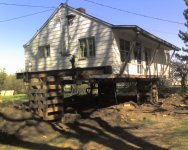
What you see is it. Green LVL'S on side walls and tan LVL' across underneath. 2x10 across garage door opening. Tomorrow I will mount the other cross LVL that is sitting diagnal on floor in pic. Might be trickier with no doorway to have the extra length hanging out of. There's an inch gap currently between a bottle jack and the cross LVL just enough room for the u channel. There will be lots of diagnal bracing next few days. Mostly 2x4 and 2x6 lumber.
Sent from my SM-G900V using Tapatalk
Sent from my SM-G900V using Tapatalk
Pluribus
Well-known member
Following with interest! Very curious to see how it's cribbed up and how the process of new walls being built works.
metalhead212121
Well-known member
- Joined
- Mar 21, 2010
- Messages
- 2,898
subscribing....
OP
Sparkynutz
Well-known member


What you see is it. Green LVL'S on side walls and tan LVL' across underneath. 2x10 across garage door opening. Tomorrow I will mount the other cross LVL that is sitting diagnal on floor in pic. Might be trickier with no doorway to have the extra length hanging out of. There's an inch gap currently between a bottle jack and the cross LVL just enough room for the u channel. There will be lots of diagnal bracing next few days. Mostly 2x4 and 2x6 lumber.
I've never lifted one like that, and it does concern me a little. It's going to be very tough to correct if it moves out of square even a little on the way up. The jack control would have to be precise. If it does move, it's going to be a nightmare trying to correct it square again. You'll have to use wedges and jacks to spin it in the air while you drop it at the same time. Not saying it can't be done, but it takes years of experience to get it right.
These are the screws I'm using. I'm afraid of using 5/16 for fear of splitting the 2x4's they are going into which I assume is most likely the weak link in the whole setup.
There's a reason you don't ever see a house screwed together. Screws have little shear value. Nails bend, screws break.
johnnyradiant
Well-known member
duplex nails are usually the tool of choice. Shear strength is why engineers usually tell us grunts to use them with sometimes some pretty intense density.
Last edited:
OP, good luck with "The LIFT" as the end goal is worth the effort !! 
+1 to Add MANY more DIAGONAL bracing . . . like 24' long 2x6's to prevent any racking of the walls. Same with diagonal bracing across the front of garage (both directions) where opening for garage door creates significant racking risk.
Heck, you could also run diagonal cables from corner-to-corner once you have all your wood braces in place. Overkill on all the bracing IS a good thing.
+1 to Add MANY more DIAGONAL bracing . . . like 24' long 2x6's to prevent any racking of the walls. Same with diagonal bracing across the front of garage (both directions) where opening for garage door creates significant racking risk.
Heck, you could also run diagonal cables from corner-to-corner once you have all your wood braces in place. Overkill on all the bracing IS a good thing.
Last edited:
OP
Sparkynutz
Well-known member
What's the alternative way? I'm assuming lift it up and down a bunch of times till I get it in place. Might take a while. The thing that worries me more is if the walls tip inward it will be harder to push them back out and up at same time.
The screws are advertised as being engineered grade 5. I tested them myself at work sandwiching a steel plate between two 2x4's and forcing the steel out with a 50 ton press. It read around .4 tons when the ripped out of wood. The screws didn't break. They bent in a U and ripped out of wood. I'll probably put some nails in just incase near jacking points for sure. What is. Shear strength of those in comparison?
Sent from my SM-G900V using Tapatalk
The screws are advertised as being engineered grade 5. I tested them myself at work sandwiching a steel plate between two 2x4's and forcing the steel out with a 50 ton press. It read around .4 tons when the ripped out of wood. The screws didn't break. They bent in a U and ripped out of wood. I'll probably put some nails in just incase near jacking points for sure. What is. Shear strength of those in comparison?
Sent from my SM-G900V using Tapatalk
OP
Sparkynutz
Well-known member
I'm finding around 100-140lb of sheer strength on a nail. Much less than the screws I'm using that's for sure. I guess a better idea would be to just get some and do the same test I did with the screws and compare results tomorrow.
Sent from my SM-G900V using Tapatalk
Sent from my SM-G900V using Tapatalk
What's the alternative way? I'm assuming lift it up and down a bunch of times till I get it in place. Might take a while.
The problem is, unless you have a hydro pump system that self levels, it's going to be very hard to lift it with out it moving around. And once it moves out of square from the foundation, unless you know how to tilt corners to slide it back into position, it could turn into a nightmare for you. It's pretty scary using wedges and letting the house slide down it to gain a few inches. Houses don't just lift straight up and down. Even the pro's get killed doing lifts. I'd at least put in more of the brown glulams, and then 2 long steels or timbers from font to back under the glulams with 4 piles inside the garage to jack from. I can see why the guy wanted to cut a hole and jam the steels in that way, because that's the way I would do it and build the piles on the outside. The cribbing is much easier.
OP
Sparkynutz
Well-known member
Corner bracing is mostly done. Not sure how or where to mount rest of bracing but I definitely need more. I just don't want it in the way or too close to jacking points of it were to fall I'd rather not get crushed by bracing.
Sent from my SM-G900V using Tapatalk
Sent from my SM-G900V using Tapatalk
Slednut
Well-known member
garagelogician
Well-known member
I may be missing something, but how are you going to bring in fill and prep the new slab while the garage is up in the air?
Kudos for having the balls to take this on yourself with winter on the way. I got my fill of structure lifting when I lifted my 12'x16' shed up three inches so I could set it on rollers and move it forward 18".
Kudos for having the balls to take this on yourself with winter on the way. I got my fill of structure lifting when I lifted my 12'x16' shed up three inches so I could set it on rollers and move it forward 18".
Last edited:
firebirdparts
Well-known member
That is not a heavy building. If it were sitting on something, a 9 pound hammer will move the base of the walls in/out very easily. However, I am not sure exactly how you plan to support it while your walls are completed under it.
If it's sheeted with osb, you don't need any more bracing on the walls. Corner to opposite corner would be really nice to have, and that needs to be as low as possible.
My Grandfather had a neighbor named George McMurray. George commented that he wished his house was turned toward the road. My granddad took a team of mules down there and they jacked the house up, put firewood-sized rollers under it, and turned it around with those mules. George's wife cooked supper for them while they turned it. The house is still there today.
If it's sheeted with osb, you don't need any more bracing on the walls. Corner to opposite corner would be really nice to have, and that needs to be as low as possible.
My Grandfather had a neighbor named George McMurray. George commented that he wished his house was turned toward the road. My granddad took a team of mules down there and they jacked the house up, put firewood-sized rollers under it, and turned it around with those mules. George's wife cooked supper for them while they turned it. The house is still there today.
OP
Sparkynutz
Well-known member
I am cribbing the garage up on the current slab and lowering onto side walls after they are poured. The hardest part is going to be working around the cribbing and beams to get concrete in the walls. I should have around 44-48 inches under beams after raised more than enough to wheel barrow under. There will be about a foot between bottom of the sill and the top of wall forms. Hopefully we can wheel right up to forms and dump right in. Might have to shovel some around cribbing tho. The fill won't be brought in until after garage is back down and bracing removed. I will pour the slab next spring and just sit with a gravel floor this winter.
That's the plan anyways.
Sent from my SM-G900V using Tapatalk
That's the plan anyways.
Sent from my SM-G900V using Tapatalk
OP
Sparkynutz
Well-known member
Today's progress. Not as far as I'd hoped but something atleast. 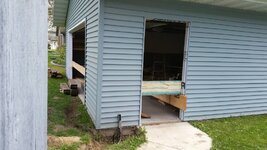


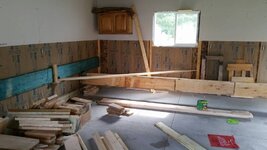
Sent from my SM-G900V using Tapatalk
Sent from my SM-G900V using Tapatalk
Attachments


lakeroadster
Well-known member
Hey Sparky... I can't read the data on the screws your are using? Are they structural screws?
Use the right fastener, for the right application. There are structural screws available and they are being used more and more in construction. And they are very expensive, compared to nails.
The biggest reason screws are seldom used: Cost of the screws and the time to install them.
But lots of folks think screws are screws... and use, for instance, deck screws for anything and everything.
There's a reason you don't ever see a house screwed together. Screws have little shear value. Nails bend, screws break.
Use the right fastener, for the right application. There are structural screws available and they are being used more and more in construction. And they are very expensive, compared to nails.
The biggest reason screws are seldom used: Cost of the screws and the time to install them.
But lots of folks think screws are screws... and use, for instance, deck screws for anything and everything.
Last edited:
OP
Sparkynutz
Well-known member
Yes they were like $15-$20 per 50 screws depending on length. Time consuming but should be on walls tight. I've put in about 200 screws last few days and haven't snapped or broken a single one by driving it too tight with an impact. About 10 or so are going to be a bear to remove later because the star head stripped but that's a problem for later. All else fails I grind them or Sawzall them off. I've gone through 4 drive bits too. Pretty sad the most expensive irwin black impact rated bit lasted a whopping 3 screws before the tip was shot. The best tips were the cheapo menards brand.
Sent from my SM-G900V using Tapatalk
Sent from my SM-G900V using Tapatalk
theoldwizard1
Well-known member
Hopefully the new holes don't rip out to old holes and strip.
Drill the old hole oversized and buy hardwood dowel to plug the holes. Wood glue is adequate.
theoldwizard1
Well-known member
+1 to Add MANY more DIAGONAL bracing . . . like 24' long 2x6's to prevent any racking of the walls. Same with diagonal bracing across the front of garage (both directions) where opening for garage door creates significant racking risk.
Heck, you could also run diagonal cables from corner-to-corner once you have all your wood braces in place. Overkill on all the bracing IS a good thing.
+2 !
You need cross braces installed low, very similar to ceiling joists except about 1' of the ground. They don't have to be one piece. 2 or 3 pieces screwed would be adequate. You just don't want the bottom sill plate to move in relationship to the top plate.The thing that worries me more is if the walls tip inward it will be harder to push them back out and up at same time.
OP
Sparkynutz
Well-known member
Already moved and mounted the beam. Kinda late to remove the beam another time to do that. It's only 2 holes per stud and I'm putting more fasteners in after I have a chance to buy them so it should be good enough.
Sent from my SM-G900V using Tapatalk
Sent from my SM-G900V using Tapatalk
ford33
Well-known member
You are making excellent progress. Keep progressing.
I wish you well.
I wish you well.
You should be fine. I raised a 26' x30' ,8' walls ,6-12 pitch. Used doubled up 2x10 rough sawn pine on the walls, with 8" steel channel for cross beams. I placed the channel 20' apart and used angle top and bottom to prevent twist. I used 3" torx head construction screws, 2 or 3 per stud. No issues with shearing or bending screws. The building will walk a little when you raise it but nothing a few come alongs hooked to an anchor point in the floor won't fix. I used a combination of blocking , concrete blocks and 12 ton jack stands. Good wood blocks were used under the jacks, with the concrete blocks used when I had to recrib the jacks. I went up about 3' , then set 3 courses of block , pinned to the slab for my foundation. I didn't use J bolts, just drilled in 1/2" anchors, as trying to line up J bolts would have been about impossible. Good luck with the project.
OP
Sparkynutz
Well-known member
I have another idea to make sure everything stays square going up and down. If I buy 4ftx1/2" threaded rod and couple to the existing bolts after raising about 6 inches then place a plastic tube over the rod and slightly oversize my holes the garage should slide up and down fairly straight along the rods. I'm sure they'd bend some but as long as I check them for level before pouring the concrete around them and setting back down everything should line up perfectly and no need to drill new holes or have a hard time trying to line up with bolts embedded.
After it's lowered then just cut the rods off 2 inches above sill or just leave it inside the wall.
Sent from my SM-G900V using Tapatalk
After it's lowered then just cut the rods off 2 inches above sill or just leave it inside the wall.
Sent from my SM-G900V using Tapatalk
matt_i
Well-known member
I don't see any issue at all with SPAX power lags. They will have a self-drilling point that cuts the wood fibers instead of simply wedging them apart ala the old "grade zero" lag bolts. GRK makes a competitive product, the RSS screw. I had good luck with Wiha torx bits, they've lasted 100s of screws with just a little wear but still no slipping.
Nails? meh. What a poor excuse for a fastener. Its just fast and that is all.
Nails? meh. What a poor excuse for a fastener. Its just fast and that is all.
Platonic Solid
Well-known member
Interesting thought. Assuming existing rods are 5/8" here are a couple component links:I have another idea to make sure everything stays square going up and down. If I buy 4ftx1/2" threaded rod and couple to the existing bolts after raising about 6 inches then place a plastic tube over the rod and slightly oversize my holes the garage should slide up and down fairly straight along the rods. I'm sure they'd bend some but as long as I check them for level before pouring the concrete around them and setting back down everything should line up perfectly and no need to drill new holes or have a hard time trying to line up with bolts embedded.
After it's lowered then just cut the rods off 2 inches above sill or just leave it inside the wall.
Threaded Rod Coupling Kit
Threaded Rod Cover
OP
Sparkynutz
Well-known member
I didn't get much done today. Was busy doing some yard work and picked up a few 12' 4x4 and 2x6 for bracing. The concrete bolts are 1/2" galvanized so I ordered 8x 10ft galvanized rods and 25 galvanized couplings. Just shy of $400 but I'm hoping it helps guide everything to where it should be come time to set it down on the wall. I won't have to drill new holes either. Just enlarge them enough for the 1/2" ID plastic hose I slip over them to help them slide through and not catch the wood.
Menards sent a pretty twisted 24ft 2x10 that I wanted to use on the back wall. That's what's been holding me up with all the back side bracing needing to be screwed to that board. Hopefully they bring the new board at a reasonable time tomorrow and I can get bracing finished before work.
It's supposed to rain the next 4 days and I can't close my garage door now with track off and bracing. Hopefully it doesn't get too wet and all the wood I have sitting around ready to use.
Sent from my SM-G900V using Tapatalk
Menards sent a pretty twisted 24ft 2x10 that I wanted to use on the back wall. That's what's been holding me up with all the back side bracing needing to be screwed to that board. Hopefully they bring the new board at a reasonable time tomorrow and I can get bracing finished before work.
It's supposed to rain the next 4 days and I can't close my garage door now with track off and bracing. Hopefully it doesn't get too wet and all the wood I have sitting around ready to use.
Sent from my SM-G900V using Tapatalk
OP
Sparkynutz
Well-known member
I talked to a guy from MN this morning that supports a raised garage from the bolts so that the concrete can be poured under and up to the sill without having to set back down after raising. There's pics on his website of a lifted gage supported by the bolts. I tried compressing a 1ft piece of 1/2" rod and it started to bend with about 600-700lb of force and got easier real quick after it bent. I'm glad I ran my test and I would no way in hell trust supporting anything with bolts or rod. I'm hoping they still guide me square and straight when lowering back down but won't count on them to do anything more than hold the building down to concrete in strong winds.
Sent from my SM-G900V using Tapatalk
Sent from my SM-G900V using Tapatalk
Vintage Veloce
Well-known member
Raise the floor too! I raised mine 6" and wish I had done 12.
OP
Sparkynutz
Well-known member
That's the plan. Finished floor height will be 24 inches higher with a 2 inch slope down towards existing driveway
Sent from my SM-G900V using Tapatalk
Sent from my SM-G900V using Tapatalk
Vintage Veloce
Well-known member
That's the plan. Finished floor height will be 24 inches higher with a 2 inch slope down towards existing driveway
Sent from my SM-G900V using Tapatalk
Smart man! Just be sure it is enough, for whatever the future holds. Mine worked out, but would have been much easier if it was even higher.
OP
Sparkynutz
Well-known member
I have a basement egress window 8 or so ft away from corner of garage. That's going to be the challenge to put in decent steps and retaining wall to hold back 2ft of dirt.
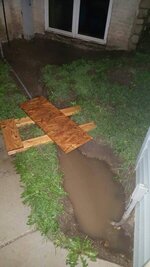
The wet pic was last time it rained.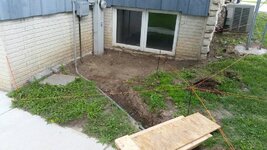
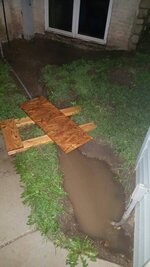
Sent from my SM-G900V using Tapatalk
The wet pic was last time it rained.
Sent from my SM-G900V using Tapatalk
Attachments
OP
Sparkynutz
Well-known member
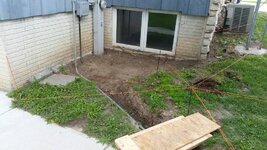
It rained more after that and would have come in window if I hadn't dug a trench along entire front of garage and put a fountain pump in the hole sending water to the street.
Sent from my SM-G900V using Tapatalk
Sent from my SM-G900V using Tapatalk
Platonic Solid
Well-known member
It rained more after that and would have come in window if I hadn't dug a trench along entire front of garage and put a fountain pump in the hole sending water to the street.
I think I'll just quote myself from your other thread:
Something to keep in mind – Sheet flow drainage, as opposed to channel flow drainage, is always best as it causes the least amount of erosion.
If this was my property I would:
1. Hire a surveyor to provide a topographic map of the property (assuming there isn’t one already on file at the town hall). Yes, you can do this yourself with a ruler and a laser level, but it’s a time consuming PIA that a surveyor can do with a couple days turn-around. (I got a topographic survey for my property for $500 and I have 1.2 wooded acres on a steep hill.)
2. Find out if the town will let you regrade the whole property to get rid of the drain in the middle of the yard.
3. Raise the garage to connect to side driveway as previously stated.
4. Regrade entire property for sheet flow drainage to the street using drainage swales only when absolutely necessary. This may require a civil engineer available for hire at most architectural firms. Note: Getting the topographic CAD file from the surveyor will make this a simple low cost venture.
willymakeit
Well-known member
Can't tell completely by picture but can you put a area drain in and exit going by your ac unit.
What's all the string lines for?
What's all the string lines for?
OP
Sparkynutz
Well-known member
Next year I will be regrading entire yard if funds allow. I bought a laser level and asked city before deciding on raising garage. I don't understand what you mean by drain by ac unit.
All the strings are basicly my rough idea of finished grade hopefully before winter to drain top water away from garage and house. I've never heard of term sheet flow but I assume it's basicly top rain water before it soaks in or if already saturated.
I'm curious on best material for fill for this application. I don't want to create a drywell that eventually seeps water under current garage slab and to basement if using gravel but also afraid of using soil that could expand and contract creating hydraulic pressure issues from freeze thaw. Do I remove current dirt in front of garage and replace with gravel or not and how deep?
Sent from my SM-G900V using Tapatalk
All the strings are basicly my rough idea of finished grade hopefully before winter to drain top water away from garage and house. I've never heard of term sheet flow but I assume it's basicly top rain water before it soaks in or if already saturated.
I'm curious on best material for fill for this application. I don't want to create a drywell that eventually seeps water under current garage slab and to basement if using gravel but also afraid of using soil that could expand and contract creating hydraulic pressure issues from freeze thaw. Do I remove current dirt in front of garage and replace with gravel or not and how deep?
Sent from my SM-G900V using Tapatalk
OP
Sparkynutz
Well-known member
I had toyed with idea of french drain entrance in window well going 250ft around back side of house to low spot in side/front yard where my sump pump discharges that empties into storm sewer. I found a guy that specializes in nothing but drain tile. He said there wasn't even close to enough pitch and that tile would be a waste of money instead put into dirt and regrade slope better. He was pretty confident after looking at my grade strings and raising garage my drainage issue would be better without drain tile. I'm on vacation next week and one way or another the garage is going up and wall will be poured by end of next week if I can help it.
Sent from my SM-G900V using Tapatalk
Sent from my SM-G900V using Tapatalk
I talked to a guy from MN this morning that supports a raised garage from the bolts so that the concrete can be poured under and up to the sill without having to set back down after raising. There's pics on his website of a lifted gage supported by the bolts. I tried compressing a 1ft piece of 1/2" rod and it started to bend with about 600-700lb of force and got easier real quick after it bent. I'm glad I ran my test and I would no way in hell trust supporting anything with bolts or rod. I'm hoping they still guide me square and straight when lowering back down but won't count on them to do anything more than hold the building down to concrete in strong winds.
Sent from my SM-G900V using Tapatalk
Sounds like you have an idea to follow for pouring the walls. I think I might have considered laying block under three walls and then core filling them. The front wall with the O/H door, I'd pour that and carefully tie it together with the old floor/foundation.
When I did the new floor in my garage, I was worried about the water making it's way under the new floor and trying to push it up. If you follow the link in my "Garage Refurb" thread, you can see how I tried to tie it all together and followed it up with an apron to cover it up.