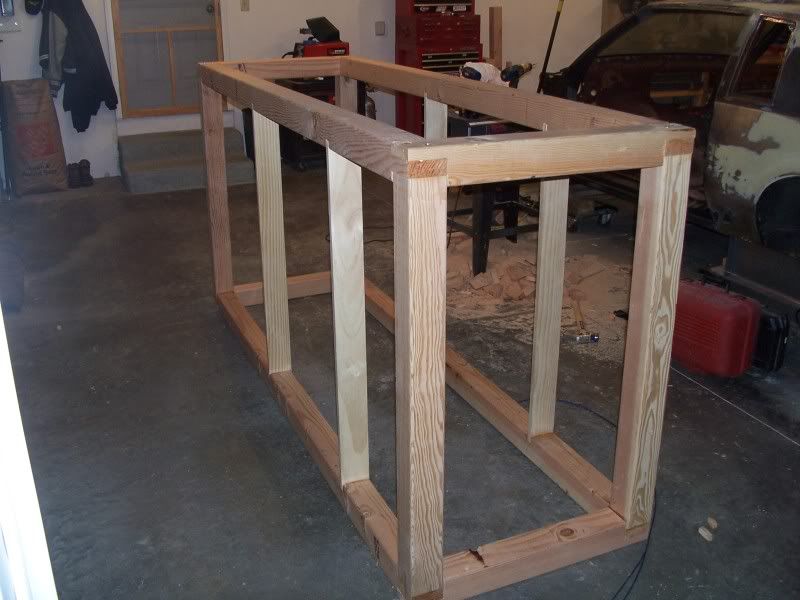
If you're looking for cheap... you might be able to build a good frame, throw some OSB on it, then cover that with some semi thick sheet metal (like 22 or 20 gauge).
Not sure exactly how much cheaper it'd be vs using a thicker metal top, but likely faster to build and easier to move.
if you use osb you could top it with some unfinished oak flooring from hd. that and several layers of spar varnish and you've got your self a pretty strong, mostly liquid proof bench.
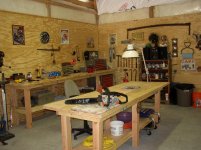
that said i have a wood bench, one end is two layers of 3/4oak ply, the other end is one layer 3/4ply, a layer of 1/2 ply and then a 32x32" piece of 1/4 plate. it's been holding up pretty good so far.
When I saw this corner joint by 84TurboBuick, I was thinking THAT'S a strong joint. I'm thinking about incorporating that design into my workbench. I need to build an outdoors backyard workbench.
What about covering the top with a discarded piece of conveyor belt? I'm thinking of going this route when I build my next bench in a few weeks since I deal with a lot of small screws and liquids. Also makes the cover easy to replace .
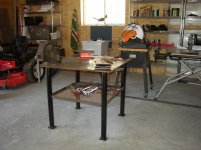
I am a transmission dude, and my old school work bench is 3/16" plate, while my newer rolling bench is 3/8" plate. All steel, all of the time.
Probably helps that I worked at a steel shop for YEARS. Here is the new-school rolling trans bench right before I filled in that square hole with a piece of plate.
I made workbenches, put mdf on the top and covered the mdf with stainless steel. The mdf doesn't dent easily and has kept the stainless from denting.
Our local belting supplier has a lot of scrap belting ( the end of rolls). I put that on the tops and like it even more. It cleans very easily, and protects what you are working on. On the bad side of it, the conveyor belt that I got swells very slightly if oil is left on it for a few days. If you use conveyor belting, get the smooth face (cleans nicely with window cleaner) and at least 3/8" thick.
I like a white top.
It makes it easy to find things.
(I also use a lot of little trays to put things into so they don’t roll around.)
I use store damaged 4x8 Melamine panels as sacrificial tops.
It is usually just the corners that get damaged and I can cut a top sized piece from the rest.
They usually last about 1 ½ to 2 years of casual use.
I got the idea from the local electric motor repair shop.
He hired on of my boys one Xmas vacation to come in and replace all the work bench tops in his shop while the guys were off for the holidays.
He did it every year.
It was a kind of bonus to come back to work at a fresh new bench.
It is nice, and it forces you to clean off the bench.
You want mass in a good work bench 4x4 legs, 2x4's minimum for stretchers. One bench I mad for a shop ha the top made of 2x4's on edge with 3/4 ply on top the shelf was made the same way. It was pretty cheap to make it that way. Once the 150lbs vise was attached with the 35lbs backing plate the bench was going no where. I aligned several 6/4 ti frames in the vise ( with proper attachments) with out any extra help , most time you need help to keep thing steady. I figure the bench when done weight 400lbs once in place it was never moved.
BTW the proper way to agile a frame in on a frame table it is usually made out of cat iron and blanchard ground 800-1550 lbs is not an unusual weight fora frame table. There are a few granite base table here in NE that are just killer to use.