
Codejack
Banned
Given some recent comments, I thought that I would ask for a show of hands.
Let's talk in general:
For someone starting out as an automotive technician, such as chain-store lube and tire tech, and doing larger jobs/flipping cars on the side, building up to a master set, what is the best philosophy for acquiring the necessary tools?
I see 3 rough philosophies:
1. Buy top quality at all costs; in most people's cases, this means opening up a tool truck account. Pros: Your tools should never let you down, the service is unbeatable. Cons: You are paying a premium for a level of quality that you may not need in many of your tools, large debt if you change careers for whatever reason (accident, illness, etc).
2. Buy used and make do until you find top quality. Pros: Top quality tools for half price. Cons: What are you supposed to do in the meantime? Service may also be an issue, depending.
3. Buy mid-range tools for budget price and upgrade the pieces that fail and/or break. Pros: You will get the quality you need in the tools that matter for the least amount of money.
I will be skipping,
4. Buy the cheapest possible **** you can and hope that you don't ever have a tight nut or bolt to turn.
Let's talk in general:
For someone starting out as an automotive technician, such as chain-store lube and tire tech, and doing larger jobs/flipping cars on the side, building up to a master set, what is the best philosophy for acquiring the necessary tools?
I see 3 rough philosophies:
1. Buy top quality at all costs; in most people's cases, this means opening up a tool truck account. Pros: Your tools should never let you down, the service is unbeatable. Cons: You are paying a premium for a level of quality that you may not need in many of your tools, large debt if you change careers for whatever reason (accident, illness, etc).
2. Buy used and make do until you find top quality. Pros: Top quality tools for half price. Cons: What are you supposed to do in the meantime? Service may also be an issue, depending.
3. Buy mid-range tools for budget price and upgrade the pieces that fail and/or break. Pros: You will get the quality you need in the tools that matter for the least amount of money.
I will be skipping,
4. Buy the cheapest possible **** you can and hope that you don't ever have a tight nut or bolt to turn.


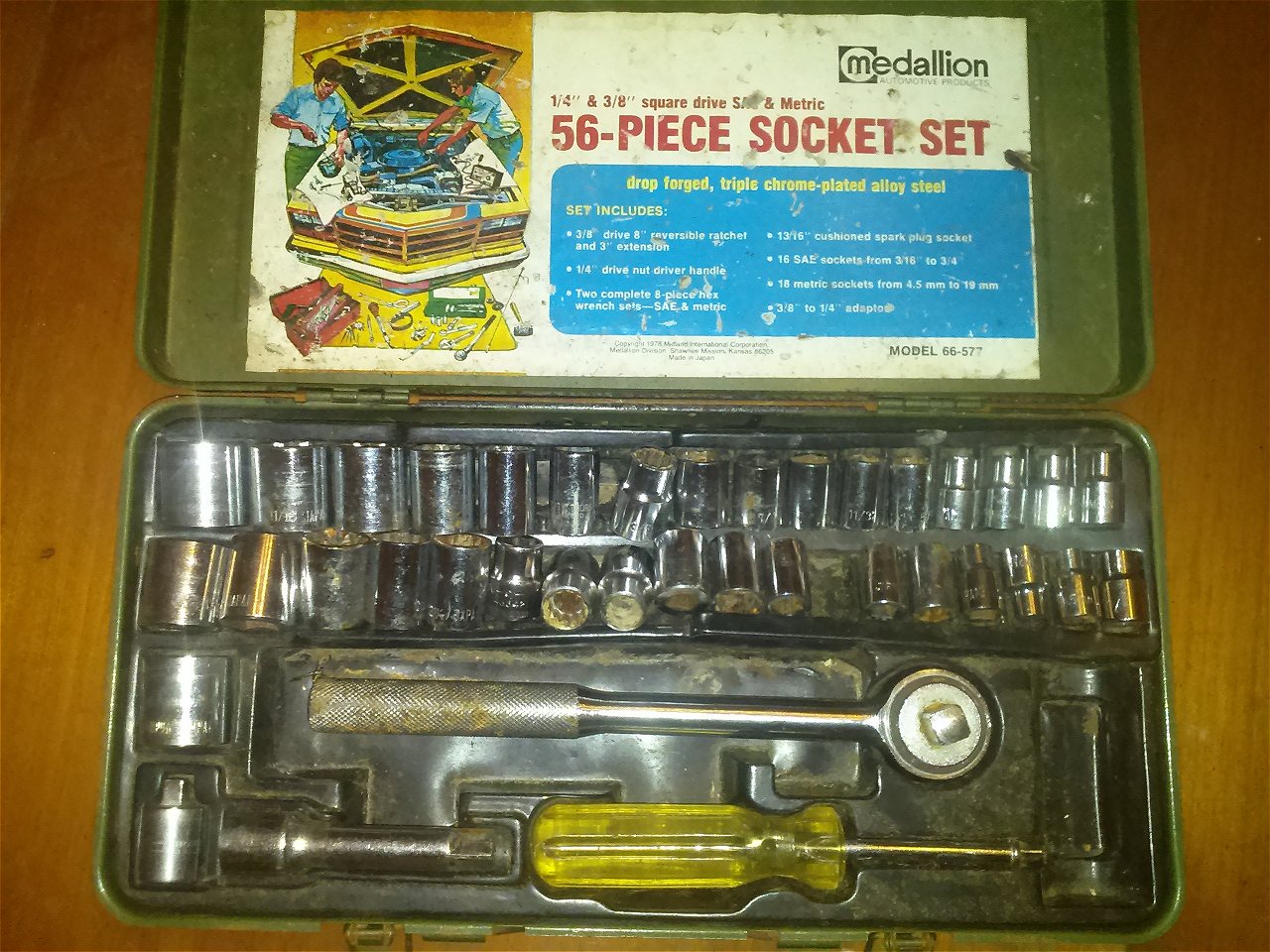
 Brand isn't important you say BUT from what I can see the important thing in your tools is that they be colored black.
