
To avoid these ads, REGISTER NOW!

Torque Wrench necessity

Lassen Forge

Well-known member
Joined
Apr 26, 2014
Messages
15,018
Location
The romantic hills of central Umbria, Italy,
Wonder how many aircraft people build or repair airplanes (and sign off their repairs) based on feel? "Hmmm... I gave those motor mount bolts a good snug tug, so I'm sure it's OK".

I've worked on too many exotic powerplants to know better than to second guess the engineers who designed it... when they have a torque value, they have it for a reason. It takes all of about 5-10 seconds to reach over, grab a torque wrench, set it, and do the job right.

First time you have to replace a Honda CBX block because you used the "I can do it by feel" method and stripped out something, let me know how that goes.
 
To avoid these ads, REGISTER NOW!

pstemari

Well-known member
Joined
Jan 7, 2012
Messages
903
Location
Seattle
Well, I've certainly seen torque specs on things that probably didn't need them. In particular, a Hubbell 240VAC/30A plug that came with torque specifications for the electrical connections, shell screws, and cord clamp.

I will confess that i actually did buy a torque screwdriver for that plug, but I also needed it for carbide insert screws.

Sent from my Pixel XL using Tapatalk
 

FSrepair&fabrication

Well-known member
Joined
Jul 28, 2017
Messages
908
Location
maryland
Wonder how many aircraft people build or repair airplanes (and sign off their repairs) based on feel? "Hmmm... I gave those motor mount bolts a good snug tug, so I'm sure it's OK".

I've worked on too many exotic powerplants to know better than to second guess the engineers who designed it... when they have a torque value, they have it for a reason. It takes all of about 5-10 seconds to reach over, grab a torque wrench, set it, and do the job right.

First time you have to replace a Honda CBX block because you used the "I can do it by feel" method and stripped out something, let me know how that goes.[/QUOTE

Is that really a relevant example? I dont think the guy is repairing aircraft in his garage at home.
 

ekimneirbo

Well-known member
Joined
Nov 21, 2018
Messages
132
Location
Kentucky
Wonder how many aircraft people build or repair airplanes (and sign off their repairs) based on feel? "Hmmm... I gave those motor mount bolts a good snug tug, so I'm sure it's OK".

I've worked on too many exotic powerplants to know better than to second guess the engineers who designed it... when they have a torque value, they have it for a reason. It takes all of about 5-10 seconds to reach over, grab a torque wrench, set it, and do the job right.

First time you have to replace a Honda CBX block because you used the "I can do it by feel" method and stripped out something, let me know how that goes.

I'm not saying that when working on an engine torque wrenches aren't necessary. Having rebuilt car engines, motorcycle engines and aircraft engines, I'm familiar with the use of a torque wrench. I have several very high quality torque wrenches in my tool box.
When my son was in the air force he was a jet engine mechanic and one of his duties was to manage the tool inventory for his shop. He personally hand delivered torque wrenches to a company for calibration and kept the records of their certification.Torque wrenches for use in aviation require recalibration every year or two.
The thing you fail to understand is that the myriad number of low quality and never ever calibrated torque wrenches that the public has in their possession vary all over the horizon with inaccuracy. Just because you hear a click when you pull on it doesn't mean its correct. Beam scales can be affected by everything from temperature changes to abuse from being dropped. Lubrication affects readings just as much as deformed threads in blind holes.
Just having a $10 torque wrench in your hand doesn't mean you correctly torqued anything.....much less an exotic engine.
One other thing, those aircraft bolts that get torqued will most likely get tightened a little further to align the castle nut with the hole in the bolt so a cotter pin will fit in place.
 

kb1982

Well-known member
Joined
Mar 8, 2017
Messages
590
Location
Kentucky
I use a torque wrench on anything that goes into aluminum. Lugnuts and any sealing surface that needs consistency among the various fasteners also get the exta time to grab a torque wrench. Shock mounts, leaf spring u bolts, and fasteners of those sorts, get the feel method.

Sent from my LML713DL using Tapatalk
 

M6erfan

Well-known member
Joined
Dec 6, 2014
Messages
10,170
Location
'Merica!
For lug nuts, yes. Don't want to damage certain types of wheels and or have a wheel off incident. For other non critical stuff like drain plugs, once you get a feel for it, you'll get it around right. If you go ask people who do this for a living, nobody is going to use a torque wrench on a drain plug.

And plenty doing it for a living that end up with dropped drain plugs and stripped oil pans.

My BIL had his clutch done at an indy shop that's been around for years. several miles later, on I75, his front right wheel came off at 65MPH. Lucky no-one was killed.
 

Meursault74

Well-known member
Joined
Apr 1, 2019
Messages
21,881
Location
Southern California
I've used the beam type for my bicycles, especially on the bottom bracket and crank bolts. They're in the 50-25 ft-lbs range and if they loosen up you'll damage your frame and crank. I wouldn't rely on the German torque spec of gutentight for these tasks.
 

dnschmidt

Well-known member
Joined
Oct 3, 2014
Messages
7,261
Location
Phoenix, AZ
What I find surprising is that most of the time most people UNDER TORQUE things rather than over torque them. What people think is tight enough seldom is in my experience. This is not what one would expect but it is what I have observed.
 

Mikeske

Well-known member
Joined
Apr 28, 2017
Messages
2,122
Location
Washington State
Wonder how many aircraft people build or repair airplanes (and sign off their repairs) based on feel? "Hmmm... I gave those motor mount bolts a good snug tug, so I'm sure it's OK".

I've worked on too many exotic powerplants to know better than to second guess the engineers who designed it... when they have a torque value, they have it for a reason. It takes all of about 5-10 seconds to reach over, grab a torque wrench, set it, and do the job right.

First time you have to replace a Honda CBX block because you used the "I can do it by feel" method and stripped out something, let me know how that goes.

I was wondering reading this how long it take for someone to mention aviation mechanics. I worked at Boeing for over 30 years (plus 13 years in the Air Force and 12 in the Air Force Reserves) and every fastener on the aircraft has a torque specified for and it MUST BE torqued to the specification. Almost all drawings have the torque specification, if a drawing does not have a specification on it you use the torque specification manuals that Boeing put out.

I retired a couple years ago and I have a complete set of torque wrenches and I still have the habit of everything being torqued on my vehicles. It does not matter to me as I am that way and always break out my Utica torque wrenches set it and do the torque. The only time I don't do a torque is when it is a plastic part on the interior or it is Christmas tree plastic fastener.
 
OP
4

4 Ever-Fish N

Well-known member
Joined
Jul 20, 2011
Messages
350
Location
Deep East Texas
Thanks guys. I appreciate all the input. I think I'm going to get a new torque wrench. I have one but pretty sure it's in/lbs. Never been big on cheap tools so I doubt I'd consider Harbor Freight.
 

WittHay

Well-known member
Joined
Jan 6, 2016
Messages
2,157
Location
Surrey, BC Canada
Shop manuals regarding torque are fairly specific or terse.. They dont list torque figures for every last fastener on a vehicle. A piece of equipment might have a torque figure for the 3 bolts holding on the diesel injection pump drive gear. but no torque figures for the flex plate or pressure plate bolts.

The reasoning being if you have enough mechanical ability to split a piece of equipment or drop a 1000 lb gear box, you should be able to tighten a bolt by feel,

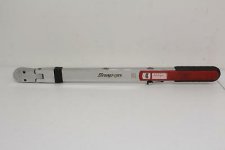
I find myself using a torque wrench on most newer vehicle lug nuts. They get zipped off with a impact and it takes 2 seconds to set a split beam torque wrench to tighten them. If I had to futz around with the $10 HF special, I would probably tighten them by feel
 

Attachments

  • Snap-On-TQFR250E-1-2-Drive-40-250-ft-lb.jpg
    Snap-On-TQFR250E-1-2-Drive-40-250-ft-lb.jpg
    4.8 KB · Views: 30

Fluelikesymptoms

Well-known member
Joined
Apr 19, 2019
Messages
289
Location
Midwest snow belt
One good middle ground between anality and practicality is to use a torque wrench the first several times you do something in order to develop the correct feel.

Feel and experience do count for a lot. It's been an awfully long time since I broke a fastener or stripped threads by going gorilla on something. Or, to put it another way, I don't often get surprised these days when something breaks or strips, so I can choose when and how to break or strip it (or cut it off, or leave it, etc.) to make extraction easier.

And there are times when torque isn't exactly the correct measurement. On some new spark plugs with crush gaskets, the instructions on the box state to snug them up hand tight, then turn the plug the specified amount marked on the box to get the correct amount of squishitude.

On most CV axle nuts, I lack a torque wrench that reads high enough. I do a little math using my weight and mark the right place to stand on a horizontal breaker bar. Plenty close enough.

Torqueing by a torque wrench and torqueing by a ratchet or wrench have completely different feels. It takes more "umph" without a torque wrench. This advice would lead to under torqued fasteners.

That being said, critical fasteners obviously need torqued, torque stick for lug nuts. Some of you guys are overdoing it, I get why you feel comfortable with torque everything, but realistically most techs aren't doing it. When you take your car to the dealership, it's likely getting reassembled with an air impact and that's that.

The best way to learn the "feel" of things, is the ole school hard way of breaking fasteners. You'll learn how to become one with the bolt, and how to fix your mistakes as well. I'm not afraid to admit that growing up, I've ruined alot of fasteners and create a lot of headache for myself over torque stuff.
 

dledinger

Well-known member
Joined
Apr 14, 2009
Messages
345
I generally only use a torque wrench inside and engine. Especially with things like cam caps, heads and anything into aluminum.

Have never put a torque wrench on a wheel and don’t plan to. They come off with an impact, and back on with a four way.
 

seber

Well-known member
Joined
May 31, 2016
Messages
4,192
Location
Deep East Tx.
As a machine design engineer I gave torque specs whenever it was important. If not then I expected the mechanic to give it everything his tool could manage. That does not mean air tools or a 1/2" ratchet on a 1/4" screw. Any screw going into aluminum gets a torque spec. And in that case the torque had better be damn close. As a home mechanic I follow the same rules. Having done it for a living, I know how important those specs are.
 

pbon

Well-known member
Joined
May 14, 2017
Messages
3,498
Thanks guys. I appreciate all the input. I think I'm going to get a new torque wrench. I have one but pretty sure it's in/lbs. Never been big on cheap tools so I doubt I'd consider Harbor Freight.

Read the grassroots Motorsport comparison test.
 

pbon

Well-known member
Joined
May 14, 2017
Messages
3,498
it takes 2 seconds to set a split beam torque wrench to tighten them. If I had to futz around with the $10 HF special, I would probably tighten them by feel

I have both types of torque wrenches (precision instruments 1/2 split beam and HF 1/2 clicker). 2 seconds to adjust split beam. 4 seconds to adjust clicker. Your seconds must be very precious.

I do return the clicker to zero when putting it away, so add another 4 seconds. No need to do that with the split beam. I have been doing this for years and have not found it to be overly burdensome or frustrating or difficult, but I am a DIYer, not a pro who might use a torque wrench every day.
 
Last edited:

dnschmidt

Well-known member
Joined
Oct 3, 2014
Messages
7,261
Location
Phoenix, AZ
Torque is a ******** specification anyway but, for any blind fastener, it's all we got. Torque reading is affected by damn near everything. Lube, No-Lube, rust, friction under the head, and a ton of other stuff. In engine assembly rod bolts are tightened by bolt stretch specification, which is the real deal and is actually what you want to measure, but it's the only fastener on the car that you can measure this way.

That stated it's better than nothing.
 

JUNK-MAN

Well-known member
Joined
Nov 28, 2014
Messages
1,485
Location
PA
Only thing I torque is things like heads, intakes and interal engine parts. Ive worked on enough stuff in my life im confident to go by feel. Unless youre doing rebuilds having one is optional.

For a new guy starting out you probably should torque anything youre unsure of untill you get a feel for how tight things should be.


Sent from my SM-G930V using Tapatalk
 

Downwindtracker 2

Well-known member
Joined
Jun 13, 2019
Messages
1,715
Location
BC
A sticker on the side of our travel trailer says torque the lug nuts to wheel spec and check after 10,25 and 50 miles. It seems trailer wheels have been known to come off. It's a common point on RV forums. I have a $20 one in the trailer tool box just for that. I wouldn't dream of using it on an engine.

My friend bought one after a shop forgot to tighten the lug nuts on his car !
 

Mechanical Noise

Well-known member
Joined
Apr 25, 2014
Messages
2,635
Location
Southeast of O'Hare
Torque is a ******** specification anyway but, for any blind fastener, it's all we got. Torque reading is affected by damn near everything. Lube, No-Lube, rust, friction under the head, and a ton of other stuff. In engine assembly rod bolts are tightened by bolt stretch specification, which is the real deal and is actually what you want to measure, but it's the only fastener on the car that you can measure this way.

That stated it's better than nothing.

You're right. Torque is an indirect measure of the tension on the fastener. About 90%, more or less, of the torque reading is caused by friction and that friction can be changed by just about anything.

An accurate torque wrench might get the torque on a group of fasteners to within, say, 2%, but if the tension on that group of fasteners is actually within 2%, it's just by luck.
 
To avoid these ads, REGISTER NOW!

matt_i

Well-known member
Joined
Mar 14, 2008
Messages
10,722
Location
SE Michigan
Devil's advocate position here but if you take your new vehicle to the dealer for warranty work do they put a torque wrench on every fastener to make sure it got back to "OEM specs"...;)

I'm the camp of...for powertrain internals, absolutely. For gaskets with no crush-limiters, yes. For old tractors and forklifts and boats, just get it as tight as it came apart.
 

manwithtools

ALLIANCE MEMBER
Joined
Aug 24, 2015
Messages
13,647
Location
Lebanon, TN
Well, I've certainly seen torque specs on things that probably didn't need them. In particular, a Hubbell 240VAC/30A plug that came with torque specifications for the electrical connections, shell screws, and cord clamp.

I will confess that i actually did buy a torque screwdriver for that plug, but I also needed it for carbide insert screws.

Sent from my Pixel XL using Tapatalk

Every electrical connection has a specified torque, it's required to meet UL certification. Take a look at any circuit breaker, ground bar or electrical outlet. They all have torque ratings, typically only folks working in a shop environment pay attention to this and use a torque screwdriver to validate the proper tightness.

The proper torque is important to be sure there is adequate connection to prevent arcing under load. It's also important to be able to tolerate the thermal cycling of the connection without coming loose.
 

Kent_B

Well-known member
Joined
Jul 4, 2013
Messages
1,406
Location
MI
I did an oil change and tire rotation on my daughter's new-to-her car last week. In the process I broke 2 wheel studs taking the wheel off. If the lummox that put that wheel on had torqued it properly, I wouldn't have had to fix it. Torque wrench? yes.
 

mbshop

Well-known member
Joined
Nov 23, 2010
Messages
1,539
Location
visalia ca
Why anyone doing any work would not have a torque wrench is beyond me. Use it often ? No. But its there when needed that one or two times. Lug bolts or nuts ? Absolutely !
 

Kreis

New member
Joined
Feb 16, 2024
Messages
1
If youve been turning wrenches long enough youll develop a “feel” for torque. Only on critical fasteners would I use a torque wrench. Lug nuts, not neccesary. Use a 2ft bar and tighten them down youll be fine. Only the **** retentive and those without proper tools to remove an overtightened lug nut want properly torqued wheels. Everywhere else in the world tight is good enough.

But this is garage journal and you know you want a torque wrench anyway, so why not?
Exactly, you know you want one. Plus, doesn't it feel good to do It right? Oh yea!
 

richfinn

Well-known member
Joined
Jan 29, 2011
Messages
4,809
Location
Leeds, Yorkshire, England
Accountability, we have to torque lug nuts to spec and record it (and wheel position) on the paperwork.

People can be assh*les and will try every trick in the book to claim money for their own mistakes/cheapness by blaming the last guy, we get claims and complaints all the time for stripped locking wheel keys/nuts that tyre fitters have messed up with impacts.

We simply refer them to their signed copy of the paperwork and tell them "you watched him torque the wheel up and return the locking key into your possession and then signed for it, go complain to the cheap tyre repair guy who plugged your tyre"

Anything that bolts into Aluminum is also a "Torque Wrench" situation for me personally,When I worked in the Shop I've changed/helicoiled too many messed up sumps that lube guys have overtightened because somebody wanted to save a few dollars/earn more bonus/beat the clock.

Here's how you beat the clock and earn more bonus "use the flipping torque wrench hanging on the wall, you doughnut"
 

Rabid Badger

Well-known member
Joined
Apr 2, 2018
Messages
1,338
A torque wrench can be a great teaching tool. When I was younger my method for tightening fasteners was turn it until I couldn't turn it any more. Many bolts and a couple wheel studs were broken.

If I'd had a torque wrench, I could have learned what proper torque felt like much sooner.
 

pbon

Well-known member
Joined
May 14, 2017
Messages
3,498
My cars have a lot of aluminum and the newer ones a lot of angle torques. I use torque wrenches. Even for steel and iron much of the time — I am not going to torque rod bearing bolts by feel.
 

vavet

Well-known member
Joined
Mar 6, 2012
Messages
5,319
Location
Ashland, VA
I took my tundra in to the dealer a few months ago for the10k mile service which was really an oil change and tire rotation.
a few weeks ago, I had a low tire and saw the screw in the tire. I was planning to remove it at work, install the spare, and drop off the punctured tire at a local shop to be repaired the following day.
I could not remove the lug nuts with the factory tool. Apparently the dealership lube monkey just gave the lug nuts 4 ugga duggas instead of the factory spec 3 ugga duggas. Why is it so hard to get people to use a torque wrench or even a torque stick?
 

rust in the eye

Well-known member
Joined
Oct 2, 2017
Messages
2,742
Location
Chicagoland
Apparently you don't understand that over tightening a wheel can cause a brake rotor to distort enough to cause brake pulsation and also can stress the stud enough to cause it to sheer off.
This has been told over and over again. I've never seen it and have witnessed some grossly overtightened wheel bolts.
Think about this for a minute; The rotor is sandwiched between the wheel and hub. How is squeezing the "hat" going to distort it? Also, lots of brake pedal pulsations are wrongly attributed to distorted(warped) rotors when the issue is uneven transfer of pad material. Re-machining cures both so that mis-diagnosis gets confirmed as correct.

For the tasks the OP mentions no torque wrench needed, just common sense.
Drain plugs? These get overtightened/stripped when folks don't change the seal ring but instead just keep tightening the old ones more and more. Snug it up with a fresh seal ring each time, no leaks., no need to wail on it.
 

richfinn

Well-known member
Joined
Jan 29, 2011
Messages
4,809
Location
Leeds, Yorkshire, England
This has been told over and over again. I've never seen it and have witnessed some grossly overtightened wheel bolts.
Think about this for a minute; The rotor is sandwiched between the wheel and hub. How is squeezing the "hat" going to distort it? Also, lots of brake pedal pulsations are wrongly attributed to distorted(warped) rotors when the issue is uneven transfer of pad material. Re-machining cures both so that mis-diagnosis gets confirmed as correct.

For the tasks the OP mentions no torque wrench needed, just common sense.
Drain plugs? These get overtightened/stripped when folks don't change the seal ring but instead just keep tightening the old ones more and more. Snug it up with a fresh seal ring each time, no leaks., no need to wail on it.

OK think of it like this, if you were entrusting your wife's Vehicle to a Technician (you had never met before), would you prefer correct torques or guesstimates?

Torque specs exist for accountability, consistent quality control and ultimately safety, sure we can all make do in a pinch and get away without torque wrenches 90% of the time (but it's a deal breaker for me) if you want to fit tyres on my work van you need to torque them to spec. and I'm going to check them afterwards.

I believe it also promotes confidence in Technicians who aren't then constantly worrying "did I tighten them"?

That final step becomes part of the routine and then you get consistent reliable results.
 
Last edited:

Nessism

Well-known member
Joined
Nov 12, 2023
Messages
173
Location
Torrance, CA
OK think of it like this, if you were entrusting your wife's Vehicle to a Technician (you had never met before), would you prefer correct torques or guesstimates?

Torque specs exist for accountability, consistent quality control and ultimately safety, sure we can all make do in a pinch and get away without torque wrenches 90% of the time (but it's a deal breaker for me, if you want to fit tyres on my work van you need to torque them to spec. and I'm going to check them afterwards.

I believe it also promotes confidence in Technicians who aren't then constantly worrying "did I tighten them"?

That final step becomes part of the routine and then you get consistent reliable results.

Since we have no idea on the skill of this fictitious "technician" you reference, it goes without saying that we would want them to use a torque wrench on everything. That said, I don't, because I've developed a feel, that I trust.
 

Steve_P

Well-known member
Joined
Sep 15, 2010
Messages
5,181
This has been told over and over again. I've never seen it and have witnessed some grossly overtightened wheel bolts.
Think about this for a minute; The rotor is sandwiched between the wheel and hub. How is squeezing the "hat" going to distort it? Also, lots of brake pedal pulsations are wrongly attributed to distorted(warped) rotors when the issue is uneven transfer of pad material. Re-machining cures both so that mis-diagnosis gets confirmed as correct.

For the tasks the OP mentions no torque wrench needed, just common sense.
Drain plugs? These get overtightened/stripped when folks don't change the seal ring but instead just keep tightening the old ones more and more. Snug it up with a fresh seal ring each time, no leaks., no need to wail on it.

It doesn't sound like you've ever worked on a 1980s or prior RWD vehicle that has the studs built into the rotor; the rotor has two tapered bearings and is mounted to the spindle. Correct or not, this is when the "over torque can distort the rotor" theory started: 40+ years ago. I personally haven't seen it, but it does seem possible if grossly overtightened.

edit: regardless, as cheap as torque wrenches are, it makes no sense not to have several and to use them
 

Steve_P

Well-known member
Joined
Sep 15, 2010
Messages
5,181
They're so cheap, why not. Get yourself a HF coupon and blow $10.00. They **** in fit and feel but apparently from numerous tests in multiple magazines are fairly accurate. This question is like should I buy a tube of Pringles? Does your world collapse either way?

Exactly. And love the Pringles analogy. I know this thread is old, but I must've skipped reading it until now- because of the title.
 

rust in the eye

Well-known member
Joined
Oct 2, 2017
Messages
2,742
Location
Chicagoland
It doesn't sound like you've ever worked on a 1980s or prior RWD vehicle that has the studs built into the rotor; the rotor has two tapered bearings and is mounted to the spindle. Correct or not, this is when the "over torque can distort the rotor" theory started: 40+ years ago. I personally haven't seen it, but it does seem possible if grossly overtightened.

edit: regardless, as cheap as torque wrenches are, it makes no sense not to have several and to use them
Yes, I have worked on plenty of old front disc brake cars. I've not seen it and as you've said you either.
Someone else here recently stated something to the effect of theory goes out the window when practice works.
 

MarcSeattle

Well-known member
Joined
Mar 25, 2010
Messages
575
Location
Seattle
The reasoning being if you have enough mechanical ability to split a piece of equipment or drop a 1000 lb gear box, you should be able to tighten a bolt by feel.
That's a very good point, but if you have that kind of mechanical ability then you already own a torque wrench. Or three.

This discussion has been pretty complete but I can add one factor. Whether to use a torque wrench also can depend on what you work on. Every engineering design has a margin for error based upon the use. A Ducati aluminum 55mm 12-sided rear wheel nut has been designed as part of a system to be as light as possible and it doesn't have a lot of error room on the torque. Overtighten at the peril of your wallet. Also, if I'm going down the road or a track at Ducati speeds then I want to be absolutely confident about important bits not falling off due to the stress and vibration. OTOH, if the fastener is a wheel nut on a 1994 Deere tractor it probably has a lot of fudge factor built into it.
 
Last edited:

MarcSeattle

Well-known member
Joined
Mar 25, 2010
Messages
575
Location
Seattle
I was wondering reading this how long it take for someone to mention aviation mechanics. I worked at Boeing for over 30 years (plus 13 years in the Air Force and 12 in the Air Force Reserves) and every fastener on the aircraft has a torque specified for and it MUST BE torqued to the specification. Almost all drawings have the torque specification, if a drawing does not have a specification on it you use the torque specification manuals that Boeing put out.


Yeah but we don't have to use a torque wrench if we just skip installing the bolt, do we?

Asking for a friend.

Sincerely,
A worker at Spirit AeroSystems in Kansas


.
 
To avoid these ads, REGISTER NOW!
Top Bottom