To avoid these ads, REGISTER NOW!

Transfer Switch Wiring

DaveInTX

Active member
Joined
May 29, 2020
Messages
37
Location
Texas
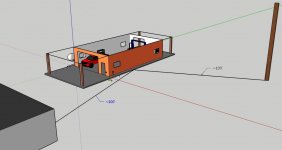
I'm trying to plan out the wiring for when I build my shop/outbuilding in the (hopefully) near future. I'm planning for a standby generator, physically located next to the shop, with a manual transfer switch.

I'd like to be able to feed both my house and the shed, regardless of whether I'm on generator power or utility power.

Because of that, I'm looking to share lugs, and hook-up two sets of wires (feeder for the shed, and feeder for the house), to the middle leg of the transfer switch (or a similar model):

https://www.homedepot.com/p/GE-200-...ency-Power-Transfer-Switch-TC10324R/100150463

I'm not sure on wire size (haven't calculated it out yet). Assuming that the combined-size of wire will fit inside of the lug, does anyone see any issue with having two wires in a single lug?

Or.... should I run a single set of wires from the middle leg of this transfer switch, to the shed power panel, and divide the power there between the shed and the house? I'm thinking a panel like this for the shed, assuming I can install a 200A breaker in this panel, and run wires to the 200A house panel.

https://www.homedepot.com/p/GE-200-...-Center-Contractor-Kit-TM2020RCUBK1/301157584

I'm sure there are better options than GE, but that's what I've got at my house already, so I'm trying to stick with one system for the breakers. Any comments or advice would definitely be appreciated. Thanks in advance!
 

Attachments

  • Layout 1.jpg
    Layout 1.jpg
    47 KB · Views: 89
  • Layout 2.jpg
    Layout 2.jpg
    57.1 KB · Views: 53
Last edited:
To avoid these ads, REGISTER NOW!

wyliesdiesels

Well-known member
Joined
Aug 14, 2012
Messages
19,983
Location
Modesto, CA
I'm trying to plan out the wiring for when I build my shop/outbuilding in the (hopefully) near future. I'm planning for a standby generator, physically located next to the shop, with a manual transfer switch.

I'd like to be able to feed both my house and the shed, regardless of whether I'm on generator power or utility power.

Because of that, I'm looking to share lugs, and hook-up two sets of wires (feeder for the shed, and feeder for the house), to the middle leg of the transfer switch (or a similar model):

https://www.homedepot.com/p/GE-200-...ency-Power-Transfer-Switch-TC10324R/100150463

I'm not sure on wire size (haven't calculated it out yet). Assuming that the combined-size of wire will fit inside of the lug, does anyone see any issue with having two wires in a single lug?

Or.... should I run a single set of wires from the middle leg of this transfer switch, to the shed power panel, and divide the power there between the shed and the house? I'm thinking a panel like this for the shed, assuming I can install a 200A breaker in this panel, and run wires to the 200A house panel.

https://www.homedepot.com/p/GE-200-...-Center-Contractor-Kit-TM2020RCUBK1/301157584

I'm sure there are better options than GE, but that's what I've got at my house already, so I'm trying to stick with one system for the breakers. Any comments or advice would definitely be appreciated. Thanks in advance!

I highly doubt the lugs on the transfer switch are rated for 2 wires. doesnt matter what gauge they are

you should instead run the house feeder off the shop subpanel...
 

txvwnut

Well-known member
Joined
Jan 1, 2015
Messages
7,588
Location
Bedford, Texas
Wylie hit it right on, also its against code to double lug.

This is how I have mine run, feeder to the house panel then a line to the shop panel(which is a sub panel) then I have a plug and breaker in the shop for my generator. When the power goes out I trip the main in the house panel hook up the generator rip the cord and flip the breaker for generator. The breaker I used for the generator is no larger than the circuit breakers on the gen itself so I don't worry about a back feed safety issue since the generator breakers will trip before the panel. Found that one out on accident.
 
OP
D

DaveInTX

Active member
Joined
May 29, 2020
Messages
37
Location
Texas
Okay great, thanks folks!

I had a feeling that was the better option, I just didn't know the specifics of the code regarding a double-lug connection.
 

CJ7VFR

Well-known member
Joined
Jan 13, 2015
Messages
2,939
Location
Central New Jersey
...When the power goes out I trip the main in the house panel hook up the generator rip the cord and flip the breaker for generator...so I don't worry about a back feed safety issue....

By code, can that be allowed, since you have to remember to shut down the main breaker in the house panel? Doesn't this make for a potentially dangerous back feeding issue out to the pole if you, or someone else forgets to turn off the main breaker in the house when you fire up the generator?

I am curious about this. Maybe some of the sparkies here can verify if this is a safe way to power your house.

Jim
 

ROBZ71LM7

Well-known member
Joined
Aug 5, 2009
Messages
96
Location
Louisville, KY
By code, can that be allowed, since you have to remember to shut down the main breaker in the house panel? Doesn't this make for a potentially dangerous back feeding issue out to the pole if you, or someone else forgets to turn off the main breaker in the house when you fire up the generator?

I am curious about this. Maybe some of the sparkies here can verify if this is a safe way to power your house.

Jim

Against code and unsafe. You need an interlock kit or transfer switch to be compliant and idiot proof so someone cannot backfeed and create an unsafe condition for the lineman. Will it work? Yes. Can it work safely? Yes, but reliant upon someone not slipping up or making a mistake. Is it legal and proper? No.
 

wyliesdiesels

Well-known member
Joined
Aug 14, 2012
Messages
19,983
Location
Modesto, CA
Wylie hit it right on, also its against code to double lug.

This is how I have mine run, feeder to the house panel then a line to the shop panel(which is a sub panel) then I have a plug and breaker in the shop for my generator. When the power goes out I trip the main in the house panel hook up the generator rip the cord and flip the breaker for generator. The breaker I used for the generator is no larger than the circuit breakers on the gen itself so I don't worry about a back feed safety issue since the generator breakers will trip before the panel. Found that one out on accident.

:shocking::shocking::shocking::shocking::shocking:

This is not only against code, it is very dangerous. what if you forget to turn off the main, then turn on your generator, send current over lines a lineman is working on and zap them? It has happened many times...

put an interlock in your panel please

Many PoCos will cut the service drop on houses that have an illegal setup like yours....
 

txvwnut

Well-known member
Joined
Jan 1, 2015
Messages
7,588
Location
Bedford, Texas
I never forget to trip the main as I don't want to back feed the neighborhood for two reasons, the first being the repair crew the second is the possibility of a dead short killing the generator and there is a third, wouldn't want to start a fire from an arc flash.

The house main panel is on pathway to the shop. When the power goes out the first stop is the main panel to trip the master and I leave the panel open to for visual reference right before I start the genset. When the time comes to transfer back to commercial power I trip the breaker to the shop first then the master.

Is this code? No

If I sell will this stay in place? HELL NO!

Am I the only one that sets up and starts the generator? Yes.

Has the power company seen my house on gen power? Yes many times. They've even come to the door and asked if the main is off or is there a transfer switch in place. I believe now they have my house listed as being on backup power cause I don't asked when and if the power goes out.
 

GabeC

Member
Joined
Jan 22, 2021
Messages
11
Location
ND
It is not against code to put two wires under one lug, but at Wylie stated earlier, the lug has to be rated for it.
most lugs have min-max wire size and an indication if they can take more than one wire of the same size stamped into the tongue or side of the lug.
Proper torque when tightening is also important and a code requirement that we have been getting enforced in North Dakota.
I just installed a service rated ASCO transfer switch at the pole and that feeds both panels in the house and the shop. (60KW)
There is a lot of code to consider when doing this ie: proper grounding and bonding, neutral connection, mechanical or electrical interlock, AIC ratings... wiring certificate :)
Those GFI's in your house trip at 5 milliamps, that's .005 amps! It doesn't take much to hurt or worse.
IMHO, I would suggest pulling a self wire permit and having it inspected, or spending the extra money to hire it out. Lots of electricians will install customer provided material if you want to save a few buck.
Good luck with your build! Having a generator has been REALLY nice out here in the sticks!
 
To avoid these ads, REGISTER NOW!

yeldogt

Well-known member
Joined
Jan 2, 2012
Messages
18,184
How is the house getting power now?

Will not the house feed take care of the shed/ shop?

Just feed the house and the house will take care of the shop with a feed?

The generator can be anyplace -- mine is not near the house. I used the same trench to place both the outbuilding wire and the Gen feed back to the panel.
 
OP
D

DaveInTX

Active member
Joined
May 29, 2020
Messages
37
Location
Texas
It is not against code to put two wires under one lug, but at Wylie stated earlier, the lug has to be rated for it.
most lugs have min-max wire size and an indication if they can take more than one wire of the same size stamped into the tongue or side of the lug.
Proper torque when tightening is also important and a code requirement that we have been getting enforced in North Dakota.
I just installed a service rated ASCO transfer switch at the pole and that feeds both panels in the house and the shop. (60KW)
There is a lot of code to consider when doing this ie: proper grounding and bonding, neutral connection, mechanical or electrical interlock, AIC ratings... wiring certificate :)
Those GFI's in your house trip at 5 milliamps, that's .005 amps! It doesn't take much to hurt or worse.
IMHO, I would suggest pulling a self wire permit and having it inspected, or spending the extra money to hire it out. Lots of electricians will install customer provided material if you want to save a few buck.
Good luck with your build! Having a generator has been REALLY nice out here in the sticks!

Thanks for the response! I'll have to see if any transfer switches allow a double-wire install. About codes/permits - where I live, there really is no code enforcement or permits required (you should see some of the electrical work around here. it's scary). My plan is to do what is safe/right when working with electrical, and I'm not afraid to call out an electrician if something's out of my league.


How is the house getting power now?

Will not the house feed take care of the shed/ shop?

Just feed the house and the house will take care of the shop with a feed?

The generator can be anyplace -- mine is not near the house. I used the same trench to place both the outbuilding wire and the Gen feed back to the panel.

Right now, my electric meter is on the house. For a few reasons, I'm going to ask the PoCo to move the meter back to the power-pole. I don't think I'll have any trouble with this - their standard practice nowadays is to install the meter on the last pole.

If I left the meter on the house, it wouldn't be easy to feed the shed - the house panel's full, and I've already got a (full) sub-panel next to it - not looking to add/change-out the subpanels. Also, the power-line to my house is overhead - I'm going to use this opportunity to bury it (~75' from the pole to my house).


Here is an easy way to do what you want:

http://www.generlink.com/generlink.html

Goes between the meter and meter base. $5-800 including a cord to go to your generator.

Good option! I'm not sure if that works with my current plan, since I'd like to have the generator next to my shed, ~50' from the meter. But I definitely see how that could work for some applications.
 

dcg9381

Well-known member
Joined
Jun 20, 2018
Messages
11,627
Location
Austin, TX
I have a different situation, but the solution to my problem and your problem are exactly the same.

You use a pass-thru panel as the sub-panel for your shed. That sub panel has the breakers you need to do what you want in the shed, and you come off the bottom of lugs and feed your home. In this manner, you double the available lugs.

So your home will connect to the feed-thru panel instead of the transfer switch.

Everything they said about possible back-feed is right. Do it right (minimally) with a generator lock-out kit.
 
OP
D

DaveInTX

Active member
Joined
May 29, 2020
Messages
37
Location
Texas
I've got one quick follow-up: As mentioned, I'll be moving my electric meter from the house, back to the power pole. I'll have some form of breaker/disconnect just after the meter, and then from there, I'll go underground to the shop.

In the shop, I'll probably have a manual transfer switch which will feed my shop breaker panel, and have some sort of feed-through inside the shop breaker panel to an underground line which will go to the house.

My question is: what do I do about neutral bonding? Do I need to make any changes to the wiring in the breaker box at the house, since I've now moved the meter - does this technically make the house breaker box a subpanel (to the shop panel)?
 

wyliesdiesels

Well-known member
Joined
Aug 14, 2012
Messages
19,983
Location
Modesto, CA
if there will be a disconnect between the house panel and meter then yes the house panel becomes a subpanel and you will need to isolate the neutral bar, install a ground bar and move any grounds on the neutral bar over to the new ground bar. Also, any GECs to rods or bonding wires to plumbing will need to be moved off the neutral bar and connected to new ground bar
 
To avoid these ads, REGISTER NOW!
Top Bottom