To avoid these ads, REGISTER NOW!

Trouble getting self tapping screws to bite.

Hobby_Man22

Well-known member
Joined
Nov 16, 2020
Messages
3,581
Location
tx
I've never had any luck with self tapping screws threading into metal. Am I doing something wrong? I always had to drill a small pilot hole to keep it from wandering off and usually you use a punch to prevent this, but with a self tapping screw you shouldn't have to.
 
To avoid these ads, REGISTER NOW!

Doug Arthurs

Well-known member
Joined
Dec 1, 2012
Messages
1,137
Location
Ontario
I use mostly self drilling screws so no need for pilot holes. The only time I would use self tappers would be in thin aluminum and then usually just press hard to form a dimple then drive it in.
 

chinboys

Well-known member
Joined
Jun 20, 2011
Messages
434
What type of metal and how thick (most self tappers are 10-20 RC in hardness)? What sort of cutting head is on the screw (blade versus taper cutter)?

There isn't any shame to drill a small pilot hole or a tap size hole to tap except for the speed and steps involved (number of fasteners required).
 

BillK

Well-known member
Joined
Aug 24, 2006
Messages
9,320
Location
Beautiful Southern Maryland
HM.
Are you using self "tapping" or self "drilling" screws ? Self tapping are made to work with a pilot hole. Self drilling have a drill point on them and drill their own hole. I have never had an issue with the self drilling ones.
 

larry_g

Well-known member
Joined
Apr 28, 2007
Messages
16,879
Location
oregon
What type of metal and how thick (most self tappers are 10-20 RC in hardness)? What sort of cutting head is on the screw (blade versus taper cutter)?

There isn't any shame to drill a small pilot hole or a tap size hole to tap except for the speed and steps involved (number of fasteners required).

HM.
Are you using self "tapping" or self "drilling" screws ? Self tapping are made to work with a pilot hole. Self drilling have a drill point on them and drill their own hole. I have never had an issue with the self drilling ones.

X2 on the above. I also find that setting the drill/driver to hammer mode works things a bit better.

lg
no neat sig line
 

Mr_fixit

Well-known member
Joined
May 24, 2008
Messages
1,221
Location
Rustylvania
There's many different self tapping or self drilling bits, thread forming bits, with different threads, heads, wings, drill point , depending on what you're screwing into. Coarse threads into something very thin isn't going to work. Whether you're screwing into metal or wood, or combination of both, requires specific screws. some info here. https://uk.rs-online.com/web/generalDisplay.html?id=solutions/self-tapping-screws-guide
 

allinon72

Well-known member
Joined
Jul 5, 2010
Messages
3,307
Location
Indianapolis
Varies widely depending on what material you are screwing into and the quality of the self tappers. Cheap ones are basically worthless on anything but the thinnest of material.
 

JRC3

Well-known member
Joined
Jun 30, 2014
Messages
12,481
Location
Southwestern OH
Sometimes you have to put some *** behind it. I've used them to replace the plywood deck on my utility trailer, that's pretty thick and I didn't pre drill. Last week I used some to do an impeller mod on my snow blower, also pretty darn thick.
 

BFBOB

Well-known member
Joined
Sep 20, 2011
Messages
5,073
Self Piercing screws are the best, strongest for what I use them for - attaching wiring devices to steel studs. Since they don't remove any metal, there's a lot more for the threads to grip. Not as easy to find as the self drilling screws, but they're out there.
 

NUTTSGT

Super Moderator
Staff member
Joined
Sep 14, 2009
Messages
50,931
Location
Northern Central Ohio
I'll second what many said above. I'll also suggest to start the screw slowing depending on the material. You have to get it started before you go wide *** open, it's not a drywall screw going into sheetrock/stud.
 
To avoid these ads, REGISTER NOW!

Marctrees

Well-known member
Joined
Mar 5, 2015
Messages
6,265
Location
TX/LA border - Toledo Bend
Be aware the drill length portion of the self drill screw MUST be at least as long as the thickness of the material you will be going through, otherwise it will stall and not progress.

Marc
 

nadogail

Well-known member
Joined
Jan 23, 2009
Messages
31,949
Location
Coronado, CA
Self Piercing screws are the best, strongest for what I use them for - attaching wiring devices to steel studs. Since they don't remove any metal, there's a lot more for the threads to grip. Not as easy to find as the self drilling screws, but they're out there.

IMHO. I would go to the place where meta studs are sold to find the self piercing screws.
 

Dadillac

Well-known member
Joined
Apr 14, 2017
Messages
257
Most people drill at a much too high speed when drilling metal. Slow the drill down and watch those screws plow right through

Don
 

Dustball

Well-known member
Joined
Jun 25, 2011
Messages
2,081
Location
Hudson, WI
I've never had any luck with self tapping screws threading into metal. Am I doing something wrong? I always had to drill a small pilot hole to keep it from wandering off and usually you use a punch to prevent this, but with a self tapping screw you shouldn't have to.

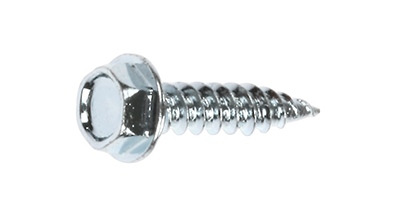
Self-tapping (needs a pilot hole, cuts its own threads)
RCT-MS1032STZ50_P.jpg


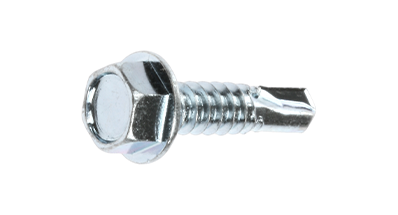
Self-drilling (drills its own hole and cuts its own threads)
Metal-to-Metal-Drill-398x215.png


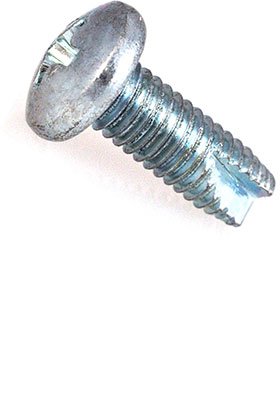
Self-piercing (pierces its own holes in sheet metal)
Metal-to-Metal-Sharp-398x215.png


Which one are you trying to do?
 
OP
H

Hobby_Man22

Well-known member
Joined
Nov 16, 2020
Messages
3,581
Location
tx
Self-tapping (needs a pilot hole, cuts its own threads)
RCT-MS1032STZ50_P.jpg


Self-drilling (drills its own hole and cuts its own threads)
Metal-to-Metal-Drill-398x215.png


Self-piercing (pierces its own holes in sheet metal)
Metal-to-Metal-Sharp-398x215.png


Which one are you trying to do?

The middle picture
 

Dustball

Well-known member
Joined
Jun 25, 2011
Messages
2,081
Location
Hudson, WI
The middle picture

Ok, self-drilling screws it is. All you should need is a center punch to mark your hole location.

As for material thickness, I go by the thickness being no more than the length of the drill section of the screw. Any more than 1/8", I drill and tap for regular screws.

Some good tips-
https://www.fastenermart.com/self-drilling-screws.html

  • To avoid point breakage, the drill point must completely penetrate the material before thread pick-up occurs because the screw advances faster when tapping than drilling.
  • Recommended driving speed for most efficient drilling is also different for the different sizes. For example, one manufacturer indicates the drill capacity of a #8 screw with a #2 point is 0.035 - 0.100" and recommends a drill speed of 2500 RPM. A #12 screw with a #5 point is rated for 0.125 - 0.500" material thickness at 1500 RPM. For best results, always follow the screw manufacturer's guidelines but, in general, 2000 to 3000 RPM and end pressures between 25 and 65 pounds should produce satisfactory results for most applications.
 
OP
H

Hobby_Man22

Well-known member
Joined
Nov 16, 2020
Messages
3,581
Location
tx
Dustball thanks fornthe help. It looks like I just wasn't giving the drill enough rpm. Plus I went out and bought a magnetic drill bit.
 
Last edited:
To avoid these ads, REGISTER NOW!
Top Bottom