To avoid these ads, REGISTER NOW!

Try square opinions?

dwasifar

Well-known member
Joined
May 28, 2017
Messages
2,109
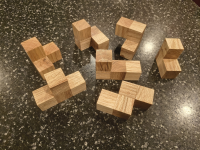
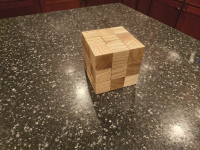
I make these Soma puzzles:

1786412732053.png1786412755490.png

Obviously, precision is important to make the puzzles fit together well. I use a try square to check square on the pieces as I'm working. Currently I'm using this:

1786412992644.png

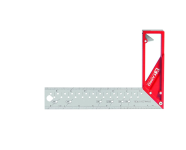
Interested in opinions. Amazon has the Kapro 353:

1786413149094.png

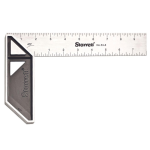
And also Starrett K53-8N:

1786413266060.png

Is it worthwhile to upgrade? Or is this an "if it ain't broke" situation?
 
To avoid these ads, REGISTER NOW!

whateg01

Well-known member
Joined
Mar 13, 2006
Messages
11,785
Location
doo dah, kansas, usa
I make these Soma puzzles:

1786412732053.png1786412755490.png

Obviously, precision is important to make the puzzles fit together well. I use a try square to check square on the pieces as I'm working. Currently I'm using this:

1786412992644.png

Interested in opinions. Amazon has the Kapro 353:

1786413149094.png

And also Starrett K53-8N:

1786413266060.png

Is it worthwhile to upgrade? Or is this an "if it ain't broke" situation?
What are you trying to fix? Is the current square not square?
 
OP
D

dwasifar

Well-known member
Joined
May 28, 2017
Messages
2,109
What are you trying to fix? Is the current square not square?
It seems fine. Basically I'm just wondering what makes the Starrett and Kapro worth their money. Nicer to use, maybe. The ledge flip-out and 60 degree line on the Kapro look interesting.

Just curious really.
 

whateg01

Well-known member
Joined
Mar 13, 2006
Messages
11,785
Location
doo dah, kansas, usa
It seems fine. Basically I'm just wondering what makes the Starrett and Kapro worth their money. Nicer to use, maybe. The ledge flip-out and 60 degree line on the Kapro look interesting.

Just curious really.
We have a bunch of starrett measuring tools at the makerspace. Just like any tools, you have to take care of them or they end up damaged. The two starrett try squares in the metal shop both are loose.
 
OP
D

dwasifar

Well-known member
Joined
May 28, 2017
Messages
2,109
I had an original red plastic SOMA puzzle and loved to make all the prescribed shapes. 🟥🟥🟥🟥🟥
Yeah, I had one red and one blue. Really wanted the rosewood one they mentioned in the back of the booklet, but that was out of reach for a child in the late 60s. But that's why I make wood sets now.
 
OP
D

dwasifar

Well-known member
Joined
May 28, 2017
Messages
2,109
We have a bunch of starrett measuring tools at the makerspace. Just like any tools, you have to take care of them or they end up damaged. The two starrett try squares in the metal shop both are loose.
Yeah. If I drop a square or knock it off the bench, I always check it before using it again.
 
To avoid these ads, REGISTER NOW!

Firebrick43

Well-known member
Joined
May 12, 2015
Messages
14,371
Location
West central Indiana
It seems fine. Basically I'm just wondering what makes the Starrett and Kapro worth their money. Nicer to use, maybe. The ledge flip-out and 60 degree line on the Kapro look interesting.

Just curious really.
I cant hardly stand a try square any more without a ledge. I don't think the KPro one would do it for me but it would be better than none.

You would probably balk at the cost of a 642SS woodpeckers
 

Nobody-named-Olli

Well-known member
Joined
Jan 9, 2025
Messages
1,727
Location
North Rhine-Westphalia; Germany
If my perception of size is correct, you might find the Woodpeckers Mini Square interesting/ worthwhile for your work. I imagine it would feel like the perfect size and cover a lot of surface on those puzzle pieces.

https://woodpeck.com/products/woodpeckers-mini-square

I have this in my box of tricks and have found quite a few uses besides squaring up/ checking chisels.

But other than for the feel/handling, I think it’s a “if it ain’t broke” situation - if your current square works for you.

Kind regards,
Olli
 

RTM

Well-known member
Joined
May 13, 2019
Messages
13,380
Location
SF Bay Area
I personally use a 3" machinist square, or a 4" double square for small stuff. No idea how big your individual blocks are, but I try to use a tool as small as possible to cover the work piece.

With your squares being 8", I would want to be on the 6-8" size workpiece.

Just easier handling IMO
 

scooterbum46

Well-known member
Joined
Jan 29, 2014
Messages
911
Location
South Central Michigan / ex Gulf Coast Florida
I prefer Starrett machinists combination squares - I trust them more than any try square due to the try square's 2 piece construction that can be knocked out of square. The combination style with the rule drawn into square by the thumbscrew/bolt between two supports make it pretty hard to damage in any way that affects it's "squareness".
 

neophyte

Well-known member
Joined
Apr 23, 2012
Messages
9,898
Location
Pennsylvannia
The advantage to a combination square or the “double square” version of the combination square, is that the blade is removable, and it’s possible to tweak the slot if the slot gets out of square to correct the issues.
Epstein has decent prices on the PEC squares, and better prices on blemished PEC squares.
PEC doesn’t make as wide a variety of sizes as Starrett, but combination square can be bought in sizes from 4” to 24” , with different length rulers.
There are also similar die makers square in 2-1/2” sizes.
For traditional fixed machinist square I prefer the European unibody type made from a single piece of steel.
 

AEAdam

Well-known member
Joined
May 27, 2023
Messages
2,876
Location
SE PA
Carpenters use speed squares. Shop based woodworkers using power tools typically are getting things square by using machines that produce square. So I get it, they use solid steel engineer's squares to set up their machines. These excel due to their accuracy and the fact that every surface is square to every other.

Traditional try squares (the wooden ones with the steel blades) were really only ever designed to be square inside edge of the wood "stock" (where the brass was) to the TOP edge of the blade. The Stanley made ones were pretty good on the lower edge of the blade. But the top edge could be corrected (by filing, honing). But generally that's how try squares are.

IMG_0863.JPG

Many woodworkers find machinists' "layout" squares convenient. The double squares at right are almost as square as the solid engineers' squares. The combination square at center was invented by Starrett in the mid 19th century as an all in one tool.

People choose Starrett because, unlike PEC, the accuracy of their tools is unquestioned. The venerable Starrett #20 engineers' square is truly a "master square" ground to .0002"/6". I forget what PEC claims, but others claim .0002"/1" which isn't really all that great if we trust it at all.

But beware, the #20 offered on Amazon are the China made ones and they are an order of magnitude less accurate. The Athol Mass made squares are many hundreds of dollars (larger ones could be $600, $800). Starrett doesn't state the accuracy of their double squares or combination squares, but those of us with master squares who have bothered to check find them to be dead on. Even used, eBay doubles and combinations are typically VERY square, which has sadly led to Starrett's decline. Their tools are made so well they will last many generations. I have no found wear to be an issue. I don't even really find debris in the slides to have much effect.

Why Starrett?
Starretts' blades are generally thicker than their competitors', which generally means you can't buy Starrett blades on eBay and use them in Mitutoyo or PEC heads. In use they have a little more heft and better balance. I find Starretts' blades desirable because the markings are so easy to read. There's just something about a Starrett ruler. The size of the marks, their depth and "brightness". Cheaper rulers are laser marked and just not that great. Last, you always need to check the ends of less expensive rules. Ends need to be ground perfectly square to the long edge and exactly at the zero point. Beware of rough, filed, or damaged ends.

Use of Adjustable Squares in the Woodshop:
  1. The adjustable squares can be set and used like gauges. This is really their chief advantage. So you can get a square line or a exact dimension at a known distance, and repeat that.
  2. With the blade not in its fully extended position, you get a bit better balance in use. If I dropped these tools on your bench, you'd do that without thinking as we all do.
  3. These are fairly delicate tools compared to the try squares in the OP. Sorry about the glare, the Die Maker's square (center) is only 2-1/2" long or so. Its an attractive piece for small work, but to be honest I don't use it that often. I bought it specifically for use on work in the milling machine and it excels at that because it is so compact.

    Personally, I use the 6" combination square (with the 45 degree face, center) the most in the woodshop, followed by the 4" double square.

    The original 12" combination square is a fixture in so many wood shops I've been in or seen, but my personal opinion is, it's too big, too blade heavy. The stock isn't long enough to get an accurate reference surface on wood and the balance of the tool is off. Ironically the smaller 6" version is better proportioned, in my opinion.
Summary, I'd go looking for a 6" Starrett combination square on eBay. You can find them cheap enough. All of mine came from eBay, and may need a good clean and a little touch up paint.

For the Starrett connoisseurs, the combination square in the pic is not the typical 6" combo. It was called the "junior" combo and is unique in that it has the hardened heads and uniquely uses the same blades as the 4" double square. The normal 6" combination square uses a unique blade that fits in nothing else I know about. That's the one I use in the woodshop, and this one stays in this drawer. The junior head is a little smaller than the normal 6" combo head.
 
To avoid these ads, REGISTER NOW!
Top Bottom