To avoid these ads, REGISTER NOW!

Tying trusses together

z28dad

Well-known member
Joined
Jul 20, 2010
Messages
172
Location
VA
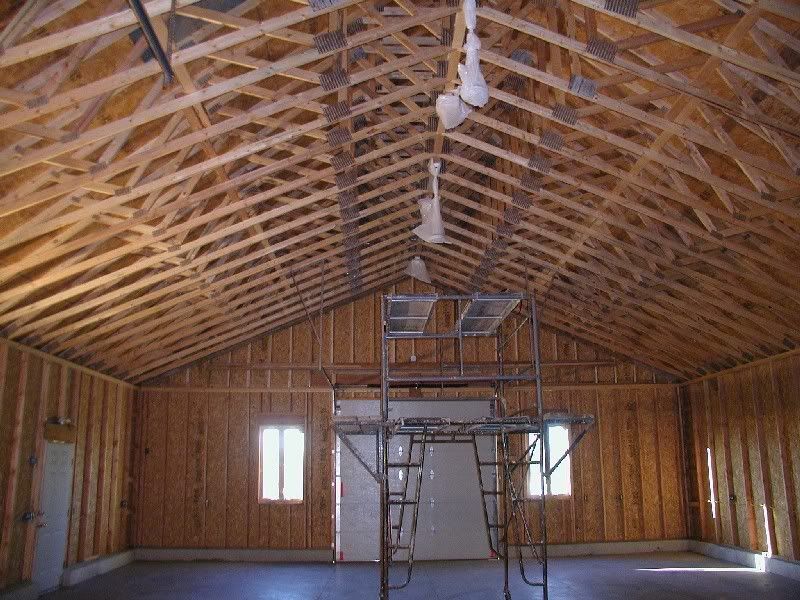
Guys, I'm try to get a wall in my garage ready for sheet rock. I have a 10ft wall with scissors trusses. The gable end is above the 10ft area of the wall. When my builders built the wall I noticed the gable sits flush with the outside, but not inside. I ended up adding some 2x4's and plywood to fill the gap between the gable and the wall. I also added 2x4's at the same angle as the ceiling joist. This will let me run the sheet rock all the way up to the scissor trusses.

With all that said, I have a little movement in this wall when I shake it. Its mainly in the gable area. What I want to do is tie the gable end to to the truss beside it every 24 inches. The trusses are on 16ft center. I put two braces on each side and its definitely made a difference already. My big question here is when tying them together does it affect the engineering in the truss? Here are a few pics:
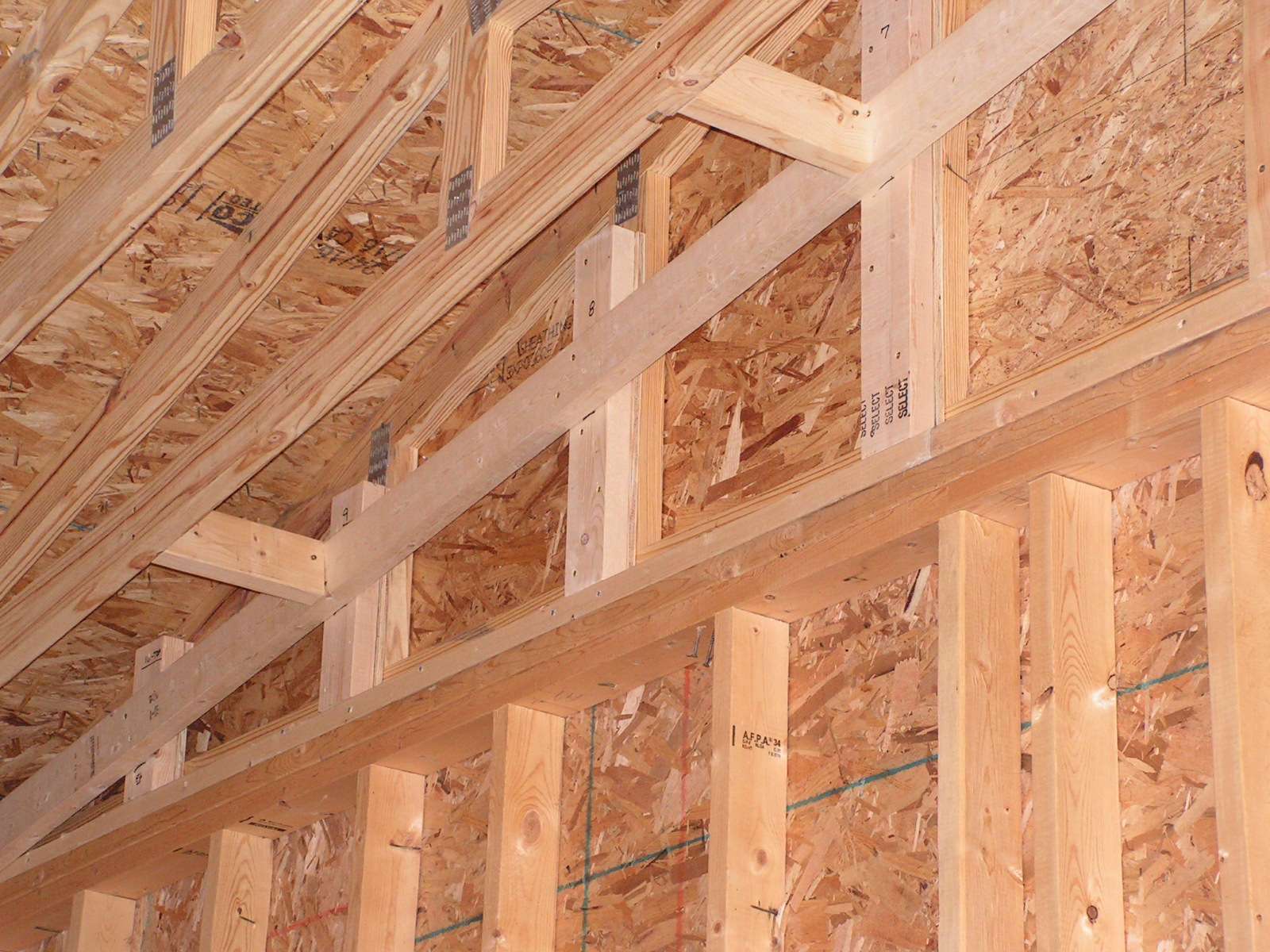
pict0399w.jpg


pict0397i.jpg


Thanks, Russ
 
To avoid these ads, REGISTER NOW!

ket-tek

Well-known member
Joined
Jan 28, 2009
Messages
1,289
It is typical that I see long 2x4's or 2x6's tied across the trusses from gable to gable. It will help sturdy the whole roof. Mine is tied in to the center vertical brace in the middle of the trusses, and yes before the 2x's were in place you could wobble the gable end like crazy, it's kinda scary to see. As that outside gable truss is just sitting on top of the framed wall and only being held laterally by the plywood on the roof.

I can probably grab some pics if you need them..
 
Last edited:

IDASHO

Well-known member
Joined
Mar 5, 2007
Messages
1,809
Location
Moscow, Idaho
Check your truss spec sheets.

They should call for a "backbone" to be installed in the attic space, tied to the bottom cords, perpendicular to the trusses.

The backbone should run the entire length, tying in both gable end walls.
 

1969

Well-known member
Joined
Jan 8, 2010
Messages
1,412
Location
East Coast
Generally you will have a spec sheet that comes with the trusses on how and where to brace........ I know mine did. I'm guessing your trusses are on 16" centers, correct? You probably could find the info you need on the internet.
 
OP
Z

z28dad

Well-known member
Joined
Jul 20, 2010
Messages
172
Location
VA
There is 2x4's in the attic space that runs the entire length. They are right in the middle. I will see if I have a spec sheet.
 
Last edited:

ishiboo

Well-known member
Joined
Oct 27, 2010
Messages
9,481
Location
Oshkosh, WI
Spaced at proper intervals, 5/8" drywall actually does a decent job of acting as a sheething to prevent the trusses from moving much once it's there, provided you are not storing anything in the attic (accessing it frequently.)

Don't spend too much time on this, if there's too much movement put a couple boards over the top and nail them down, or put 1x2 or 1x3 furring strips perpendicular to the trusses.
 

maxwedge

Active member
Joined
Feb 28, 2010
Messages
36
Location
Bloomington IL
Most builders don't bother to add anything that they don't have to, if they think they can get away with it and save a buck. I've seen tons of gable walls on truss roofs that were built very flimsy, to the point where I was surprised they passed inspection at all, but I'm sure you are fine with that bracing you've added and anything you can nail across the bottom cord to tie them together will only help out.
 

6768rogues

Banned
Joined
Nov 28, 2007
Messages
4,524
Location
Western NY
You did not do anything that will affect the integrity of the trusses.
The truss plan will show bracing. Generally that bracing will show a strong back (called a backbone above, different regions have different names). Compression members in a truss are braced, tension members are not. You cannot tell by looking whether a web is in compression or tension. That is why bracing is on the truss plan.
When I was a county inspector, if I didn't get a truss plan so I could verify that bracing was properly installed, construction stopped until I got one.
 
Last edited:

framer

Active member
Joined
Feb 14, 2010
Messages
29
That's what is done a lot and other ideas were good also .When we frame houses or garages we balloon frame so studs go floor to roof deck makes a better wall.I have fixed longer walls than yours. 20 foot wall require 2 studs in middle cut thru top plate and double run studs to roof deck.Use A35 or similar type hanger on each side of studs to plates.Longer walls would need more studs. In some cases would have to use 2x6 studs or microlams and fur out the walls. good luck.
 
OP
Z

z28dad

Well-known member
Joined
Jul 20, 2010
Messages
172
Location
VA
Thanks, for al the replies guys. I was also wanting to add some more braces between the trusses at the top where the roof sheating is. Its hard to explain, but here are some pics.

beamsinsidejpg.jpg


rightsidebeam1jpg.jpg


frontroofjpg.jpg


When they built the front area which is on an angle, they got the hand built rafters a little off on over the trusess. I guess you could say its a roof over a roof. Its not off by much , but a little. I want to go into the areas where the 2x6 rest on the sheeting and put a 2x4 between the scissor trusses in these areas. Not sure if thats a good or bad idea. I'm sure its fine now, I just worry about snow load should we ever get a big snow.

This is a very weird building. Its has been a real challenge. Here is what it looks like from the outside. Overall I'm very happy with it. I would do some things different if I had it to do all over again.

garageoutside1jpg.jpg


garageside1jpg.jpg


I will try to find my spec sheet. Thanks, Russ
 

5lima30

Well-known member
Joined
Nov 11, 2010
Messages
2,442
Location
Mountains of Western NC
I used metal spacer/ straps that are designed between each truss. The roof decking goes over the top of the straps. These are used in lieu of 2x4 blocking/ spacers. I got them from the truss company. They made setting the trusses go much quicker and keeps the spacing consistent.
 

fefarms

Well-known member
Joined
Jan 25, 2007
Messages
186
That gable end wall is a structural disaster. I hope you aren't in a high wind-area. A lot of homes in Florida have been destroyed by hurricanes when the gable end wall folded in at the joint between the platform framing and the short studs running from there to the top of the roof. The usual retrofit fix for this is diagonal bracing in the attic, tieing the double top plate in the wall to the roof deck. But you can't really do this because of the scissors trusses.

Framer has it right. Retrofit some balloon framing: 2x4s running from the bottom plate all the way to the roof deck. That will create a wall that can resist inward and outward forces, instead of one that folds in the middle.
 
To avoid these ads, REGISTER NOW!

LSVLance

Well-known member
Joined
Jul 17, 2010
Messages
298
Location
Peoria, AZ
pict0399w.jpg


My 36' long end wall was framed almost exactly like yours is. I too added fir strips to make the inside surface flush all the way to the trusses and short braces from the gable end to the first truss.

I also had to build what I called a "stiff back" basically a 24' 2x6 with two layers of 2x4s on edge screwed too it and the whole works screwed across the gable to stiffen it as it wanted to bow in and out with the winds.

It actually worked pretty good.

You can see it along the back wall in this picture.

Outbuildingbeforefoama-1.jpg


I'd have to work around it if I ever sheeted the wall that high up, but the strength that it added was worth it to me.

That wall faces South and has seen some pretty stout winds over the past 10 years it's been standing and it's no worse for wear than it was the day we put it up.
 
OP
Z

z28dad

Well-known member
Joined
Jul 20, 2010
Messages
172
Location
VA
Thanks for all the replies. I'm learning alot. I'm really not that skilled when it comes to building with wood. My plan was just to keep adding the braces across at each 2x4 on the gable to the next truss. I put two on each side and it did make a noticeable difference. The scissor trusses does make it a little difficult tying the gable with the rest of the trusses. If I would have knew about balloon framing, I would have had the contractors build that wall using this method. From some pics that I found on the internet that looks like the way to go with a vaulted ceiling. I was also thinking about adding 2x4's between the ones secured to the gable and attaching them to the top plate of the wall. Something else I thought about was maybe putting osb over the whole gable and part of the wall below it. Then my drywall could just mate up to the edge. Not sure how much of a finish nightmare that would be. I don't really want to see the osb texture in the finish.

As far as adding balloon framing I don't want to cut the top plates. I don't think I would feel comfortable doing that with my skill level.

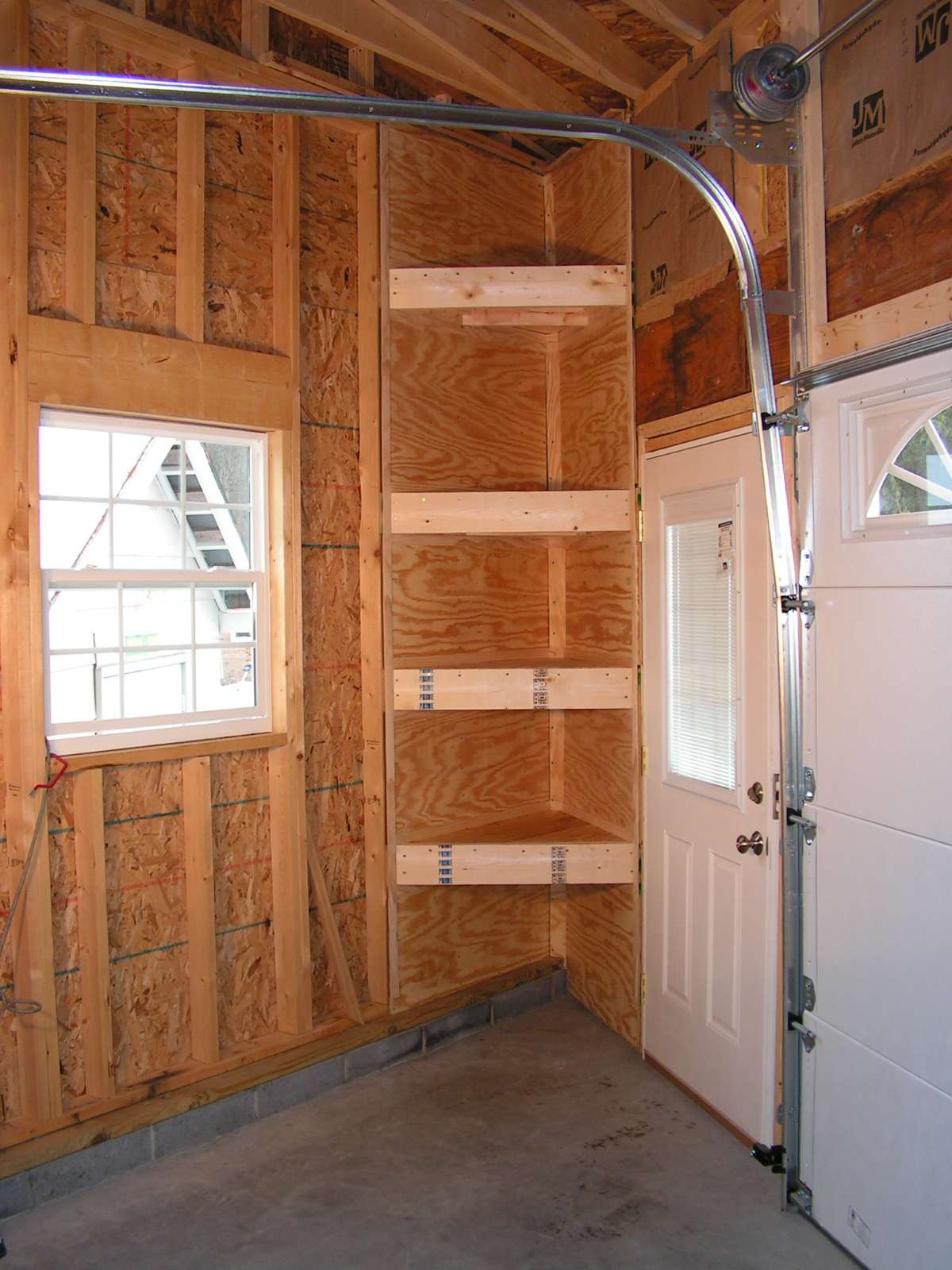
When the inspector came by, I was at home and my contractor told me to voice any concerns I had with him. I ask him about the movement on the gable and he wasn't too concerned. The front wall was a different story. With the weird corner, a 24' long, 10' high, and a 3' and, 14' openings, there was alot of movement. He had me build shelves in the corner that tied the walls together. When I framed in the shelves, I could not believe how much it tighten up the front wall. There is zero shake in it now. The garage door used to shake like crazy when I would close the entry door. That's all gone now. Here are some pics of the corner.

pict0383m.jpg


Thanks for any advice/compliments. Russ
 

framer

Active member
Joined
Feb 14, 2010
Messages
29
Your inspector is wrong that should not have past framing inspection. Needs to
be fixed. Looking at your picture you need triple post on each side of garage
door. Micralams ripped to 3-1/2 is your best option. Run from bottom plates
to bottom cord of ceiling. At this point would labor cost about $400.00 later
after a good thunderstorm $4,000.00? Fix it forget it. Good luck. Framer.
 

6768rogues

Banned
Joined
Nov 28, 2007
Messages
4,524
Location
Western NY
The International Building Code (variations of it used almost universally) requires that a header over 6 feet long be supported by two jack studs at each end. That would give you a triple stud, two supporting the header and one from the bottom of the wall to the top of the wall. I sometimes put the header up against the top plate of the wall and frame in below it. The header carries the weight of the structure above, so it works the same as putting it at the top of the door. That leaves framing the opening below the header and I don't have short studs between the header and top plate supporting the load. It makes installing a taller door later easier, not that I have ever had to do it.
 
OP
Z

z28dad

Well-known member
Joined
Jul 20, 2010
Messages
172
Location
VA
That's an older pic of the front wall. I double all the studs up on it and added several more to the main lvl. The front wall really doesn't have much weight on it. that was another reason it had alot of shake. I see what your saying though, that instead of the lvl all the way across, it should have had studs from the floor to ceiling.
 
Last edited:

rasit

Well-known member
Joined
Sep 17, 2009
Messages
387
Location
SE Pennsylvania
.I have fixed longer walls than yours. 20 foot wall require 2 studs in middle cut thru top plate and double run studs to roof deck.

That's what my builder did to solve the same problem as the OP's in spite of all the required bracing on the truss plan. He called them "king studs". Made the gable rock solid.
 
OP
Z

z28dad

Well-known member
Joined
Jul 20, 2010
Messages
172
Location
VA
So are you guys saying to cut the top plate where I have it outlined in this pic? Install two studs from the plate at the floor, to the top of the gable? Then install a stud on each side that goes from the floor to the bottom of the top plate?

pict03961q.jpg


I guess I would have to notch the 2x4 king studs to go around the truss?
 

framer

Active member
Joined
Feb 14, 2010
Messages
29
Russ i owe you and lsvlance and apology. I haven't followed the thread well enough and confused the two pictures.Lance fix for his gable is a good fix if
you don't mind it sticking out. I think that fix for you good is less complex.
I was referring to lance'es gable as more severe before he made repair. Russ
your inspector probably was ok to pass a garage wall that span with no big
door. Russ you would have to cut bottom of gable truss for the 3 studs use
a35 or any L bracket on truss to studs same studs to wall plates. Top of studs
need to go just above ceiling attached to 2x4 ceiling cord.My opinion on concrete floor looks like shrinking cracks from concrete poured to wet.
I would wait a year or so to see how much flaking there is. There is skim coat
concrete products out there to stop that. And have seen bad concrete do that to.
Framer.
 
OP
Z

z28dad

Well-known member
Joined
Jul 20, 2010
Messages
172
Location
VA
Thanks Framer. No apology needed. Its all about learning and I have alot to learn when it comes to building. That makes me feel better about what my guys did. I will look into what LSVLance's did in his repair. LSVLance thanks for posting the pics of yours. I'm not real handy on some of these building issues, but feel more comfortable with his repair vs cutting my wall.
 

LSVLance

Well-known member
Joined
Jul 17, 2010
Messages
298
Location
Peoria, AZ
Right after I had my garage doors put in, I was in the building leaning up against the back wall talking on the phone to my Dad...when a big wind blew up and the whole wall bowed in. It freaked me out. It was moving a good 3-4 inches in and out as the wind gusted...

I didn't have a lot of framing experience myself, just what I'd watched others do over the years, but I knew I had to stiffen it up somehow. After I ran a bunch of braces from the end truss over to the next two trusses, it stiffened it up some, but now the wall was moving down lower, closer to the door.

I put my logical mechanical mind to work and figured the lack of framing where the door was in the middle of the wall was causing my problem and looked around to see what I had on hand to fix it. The long 2x6 was left over from being used as a support to hold the large gable truss in place from the ground while the rest of the trusses were set in place, so it fit the bill. After building the stiff back and screwing it tightly into place, it basically stopped the wall from moving all but just a very little in even the highest South winds.

I've since framed a bathroom into the left corner of that picture and that wall and ceiling structure stopped the movement completely. Like I said before it's been standing like that now for over 10 years, and I hadn't thought about that repair since until I read this thread. I'm sure you'll get yours tightened up soon and it'll be fine for a long time. That shelf was a great idea.
 
To avoid these ads, REGISTER NOW!
Top Bottom