Mr onetwo
Well-known member
Location #1 -
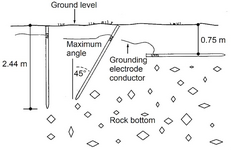
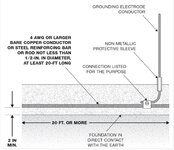
I am prepping the site and getting ready to pour concrete for my new shop and I have a couple of questions on UFER's. I will have a 6" thick slab with 12" thickened edges and 1 internal 12" grade beam to carry a mezzanine wall. It will be completely insulated with the usual 2" XPS and will get Pex for radiant infloor heat. If I leave out the XPS under a 20' section of the grade beam and tie into the rebar so there is direct contact with the earth...is this a good location for the UFER? Alternatively, I could put a 20' pc of #5 rebar in concrete below the thickened edge before insulating and pouring the slab. It would be more exposed to moisture in the perimeter...just not sure which would be better. Keep in mind that ground rods are not an option...granite ledge 41" below floor level.
Location #2 -
I am bringing the electrical service into a 40' shipping container and the ledge situation is about the same...46". It is about 200' away from where the shop is located. We will be pouring 4 14" concrete piers under the 4 corners. I think I will pour a 20' pc of concrete with #5 for the UFER and bond this to the container and the service if the utility will accept this. Is this ok? Are there any additional things I should do for lightning protection?
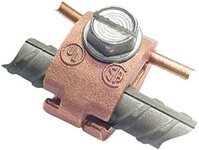
I found the proper approved grounding clamps here - https://www.suppliesdepot.com/product/greaves-j31-db-6-20-5-direct-burial-rebar-ground-clamp-58-inch
It will be a 150 amp service with a Square D RC12L200C meter/main with a HOM2150BB 4 pole disconnect and 2" rigid mast on the container. I have a 150 amp panel with feed thru lugs to go over to the shop.
Thank you in advance for your thoughts.
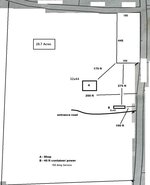
I am prepping the site and getting ready to pour concrete for my new shop and I have a couple of questions on UFER's. I will have a 6" thick slab with 12" thickened edges and 1 internal 12" grade beam to carry a mezzanine wall. It will be completely insulated with the usual 2" XPS and will get Pex for radiant infloor heat. If I leave out the XPS under a 20' section of the grade beam and tie into the rebar so there is direct contact with the earth...is this a good location for the UFER? Alternatively, I could put a 20' pc of #5 rebar in concrete below the thickened edge before insulating and pouring the slab. It would be more exposed to moisture in the perimeter...just not sure which would be better. Keep in mind that ground rods are not an option...granite ledge 41" below floor level.
Location #2 -
I am bringing the electrical service into a 40' shipping container and the ledge situation is about the same...46". It is about 200' away from where the shop is located. We will be pouring 4 14" concrete piers under the 4 corners. I think I will pour a 20' pc of concrete with #5 for the UFER and bond this to the container and the service if the utility will accept this. Is this ok? Are there any additional things I should do for lightning protection?
I found the proper approved grounding clamps here - https://www.suppliesdepot.com/product/greaves-j31-db-6-20-5-direct-burial-rebar-ground-clamp-58-inch
It will be a 150 amp service with a Square D RC12L200C meter/main with a HOM2150BB 4 pole disconnect and 2" rigid mast on the container. I have a 150 amp panel with feed thru lugs to go over to the shop.
Thank you in advance for your thoughts.