To avoid these ads, REGISTER NOW!

Utility 3 phase vs rotary phase converter

JamesBondo

Member
Joined
Sep 16, 2019
Messages
20
Location
Iowa
Hi all,

Its my first time posting here, but I have found this site to be a valuable source of information for a while now. I am wondering if I can get some advice from those with more experience.

I'm in the process of building a shop (40ft x 80ft) which will house both metal and wood working equipment. I now need to set up the utilities. The base monthly fee for 3 phase power is $23 more per month than the base fee for stranded 2 phase. I am wondering if it is better to go this route, or just sink 3k into a rotary phase converter?

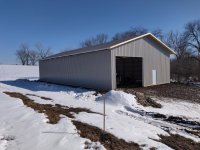
I'm a young guy who has always dreamed of having a metal and wood working shop. My background is in programming and automation, but in my free time I enjoy tinkering and designing stuff. I've never had the equipment to make allot of the stuff that I wanted to, but I'm hoping to change that in the near future (lathe, mill etc). I also have a tendency to over do things...so I'm thinking that unless there is a major convenience factor of having 3 phase, the rotary converter would probably do everything I need it to? Below is a picture of my nearly completed building :) Thanks!
 

Attachments

  • IMG_20200215_143026.jpg
    IMG_20200215_143026.jpg
    148.3 KB · Views: 69
To avoid these ads, REGISTER NOW!

My Old Tools

Well-known member
Joined
Jun 4, 2014
Messages
5,441
Location
Hamrick Lake, TX
I've been running a 3 phase rotary for 20 years because I've never has access to real 3 phase. The rotary properly sized will run all of your equipment just fine. You just have to turn it on when you need it. Mine doesn't run all day because my tablesaw is single phase and so are several other pieces. When I need the planer, mill, or metal lathe, and a few others, I flip it on and it runs until I'm done. If you can avoid having two meters by subbing off your house service you can avoid having a minimum monthly bill on the shop completely.
 

Stuart in MN

Well-known member
Joined
Sep 8, 2005
Messages
23,135
Location
Minneapolis
If you can actually get three phase service (most utilities won't provide it for residential properties) it will be the simplest thing. You'll have to weigh the additional monthly cost against the cost of purchasing a rotary converter or VFDs for operating your equipment.
 

dagofast

Well-known member
Joined
Oct 15, 2006
Messages
411
Location
The QC in AZ
You say the bill for 3 phase is $23 per month more than single phase, but you'll probably want to do a little more research as to the actual costs of them installing 3 phase to your panel. Most of the utility companies I've dealt with wanted quite a bit of money to run and connect 3 phase service to your property. And that is if they will do it at all.

Which explains why I have an American Rotary phase converter in my current shop.
 

u2slow

Well-known member
Joined
Nov 20, 2011
Messages
3,599
Location
BC
Check with the PoCo again... for the whole picture. Aside from the higher base fee, there can also be a different rate structure (resi vs comm).

In my case, the 3Ø primaries are only 60' away, but I would have to pay for the transformer set w/install. If they supply a 120/208V service, there's the matter of 240V items running at reduced voltage.

IMHO, seriously consider the phase converter. If your machines are big enough to run on 480V, it might be worth looking at a dedicated genset.
 

ClappedOutBport

Well-known member
Joined
Mar 30, 2016
Messages
998
Man, all of us GJers that lust after 3 phase and you have the opportunity to walk right buy it? Personally, I'd take it for the $23 a month. 11 years to break even on the rotary phase, and that's assuming that you don't have any capacitors or bearings fail, and that the addition of the RPC uses no additional power. That and real 3 phase adds extra possibilities like welders and sensitive CNC equipment.
 

isb cornbinder

Well-known member
Joined
Nov 3, 2010
Messages
7,073
Location
Pacific South West, BC, Canada
Last year, I bought an AMERICAN ROTARY, 10 horse power three phase generator for my shop. I did lots of due diligence before I made this purchase. I have no regrets.
 

Attachments

  • Rotary Phase copnverter.jpg
    Rotary Phase copnverter.jpg
    11.9 KB · Views: 40
Last edited:

Augus7us

Well-known member
Joined
Jan 14, 2017
Messages
1,190
Location
Central Ohio
I am skeptical of the 23$/month increase. I can't speak from experience but I was going to try and get three phase at a building I was renting and the puco was willing to do it but was going to charge me something like 6k just to add the additional transformer on the pole.

You might be lucky and there is already a transformer out there for a farm or something. But in my experience, I don't think I've ever seen a hobby shop that had three phase. I'm with u2slow, I'd call the electric company and make sure you're speaking to someone with a brain and have them spell out every cost associated with bringing it to your shop. On the flip side, I have static and VFD phase converters and have no qualms with either.

One last note, while you may end up being unlucky with the 3 phase, you certainly are lucky with that shop. An 80'x40' and you don't even have tools for it yet? You will fit right in here. Welcome to GJ and say good by to your bank account :D
 

Steve from Socal

Well-known member
Joined
Jan 27, 2009
Messages
3,499
Location
Hutchinson Ks.
The 23.00 fee is just the added monthly service fee, with most three phase service there is a demand charge and tiered service rates.

Would the service be 240/ 208 or 480? If the service is 480 you would need to provide your own step down transformer for 240/120 service. The transformer could cost you 25-100.00 or more a month just to keep warm.

There are advantages to having utility three phase especially if you are using machines with regenerative motor controls. The repair or maintenance of phase converter is generally minimal but, it is another layer of complexity in the shop. Unless you plan to have larger machines, 7HP or greater perhaps single phase input inverter drives may be a better option for the three phase needs?

Unless you plan to run 15-20 hp machines single phase service would be the most cost effective. Three phase service is probably going to be a hundred or more than single phase in monthly charges at best.

Steve
 

gnpenning

Well-known member
Joined
Jan 25, 2015
Messages
2,754
Location
I have more questions than answers.
When I bought my place years ago it came with 3ph. The difference in basic billing is about what you were quoted. It opened up equipment options with most 3ph equipment being much cheaper in my area. I have a friend that has a rotary converter, dang thing is noisy.

For me I add in the lower cost of equipment as part of the cost.

As mentioned check overall cost. If close having tru 3ph us worth it for me.
 
Last edited:

LeeG

Well-known member
Joined
Nov 29, 2012
Messages
1,528
Location
Phoenix, AZ
It looks like the OP is in a rural setting back in my old stomping grounds. Many of the farms in that area had 3 phase services, so it may not be the big deal it is in other places.

Personally I’d go for 3 phase mains an not have to mess with a phase converter, unless there are rate structure differences tha will be a factor
 

MushCreek

Well-known member
Joined
Jan 14, 2015
Messages
9,785
Location
Upstate South Carolina
As others have said, make sure that there's not a big(ger) fee to hook up, and/or high rates. If not, I'd go with the 3 ph from the pole. I have a phase converter, because it would have cost many thousands to have it brought in. My converter was pretty cheap, because I got a deal on a 10 hp idler motor ($25). I bought an American Rotary panel, and it works great. Somewhat inconvenient, but fine for my hobby usage.
 

jmarkwolf

Well-known member
Joined
Jan 15, 2013
Messages
1,818
Location
Southeast Michigan
If you don't yet have the machines, why go 3 phase?

If you already have them but only have a couple 3-phase machines look into VFD's. Depending on horsepower they can cost as little as $100 per machine, and offer other benefits.
 

wyliesdiesels

Well-known member
Joined
Aug 14, 2012
Messages
20,031
Location
Modesto, CA
Your costs will be far more than just the increased monthly meter fee.

3 phase services are billed for not only the Kwhr usage but also TOU/time of use rates, and demand charges.
 

toolchaser

Well-known member
Joined
Apr 6, 2008
Messages
803
Location
Greenville, GA
I put my American Rotary PC outside in a dedicated doghouse. After running it, I shouldn't have bothered, it's quieter than my mill
 

MushCreek

Well-known member
Joined
Jan 14, 2015
Messages
9,785
Location
Upstate South Carolina
Same here. I can hear my rotary, but it's not obnoxious. I got the rotary to run my mill and surface grinder, but it opens other doors. I got a monster 12" Baldor pedestal grinder for $160 because 3 ph ones don't bring much. Cost new would be $4000! My lathe is currently 1 ph, but I want to replace it, and can freely shop 3 ph lathes.
 

William Payne

Well-known member
Joined
Mar 15, 2010
Messages
7,746
Location
Wanganui, New Zealand
I can’t speak based on what you guys have to deal with in the states but one thing I did initially with my 3-phase install was I made sure that the underground cables were appropriate for 3-phase even if initially I only had single phase.

I don’t know if that would work for you, I don’t know your utility requirements but my logic was even if you don’t get 3-phase right away at least you have the infrastructure in place should you decide to upgrade later.

In my case the utility infrastructure where I live is very different to you guys and I chose to go with 3-phase as it was already available to me at the pole outside my house I just needed to connect to it.
 
To avoid these ads, REGISTER NOW!

Augus7us

Well-known member
Joined
Jan 14, 2017
Messages
1,190
Location
Central Ohio
Bored so I'll list a little more here.

Your options outside of getting 3 phase from the puco are:

Static converter

Rotary converter

VFD\DVR

Digital converter


Static are dirt cheap and I run one in my shop. Dead simple to setup. Downsides are they can deliver "dirty" power and this can cause problems with precision machining tools like a surface grinder. Can be used for one tool or routed to a switch to control multiple tools. I would not run my whole shop off of one.

Rotary is in my eyes the budget whole shop 3 phase power source. What I mean by that is you can wire a second breaker box for 3 phase, like you would if it came from the puco, and power that box with the RPC and just wire your tools up as if you had 3 phase. Downsides are they are noisy and while cheaper than the alternative are still up there in price compared to VFD's and static converters.

VFD\DVR drives are great. They are a combat multiplier in that they both convert single to 3 phase and provide the ability control the speed of a tool. These get special mention in my eyes because even if you have 3 phase, if you need to control the speed you just can't beat them. The downside is that it doesn't give you the full HP of the motor because your "faking" the third leg with capacitors and at low RPMs this can be a problem.

Enter the DVR. Now I don't own one of these and I really haven't read up on them. My dad turned me onto them when he bought a lathe that has one. My understanding is that they use digital software to compensate for some of the issues I mentioned above and supposedly have more torque at the low end.

Hard to go wrong with a VFD if you don't want to power your tools from a box. While I haven't seen a DVR box like I have a VFD from say KB, I'll certainly keep my eye out when I go shopping for another.

Digital conversion. I saved the best for last here. I think this is the best option unless you plan on only buying one or two 3 phase tools. Since you have an empty 2400 sq ft shop we can assume you'll fill that sucker up with 3 phase mills and lathes and **** we've never heard of. Wire up a breaker box and in between your single phase and 3 phase breaker box is your digital converter. Near perfect 3 phase power, no spinning motors, no boxes to attach to your tools. Just power and who doesn't like that.

Now the down side... Cost. The only digital converters I'm familiar with are phase perfect and they are not cheap. I think they start at 4k. But look at it this way, that's less than it was going to cost me just to get 3 phase installed.

Conclusion:
First, I'm not an electrician and I don't even know what I am doing. So take this for what its worth. Really, I've been reading up on these things for years and I use a few to control my tools so I thought I would offer my layman's perspective on this. With that in mind, I generalized on some stuff. Hey, it's a forum post not a white paper. We have some sharp guys here so that said, if I'm off on something feel free to correct me or add on to what I'm saying.

Also consider power consumption. You can power a single 3HP motor off of a VFD. If you want to run a prod shop and have multiple tools running at once or you want to run your 10HP hydraulic press, you may need a 20HP RPC and 200AMP service at your shop.
 

wyliesdiesels

Well-known member
Joined
Aug 14, 2012
Messages
20,031
Location
Modesto, CA
I can’t speak based on what you guys have to deal with in the states but one thing I did initially with my 3-phase install was I made sure that the underground cables were appropriate for 3-phase even if initially I only had single phase.

I don’t know if that would work for you, I don’t know your utility requirements but my logic was even if you don’t get 3-phase right away at least you have the infrastructure in place should you decide to upgrade later.

In my case the utility infrastructure where I live is very different to you guys and I chose to go with 3-phase as it was already available to me at the pole outside my house I just needed to connect to it.

If youre referring to the service entrance wires from the PoCo, we have no control over that here in the states because the PoCo owns the underground service lateral wires or overhead service drop. They put in what they want.
 

William Payne

Well-known member
Joined
Mar 15, 2010
Messages
7,746
Location
Wanganui, New Zealand
If youre referring to the service entrance wires from the PoCo, we have no control over that here in the states because the PoCo owns the underground service lateral wires or overhead service drop. They put in what they want.

Oh ok, my mistake. What I meant was the line on his property that connect to the PoCo service. Example here there is a connection box just outside my property line. The PoCo own that box and the cable that goes from that box to the power pole. But the cable that goes from the meter on my house to that box is mine. I physically ran the main feed cable for my property myself I just had them connect it.

My apologies. Your guys stuff really is very different.
 

Norcal

Well-known member
Joined
Mar 16, 2008
Messages
13,763
Oh ok, my mistake. What I meant was the line on his property that connect to the PoCo service. Example here there is a connection box just outside my property line. The PoCo own that box and the cable that goes from that box to the power pole. But the cable that goes from the meter on my house to that box is mine. I physically ran the main feed cable for my property myself I just had them connect it.

My apologies. Your guys stuff really is very different.

If the PoCo owns the cable they get to size it differently then what the NEC requires it is significantly smaller.
 

Brand X

Well-known member
Joined
Sep 15, 2014
Messages
240
http://www.cromanconverters.com/3-Phase-Rotary-Converter-Panels_c_16.html

I found a 15 hp motor for free. Super quiet running too Guy I got it from runs all his three phase from Solar. 25 welders there too. Big Lincolns etc..He tried to get me to run a VFD for my mill, and would of got me a deal too. I said I wanted old school, and boy has that worked out well for me.. The TaTung 15hp motor is sweet, and super quiet. Seems to punch above it's weight too. zero issues cutting 1.5 ms with the 60i machines..

I use it with my Cincinnati #2 universal Mill , (plus can use the spindle more only to add reserve to the 15 hp rotary) Not needed yet though., I use it with my 2-Thermal dynamics 60i plasma cutters, Thermal LM-200, and Lorch/ Esab 220i AC/DC machine..

Cost was $275.00 when I bought the box a bit over a year ago. So people that say the Rotary is expensive have not built their own of at least pieced it together like I did.. Voltages are really good, and the Lorch will let you know if there is power it does not like.
About as high tech as it gets too..

I went out to Croman's place, and he buys most of his large motors from Ebay..
 

wyliesdiesels

Well-known member
Joined
Aug 14, 2012
Messages
20,031
Location
Modesto, CA
Oh ok, my mistake. What I meant was the line on his property that connect to the PoCo service. Example here there is a connection box just outside my property line. The PoCo own that box and the cable that goes from that box to the power pole. But the cable that goes from the meter on my house to that box is mine. I physically ran the main feed cable for my property myself I just had them connect it.

My apologies. Your guys stuff really is very different.

Doesnt work that way here.

If underground service lateral, PoCo owns wire up to line side of meter lugs. Even if there is an underground splice box between pole and house. They own it all and size it as they see fit. They wont be running 3-phase wire for a single phase service.

If overhead service drop, they own the wire up to the splices coming out of the weatherhead. From the weather down to the meter pan is owned by the building owner but no point in running 4 conductors here for a single phase service when the PoCo owns the overhead drop.

And most PoCos here will NOT provide 3 phase to a single family residence unless its very huge. I have seen one property that had 3 phase and this was because its such a large property.

They do provide 3 phase service to apartments, condominiums and townhouses but the individual units do not get 3 phase. only 2 out of 3 legs of the 208Y/120 3 phase service.

Yes things are very different here.
 

matt_i

Well-known member
Joined
Mar 14, 2008
Messages
10,729
Location
SE Michigan
I'd stay out of 3 phase service unless you are setting up your own manufacturing plant.

Everything is going to be more expensive on the distribution side.

Go RPC until the point you can't or need better power quality. Or integrate VFDs which should be cake with an automation background.
 

nsula_country

Well-known member
Joined
May 23, 2013
Messages
1,534
Location
Northwestern Louisiana
Doesnt work that way here.

If underground service lateral, PoCo owns wire up to line side of meter lugs. Even if there is an underground splice box between pole and house. They own it all and size it as they see fit. They wont be running 3-phase wire for a single phase service.

If overhead service drop, they own the wire up to the splices coming out of the weatherhead. From the weather down to the meter pan is owned by the building owner but no point in running 4 conductors here for a single phase service when the PoCo owns the overhead drop.

And most PoCos here will NOT provide 3 phase to a single family residence unless its very huge. I have seen one property that had 3 phase and this was because its such a large property.

They do provide 3 phase service to apartments, condominiums and townhouses but the individual units do not get 3 phase. only 2 out of 3 legs of the 208Y/120 3 phase service.

Yes things are very different here.

Our POCO owns overhead secondary lines. If you want underground, customer owns secondary lines.

When we built our shop they set a pole about 120' from shop. I had to trench and provide all conduit/wiring from their pedestal to the meter pan on side of building and connect meter pan. They only tied my wire into their pedestal.
 
Last edited:

nsula_country

Well-known member
Joined
May 23, 2013
Messages
1,534
Location
Northwestern Louisiana
I'd personally subscribe to 3P if available. 480VAC 3P would be a machine shop dream!

Personally grew up on farm with 240 Delta 3P. 30HP hammer mill would make it grunt!

CT
 

wyliesdiesels

Well-known member
Joined
Aug 14, 2012
Messages
20,031
Location
Modesto, CA
Our POCO owns overhead secondary lines. If you want underground, customer owns secondary lines.

When we built our shop they set a pole about 120' from shop. I had to trench and provide all conduit/wiring from their pedestal to the meter pan on side of building and connect meter pan. They only tied my wire into their pedestal.

interesting.

all the PoCos out here own the service lateral...
 

Stuart in MN

Well-known member
Joined
Sep 8, 2005
Messages
23,135
Location
Minneapolis
As indicated by some of the previous posts, the ownership of the service lateral depends on the particular utility and sometimes on the specific circumstances. I've seen it done both ways, but have to deal with a number of different utilities (I have a project right now where the job site is exactly on the border between two different power companies...100 feet in one direction is the last power pole for company A, and 100 feet in the other direction is the last power pole for company B.) :)
 

u3b3rg33k

Well-known member
Joined
Dec 18, 2017
Messages
4,048
Your costs will be far more than just the increased monthly meter fee.

3 phase services are billed for not only the Kwhr usage but also TOU/time of use rates, and demand charges.

not WILL, MAY.

they charge less per kWh and hit you with a (current here) $15/kW 9-9 demand charge. work pays about $0.01/kWh more than I do at home, and that's with over 100kW demand charge.

Id do 3 phase service in a heartbeat. 200A service only gives you 38kW max! and good luck running a 50hp motor off a 200A service.
 
OP
J

JamesBondo

Member
Joined
Sep 16, 2019
Messages
20
Location
Iowa
Thanks for all the info guys, and thanks Augus7us for that list of 3 phase options. Between work and pole barn I've been pretty busy, but I've been meaning to stop into the utility office and get the facts on the hole 3 phase deal, other than just going off what the guy on the phone told me. The cost of it may very well be more than he said, but I do know that I have 3 phase going right in front of my property. There used to be a coal mine just down the road that operated in the 70s. I'll let you know what I find out.


I got a monster 12" Baldor pedestal grinder for $160 because 3 ph ones don't bring much. Cost new would be $4000! My lathe is currently 1 ph, but I want to replace it, and can freely shop 3 ph lathes.

Thought it was funny you mentioned this, I picked up a 10' Balder for $150 a few days ago as well. Might be putting the cart before the horse, but it seemed too good to pass up. And so it begins.. :D There is something very enjoyable about having all the tools you could need to fix/create something. I got to get a taste of that when I took a job working for a machinist while in college. The man literally had any tool you could want.:bowdown:

My wants far exceed my practical abilities/skills at this point, but I like lofty goals, and I figure you have to start somewhere.
 

Attachments

  • IMG_20200124_210736.jpg
    IMG_20200124_210736.jpg
    105.4 KB · Views: 24

Norcal

Well-known member
Joined
Mar 16, 2008
Messages
13,763
Thanks for all the info guys, and thanks Augus7us for that list of 3 phase options. Between work and pole barn I've been pretty busy, but I've been meaning to stop into the utility office and get the facts on the hole 3 phase deal, other than just going off what the guy on the phone told me. The cost of it may very well be more than he said, but I do know that I have 3 phase going right in front of my property. There used to be a coal mine just down the road that operated in the 70s. I'll let you know what I find out.


Thought it was funny you mentioned this, I picked up a 10' Balder for $150 a few days ago as well. Might be putting the cart before the horse, but it seemed too good to pass up. And so it begins.. :D There is something very enjoyable about having all the tools you could need to fix/create something. I got to get a taste of that when I took a job working for a machinist while in college. The man literally had any tool you could want.:bowdown:

My wants far exceed my practical abilities/skills at this point, but I like lofty goals, and I figure you have to start somewhere.

That grinder is the perfect place to use a VFD, I did the same thing with a Rockwell 200 volt 3Ø 7" grinder, took care of 2 issues with that machine w/ the VFD, shop only has 240V 1Ø, if a RPC was used, would still require buck/boost transformers to buck things down to around to 208V.


The grinder has the later version cast iron base and steel column, which was the perfect place for the drive, originally (more vintage) they were cast iron stands. The drive also had the ability to adjust the output to a lower output voltage which was adjusted for 208V.
 

wbclassics

Well-known member
Joined
Jan 11, 2010
Messages
182
Location
Upstate NY
You say the bill for 3 phase is $23 per month more than single phase, but you'll probably want to do a little more research as to the actual costs of them installing 3 phase to your panel. Most of the utility companies I've dealt with wanted quite a bit of money to run and connect 3 phase service to your property. And that is if they will do it at all.

FYI, for anyone with National Grid (Upstate NY, Mass, Rhode Island), getting three phase service to my new shop wasn't a big deal once I found an electrician that was willing to put the effort into prodding National Grid.

I already knew the utility poles carry three phase at the road. So then I went through 3-4 electricians before I found one that was competent enough and also willing to get a "Planning Engineer" from National Grid to come out and discuss our options. Once we went through our scenarios with him, the planning engineer agreed that three phase direct from the utility company was the most efficient approach.

We then waited about a month before the utility company came back to us with a final approval for the new three phase service and also to receive confirmation that there would be no equipment / installation charges from the utility co for this service. I had the 240' long x 2' deep trench dug to the pole ($550, done in under 2 hours with a mini excavator). Electrician then installed service line in full conduit, to a new meter box, and then another conduit run along the outside of the building and under the building perimeter and up to a new CH 3 phase panel (42 spot?). All in cost for labor and materials to the electrician was ~$5500, 3 man crew and they finished up in one day. They installed a couple basic circuits to I could get an outlet, some overhead lights and the two garage door openers operational as soon as the utility company hooked up the new service.

Then I waited for about 2 months for the utility company to actually get around to making the equipment changes/upgrades they needed to do before connecting service, this was a 3 day process. Day 1 a crew came out and removed some old transformers along the stretch of road I'm on. Day 2, 4-5 utility crews showed up to install new transformers right on the pole my service was coming off of, and do some other work to some of the other poles. Day 3, a new service tech came from the utility company to install the meter into my meter box.

The utility co setup the new 3 phase service as a secondary service on the property, with my bill denoting it as "Gar. *". Base monthly service charge on my first bill was $15.14, as I haven't actually used any electricity yet (still have an extension cord running under the snow to power the garage door openers).

Just my experience here in Upstate NY with National Grid. The biggest obstacle I encountered was interviewing electricians who were willing to get involved. One guy came out and gave me a million excuses why the utility co would never allow a separate 3 phase service to the new barn, my internal BS detector was going off the charts the more that guy talked.

EDIT: The utility company classed my three phase service to the barn under their Small General Commercial rate (SC-2). "This service is for commercial or industrial customers whose monthly measured demand is less than 100kW. Customers can be served under the non-demand or demand pricing schedules. A business that uses greater than 2,000 kWh in each month for four consecutive months would be classified as a demand customer."

Base service rate will actually be $21.02. Mine was $15.14 as it was pro-rated due to a shorter billing period for the first billing cycle. $0.067/kWh. Details for SC2 service here:

https://www.nationalgridus.com/Upstate-NY-Business/Rates/Service-Rates

Again, only supplying this for reference, but it may be helpful for anyone who is thinking or trying to get three phase service with National Grid.

EDIT 2: This is a 200AMP 208Y/120 setup. 208Y/120 is the typical three phase setup here from National Grid, before you get to 480Y/277 for all services below 600V.
 
Last edited:

matt_i

Well-known member
Joined
Mar 14, 2008
Messages
10,729
Location
SE Michigan
Nice Post, WB!

I priced out a 20hp Phase Perfect on their website...240v 1phase in and 240v 3 phase out, no bells & whistles. It comes in as ~$5600 which probably has to be increased for shipping.

That base meter charge is a slow killer though, in 10 years you're going to pay ~$2400 in base charges without flowing a single electron.

The portability (relatively) of the PP was the thing that sold it for me, I moved 5 times in my career and I would be really sad if I ended up having to leave behind a 3ph utility service and have to invest in a new one somewhere else.

Every utility is different. I went down the road of utility 3ph previously in life and the cost was about identical. The field engineer at that utility put it to me like this...the utility has to supply 2 more transformers on the pole and they don't do that as a generous favor, it costs them money up front which they wish to recoup some of it at the start, but then add to it incrementally, over time, with increased electricity sales. Another thing is that the utility maintains their end of it "for free" while I'm living on the quality of the PP product and its longevity. Any repairs are on me.
 
Last edited:

u3b3rg33k

Well-known member
Joined
Dec 18, 2017
Messages
4,048
Nice Post, WB!

I priced out a 20hp Phase Perfect on their website...240v 1phase in and 240v 3 phase out, no bells & whistles. It comes in as ~$5600 which probably has to be increased for shipping.

That base meter charge is a slow killer though, in 10 years you're going to pay ~$2400 in base charges without flowing a single electron.

The portability (relatively) of the PP was the thing that sold it for me, I moved 5 times in my career and I would be really sad if I ended up having to leave behind a 3ph utility service and have to invest in a new one somewhere else.

Every utility is different. I went down the road of utility 3ph previously in life and the cost was about identical. The field engineer at that utility put it to me like this...the utility has to supply 2 more transformers on the pole and they don't do that as a generous favor, it costs them money up front which they wish to recoup some of it at the start, but then add to it incrementally, over time, with increased electricity sales. Another thing is that the utility maintains their end of it "for free" while I'm living on the quality of the PP product and its longevity. Any repairs are on me.

$2400 vs $1800 for single phase. a $600 difference over 10 years.
 

wbclassics

Well-known member
Joined
Jan 11, 2010
Messages
182
Location
Upstate NY
I priced out a 20hp Phase Perfect on their website...240v 1phase in and 240v 3 phase out, no bells & whistles. It comes in as ~$5600 which probably has to be increased for shipping.

That base meter charge is a slow killer though, in 10 years you're going to pay ~$2400 in base charges without flowing a single electron.

The portability (relatively) of the PP was the thing that sold it for me, I moved 5 times in my career and I would be really sad if I ended up having to leave behind a 3ph utility service and have to invest in a new one somewhere else.

I would have done a Phase Perfect if I couldn't get native 3 phase from the power company. But I would have required a 30hp PP, which costs closer to $8k. And then you've got the added expensive of a 3ph sub panel if you want if you want to hardwire the PP into the building's electrical infrastructure. With the 208Y/120 service, the primary 42spot panel services 3ph and 1ph needs. I can't envision having more than 4-5 pieces of 3ph equipment, so that still leaves me with ~27 slots in panel for single phase circuits. Once I'm finished planning out all of the circuits for the building, I may add have to add another subpanel. But right now, I think I can meet all of my needs and still have a reasonable number of spaces left over in the primary panel.

Overall, with the cost of a 30hp PP, I figured I would be into things about $9-$10k in order to generate my own 3 phase onsite.

The base meter charge for single phase service is $17/mo. Because of the layout of the property, and other fixed features on the property, the easiest option to get power to the new barn was direct from a pole. So in my scenario, with the three phase base meter charging being $21/mo, I'm only spending $4/mo more for three phase service, and about 10% more per month for the actual kWh price ($0.055 res 1ph vs $0.060 com 3ph).

When I started this project and decided on the size and features I wanted in a new shop, I based the feasibility of my project against renting something similar over a 10 year period. I would spend about $2000-$2500 a month to rent a space similar to what I'm building, when I'm finished later this year. And my costs are fixed, whereas with a rental you are sure to face rental increases within that 10 year period. So for about half of what it would cost to rent a personal shop space for 10 years, I'm building exactly what I want, within walking distance of my house.

As for moving, whatever happens happens. And while it is unlikely we'll move in 5 years. It changes to "maybe" in 7-8, and to "probably" after 10 years. Which was another reason I wasn't unhappy of separating the electric service for the house and barn/shop. It is unlikely I will move out of the local area or the region, in which case the current house and the barn will be rented out individually on their own, and separating the electric alleviates the headache of dividing the electric bill among two tenants, especially since the usage will be fairly different for the two structures.
 
To avoid these ads, REGISTER NOW!
Top Bottom