

You are using an out of date browser. It may not display this or other websites correctly.
You should upgrade or use an alternative browser.
You should upgrade or use an alternative browser.
Valve Lapping Tool
- Thread starter jbertrand
- Start date
bob15
Well-known member
ebay.....type in "valve lapping tool" and 84 auctions come up
Wamsutta
Well-known member
They got those at NAPA, but you'll probably have to go to a distribution center. Run a search under KD Tools 501 and 505.
Last edited:
WBrowniv
Well-known member
O'Reilly Auto Parts carry them last I looked.
MechanicNamedJohn
Well-known member
- Joined
- Jun 3, 2010
- Messages
- 1,344
Most all the auto parts stores sell them... You can also flip the head over and just use a piece of tight fitting vacuum hose on the valve stem.
senlow
Well-known member
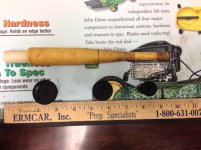
That is a Wood's Powr-Grip V1275. I would try Goodson. Here's the URL: http://www.goodson.com/ or, you could just call Wood's for a dealer list.
J.A.Varela
Banned
Hazet
Dust Devil
Well-known member
Whatever you do dont waste your money on the "performance tool" one at o'rilly. Bought one today and it is a total *************. My other one disappeared, I think one of the other guys took it when he left.
Gonna hit the truck when he gets back from the tradeshow.
Friggen weird I buy one today and then a thread about tonight. Kinda obscure tool IMO not many going to use one.
Gonna hit the truck when he gets back from the tradeshow.
Friggen weird I buy one today and then a thread about tonight. Kinda obscure tool IMO not many going to use one.
Dust Devil
Well-known member
Most all the auto parts stores sell them... You can also flip the head over and just use a piece of tight fitting vacuum hose on the valve stem.
Brilliant. Just put a piece of fuel line on and spin with fingers. AWESOME idea. Thanks.
kiatech
Well-known member
Chuck'er in the drill and pull 
Packard V8
Well-known member
Most of the real-deal performance engine builders won't let valve-lapping compound anywhere near their valve jobs. I know I haven't used it since I learned better and that was many a year ago.
jack vines
jack vines
michael murder
Well-known member
- Joined
- May 30, 2009
- Messages
- 284
Most of the real-deal performance engine builders won't let valve-lapping compound anywhere near their valve jobs. I know I haven't used it since I learned better and that was many a year ago.
jack vines
What do you do instead of using valve lapping compound?
Dust Devil
Well-known member
The high revving/high compression engines (13:1 comp, >10k redline)I work on daily get a light lapping unless they are getting Ti valves.
If I am assembling a new head with new valves I might skip the lap but IMO a light lapping is going to get you a better seal and longer life.
If I am assembling a new head with new valves I might skip the lap but IMO a light lapping is going to get you a better seal and longer life.
Packard V8
Well-known member
The explanation I was given is:
1. If the valves and seats are correctly ground on high quality machines, the finish is as good as it's going to get. We take valves out of the box and seat them directly in the new guide and seat. We then pull a vacuum and 99% of the time it holds 30" and it's good to go. The 1% which don't hold full vacuum, we use marking dye to find the problem and usually it's the valve isn't concentric. A touch on the valve refacer and it is corrected.
2. It's almost impossible to remove all the lapping compound. Some remains in the pores of the valve and seat and continue to eat at the surfaces.
Your engine, your build, your decision. Just do the homework and see what the majority of the pros do. I decided lapping compound had no place in my valve jobs.
1. If the valves and seats are correctly ground on high quality machines, the finish is as good as it's going to get. We take valves out of the box and seat them directly in the new guide and seat. We then pull a vacuum and 99% of the time it holds 30" and it's good to go. The 1% which don't hold full vacuum, we use marking dye to find the problem and usually it's the valve isn't concentric. A touch on the valve refacer and it is corrected.
2. It's almost impossible to remove all the lapping compound. Some remains in the pores of the valve and seat and continue to eat at the surfaces.
Your engine, your build, your decision. Just do the homework and see what the majority of the pros do. I decided lapping compound had no place in my valve jobs.
Dust Devil
Well-known member
I use fluid to check valve seat seal. Better than vacuum any day fluid tells the tale instantly.
My experience and my eyes also show me that a LIGHTLY hand lapped valve seat is a much finer sealing surface than a fresh CNC cut seat.
The key is lightly hand lapped. Not a 30 minute tweak out, a quick 30 second lap. It is the best method if you really are concerned with a proper seal. Period.
Also disagree on the on the impossibility of removing all the lapping compound.
My experience and my eyes also show me that a LIGHTLY hand lapped valve seat is a much finer sealing surface than a fresh CNC cut seat.
The key is lightly hand lapped. Not a 30 minute tweak out, a quick 30 second lap. It is the best method if you really are concerned with a proper seal. Period.
Also disagree on the on the impossibility of removing all the lapping compound.
Dust Devil
Well-known member
LOL... I don't envy you Merbie, that is a load of valves.
michael murder
Well-known member
- Joined
- May 30, 2009
- Messages
- 284
1. If the valves and seats are correctly ground on high quality machines, the finish is as good as it's going to get. We take valves out of the box and seat them directly in the new guide and seat. We then pull a vacuum and 99% of the time it holds 30" and it's good to go. The 1% which don't hold full vacuum, we use marking dye to find the problem and usually it's the valve isn't concentric. A touch on the valve refacer and it is corrected.
2. It's almost impossible to remove all the lapping compound. Some remains in the pores of the valve and seat and continue to eat at the surfaces.
Thanks for the info!
