To avoid these ads, REGISTER NOW!

vapor barrier or not??

Joined
May 8, 2010
Messages
11
Location
Dartmouth, Nova Scotia, Canada (Halifax)
Hi Everyone,

I am somewhat new to this site and have been soaking in all the info I can. It's a great site to learn from.

I am just about finished my new garage and have a question for you HVAC guys.

I will be insulating my garage this fall as I plan to heat it during the winter months when I am out there working or just hanging around. I built a 20 x 24 building with 2 x 6 walls. I live in Halifax (Dartmouth) Nova Scotia Canada and we have big swings in temp over the winter from -25c to 10c. We get snow and rain with that. There will be no cars in this garage, it is just for our bikes.

Question:

After I insulate and before I put up the sheetrock, should I put up vapor barrier?

This is standard practice here. Some people say no to the vapor barrier. They are thinking to let the structure breath and keep the condensation out of the garage. Last thing I want is my tools and bikes rusting. The garage was built using Tyvek on the outside. The building is quite tight.

Any input from people that have cold and snow 6 months of the year??

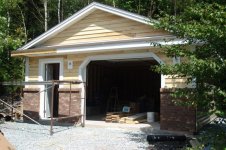
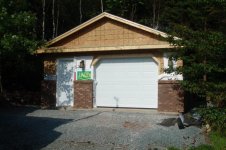
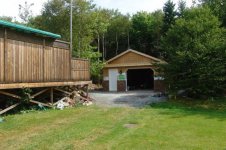
BTW, here's a picture of my new garage. The rough sawn pine will be stained a dark, honey cedar color. :)

Thanks guys!
 

Attachments

  • DSC07232_resize.jpg
    DSC07232_resize.jpg
    90.9 KB · Views: 73
  • DSC07218_resize.jpg
    DSC07218_resize.jpg
    71.4 KB · Views: 63
  • DSC07219_resize.jpg
    DSC07219_resize.jpg
    66.7 KB · Views: 61
  • DSC07207_resize.jpg
    DSC07207_resize.jpg
    87.8 KB · Views: 56
To avoid these ads, REGISTER NOW!

jvitez

Well-known member
Joined
Nov 30, 2009
Messages
2,429
Location
Big Sky Country, Canada
Beautiful garage, and welcome to the forum fellow Canuck! :canada2:

I would definitely put vapour barrier up. It protects the structure from condensation forming inside the walls and rotting the wood. Rusting tools are from moisture inside the garage which is really a separate issue.

Drive your snow covered car into the garage and it melts. Water vapour will go somewhere. Without a vapour barrier it's going into your walls. If the outside temp is lower than the garage temp, condensation will occur somewhere inside the wall cavity depending on the relative temp difference.

Tyvek etc works by allowing any moisture that does penetrate the wall to evaporate outside. It prevents wind from getting between your siding and blowing into the insulation. Fibreglass/mineral wool/cellulose insulations work by trapping air, nothing else. If wind is blowing into the insulation, there is no trapped air, hence no insulating effect right when you need it.

Use code approved vapour barrier with acoustical sealant and Tuck tape after the insulation, before the drywall goes up. It's what I'm doing.

Vapour barrier needs to go on the "warm in winter" side of the wall.
 

haugy

Well-known member
Joined
Dec 1, 2009
Messages
783
Location
Nashville, TN
Vapour barrier needs to go on the "warm in winter" side of the wall.

Is that accurate?? I'm down south and I was told to put the vapor barrier closest to the outer wall of my shop. So it would be outer wall, vapor barrier, insulation, then drywall.

Am I misinformed? I will say, it would be easier to do it on the drywall side, but I want to do it right.
 

jvitez

Well-known member
Joined
Nov 30, 2009
Messages
2,429
Location
Big Sky Country, Canada
Is that accurate?? I'm down south and I was told to put the vapor barrier closest to the outer wall of my shop. So it would be outer wall, vapor barrier, insulation, then drywall.

Am I misinformed? I will say, it would be easier to do it on the drywall side, but I want to do it right.

Sorry, I should have specified: in cold climates, place the vapour barrier on the warm in winter side.

Yes, you've been told correctly. In hot climates vapour barrier should go on the outside. Air has variable ability to hold water vapour. Hot air holds more water vapour than cold air. In cold climates, we heat outside air. The same absolute amount of water vapour is now in warm air that can hold more than cool air, so the relative humidity drops. That's why inside air can be dry during winter in cold climates.

In hot climates, what if you cool the inside air of your shop? If air penetrates the wall cavity, hot air will eventually hit cool air, increasing the relative humidity until it passes 100%, causing water vapour to precipitate as liquid. Liquid water inside a wall cavity. Yummy mold!! How do you stop it? By stopping the air from entering in the first place. So yes, in warm climates vapour barrier goes on the outside.
 
To avoid these ads, REGISTER NOW!

trbomax

Well-known member
Joined
Mar 21, 2010
Messages
2,556
Location
starvation lake,mi.
Thats the "catch 22" of northern michigan. -20 in winter,100+ in summer. heated in winter,ac in summer!.My solution was to use a vapor retarder on both sides in the form of "polar wrap".Its a 3/8" foam with perforated foil bonded to it.Put it under the steel outside,and under the drywall inside.Did this on the house too,about 15 yrs ago and no moisture in the wall problems there.
 

nate379

Banned
Joined
Feb 2, 2009
Messages
7,279
Location
Palmer, AK
Question to tie into this discussion.

Attached garage, should there be vapor barrier between the house and garage? Wall is 2x6, insulated, 1/2" drywall one side and 5/8" on the other. Garage is heated though I normally just leave it around 50-55*
 

nate379

Banned
Joined
Feb 2, 2009
Messages
7,279
Location
Palmer, AK
I would have put barrier just as a makes me warm/fuzzy against fumes. Granted just the drywall seems to work fine.

I had plumbers do some work and it involved tearing open 2 ~12" holes in the garage wall where it meets with the master bathroom (vent pipe leaking sewer gas)
Didn't even think of that last night and I cut a sheet of concrete board in the garage and the bath fan was on in the bathroom. Make a big mess in the bathroom! :mad:
 
To avoid these ads, REGISTER NOW!
Top Bottom