To avoid these ads, REGISTER NOW!

Vapor Barrier under floor?

KPSquared

Well-known member
Joined
Aug 18, 2010
Messages
2,750
Location
Wetaskiwin, Alberta, Canada
Hey guys,

I see a lot of talk of using a poly vapor barrier under the concrete floor. Before GJ, I had never heard of this before and none of the concrete contractors around here do it.

What is the purpose and is it something that I should make sure I do before I pour the new floor in my shop? I asked a couple of local concrete guys and they just stared sideways at me. I assume it keeps moisture from coming up into the slab from underneath, but why does no one do it here?
 
To avoid these ads, REGISTER NOW!

hdshinn

Well-known member
Joined
Jun 29, 2011
Messages
121
Location
Skagit County, WA
1- A lot of concrete finishers don't like poly under the slab 'coz it prevents the bleed water from percolating into the ground and prolongs the set time for finishing. They've been known to poke holes in it. Around "here" (western WA state).

2- I've heard it said that poly will cause the top surface to dry faster than the bottom possibly causing the slab to curl like drying mud. Not that severe of course but ... Just something I've heard.

3 - My personal preference is for 6" of clean pea gravel covered with 1 1/2 to 2" of polystyrene rigid insulation. The gravel provides a capillary break to prevent moisture, or at least deter moisture from migrating up through the slab.

4- No matter what vapor barrier you decide on, perimeter drainage is important. Keep the underside of the slab as dry as possible and moisture migration will be kept to a minimum

5- Rigid poly insulation provides a moderately solid thus consistent substrate for the slab resulting in a uniform thickness. And something to chair the reinforcement on. You are putting some mesh or rebar in the slab, right?

6- Just because the contractors with whom you've spoken haven't heard of this or that, doesn't mean it's not of any value. It's your shop floor. You should expect to get it done the way you want it done.

7- How big is your shop? You should provide control joints at no more the 20' in any direction. Here my preference is to have them sawn rather than putting in cold joints between separate pours. Better still install mechanically keyed control joints if necessary.

8- Do it right the first time.
 

dcs Inc

Well-known member
Joined
Dec 13, 2010
Messages
803
Location
Indianapolis, Indiana
Agree. The concrete needs a water reducer additive to reduce the water but still offer easy placement. To keep curling at bay the top surface needs to not dry faster than the rest of the concrete. Wet burlap blankets work well. Moisture curing is the best route compared to a cure n seal product.
 

Darin

Member
Joined
Mar 8, 2012
Messages
6
In regards to the vapor barrier I have an issue with a slab that a sub of mine poured in Western NY. NO vapor barrier was installed. Now the customer is stating that moisture is preventing the interior build out. Can someone give me some possible solutions to a fix. I understand this can be expensive to seal and I'm hoping other options are out there.
 

McGenius

New member
Joined
Oct 13, 2011
Messages
1
Most contractors do not put anything under the slab unless you specifically ask for it and even then they want you to supply the plastic or whatever you want to use. Ive been involved in several shop or house basement builds and none of the concrete guys liked putting in any kind of barrier (its more work for them). But like one of the other posts says, "its your shop". A couple things to watch for with plastic or foam is to make sure they don't poke holes in the plastic with their tools and if they walk on the rigid foam with loose fill under it there is a strong chance that they will crack it in so many places that it wont be worth much. With foam, it's a good idea to tape the seams if possible. I have seen a couple nightmare scenarios with either product. But both products are a good idea and work great when installed correctly. My neighbor built his shop a few years ago and the concrete guys walked around tamping down the wet concrete with shovels and pieces of re bar and they poked so many holes in the plastic that it is essentially useless. One other related concern when using anything under the floor is that a vapor barrier/insulation does increase the "tightness" of the structure and depending on how well insulated the rest of your shop is the floor can get pretty wet due to the humidity levels. I'm in Missouri and I used plastic under my own floor and rigid foam insulation on all the walls and roof which made the shop extremely tight. Something I did not consider was the fairly high humidity we have during July and August. The coolness of the slab attracts every bit of moisture in the air and I have to run a dehumidifier to keep the water off the floor of the shop and to keep it from dripping off the underside of my cars. I do not run a furnace or air conditioner year round which would help but it just depends on the kind/location of shop you are building.
 
OP
K

KPSquared

Well-known member
Joined
Aug 18, 2010
Messages
2,750
Location
Wetaskiwin, Alberta, Canada
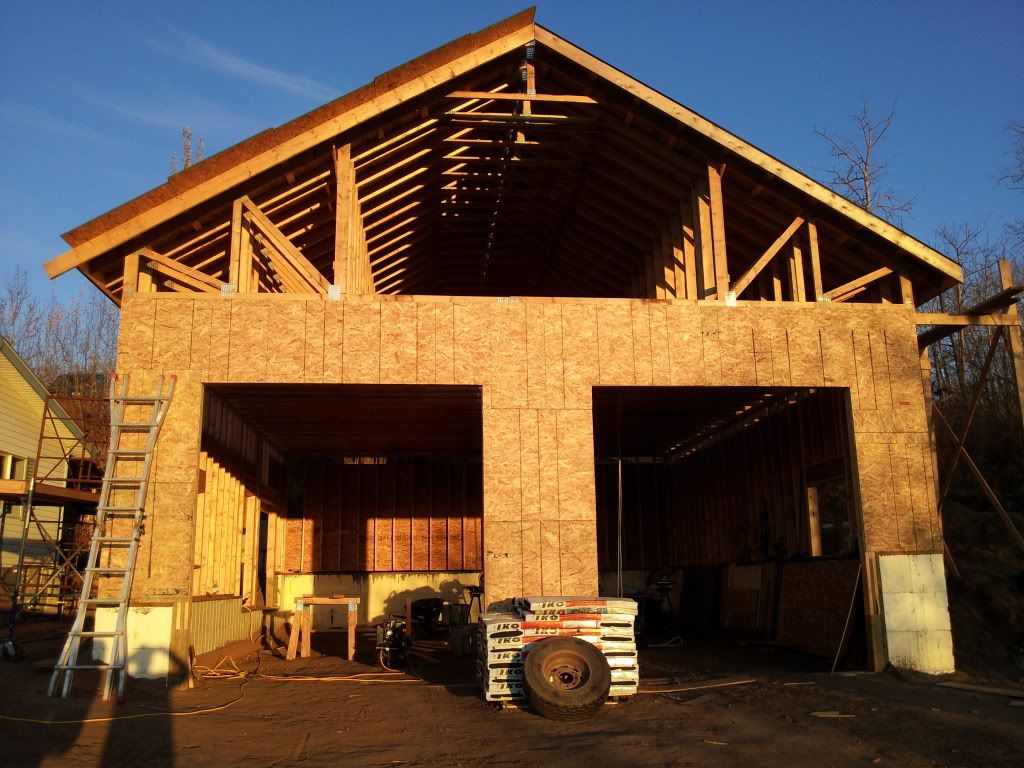
My shop is 30x36, planning on a 4" - 5" floor. I'll be doing all the prep (pad, re-bar, and maybe poly, etc.) myself and the contractor is just placing and finishing. We don't get humidity here like that. It's crazy dry most of the time. I live on a sand dune basically. If I don't water every day in the summer, my lawn in crispy dry in 24 hours, and it's not even that warm here...just dry.

Here's a couple pics:

DSC_2922.jpg


2011-10-24174842.jpg


That ICF has Blue Seal on it well below the height of the pad on the outside. There is little to no moisture in the ground.

It's not a big deal to throw some heavy poly down, I just want to know if it's worth while.
 

ConCretin

Well-known member
Joined
Jan 20, 2011
Messages
3,378
Location
Central Maine
Vapor barriers are most important when a non-breathable floor covering will be used. While I wouldn't place a floor without one, the reality is that if you don't intend to cover your floor with epoxy, VCT, etc you'll probably never miss it.

Of course it will be tough to install later if you change your mind.
 
To avoid these ads, REGISTER NOW!

ConCretin

Well-known member
Joined
Jan 20, 2011
Messages
3,378
Location
Central Maine
The coolness of the slab attracts every bit of moisture in the air and I have to run a dehumidifier to keep the water off the floor of the shop and to keep it from dripping off the underside of my cars. I do not run a furnace or air conditioner year round which would help but it just depends on the kind/location of shop you are building.

McGenius, Your vapor barrier probably has little to do with your condensation issue. As you said, the moisture originates in the warm air above the slab. :thumbup:
 
Last edited:

ConCretin

Well-known member
Joined
Jan 20, 2011
Messages
3,378
Location
Central Maine
In regards to the vapor barrier I have an issue with a slab that a sub of mine poured in Western NY. NO vapor barrier was installed. Now the customer is stating that moisture is preventing the interior build out. Can someone give me some possible solutions to a fix. I understand this can be expensive to seal and I'm hoping other options are out there.

Sorry for the triple post. should have used multi quote.

I assume the problem with interior build out is moisture in the slab. Depending on weather it can take months for the mix water in concrete to migrate out of the floor. Lack of a vapor barrier is more of a long term issue.
 

Macgyver_ga

Well-known member
Joined
Feb 28, 2011
Messages
265
Location
Canton, GA
My house has a vapor barrier under the slab. Our GA red clay soils don't drain very well. I was talking to the superintendant of our subdivision (new construction) a few weeks ago and he said the vapor barrier is required by code here in GA. They use a vapor barrier, mesh, rebar, and fiber in the concrete.
 

ConCretin

Well-known member
Joined
Jan 20, 2011
Messages
3,378
Location
Central Maine
have you ever heard of quality in vapor barrier ? wich one i need ? tickness wise ?
sorry for my bad english
Regards

The most common of the high end vapor barriers is Stegowrap, which is a 15 mil product. We've placed hundreds of thousands of square feet of the stuff.
 

dcs Inc

Well-known member
Joined
Dec 13, 2010
Messages
803
Location
Indianapolis, Indiana
Indiana requires it on commercial and I am seeing a lot of it on residential homes on slab. It's really stupid not to include it. Now the problem is this cheap 6 mil visqueen guys are using to cut costs. It degrades quickly. 10 to 15 mil vapor barrier plastic is the way to go with taped seems.

Nothing worse than seeing a yahoo installer poking holes in the 4 mil visqueen to let the 10 slump "self leveling" concrete he just placed drain so he can get home before dark. There's a lot of the **** out there. gene
 

pauls340

Well-known member
Joined
Jan 27, 2009
Messages
321
Location
North of Motown
KPS, there are a number of people replying to your question and accumulatively we have 1000 years of experience with concrete. My 2cents, agrees to go with the vapor barrier but track down a Canadian made product called Vapor Lock 20/20 as an admixture to your concrete. We just had it tested a second time for water permeability. In a 4x8 core sample it would take over 6,300 years for one drop of water to go thru 4" of Vapor Lock enhanced concrete. That test was at 15 times static head pressure. All your moisture related problems will go away and your finish guys will love ya for it.:thumbup: It not only waterproofs concrete it vapor proofs it.
 
To avoid these ads, REGISTER NOW!
Top Bottom