To avoid these ads, REGISTER NOW!

VFD as phase converter

cannuck

Well-known member
Joined
Nov 30, 2021
Messages
4,655
Location
Rural SK
I am looking at moving some 3 phase stuff from storage into home shop. I gave away my rotary converter a few years ago as I hadn't used it in decades and expected to be in my farm shop by now with 3 ph available. Covid doubling and tripling cost of materials has that on serious hold now. So, would like to use some smaller tools in little shop. My sparky friends are all out of town or country due to the usual end of summer panics in shutdowns and turnarounds, so will turn to my GJ friends for some advice.

Looking at a Bridgeport clone this (long) weekend that has a 230/460 1.5 HP spindle motor and 120 control, x feed and coolant pumps run from a transformer with many in/out options. I had thought of going to a 3HP VSD to feed the xfrmr. Everyone says you can only go one drive per motor, but I have no reason to vary from 60 cycles, so why not feed the xfrmr 230 from VSD as a converter?
 
To avoid these ads, REGISTER NOW!

micromind

Well-known member
Joined
Sep 24, 2023
Messages
3,077
Location
Fernley, Nevada, about 30 miles east of Reno.
Control transformers don't do well with VFD power.

It should be fairly easy to find where the transformer is fed from and connect it across the incoming 240 and have the VFD supply only the drive motor.

Word of caution, the 'run' input to the VFD is very low current and might not work with the switch on the machine. If it doesn't work, you'll need to get an 'ice cube' relay with a 240 coil and gold bifurcated contacts. Single pole would be fine.

Use the machine switch to power the really coil and the normally open contact to control the VFD.
 

whateg01

Well-known member
Joined
Mar 13, 2006
Messages
11,398
Location
doo dah, kansas, usa
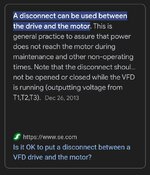
I know it's been done, but I've always read that the load on a vfd should not be removed while the vfd is running. IOW, the vfd should be doing the switching on/off. I don't know if the people switching on/off the machine at the machine are able to do so because of the specific vfd they used, or are just lucky, or other. That's just what I've read on all the vfds I've researched.

Screenshot_20240831_115115_Chrome.jpg
 

micromind

Well-known member
Joined
Sep 24, 2023
Messages
3,077
Location
Fernley, Nevada, about 30 miles east of Reno.
Motors should not be switched on and off with the power side of a VFD, only the control side.

The reason is because when switching off, the arc on the switch contacts will backfeed high voltage spikes into the output transistors and literally blow very small holes in the semiconductor. Eventually, the transistors will fail. The failures will occur more quickly on larger units and ones that run close to their current limit.

There are microswitches available for disconnect switches that can be connected to the VFDs controls that will stop the output current before the contacts open. This will ensure that no arcs will be present when the contacts open and thus, no miniature holes blown in the transistors.

Starting a motor on a running VFD is just the opposite.

A motor has basically 3 currents;

1) Magnetizing current. This occurs from when the motor is first energized and lasts roughly 1/60th of a second. It is very high current limited only by the available fault current (maximum possible current) of the source and the resistance of the motor windings.

2) Locked-rotor current. This is the current drawn by a motor after the magnetizing current all the way up to about 80% of normal speed. It's usually about 6 - 10X the full-load current of the motor.

3) Running current. This is the current drawn after the speed has stabilized.

The problem with switching a motor onto a running VFD is the magnetizing current is way more than the output transistors can handle but since it's a short time, it doesn't burn them up right away, it just takes longer.
 

Steve from Socal

Well-known member
Joined
Jan 27, 2009
Messages
3,501
Location
Hutchinson Ks.
The spindle motor is the only three phase consumer. As noted, it is FAR easier to use a VFD to drive the spindle, the VFD provides motor protection so no worry about the right overloads etc.

I have a few larger VFD's that I have considered using like a poor mans Phase Perfect. That would power a small panel with several machines. The VFD's are in the 25-40KW range. The machines in question are 480/60hz, the incomming power is 380~400/50hz. There is a lot more to do when using a VFD as a general duty phase/voltage converter than as a motor drive. The machines in my case have several motors and include a 20KW welder that is inverter powered itself.
 

loganb

ALLIANCE MEMBER
Joined
Dec 29, 2011
Messages
5,591
Location
Omaha, NE
As mentioned, the vfd will be fine here, but you will need to rewire to use the vfd controls for start/stop/reverse instead of the current machine controls
 
Last edited:
OP
C

cannuck

Well-known member
Joined
Nov 30, 2021
Messages
4,655
Location
Rural SK
to all:

As usual, I ask a stupid question and get a smart answer.

I knew there was SOMETHING undesirable in doing so, but needed to know what and why.

What I will probably do is rewire everything to power the 120 from a dedicated 120 input. The 240 can come into to the 2:1 connections on the existing transformer (that curiously has one set of 415 terminals! common voltage for UK motors....or EU? - My 15/59 VFD Colchester is 415). This will simplify doing all spindle motor switching from the VSD.
 

PopcornSutton

Well-known member
Joined
Jun 10, 2024
Messages
800
Location
Northern Tip of VA
My lathe has a VFD, factory wired. I simply connected my 240V lines to the VFD for the motor. I use an external coolant pump that is 120V and a work light I power with typical house receptacles.
 
OP
C

cannuck

Well-known member
Joined
Nov 30, 2021
Messages
4,655
Location
Rural SK
I have been thinking I might build a new rotary converter so I can use 230V 3ph tools without needing to re-wire. I gave my old one away a few years back when I realized I had not used it in over 20 years. IF I build new, will get legs balanced better than old one was.
 
OP
C

cannuck

Well-known member
Joined
Nov 30, 2021
Messages
4,655
Location
Rural SK
I should have closed off this thread properly. When I finally got to the mill and pulled some covers it was apparent both the coolant pump and the table feed drive are also 3 phase, so need a phase converter to keep the wiring in tact to use from 3 ph shore power in future. You can see from other threads I got the tool, vice and dividing head - and all are in fantastic condition.
 
To avoid these ads, REGISTER NOW!

Norcal

Well-known member
Joined
Mar 16, 2008
Messages
13,767
If you have only single phase power, it's always best to use an actual single phase motor rather than a 3 phase motor and a VFD.

One exception would be if you needed to vary the speed of the motor, then the VFD would be better.
One exception is a special purpose motor, that is either impossible or difficult to replace, have a couple of machines where a VFD was either the only choice Rockwell 7" grinder with a 200 volt single voltage motor, without that motor there is no machine, & a Rockwell drill press with a odd shaft size motor & was only going to accept a TEFC motor, 3rd machine is a Rockwell HD shaper with a 200V motor & the VFD was around $200, and there is no way to find a 2 HP 3450 RPM motor for that money. The A/C drive for the grinder was $75, & the drive for the drill press was over $300 but wanted one with a NEMA 4X enclosure.
 

Steve from Socal

Well-known member
Joined
Jan 27, 2009
Messages
3,501
Location
Hutchinson Ks.
For machine tools like mills and lathes three phase motors produce a better surface finish. There is less cogging, my 5 HP milling machine has has both single and three phase motors, the results vary with gear train speed, feed and, material.

VFD's are so cheap today it really isn't an issue.
 
OP
C

cannuck

Well-known member
Joined
Nov 30, 2021
Messages
4,655
Location
Rural SK
VFD's are so cheap today it really isn't an issue.
VFD/VSDs are definitely cheap, but stuck with one per motor (requiring rewiring of tool). Solid state phase converters that will tolerated feedback from multiple sources downstream are ******** expensive - thus the rotary phase converters out there.
 

Bert_

Well-known member
Joined
Dec 24, 2016
Messages
9,764
Location
NW Iowa
I want to experiment with a transformer and capacitor converter. There was one made commercially under the name Add-A-Phase but there is very little information out there.

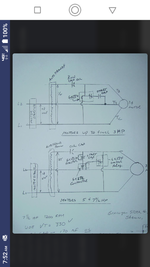
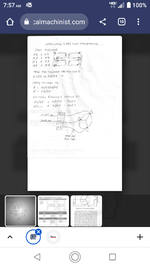
There's a couple guys on the Internet claiming you can use a standard 240/480-120/240 step down transformer. Wired as a autotransformer to boost 240v line to 360v. Then you can distribute the utility phases and the 360v line to the machines. Each machine would get capacitors in the 3rd phase selected based on the size of motor.

Sounds cool since there would be no moving parts to wear out or waste electricity like a rotary phase converter. Step down transformers are pretty cheap used.
 

Steve from Socal

Well-known member
Joined
Jan 27, 2009
Messages
3,501
Location
Hutchinson Ks.
I want to experiment with a transformer and capacitor converter. There was one made commercially under the name Add-A-Phase but there is very little information out there.

There's a couple guys on the Internet claiming you can use a standard 240/480-120/240 step down transformer. Wired as a autotransformer to boost 240v line to 360v. Then you can distribute the utility phases and the 360v line to the machines. Each machine would get capacitors in the 3rd phase selected based on the size of motor.

Sounds cool since there would be no moving parts to wear out or waste electricity like a rotary phase converter. Step down transformers are pretty cheap used.
That is a static converter. My Monarch 10EE is like most the spindle drive is single phase, the coolant pump is three phase, I am using a capacitor to phase shift te coolant pump on 240 single phase.
 

Bert_

Well-known member
Joined
Dec 24, 2016
Messages
9,764
Location
NW Iowa
That is a static converter. My Monarch 10EE is like most the spindle drive is single phase, the coolant pump is three phase, I am using a capacitor to phase shift te coolant pump on 240 single phase.

Most static phase converters only give you about 2/3 rated power from a three-phase motor.

This should give 100% of nameplate.
 

Bert_

Well-known member
Joined
Dec 24, 2016
Messages
9,764
Location
NW Iowa
By boosting the voltage to 360 in lieu of 240?

The motor is still single phasing or droping a phase leg

Only the third phase is ~360v, it also has capacitors in series for each motor. The other two phases are regular utility power.

What you see is everything I've got on the subject. There is one or two threads on it on practical machinist.

There was a commercial version available that would produce full power. I tore out an ADD-A-PHASE probably 10 years ago. It was no longer in use and I didn't have much interest in the subject at that time so unfortunately I didn't pay much attention. I know the old kan-sun dryers also use a similar converter since even the single phase dryers use 3 phase fans.

Screenshot_20230903-075221~3.pngScreenshot_20230903-075702.pngScreenshot_20230903-075645.png
 
Last edited:

Sumboodie

Well-known member
Joined
Mar 20, 2021
Messages
10,711
Location
AK
Vfds aren't exactly "cheap". One i got for my air compressor was $525 and I'm positive it's a low end overseas unit.
Industrial used ones were over $2k
 

whateg01

Well-known member
Joined
Mar 13, 2006
Messages
11,398
Location
doo dah, kansas, usa
I have one similar to this that I bought off eBay for about $100 on my mill and it works just fine, but I still do want to add a jog button for tapping. I control it with a fwd/rev switch and a potentiometer.
 

Attachments

  • Screenshot_20240913_203304_Amazon Shopping.jpg
    Screenshot_20240913_203304_Amazon Shopping.jpg
    690.3 KB · Views: 7

Steve from Socal

Well-known member
Joined
Jan 27, 2009
Messages
3,501
Location
Hutchinson Ks.
Only the third phase is ~360v, it also has capacitors in series for each motor. The other two phases are regular utility power.

What you see is everything I've got on the subject. There is one or two threads on it on practical machinist.

There was a commercial version available that would produce full power. I tore out an ADD-A-PHASE probably 10 years ago. It was no longer in use and I didn't have much interest in the subject at that time so unfortunately I didn't pay much attention. I know the old kan-sun dryers also use a similar converter since even the single phase dryers use 3 phase fans.

Screenshot_20230903-075221~3.pngScreenshot_20230903-075702.pngScreenshot_20230903-075645.png
I don't really see how that transformer set up can shift the phase angle of two legs at 180 to three legs at 120?
 

Bert_

Well-known member
Joined
Dec 24, 2016
Messages
9,764
Location
NW Iowa
I don't really see how that transformer set up can shift the phase angle of two legs at 180 to three legs at 120?
The capacitors create the phase shift. But using capacitors alone doesn't seem to work well and you end up with reduced power.

This is advertised as single motor application. But there is talk about running multiple motors on a homemade version. https://ronkelectrical.com/products/add-a-phase-power-converter-type-s


I'm not going to claim to be an expert but I think it is worth experimenting with. Obviously the concept works since they have been sold commercially since the 1950's. The big question how well will one work made with common surplus materials.
 
To avoid these ads, REGISTER NOW!
Top Bottom