knock knock
Well-known member
- Joined
- Nov 30, 2024
- Messages
- 93


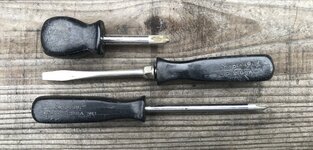


That's interesting, and explains why why so many old knives are more rusty that one would expect.Knife collectors have the same issues. They call the material Celluloid. Same gassing effect on carbon steel.
Working from ladders, as I often do, I HATE round handles!
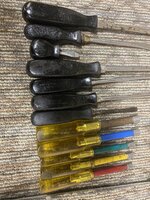
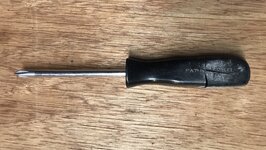
Celluloid (cue the Kinks song!) is actually a trademark that got genericized into the name for all nitrocellulose-based plastics. The tradename for the cellulosic plastic that Snap-on was using in the 70's is actually Tenite. There were dozens of plastic recipes with dozens of tradenames in the 1930's and 1940's, and later, and not all of them were cellulosic. Urea, phenol, and catalin were not cellulosic, and neither was resinoids like vinyl. It gets worse. Not all Bakelite Corp plastic was catalin. They used other formulas, but everything got conflated into one composition often misnamed as Bakelite. Earlier in the century, Snap-on's "Insuloid" handles were made of Pyralin (a DuPont tradename for a composite made with pyroxylin, which is also partially cellulosic) as was Herbrand's "Protecto-Grip".They call the material Celluloid.

Great job Lugs. I was just fixing to do the same chart.Celluloid (cue the Kinks song!) is actually a trademark that got genericized into the name for all nitrocellulose-based plastics. The tradename for the cellulosic plastic that Snap-on was using in the 70's is actually Tenite. There were dozens of plastic recipes with dozens of tradenames in the 1930's and 1940's, and later, and not all of them were cellulosic. Urea, phenol, and catalin were not cellulosic, and neither was resinoids like vinyl. It gets worse. Not all Bakelite Corp plastic was catalin. They used other formulas, but everything got conflated into one composition often misnamed as Bakelite. Earlier in the century, Snap-on's "Insuloid" handles were made of Pyralin (a DuPont tradename for a composite made with pyroxylin, which is also partially cellulosic) as was Herbrand's "Protecto-Grip".
Having said all that, cellulosic plastics do not do well in certain environments (humidity, especially) and some batches are just bad. Besides early disintegration, they often stink. Some versions of early Cellulose Acetate Butyrate are infamous for offgassing and stinking.
If you're curious who used what, I did a fairly exhaustive catalog study a few years ago, called, aptly, 'the Stinkdriver Study'.
If you want to read the methodology I used etc, go here.
If you just want to ogle the pretty chart...
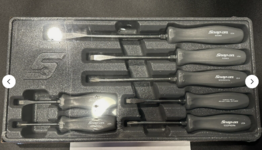
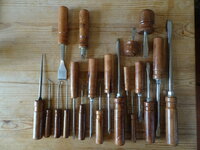
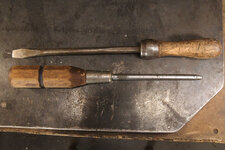
Round handles were easier to make in the lathe, but I put a flat spot on one side of them as an anti rolling feature. I don't work up ladders much, but I hate getting stabbed in the foot when round handles roll off a bench.. Those Proto ones are nice but unknown in the UK.Working from ladders, as I often do, I HATE round handles!
But I do like me some nice woodies... just not round.
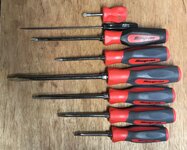
Proto, bottom, has excellent non-rolling handles:
That’s a classy solution!! BEAUTIFUL!
IIRC, off gassing has the same effect on vintage acoustic guitars when old cellulose edge bindings (and ancient pick guards) begin to fail/delaminate. The woods near the problem areas become compromised.Knife collectors have the same issues. They call the material Celluloid. Same gassing effect on carbon steel.