To avoid these ads, REGISTER NOW!

Vise Info Thread

To avoid these ads, REGISTER NOW!

Vise_Squad

Well-known member
Joined
Sep 30, 2022
Messages
89
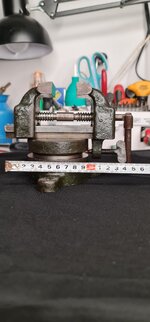
Advertised as, or wasn't unbreakable? :dunno:
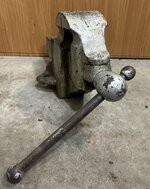
Good point! Wasn't and probably wasn't advertised as such either: the arms/shoulders on the outside of the main casting on which the slide runs broke off taking a chunk of the body with them. Someone must have whacked it from above too hard, but wasn't me. I'm the guy who bought it for $20 without noticing the damage!:p
 

ViceRoy2030

Well-known member
Joined
Mar 12, 2021
Messages
142
I've got your estimated vise circa @ (1869-1900), based on the "1869 patent jaws" and the latest offering found in a 1900 catalog scan.

You'll probably never find the removeable "round jaws", however your missing swivel base "1867 patent wrench" does become available from time-to-time.

What a great addition to your vise collection...thanks for sharing!
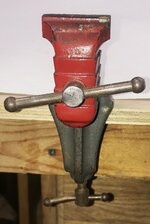
There are three areas on this vise with patent dates:

"MAY 28 NOV 28 DEC 10 & 17 1867"

"APR 14 1868"

"SEP 25 1869"
 

Fierljeppen

Well-known member
Joined
Jan 26, 2018
Messages
1,159

BALL CLAMP or BALL BASE VISES
These are not regular vises attached to positioners. They are vises with a ball on the bottom.
1883 Read, Gleason & Read
1894 Millers Falls
1930 Record *
1940 Parkinsons
The last picture is of a positioner offered on the same page. I included it as an illustration and because it's really cool.


* The catalogue was unclear about the maker of the ball base vice but all the other vices on same page were Record vices. Note that Record called it a "vice" even though the the picture uses the Parkinson's spelling "vise".

I had intended to post these and ask if anyone had ever seen another ball base vise but then KMScott posted that terrific ball base in post #3672. Has anyone else come across different one?

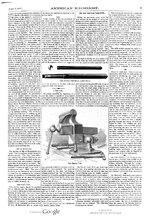
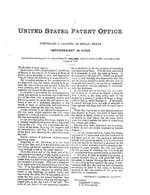
Checkout this interesting 1879 patent no. US-221,382 "Ball Vise".

1880_08-07_american_machinist_v.3_no.32_pg.7a.jpg

1880_08-07_american_machinist_v.3_no.32_pg.7.jpg 1879_11-04_US-0,221,382_f_c_zanetti ball vise-1.jpg 1879_11-04_US-0,221,382_f_c_zanetti ball vise-2.jpg

As always with the early vises, I was interested in learning a little about the inventor and was expecting a British or German immigrant living in the North East of America.

But to my great surprise, the inventor "Fortunato Clemente Zanetti", was born in Turin, Piedmont, Italy.

turin-piedmont-aosta-valley-region.jpg

It gets even more unusual to find out that in 1879, his residence was Bryan Texas.

map_of_bryan_tx.jpg bryan_tx.jpg

I've got to be honest, I didn't see that one coming.
 

skmbabon

Well-known member
Joined
Nov 11, 2021
Messages
305
Location
Ottawa
I get the impression they were a poor cousin to the Emmert in terms of quality.
The Yost No 1 had claimed some improvements on the earlier Emmerts, so I wonder if the quality difference wasn't the other way around in that comparison. Perhaps later Emmert models had sufficient improvements to get the edge, though I suspect some people claiming Emmerts are the "best" are being swayed by familiarity. Regardless, I would not hesitate to choose a Lee Valley Tucker vise over an Emmert or any of the other universal woodworkers / patternmakers' vises.
RAE were advertised as unbreakable: some kind of semi-steel or malleable iron used.
Ductalloy(TM) was Otaco's trademark for a ductile cast iron formulation licensed from the International Nickel Company in 1948. If a Rae vise is marked "Hamilton" it isn't made with Ductalloy; if marked "Orillia" it may be. Some of the Rae vises made in Orillia have a "D inside an oval" mark cast in to them. I'm trying to figure out if that indicates Ductalloy, but so far no leads. Surest way to tell is to compare the Orillia model with the same model made in Hamilton - if it's noticeably lighter then it's made of Ductalloy.

Rae 4 Orillia 2012-12 Kijiji Sarnia $65 04.jpg
 
Last edited:

CRSINMICH

Well-known member
Joined
Aug 15, 2015
Messages
2,393
Location
Southeastern Michigan

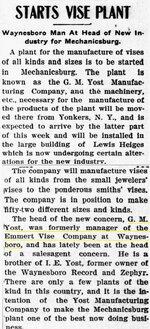
Yost and Emmert
This 1907 announcement of Yost Manufacturing beginning production in Mechanicsburg mentions that E.M. Yost had been a manager at Emmert Vise Company. He must have learned a lot.
 

Attachments

  • 1907 Public Opinion article - 2.jpg
    1907 Public Opinion article - 2.jpg
    498.5 KB · Views: 23

KMScott

Well-known member
Joined
Feb 14, 2012
Messages
4,632
Location
Daufuskie Island, South Carolina
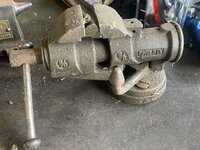
Here is a possible Vietnam vise. The owner posted it living in Vietnam. Thought it was kind of neat.

2-5/8" jaws that opens to 3" and weights 6-1/4 lbs
 

Attachments

  • Vietnam vise-1.jpg
    Vietnam vise-1.jpg
    255.1 KB · Views: 9
  • Vietnam vise-2.jpg
    Vietnam vise-2.jpg
    319.7 KB · Views: 8
  • Vietnam vise-3.jpg
    Vietnam vise-3.jpg
    323.8 KB · Views: 8
  • Vietnam vise-8.jpg
    Vietnam vise-8.jpg
    529.7 KB · Views: 7
  • Vietnam vise-7.jpg
    Vietnam vise-7.jpg
    277.5 KB · Views: 7
  • Vietnam vise-9.jpg
    Vietnam vise-9.jpg
    370.4 KB · Views: 7
  • Vietnam vise-10.jpg
    Vietnam vise-10.jpg
    287.9 KB · Views: 6
  • Vietnam vise-11.jpg
    Vietnam vise-11.jpg
    275.9 KB · Views: 6
  • Vietnam vise-4.jpg
    Vietnam vise-4.jpg
    293 KB · Views: 9
Last edited:

CRSINMICH

Well-known member
Joined
Aug 15, 2015
Messages
2,393
Location
Southeastern Michigan

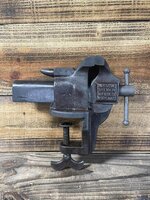
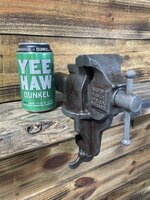
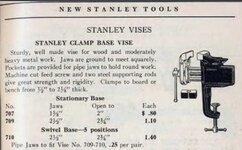
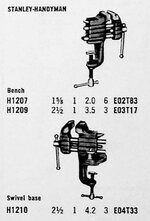
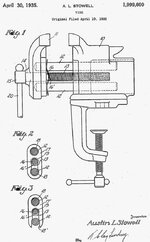
STANLEY HANDYMAN NO. H1207
1 5/8" jaws same as STANLEY 707
The STANLEY 707 was in a 1934 catalog but the H1207 HANDYMAN version came in 1964. The original patent date was 1932.
 

Attachments

  • 1934 Stanley 707.jpg
    1934 Stanley 707.jpg
    146.3 KB · Views: 24
  • 1964 Stanley catalog.jpg
    1964 Stanley catalog.jpg
    141.2 KB · Views: 24
  • 1935 Stowell Stanley vise.jpg
    1935 Stowell Stanley vise.jpg
    131.6 KB · Views: 22
  • Stanley Handyman H1207 (6).JPG
    Stanley Handyman H1207 (6).JPG
    348.8 KB · Views: 29

454ragtop

Well-known member
Joined
Mar 24, 2008
Messages
5,010
Location
Carver, MA

STANLEY HANDYMAN NO. H1207
1 5/8" jaws same as STANLEY 707
The STANLEY 707 was in a 1934 catalog but the H1207 HANDYMAN version came in 1964. The original patent date was 1932.
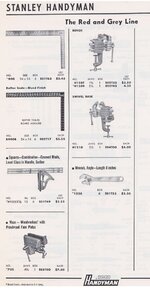
Anybody have, or even seen those pipe jaws? Must be for some pretty small pipe.
 

akasrick

Well-known member
Joined
Apr 10, 2017
Messages
794
Location
south jersey
Clamp on Vises of this size and type were and still are included in the US Small Arms Repairman Kits.
I have no clue whether that was Stanley’s intention.
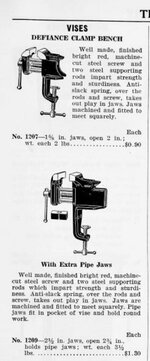
At about that time, 1942, the manufactures were tasked with using less material in their products. (?)
Possibly that vise, the 707 was Stanleys answer to use less resources.

akasrick
 
To avoid these ads, REGISTER NOW!

CRSINMICH

Well-known member
Joined
Aug 15, 2015
Messages
2,393
Location
Southeastern Michigan
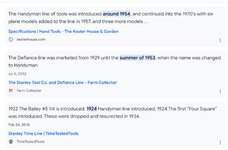
There are at least 3 different versions of Stanley vises in question here. The Stanley 707, Stanley 'Handyman' H1207, and Stanley 'Defiance' 1207 (see above). As far as can be told by catalog drawings, the Stanley 707 and the Handyman H1207 are identical but the Defiance 1207 is a bit different in shape. They all have the same specs. Here's a side view of the H1207 from post #3694 and a page from a 1915 STANLEY catalog giving the Trade-Marks they used at that point - including Defiance. I don't know when they started using Handyman.

CAUTION: The STANLEY rabbit hole is deep and dark.
 

Attachments

  • Stanley Handyman H1207 (11).JPG
    Stanley Handyman H1207 (11).JPG
    355 KB · Views: 16
  • 1915 Stanley trade-marks.jpg
    1915 Stanley trade-marks.jpg
    361.4 KB · Views: 15
Last edited:

akasrick

Well-known member
Joined
Apr 10, 2017
Messages
794
Location
south jersey
There are at least 3 different versions of Stanley vises in question here. The Stanley 707, Stanley 'Handyman' H1207, and Stanley 'Defiance' 1207 (see above). As far as can be told by catalog drawings, the Stanley 707 and the Handyman H1207 are identical but the Defiance 1207 is a bit different in shape. They all have the same specs. Here's a side view of the H1207 from post #3694 and a page from a 1915 STANLEY catalog giving the Trade-Marks they used at that point - including Defiance. I don't know when they started using Handyman.

CAUTION: The STANLEY rabbit hole is deep and dark.
CAUTION: The STANLEY rabbit hole is deep and dark. 🤣
 

akasrick

Well-known member
Joined
Apr 10, 2017
Messages
794
Location
south jersey
They must have made a few 707s, were still being advertised in 1957 included with sets. 1967 shows no repair parts.
That runs me out of catalogs.


Oops, scratch the reference to a 707 in there. Vise is a 700.

akasrick
 

CRSINMICH

Well-known member
Joined
Aug 15, 2015
Messages
2,393
Location
Southeastern Michigan
RTM: Thanks for that extra information that I was too lazy to look up.

EVERYONE: RTM's post is another example of why I tried to warn you about the STANLEY rabbit hole.
 

CRSINMICH

Well-known member
Joined
Aug 15, 2015
Messages
2,393
Location
Southeastern Michigan
WODEN clamp-on Vices
From their 1957 catalogue
Woodworkers' vice:
Jaws - 6"
Opens - 4 1/2"
Weight - 9
3/4 lbs.

X260 'Titan':
Jaws - 3"
Opens - 2
3/4"
Weight - 4
3/4 lbs.

Note that the Titan had cast in "tube grips" and two "pipe benders".
It was finished with "Stove enamelled Woden blue" and came "Packed in a coloured, illustrated Box"
 

Attachments

  • 1957 Woden 194-A woodworkers clamp-on.jpg
    1957 Woden 194-A woodworkers clamp-on.jpg
    160.4 KB · Views: 21
  • 1957 Woden X-260 'Titan'.jpg
    1957 Woden X-260 'Titan'.jpg
    280.4 KB · Views: 32

akasrick

Well-known member
Joined
Apr 10, 2017
Messages
794
Location
south jersey
An attempt to clean up a mess and of course it doesn't.
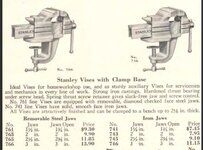
A 765 vise without Sq. or rectangular pockets for pipe jaws.
Round holes that aren't mentioned as having pipe jaws.
Also a Stanley excerpt.

Stanley765hole.jpgStanley1958.jpgStanley1958magnified.jpgStanley1942excerpt.jpg

akasrick
 

Vise_Squad

Well-known member
Joined
Sep 30, 2022
Messages
89
Speaking of ball mounts here's a little one I put together on the base of a Disston saw filer's vise which turned up without the vise part. Just so happened that an old 2" tow ball fit perfectly and the little school shop project(?) vise from the same source had a male threaded shank which matched the thread in the tow ball. When reefed down the ball is clamped very solidly.
 

Attachments

  • Ball Vise.jpg
    Ball Vise.jpg
    538 KB · Views: 39
Last edited:

Outlawmws

Well-known member
Joined
Aug 9, 2011
Messages
39,082
Location
The Badlands
that's Nice VS!

I remember way back someone making a big ball mount and used an old bowling ball as the ball. it was for a medium but full size vise.
 

akasrick

Well-known member
Joined
Apr 10, 2017
Messages
794
Location
south jersey
Akasrick what are those round holes for.
One of my 766 has the holes and one does not.
I'd say that the holes held pipe jaws. They are in the right place. They're hollow jaws, there is a stop for the pipe jaws to bottom against as some of their ratchet bits did.
A thread wouldn't hold up with the clamping pressure.
As Crsinmich demonstrated with their ever changing designations a 766 And A 766V is not a stretch, just another variation.
My take on trying to understand the differences of when and why, along with them using up stock.
That's the long version of I don't know.
Reading all this a pamphlet with just focus on their vises would be quite an undertaking.
Stanley76parts1967.jpg
Screenshot 2024-01-30 050905.jpg

akasrick
 

KMScott

Well-known member
Joined
Feb 14, 2012
Messages
4,632
Location
Daufuskie Island, South Carolina
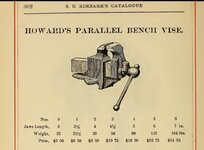
Howard Iron Works #0. 3" jaws that opens to 4-1/4” and weights 23lbs.
 

Attachments

  • Howard Iron Works #0-1.jpg
    Howard Iron Works #0-1.jpg
    456.2 KB · Views: 8
  • Howard Iron Works #0-2.jpg
    Howard Iron Works #0-2.jpg
    471 KB · Views: 6
  • Howard Iron Works #0-3.jpg
    Howard Iron Works #0-3.jpg
    507.3 KB · Views: 6
  • Howard Iron Works #0-4.jpg
    Howard Iron Works #0-4.jpg
    528.3 KB · Views: 5
  • Howard Iron Works #0-5.jpg
    Howard Iron Works #0-5.jpg
    223.2 KB · Views: 6
  • Howard Iron Works #0-6.jpg
    Howard Iron Works #0-6.jpg
    387.9 KB · Views: 6
  • Howard Iron Works #0-7.jpg
    Howard Iron Works #0-7.jpg
    249.3 KB · Views: 9
  • Howard Iron Works #0-8.jpg
    Howard Iron Works #0-8.jpg
    70 KB · Views: 9
Last edited:

ranger08

Well-known member
Joined
Nov 12, 2021
Messages
287
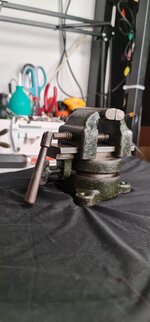
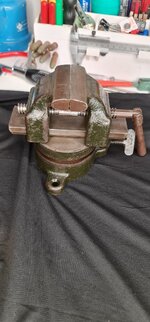
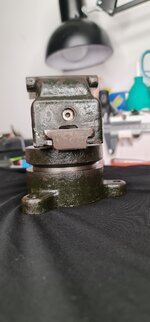
yes the lever locks and releases the swivel base, i will pull it apart to see how it works when i find time
interesting jaw plates as well
not sure of age, looks to be a watch makers/jewelers vice
 

PierceA

Well-known member
Joined
Aug 6, 2020
Messages
471
Location
SE Michigan
akasrick: I seem to remember an add-on 'swivel-jaw' device that had a horizontal pin, with a vertical pin, so a 90* bent 'pin'.
The horizontal pin fit into a hole under the fixed jaw of a vise, such that the vertical portion was in front of the fixed jaw insert.
On the vertical pin, a jaw was fitted that swiveled on the pin. This jaw was thick in the middle, to allow for some strength around the swivel pin. The jaw tapered to be thiner out to each end. So it could swivel either left or right on the vertical pin.
This device allowed the vise to do the same as a true swivel jaw vise: securely clamp tapered items or non parallel surfaces.
I have the remains of such a device somewhere, If I run across it soon and can remember, I'll post a photo.

I seem to remember that there was a similar device that was part of a set of slip-on jaws, that fit over the existing jaws and created a swiveling jaw for clamping irregular or tapered items.. This was part of a set of different clip on or slip on jaw devices.

PierceA
 

akasrick

Well-known member
Joined
Apr 10, 2017
Messages
794
Location
south jersey
akasrick: I seem to remember an add-on 'swivel-jaw' device that had a horizontal pin, with a vertical pin, so a 90* bent 'pin'.
The horizontal pin fit into a hole under the fixed jaw of a vise, such that the vertical portion was in front of the fixed jaw insert.
On the vertical pin, a jaw was fitted that swiveled on the pin. This jaw was thick in the middle, to allow for some strength around the swivel pin. The jaw tapered to be thiner out to each end. So it could swivel either left or right on the vertical pin.
This device allowed the vise to do the same as a true swivel jaw vise: securely clamp tapered items or non parallel surfaces.
I have the remains of such a device somewhere, If I run across it soon and can remember, I'll post a photo.

I seem to remember that there was a similar device that was part of a set of slip-on jaws, that fit over the existing jaws and created a swiveling jaw for clamping irregular or tapered items.. This was part of a set of different clip on or slip on jaw devices.

PierceA
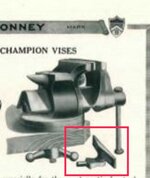
Pierce looks like you are thinking this...
1706722565808.jpeg
also maybe Bonney's swivel.

Stanley was definitely trying to add pipe jaws to some of their's.
I called it a stop in the jaw, maybe I should have written "an index" to orient the one jaw, then the other jaw would find the pipe.
I'd say that the holes held pipe jaws. They are in the right place. They're hollow jaws, there is a stop for the pipe jaws to bottom against as some of their ratchet bits did.
Remains are good 😁

akasrick
Edited
 
Last edited:
To avoid these ads, REGISTER NOW!
Top Bottom