To avoid these ads, REGISTER NOW!

Vise restoration questions

Lombie

Well-known member
Joined
Dec 30, 2013
Messages
80
Location
Arizona
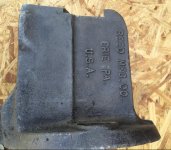
I am in the process of restoring an old Reed (pics to follow) and have a couple of questions.

My friend has access to a bead blaster, but I'd like to put more sweat equity into the resto, as it's my first one and I hope to pass it on to my son.

I've already spooged the vise parts in an e-bath and am ready to prep it for paint. Is there a significant difference as to how well a primer + paint will bond to a vise that's been wire brushed vs. bead blasted? I'll be using tractor and implement primer and paint.

My other question is how to address the main screw chamber? It's flash-rusted since I've done the electrolysis, but I can barely reach inside with a handheld wire brush, never mind anything powered. Do I lube the main screw and just not worry about it? Should I prime it?

Thanks, guys.

-Lombie
 
To avoid these ads, REGISTER NOW!

ganymede

Well-known member
Joined
Nov 29, 2012
Messages
2,332
Location
New England
Vises already have a rough surface texture so no need to wire brush for paint adhesion.
Wouldn't worry about rust inside. I've never seen a vise painted inside or one that has had significant rust there . A little is nothing to be concerned about .
The main screw and nut will like heavy grease.
 
OP
L

Lombie

Well-known member
Joined
Dec 30, 2013
Messages
80
Location
Arizona
Thanks. When only 2 answers come in on a topic about vises, you know it's a poorly worded question or needs pics...or both. I didn't have a pic when I posted.

I was referring to the chamber on the inside of the dynamic jaw that surrounds the main screw. It sounds like ganymede figured it out and that I should just leave it be, light rust and all.

And thanks 1982fxr. The main screw is in excellent shape and all I intend to do is anti-seize.
 

zkling

Well-known member
Joined
Jan 23, 2007
Messages
16,939
My take?

Do you have to prime it, no just a surface free of loose paint, rust and oils will allow the paint to stick fine. However if you want to fill in some of the casting surface bumps a coat of primer or two will help to provide a smoother surface appearance when the final paint goes on.

I know what void in the front jaw you are talking about. Some were painted from the factory. I just try to aim the spry gun up there and not worry about it too much. Also when washing I like to blow dry the parts that way water won't lurk in the crannies and possibly cause rust. A little waded up sand paper on a stick can clean it out if rust is heavy.

What vise are you working on?
 

jakemac

Well-known member
Joined
May 21, 2013
Messages
9,035
Location
New England
.............. The main screw is in excellent shape and all I intend to do is anti-seize.

DO NOT use anti-sieze. Anti-sieze has a micro-grit in it that can act as an abrasive on moving parts. It's good for parts that will sit unmoving for a long period of time, but not on parts that are intended to move often. The best thing to use on the main screw IMO is a good quality synthetic grease rated for heavy duty. But any axel/bearing grease should work fine.
 
Last edited:
To avoid these ads, REGISTER NOW!
OP
L

Lombie

Well-known member
Joined
Dec 30, 2013
Messages
80
Location
Arizona
DO NOT use anti-sieze. Anti-sieze has a micro-grit in it that can act as an abrasive on moving parts.

Wow. Good to know. Guess I'll use grease instead. Appreciate it, jakemac.

zkling, it's a 404A. I can't find any info out about the A model, but I guess it's a variant of the 404R. Some of the vise gurus in the forum think it's circa 1930's.

The main nut may have a date stamp, but it could also be a part number b/c some have said that Reed didn't date stamp their vises.

I'll attach a few naked vise photos. The boy and I are going to start priming today...
 

Attachments

  • Brushed 1.jpg
    Brushed 1.jpg
    142.2 KB · Views: 25
  • Brushed 2.jpg
    Brushed 2.jpg
    90.6 KB · Views: 23
  • Brushed 3.jpg
    Brushed 3.jpg
    86.1 KB · Views: 19
  • Brushed 4.jpg
    Brushed 4.jpg
    82.5 KB · Views: 15
  • Brushed 5.jpg
    Brushed 5.jpg
    97.3 KB · Views: 17
  • Brushed 6.jpg
    Brushed 6.jpg
    124.6 KB · Views: 18

scooternut

Well-known member
Joined
Jul 31, 2013
Messages
684
Location
Pittsburgh, PA
DO NOT use anti-sieze. Anti-sieze has a micro-grit in it that can act as an abrasive on moving parts. It's good for parts that will sit unmoving for a long period of time, but not on parts that are intended to move often. The best thing to use on the main screw IMO is a good quality synthetic grease rated for heavy duty. But any axel/bearing grease should work fine.

OK GJ vise members, Is this an accurate statement? Lot s of vise people on here, lots of recommendations either way. Lets settle this or start a new thread. What is it? Grease or never seize?
 

zkling

Well-known member
Joined
Jan 23, 2007
Messages
16,939
OK GJ vise members, Is this an accurate statement? Lot s of vise people on here, lots of recommendations either way. Lets settle this or start a new thread. What is it? Grease or never seize?

Yes. anti seize is abrasive. Will it wear out a vise in the home shop, probably not. It is a different type of lubricating compound designed to prevent galling, and sticking when removing long term fasteners. Not for repeated friction lubrication. Would you put it in your wheel bearings? I hope not. Do a search it has been discussed on here. However like usual there are a lot of opinion vs facts.
 

Leaflessshadetree

Well-known member
Joined
Aug 1, 2013
Messages
7,198
Location
Don't ask.
OK GJ vise members, Is this an accurate statement? Lot s of vise people on here, lots of recommendations either way. Lets settle this or start a new thread. What is it? Grease or never seize?

:headscrat Most of mine seem to get a little oil and grease added through normal use. I suppose some anti-sieze could end up there as well.
 

zkling

Well-known member
Joined
Jan 23, 2007
Messages
16,939
zkling, it's a 404A. I can't find any info out about the A model, but I guess it's a variant of the 404R. Some of the vise gurus in the forum think it's circa 1930's.

Looks like a really nice, feature packed vise. :thumbup:
 
To avoid these ads, REGISTER NOW!
Top Bottom