To avoid these ads, REGISTER NOW!

Wago products.

whateg01

Well-known member
Joined
Mar 13, 2006
Messages
11,227
Location
doo dah, kansas, usa
You know they are thoroughly tested? But I guess so were back-stab receptacles at one time. ...
I kinda got the impression that the push in nuts are just the modern use of the old back stab receptacles. I don't know if the lever lock versions maintain a better connection but it seems like they could. I do know that stranded wire doesn't like to go into the push in type.
 
To avoid these ads, REGISTER NOW!

wyliesdiesels

Well-known member
Joined
Aug 14, 2012
Messages
19,998
Location
Modesto, CA
One thing I haven't seen mentioned is when dealing with 12 gauge wire is that it's so stiff that when you stuff it back into the box it tends to want to unwind the screws that hold it secure. I had this happen to a surface mount box in my shed. I needed to replace the box because I lost a screw when rewiring it. I bought a new one and I had two 12-2 wires in the smaller box. I got it together and noticed my light was flickering when plugging in a cord into the outlet. Found the screw had loosened. And I know how tight to get a screw to start with. I am going to say that perhaps 12 gauge wire has caused more concerns than overloading a 14 gauge wire has just because it's so darn stiff when trying to deal with it.
thats never happened to me. are you wrapping the wire in the same direction that the screw tightens? if so then the wire should never unwind. its physically impossible for it to do so.
 

whateg01

Well-known member
Joined
Mar 13, 2006
Messages
11,227
Location
doo dah, kansas, usa
Regardless of the direction I have around them in the past, I've never had trouble with them unscrewing the screws. Either you are pulling on the wires too hard and not just bending them or you are not tightening the screws enough, imo
 

Firebrick43

Well-known member
Joined
May 12, 2015
Messages
14,020
Location
West central Indiana
I called your information horse pucky. Yes, look at your situation carefully. You pull both hot and cold wires down. What happens? The white one loosens up and the black one on the other side gets tighter.
absolutely, btw; the surface mount I replaced had the wires wound the wrong way and hot and cold were interchanged.
What are these "cold" wires you keep talking about? Are they chilled somehow?

The surface mount receptacles are two pieces. You land and hook up the wires and prebend them. You then snap on the back plate, and see where it lands on the post/wall. You pop the front off holding the back plate in place and without moving it mount the back plate. The front then is screwed on without displacing or anymore bending of the wires. Remove the staples if they are causing an issue.

You are not installing new circuits with surface mount plugs and not using a raceway are you?
 
Last edited:

428PI

Well-known member
Joined
Jul 14, 2018
Messages
1,976
Location
Peabody, KS
And to confuse those terms leads to misunderstandings and people getting hurt.
How is anyone going to get hurt because I called it a cold wire instead of neutral? I'm sure everyone here knew exactly what I meant. Let's move on.
 

rharman

Well-known member
Joined
Apr 22, 2012
Messages
8,778
Location
SoCal
I've been using Wagos for when I had five wires to tie together as the wire nut just didn't seem to be a good choice for tightness or security. I had it in a junction box and used the Ideal push-in types for 4 and 3 wire connections. As others have said, it wouldn't be a good idea to seal them up in walls but for inside junction boxes where you can access them, it wouldn't be bad. Also, only dry locations where you use them too. If using them in wet locations, I guess I'd seal them with electrical tape as best as possible?

The thing I like about the push-in Ideal brand types is they're cheap and they're easier to stuff back into a box as you don't have a huge knot twisted up to jam back in.

Why on earth would you EVER bury any connection, other than an approved NM-B splice, inside a wall???
 

Lassen Forge

Well-known member
Joined
Apr 26, 2014
Messages
15,117
Location
The romantic hills of central Umbria, Italy,
I've used them for fluorescent lights but never felt comfortable using them for anything heavier than that.
To me they're like Push-back receptacles and switches - they're great for people in a rush trying to slap together a job, rather than take a couple extra seconds to make a better (and safer IMO) connection.
They're also available over here where you have lower amperage, but you can ALSO get the (here traditional) "screw-type" connectors(wire in either side of the connector and a screw holds them fast) and I've NEVER had an issue with those.
I JUST replaced a bunch of "push connector" switches and receptacles installed 25 years ago that were shot - high resistance, got warm. When you're dealing with a failure at 230V where you can talk a pretty swift amperage jump, um, thanks but no.
 

67CarGuy

Well-known member
Joined
Feb 6, 2008
Messages
763
Location
Outside Boston, MA
I see Wagos used on all of the lighting and receptacle connections in the apartment buildings I inspect for work (I'm not an electrical inspector though, so...). But they're certainly well-represented in those buildings, usually 300+ units per project. These are being installed by large commercial electrical contractors, so either they trust them to work, or they're getting a good deal from the supply house.... but I'm guessing it's more of the former than the latter. Most outfits don't like callbacks, in my experience.
 

dave*99

Well-known member
Joined
May 5, 2009
Messages
4,260
Location
Coastal NJ
I've used them for fluorescent lights but never felt comfortable using them for anything heavier than that.
To me they're like Push-back receptacles and switches - they're great for people in a rush trying to slap together a job, rather than take a couple extra seconds to make a better (and safer IMO) connection.
They're also available over here where you have lower amperage, but you can ALSO get the (here traditional) "screw-type" connectors(wire in either side of the connector and a screw holds them fast) and I've NEVER had an issue with those.
I JUST replaced a bunch of "push connector" switches and receptacles installed 25 years ago that were shot - high resistance, got warm. When you're dealing with a failure at 230V where you can talk a pretty swift amperage jump, um, thanks but no.
Well..... not exactly.
The Wago's with the locking lever provide much greater force on the connection and make better contact.
Feel to do as you like - the old back stab stuff has certainly been a great source of problems, but they are not the same.

Leviton just introduce a complete line of devices with a lever lock. I have not tried them. But I suspect they work better than the old back stab stuff.
YMMV
 

Skooterj

Well-known member
Joined
Mar 11, 2021
Messages
750
Location
Indiana
I've used quite a few Wago Lever Locks, both with solid and stranded wire. Never had a problem, but I've probably used less than 50 in my life. I do always wrap them with electrical tape when I'm done just in case when I'm pushing them into the box the lever might get jostled and let the wire come loose. Probably overkill, but just makes me feel a little safer.
 

WildBill

ALLIANCE MEMBER
Joined
Aug 20, 2021
Messages
1,998
Location
PNW
I use the lever type for low voltage and sometimes when I have a bunch of bare ground wires to connect in crowded box. I don't entirely trust them and probably wouldn't run any high amperage stuff through them. I also did all my plumbing in copper because I've seen dozens of pex and sharkbite failures doing apartment maintenance. But it also could very well be because I'm old.
 
To avoid these ads, REGISTER NOW!

dave*99

Well-known member
Joined
May 5, 2009
Messages
4,260
Location
Coastal NJ
This:

This model Wago Connector has a lever. Some do not have a lever.
1691779198544.png

Ain't this:

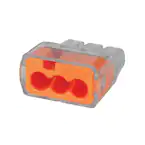
This style Idea Connector does not have a lever
1691779252573.png

I do believe Wago is suffering from folks stigmatizing them from the poor performance of the old backstab receptacles and switches.
 
Last edited:

428PI

Well-known member
Joined
Jul 14, 2018
Messages
1,976
Location
Peabody, KS
I do believe Wago is suffering from folks stigmatizing them from the poor performance of the old backstab receptacles and switche
Wago does make back stab non lever style connectors. I just purchased some. Shall I get a picture of the box?
 

reader2580

Well-known member
Joined
Dec 31, 2014
Messages
14,516
Location
Minneapolis, MN
I've ordered Wago lever-nuts on Amazon and gotten fakes. I was most of the way through a box of them before I noticed that they were marked differently than others I've used in the past.
Did they have the Wago name and part number on them? There are other generic lever nuts out there, especially on Amazon.
 

sparky 1971

Well-known member
Joined
Oct 9, 2018
Messages
7,967
Location
Central Iowa
Why on earth would you EVER bury any connection, other than an approved NM-B splice, inside a wall???
To be brutally honest, have you ever seen the approved NM-B splice kits? I've never used one, and I never will. I would bury pretwisted joints with good wire nuts waaaaaaaay before I used one of those pieces of ****. A lever nut is probably better than one of those things as well. A stab in WAGO isn't better, but it's probably not worse either.

Those things help to strengthen my theory of money comes before all things. Throw enough money at a solution for which there isn't a problem and anything can be made and approved. AFCI "protection" being at the top of the list.
 

dave*99

Well-known member
Joined
May 5, 2009
Messages
4,260
Location
Coastal NJ
I would say they are really a DIY item for those with little electrical experience. I'm not sure I would want someone with that little experience wiring any house.
I don’t know the target customer. I do know Leviton makes good products.

And I know folks that should use this product as it matches their skill level.

Pros will look at the cost/benefit and make decisions accordingly. Time is money.
 

rharman

Well-known member
Joined
Apr 22, 2012
Messages
8,778
Location
SoCal
To be brutally honest, have you ever seen the approved NM-B splice kits? I've never used one, and I never will. I would bury pretwisted joints with good wire nuts waaaaaaaay before I used one of those pieces of ****. A lever nut is probably better than one of those things as well. A stab in WAGO isn't better, but it's probably not worse either.

Those things help to strengthen my theory of money comes before all things. Throw enough money at a solution for which there isn't a problem and anything can be made and approved. AFCI "protection" being at the top of the list.
Nope, never have. My issue was burying connections in a wall. At least the splice is UL/CSA listed. I would hope that's some comfort factor.

In hindsight, I see that I misread @Model A Fan's post. I read it as "OK to use them in a buried junction box" when what he said was "in a junction box that was accessible".

My apologies to @Model A Fan...

1691861800082.png
 

RAYJAY

Well-known member
Joined
May 29, 2006
Messages
2,638
Location
UNION DALE PA
Just curious as I am by no means an electrical person. I have hired an electrician to wire one part of my garage for 220v for my machines and I asked him if he ever used wago products. His answer just blew me away as he replied they are not safe, and he will not use them. So, I asked him why they are not safe, and he told me he had a box of then that went bad, and they burned up.

You tell me is he full of horse ****, they burn up when used, or heck no you never had any problems using them.

He seems like a very knowledgeable, electrician so I am in the dark as they say.

Woody
woody we use them in the plant where i work all the time, that being said we do use them up to 120v and work flawless the plus we can do a hot swap when needed still have not tried 480 on them yet ..
 

dave*99

Well-known member
Joined
May 5, 2009
Messages
4,260
Location
Coastal NJ
There is no place for the cold wire marked on the back?
I see PEX tubing is blue and red. That is my interpretation of hot and cold markings. The Leviton product has black and white levers. I don’t think they have published a conversion chart. If someone has one please post it.

In Physics, black is often associated with cold and white with hot. I’ve heard the term white hot. But I don’t think that maps to the electrical terminology.
 

Firebrick43

Well-known member
Joined
May 12, 2015
Messages
14,020
Location
West central Indiana
I see PEX tubing is blue and red. That is my interpretation of hot and cold markings. The Leviton product has black and white levers. I don’t think they have published a conversion chart. If someone has one please post it.

In Physics, black is often associated with cold and white with hot. I’ve heard the term white hot. But I don’t think that maps to the electrical terminology.
Read further up in the thread and you will get it.
 
To avoid these ads, REGISTER NOW!
Top Bottom