
bggrnchvy
Well-known member
I don't want to call this a rebuild, as I'm really not fixing that much. Call it more of a refinish while replacing all the soft parts with little welding here and there. The goal is function for the next 75 years, being the saw is 75 years old this year.
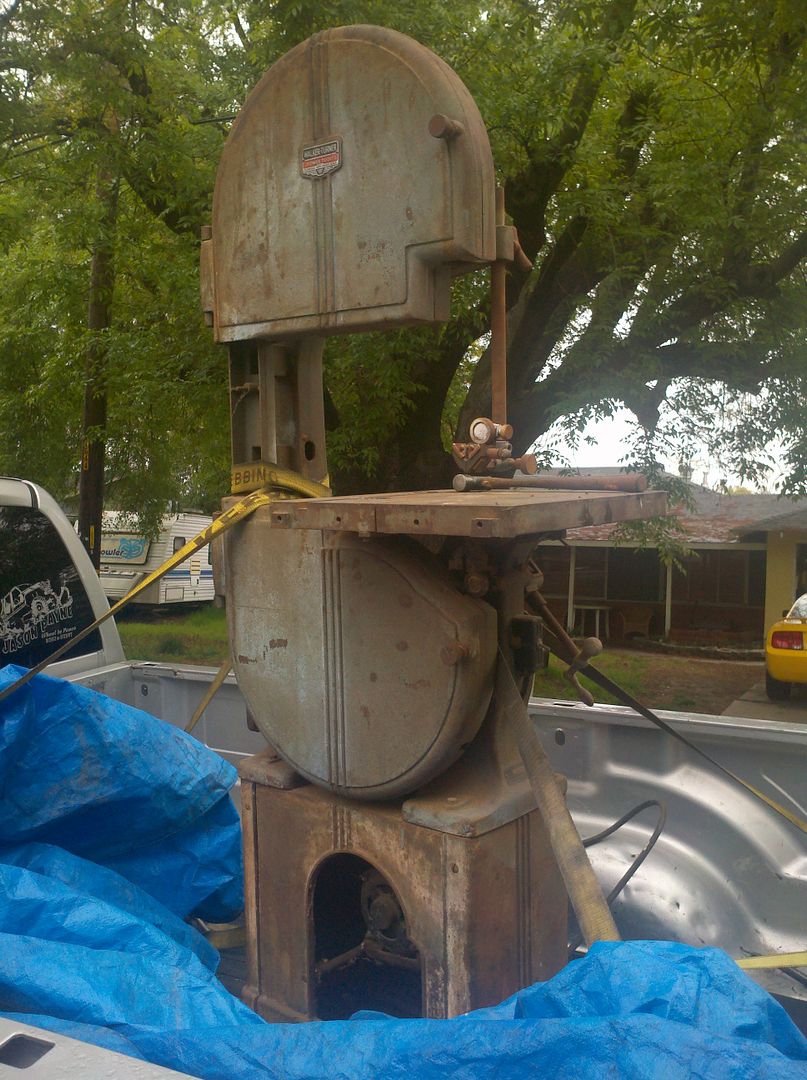
Two years ago I found this Walker Turner 16" saw. As found it was in the MB1105 configuration. Upon further investigation however it seems this saw was ordered as a table top unit without the metal drive gearbox but was upgraded during it's life. These saws were built from '39-'48 and this saw, by serial number, was built in the first year, 1939.
When I went to see it the motor wouldn't spin when plugged in (bad start capacitor), but the gear box shifted nicely and the upper and lowers wheels spun easily without any slop or noise. As such I dragged it home, which was a feat. The saw weighs in around 600lbs due to almost entirely cast iron nature. Even the wheel access doors are castings. I managed to get it home and into the garage without breaking it any further and started the long road of bringing it back into service.
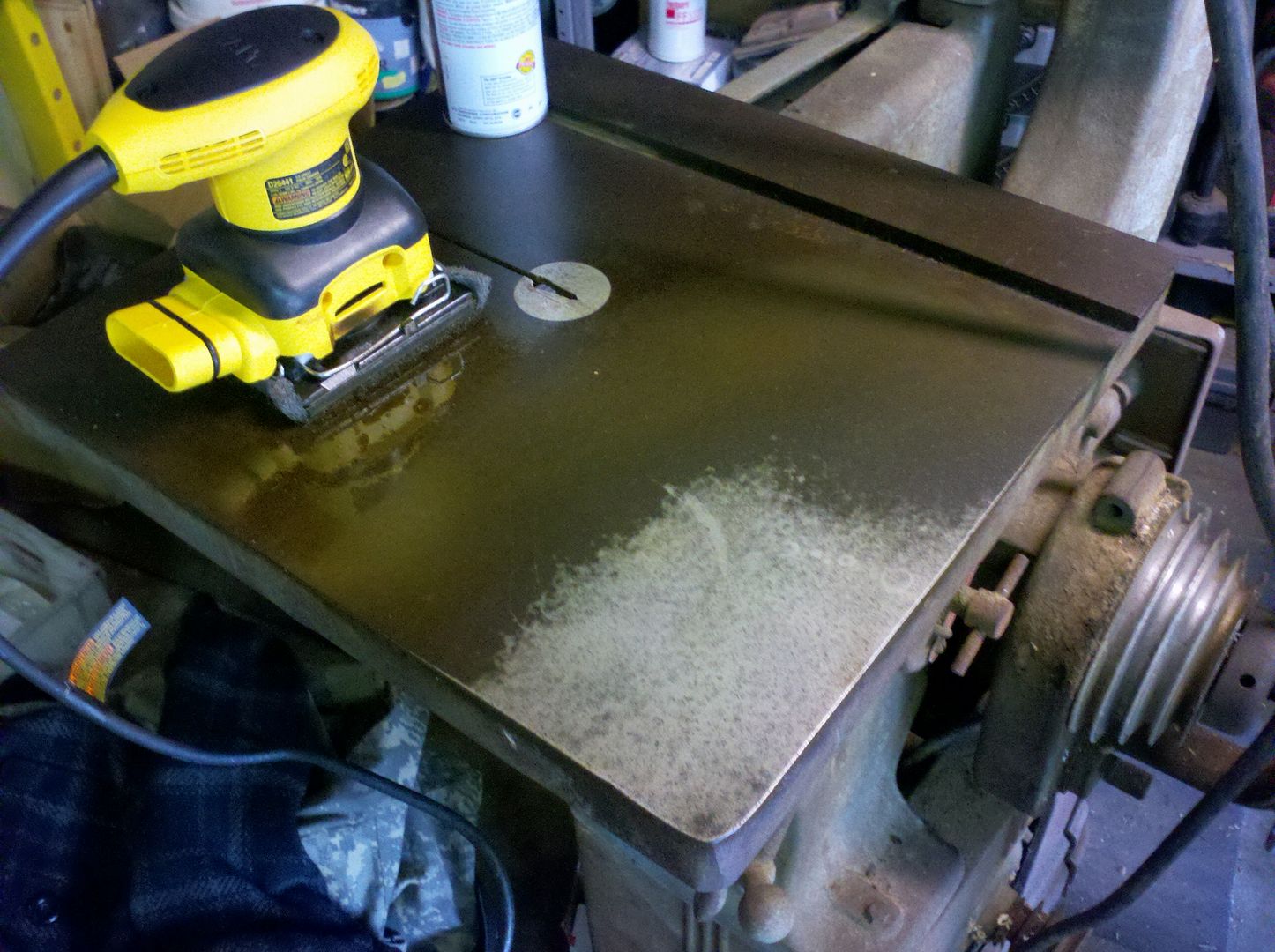
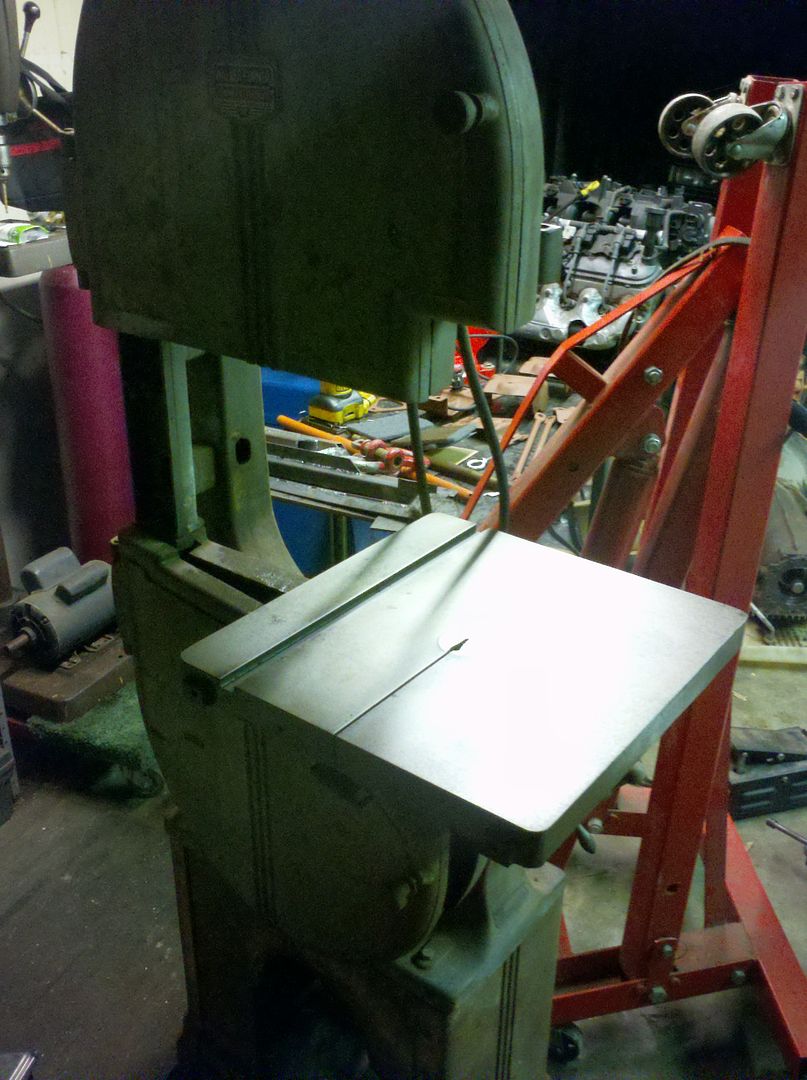
The first item I got after was removing the oxidation on the table. It had been stored in a failing barn and the environment was a little damp. It took a lot of elbow grease but it was clean again after the Scotchbrite and WD40 treatment.
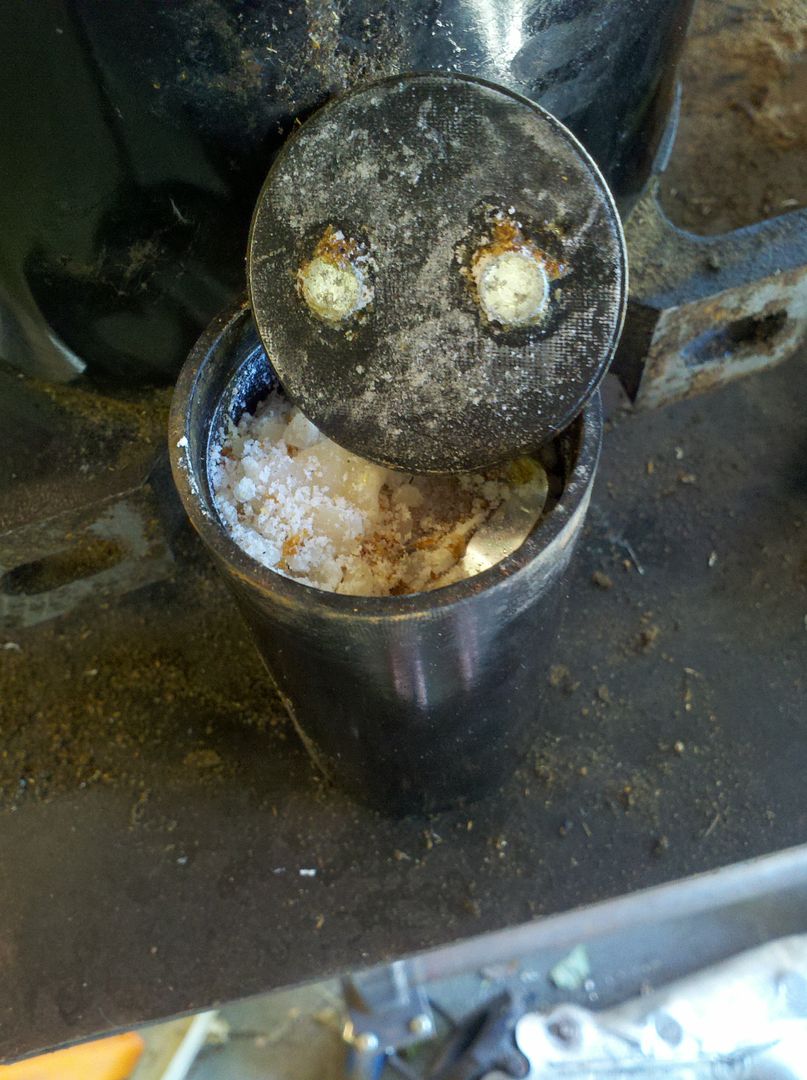
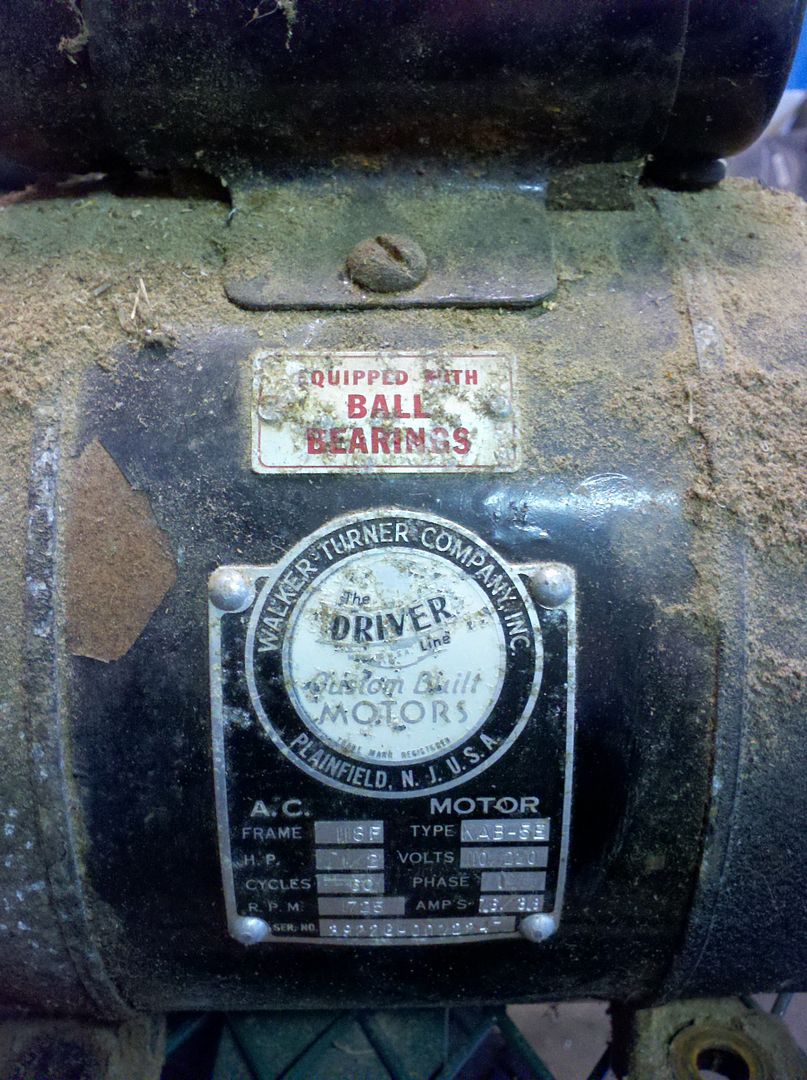
The motor wouldn't spin, but would buzz when plugged in and switched on. I was not surprised when I pull the start capacitor. My original plan was to reuse this factory motor as the unit is in really good shape. I've even sourced a new capacitor to replace the failed unit. I just don't think 1/2hp is going to satisfy me, even if the rating is probably a bit higher than a current motor.
My most recent plan is to run a 56c TEFC 208v 3ph 1-1/2hp motor and power it by VFD to prevent me from having to change belt location as often. It should give me plenty of power push through thick plate as well. A strange combination of early American iron and solid state electronics that I think fits my tool selection well.

Two years ago I found this Walker Turner 16" saw. As found it was in the MB1105 configuration. Upon further investigation however it seems this saw was ordered as a table top unit without the metal drive gearbox but was upgraded during it's life. These saws were built from '39-'48 and this saw, by serial number, was built in the first year, 1939.
When I went to see it the motor wouldn't spin when plugged in (bad start capacitor), but the gear box shifted nicely and the upper and lowers wheels spun easily without any slop or noise. As such I dragged it home, which was a feat. The saw weighs in around 600lbs due to almost entirely cast iron nature. Even the wheel access doors are castings. I managed to get it home and into the garage without breaking it any further and started the long road of bringing it back into service.


The first item I got after was removing the oxidation on the table. It had been stored in a failing barn and the environment was a little damp. It took a lot of elbow grease but it was clean again after the Scotchbrite and WD40 treatment.

The motor wouldn't spin, but would buzz when plugged in and switched on. I was not surprised when I pull the start capacitor. My original plan was to reuse this factory motor as the unit is in really good shape. I've even sourced a new capacitor to replace the failed unit. I just don't think 1/2hp is going to satisfy me, even if the rating is probably a bit higher than a current motor.

My most recent plan is to run a 56c TEFC 208v 3ph 1-1/2hp motor and power it by VFD to prevent me from having to change belt location as often. It should give me plenty of power push through thick plate as well. A strange combination of early American iron and solid state electronics that I think fits my tool selection well.


