

You are using an out of date browser. It may not display this or other websites correctly.
You should upgrade or use an alternative browser.
You should upgrade or use an alternative browser.
Walker Turner Table saw. What's it worth?
- Thread starter tolken4
- Start date

collmorgen
Well-known member
Got to OWWM.org. They have a forum area for selling machinery.
I had a Walker-Turner combination 8" table saw and jointer that was given to me. Solid little thing, but the jointer adjustment was fussy. I used it for a while; was going to set up the table saw to be a dedicated dado but later gave it away to someone else to increase garage space.
Hmm 4.5 hours one way to St Louis. My love for Walker Turner Table saws......... If you sell I am interested. I got my 2 for free from family, a WalkerTurner drill press and jointer as well.
Do you know the model, year, serial number?
Are they in general valuable? 100 dollars more or less. Have the chance to buy one. Have a Dewalt contractor saw. This thing looks nice though. Are they worth anything? No motor on it.
My Driver series from 1933 is a tank. Very smooth and just humms along. Almost zero vibration at all. I have another i am in the process of restoring. Not to make it pretty but to preserve it so I can use it. Must let the toys we have play.
$100 bucks? My answer would be a hell yes. check out the OWWM site. Post there and I sure you will get some answers.
$100 bucks? My answer would be a hell yes. check out the OWWM site. Post there and I sure you will get some answers.
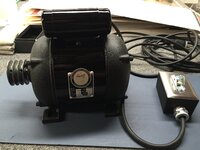
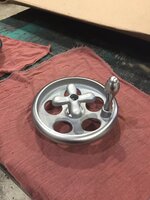
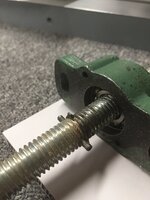
I have a 1946 Walker Turner 10” tilting arbor saw. It was totally restored in the late teens, 2016 to 2018. I had the motor restored internally and the outer case powder coated, wrinkle finish on the bearing housings and a shiny black on the center housing + the capacitor housing. I had a new heavy duty cord added to an outdoor electrical box with a stainless cover with a security lock to prevent the 20A switch being flipped on. I took the main saw housing to metal stripping company. They welded all of the “holes” in the housing that were not original. After smoothing out the welds, it was then glass beaded inside and out. They also replaced a missing stud that was broken off. After I got the housing home I vacuumed it inside and out. I wiped it down with a wax and grease remover. I used a filling glaze on all of the holes that were welded shut. After a final sand, vacuum and another wash with grease and wax remover, I tacked the cabinet down and applied 2-3 coats of acid etched primer. I was missing a couple of the inspection plate knurled knobs, and a missing plate. I ordered those from a gent on the east coast who specializes in WT pieces. After I received the ordered parts, I discovered that the missing lower plate was hiding behind the upper plate. I will used the 3rd for a dedicated saw dust port. I also decided that missing plate was removed and hidden behind the upper plate as the paint was mint. I assume the color was a slightly grayed green in a satin finish. I took the plate to a Sherwin Williams industrial paint store. They cleaned the plate and scanned it in.they matched it perfectly. I had to buy a gallon of the paint. They then made me about 10 cans for about 8.00 apiece. They are big cans too. After getting the housing painted, I started to work on the table top. I glass beaded the underside of the table and the extensions they received the same treatment as far as painting goes. I then started to work on the top surfaces using 180 on up the line until I got to about 1000 grit. I used Johnson’s Paste wax on the top. I wrapped those up in moving blankets and set them aside. I also had the 3 sheave pulley bored and sleeved ad it was some what out of round. I then began taping off the to two wheels for elevation and tilt. I glass beaded the front and rear sides. I then removed the tape and buffed the outer rounded edge of each when and then the crank handles. I re-taped everything and primed and painted. I continue to clean up all of the other generic parts to the saw, priming and painting them as well. I then turned my attention to the arbor where the bearings are. I checked it, and it ran is true and straight, just like new. The bearings felt really good so I added 20 weight oil the bearings. They were just fine. I checked with the mechanics in our truck shop said they wouldn’t touch it. It’s running straight as an arrow, besides the bearings are nice with no wobble at all. I clean that portion up and waxed it with Johnsons Paste wax. I didn’t want to change the color at all so it is the original color. After a thorough cleaning of the round black and silver walker turner plate on the front, I cleaned up all the fasteners, ran them through dyes and ran taps down all the holes, I then began reassembling this beast. I purchased a jet mobile bass. I cut a piece of three-quarter inch plywood, drilled my holes, painted it nice glossy black, two or three coats with a roller then set the base on it and bolted it in. I then unwrapped the main table and put the arbor assembly back on after cleaning the trunnions thoroughly making sure everything was lined up in the Square. My neighbor came over and after putting some cork washers on the top, we carefully flipped it over and set it in place on top. Ran the bolts home and was thrilled to get that far. I then put some studs in were the motor mounts and then I took one step at a time and ran the bolts in. Oh, and I also used Never Seize on every fastener I put back in the saw. At this point everything but the fence is cleaned up and ready to reassemble. I then added the short envied table to the control end of the saw. I then added the two wings and used my Sterritt edge to get them as flat as I could get them. I attached the rail for the fence on the front with it spacers and bolts, I also added the rear rail. I’m pretty sure there’s a rear rail, but I should really check, but I’m almost positive there is. I then took the fence to work, and the miter gauge to work, totally disassemble both of them after work I glass beaded the main part of the fence, and all of the pieces that I wanted to paint, including the miter gauge as well. I then polished up all the polished neural knobs and things of that nature. I painted the adjustment end of the fence a nice gloss, black same for the main part of the miter gauge. There is a little insert and I popped out and I just polished it up because it’s silver in color. I did buff the bar for the miter gauge as well. In a few days I dropped off the actual fence to a friend in Omaha who does plating work. He did a brushed nickel finish on it. It looked like dynamite. The last thing I did was to tighten up all the loose ends, reassembling the fence, getting it put in place, same for the miter gauge. I believe the last thing I did was reattach the walker turner plate on the front. I will attempt to include some pictures here. I hope it all works. I am going to sell the saw. I’m in a real quandary as what to charge. I was given this offer free that I’ll say ride up front, but it cost me $1437.00 for materials only. That includes the extra WT pieces, the mobile base, powder coating the rebuilding of the motor, the glass beading of the case all the paint, primer, the gallon of base cost, the spray cans of paint, the electrical cord, plug the switch and box. The plating everything you can imagine. Sandpaper you name it. It’s directly 100% materials . No labor whatsoever I did this is it is a labor of love. I know this sounds high, but compared to the Powermatic today it’s a better saw. I can testify to one thing, I think the motor weighs almost as much is a saw by itself. It’s currently wired for 110 but I’m sure it can be changed to 220 if needed. I have all the manuals every piece of literature. I could find a Walker Turner’s list of bearings for all their machines, you name it. I hope this communication find everyone doing well. Thanks everybody have a great year, Jim
Attachments
-
 6C855C73-C7DF-4A43-9DC1-451AAC48E696.jpeg665.7 KB · Views: 24
 -
 39CE3633-BC22-4176-9C82-8FA8C169E022.jpeg544.4 KB · Views: 24
 -
 1CB14ABF-6B08-47C3-8659-90B85D394850.jpeg778.4 KB · Views: 22
 -
 CA1B83B2-4AF6-49BA-87E9-2480CB6996B0.jpeg950 KB · Views: 23
 -
 9CB08129-8754-49FF-B322-CF5AD7BBC110.jpeg478.8 KB · Views: 24
 -
 2946245C-17A5-458A-8131-0DD99E4A5F20.jpeg576.2 KB · Views: 25
 -
 C88711F8-3842-4B3F-9A99-0E7750E233BB.jpeg793.8 KB · Views: 26
 -
 EF87D4C8-7C7B-4654-9CD9-F9495057A9E7.jpeg577.8 KB · Views: 28
 -
 342A4EB2-3765-4355-AC59-96A397C8624E.jpeg637.5 KB · Views: 30
 -
 8F6468A0-4BA5-450F-AAB7-199493D22CBC.jpeg514.3 KB · Views: 30


drivesitfar
Well-known member
If it’s a working table saw made by Walker turner $100 is more than fair. Of course condition is everything when items are over 70 years old but it’s a quality brand. Any pics?
I have a 1946 Walker Turner 10” tilting arbor saw. It was totally restored in the late teens, 2016 to 2018.
It is a nice saw, but it is only a 1 HP motor. Somebody that loves the really old iron will like it, but anyone doing serious wood working will want more HP. No offense, but I would not trade it for my 3HP Unisaw that I bought for $900.
Is it worth the money you have in it? Maybe, maybe $2,000. I am curious to see other opinions. You need to find "that guy".
$100??If it’s a working table saw made by Walker turner $100 is more than fair. Of course condition is everything when items are over 70 years old but it’s a quality brand. Any pics?
alfadan
Well-known member
****, I'd buy it for 100 and I don't even like woodworking
nadogail
Well-known member
A piece of equipment is worth what a buyer will pay a willing seller for it.
$100??
Did you see the pictures after my original post? I could email them to you directly if you like. I have a bunch. Thanks!If it’s a working table saw made by Walker turner $100 is more than fair. Of course condition is everything when items are over 70 years old but it’s a quality brand. Any pics?
I saw the pics. I am just trying ti figure out if he is serious about the $100. I posted that it might be worth what you have into it, to the right person.Did you see the pictures after my original post? I could email them to you directly if you like. I have a bunch. Thanks!
$100??
Did you notice that the mention of $100 was from a post in 2011. This is the problem with continuing a long dead post.
jmw-1955: posting in the Vintage Tool Discussion would have gotten a more on target audience, I am sure your story and photos would be welcomed there.
Vintage Tool Discussion
The place to rap on and on about all things vintage - from wrenches to lathes...
 www.garagejournal.com
Last edited:
drivesitfar
Well-known member
Jmw: Sorry I didn’t see that you had a new post on a thread started 11 years ago. Pics look great so yes worth the $100 and probably a lot more depending on the demand and area you’re in.
If it were me I’d certainly pay the $100 asking price for it if it was local and I had sone help to load it. As far as using it or flipping it that’s up to you. Personally I’d love to have all Walker turner woodworking tools in my shop.
If it were me I’d certainly pay the $100 asking price for it if it was local and I had sone help to load it. As far as using it or flipping it that’s up to you. Personally I’d love to have all Walker turner woodworking tools in my shop.
Thank you sir, I probably messed up putting so much into the saw. I didn’t cut any corners. I’m sure I’ll never get the 1436.99 I put into it. I was given the saw for free. You can see what it looked like, . It was a train wreck. It would t even start when I tried to start. I shut it off in about 2 seconds. I took it to my friend who used to repair motors. He took it apart and blew all the saw dust & dirt out of it. He put it back together, flipped the switch and it took right off. He still put new bearings in it, capacitor etc. One of the fellas mentioned it was only a 1 HP motor. I will need to look at all the old WT brochures I have to see what was offered as far as motors. I know one thing, it’s a beaut now. 
. It was a train wreck. It would t even start when I tried to start. I shut it off in about 2 seconds. I took it to my friend who used to repair motors. He took it apart and blew all the saw dust & dirt out of it. He put it back together, flipped the switch and it took right off. He still put new bearings in it, capacitor etc. One of the fellas mentioned it was only a 1 HP motor. I will need to look at all the old WT brochures I have to see what was offered as far as motors. I know one thing, it’s a beaut now.