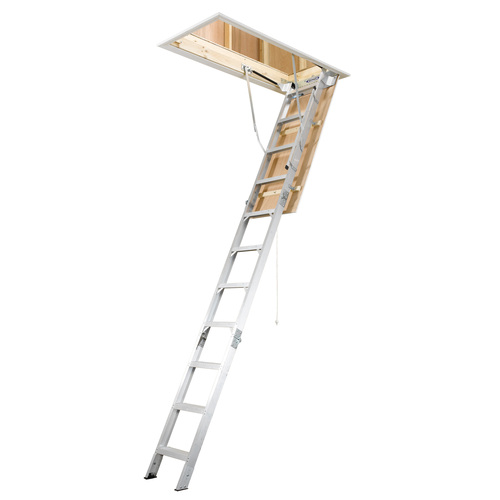
In this particular case, I'd rather see 16 penny nails holding the frame of the stairs up than some cheap drywall screws.
Oh hell yes (btw I was completely agreeing with you if that wasn't entirely clear). Lots of people think that drywall screws are structural. Boy can that be a big mistake. And they're quite brittle too.
. . .When you stop to think about it - that ladder is exposed to some pretty wild temperature swings in a well ventilated attic. Cycling between extreme hot and extreme cold and humidity changes will damage wood more than frequent use. Loose fasteners? They probably weren't loose during the summer. . .
My roof is exposed to much more wild changes in temperature. It handles those swings just fine. There's no excuse for a ladder to fail from this.
There's no excuse for loose fasteners too. My ladders were made using rivets (which were insufficiently sized for frequent use). Those shouldn't loosen over time. On the bolts I replaced them with, I used nyloc nuts. No loosening issues.
I think the bigger issue is that many houses are built with "builder basic" (i.e. the cheapest thing the contractor can find) materials.
Many attic ladders are type II or type III (225lb or 200lb) rated. That's the maximum static capacity which includes the person on the ladder AND whatever they're carrying. Make a dash up the ladder, and the dynamic forces are much greater.
Now I can't speak to the ladder referred by the OP, but I can say that cheap ladders are inherently dangerous. A chain is only as strong as it's weakest link, and there are a lot of weak links here. Inherently dangerous ladders, poor installation, plus lack of inspection, overloading, and other forms of carelessness, some of it probably due to a lack of respect for such a simple thing.
There's a reason why nearly 165,000 Americans are treated for ladder-related injuries every year (this is a statistic I got from the US CPSC).


 boxes up and down that thing. This year i built soffit storage in the garage (not a lot of attic space in typical 80's block house with trusses) and put all the