
You are using an out of date browser. It may not display this or other websites correctly.
You should upgrade or use an alternative browser.
You should upgrade or use an alternative browser.
Water heater in floor
- Thread starter Bangon61
- Start date
fitter30
Well-known member
Using a water heater for a boiler is not recommended but people do. With out knowing the zoning and piping can't really make a assumption. With drawing or some pics of the piping.
pcmeiners
Well-known member
Only one anti siphon valve is needed, it can also be installed in either hot or cold line with a tee in the piping unaffected by the valves which isolate the tank . Since you could isolate the tank from the rest of the system, it would be a good idea to have another anti siphon valve else where in the system.
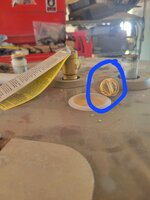
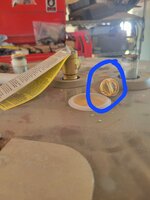
I'm not sure what you mean. I had a different tank on the system but got this new one and it's bigger. It is a closed loop system. The tank is strictly for the infloor heat. Is that piece of plastic an anti siphon? And should it only be on one side like the hot. ThanksOnly one anti siphon valve is needed, it can also be installed in either hot or cold line with a tee in the piping unaffected by the valves which isolate the tank . Since you could isolate the tank from the rest of the system, it would be a good idea to have another anti siphon valve else where in the system.
A little explanation would go a long ways so we have some idea what you are trying to do...
If you're using a water heater for a boiler, the size of the tank doesn't matter. All you care about is putting enough heat into the water (wattage)
If you're using a water heater for a boiler, the size of the tank doesn't matter. All you care about is putting enough heat into the water (wattage)
Well I previously had a 50 gallon tank with 4500 watt elements I was using, but I was given a 75 gallon tank with 4500 watt elements. So I pulled the 50 so that I could use it in the mezzanine for domestic. And now replacing it with the 75 gallon. But I didn't see those little plastic pieces,which I'm assuming are anti siphon, on the old tank, although I never looked. I just want to know if I should have them on both hot and cold, or just hot or just cold. I also have an expansion tank on the hot side. The floor heat works great.
Attachments
pcmeiners
Well-known member
No I was wrong, the plastic pieces you have are to keep keep heat from conducting up the pipe; they can't not be doing much as far as saving energy, there still is metal to metal contact with these plastic inserts. Technical they are used on both hot/cold line.. .....you could leave them out as they do very little towards energy savings.
They do have dielectric unions which do act as die electric isolators previously mentioned such as pictured below, but they are rather expensive. The piece of orange plastic completely electrically isolates the tank and house piping.
"Misunderstood, that plastic piece is a galvanic die electric isolator, it breaks the electric circuit within the piping of the house from the tank's electric circuit ( tank anode and steel tank create an electric circuit) . The function is to keep the steel tank from being the anode of the house piping thus it stops the tank and tank anode from corroding faster than they should. they should be on both hot/cold if only one of the lines you would still have a circuit between the house piping and the tank."

They do have dielectric unions which do act as die electric isolators previously mentioned such as pictured below, but they are rather expensive. The piece of orange plastic completely electrically isolates the tank and house piping.
"Misunderstood, that plastic piece is a galvanic die electric isolator, it breaks the electric circuit within the piping of the house from the tank's electric circuit ( tank anode and steel tank create an electric circuit) . The function is to keep the steel tank from being the anode of the house piping thus it stops the tank and tank anode from corroding faster than they should. they should be on both hot/cold if only one of the lines you would still have a circuit between the house piping and the tank."
Last edited:
Oh wow. Thank you. So I guess I should have it on both hot and cold. You have been a wealth of info. Thanks againMisunderstood, that plastic piece is a galvanic isolator, it breaks the electric circuit within the piping of the house from the tank's electric circuit ( tank anode and steel tank create an electric circuit) . The function is to keep the steel tank from being the anode of the house piping thus it stops the tank and tank anode from corroding faster than they should. they should be on both hot/cold if only one of the lines you would still have a circuit between the house piping and the tank.
pcmeiners
Well-known member
I revised my previous post.So I guess I should have it on both hot and cold.
danski0224
Well-known member
Odd.
I was expecting to see a water heater in a floor...

I was expecting to see a water heater in a floor...
pcmeiners
Well-known member
So was I ... shame us mentally puny human do not have telepathy, it would save so much time especially on answering questions on forums, especially for people like me who do not read OP's posts properly the first time. 