To avoid these ads, REGISTER NOW!

Welding 01 Steel Drill Rod - MaxJax Lifting Point

danieldd

Well-known member
Joined
Dec 10, 2010
Messages
1,005
Location
Southern Tennesseee
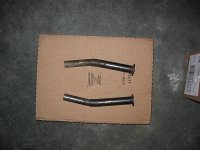
I'm lifting a BMW 850i with my MaxJax. The 850i has lifting points at the lower sills where you can insert a 7/8" rod and raise the car. The car is lowered, so its not feasible to get to the frame wells using the standard MaxJax lift pads.

The issue is I bought an 01 drill rod and thought I would be able to get someone to weld a 3 inch diameter foot onto the end of the rod to help spread the load.

Well, while researching the rod, I found its not recommended to weld this type of material as it causes it to be brittle. Since I'm going to be under the car, I don't want anything holding up the car that is going to fail. So, can you guys either recommend another type of rod material that can be successfully welded. I'm not a materials expert....

IMG_3146.jpg


IMG_3147.jpg
 
Last edited:
To avoid these ads, REGISTER NOW!
OP
D

danieldd

Well-known member
Joined
Dec 10, 2010
Messages
1,005
Location
Southern Tennesseee
Thanks for the inputs. On the two recomendations - the low carbon HRS and the 1018 - are these rods stiff enough to handle the weight of the car? This is a heavy car, in the neighborhood of 4200lbs. I don't want a situation where the rods are going to be bending under pressure on the lift.
 

larry_g

Well-known member
Joined
Apr 28, 2007
Messages
16,928
Location
oregon
Thanks for the inputs. On the two recomendations - the low carbon HRS and the 1018 - are these rods stiff enough to handle the weight of the car? This is a heavy car, in the neighborhood of 4200lbs. I don't want a situation where the rods are going to be bending under pressure on the lift.

If your worried about a 7/8" rod bending, look at the light metal that makes up the hole. Your bending moment is so short your approaching shear. A mild 7/8" bolt is in the 21000lb range. Shear strength

lg
no neat sig line
 

MoonRise

Well-known member
Joined
Nov 5, 2010
Messages
4,045
Location
NJ
As said, do not weld the O1 steel.

note/disclaimer: it is possible to weld O1 steel, but in general the 'average' welder should not weld high-carbon or tool steels. Depending on the desired/needed end-result, welding would usually involve various levels of pre-heat and post-heat requirements, as well as possible annealing or stress-relieving or hardening and tempering. As well as various electrode/filler requirements depending on the desired/needed end-result.

As Larry mentioned, don't worry about bending your 'lift pins'. With all four pins lifting up the vehicle, the loading on the pins is almost plain shear loading with minimal bending.
Just a plain mild steel solid 7/8 rod (1010, 1018/1020 annealed, A36, whatever) would have a shear-strength of around 21,000 lbs. Shear-strength of some hardened O1 (200 ksi
ultimate tensile strength, about Rc=50) is about 75,000 lbs. disclaimer: no effect or consideration given to bending, or fatigue, or stress-concentration factors, your mileage may vary, objects in mirror may appear smaller than actual size, etc, etc

If you are 'worried' about the lift-pins digging into or cutting into the rubber pads on the lift's lift pads, put a piece of steel on top of the rubber to spread the load. Worried about the steel lift-pins rolling on the small steel plates, then make a small 'block' of steel and put a horizontal 7/8 inch hole in there and slip the 7/8 lift-pins into that. No welding needed, not really going anywhere.

Or put that O1 rod away for when you need the properties of O1, and get some plain mild-steel (1010, or 1018/1020 or A36, just not some free-machining stuff) solid 7/8 rod and then four 2x2x1/4 or 3x3x1/4 steel plates. Put rod on top of plate, and fillet-weld rod to plate. Done.
 

markf4e

Well-known member
Joined
Oct 25, 2010
Messages
87
Location
Delaware
How about taking a piece of 1/4 in steel plate with steel wedges welded on each side, like this \o/. It would distribute the load and keep the O1 steel rod centered on the plate, without welding on the rod.
 
OP
D

danieldd

Well-known member
Joined
Dec 10, 2010
Messages
1,005
Location
Southern Tennesseee
Yup, seen all of these. Strong Strut was simply too expensive for what they were offering. I know you can't put a price on safety, but I was looking for a comparable solution that was less expensive.
 
To avoid these ads, REGISTER NOW!
OP
D

danieldd

Well-known member
Joined
Dec 10, 2010
Messages
1,005
Location
Southern Tennesseee
As said, do not weld the O1 steel.

note/disclaimer: it is possible to weld O1 steel, but in general the 'average' welder should not weld high-carbon or tool steels. Depending on the desired/needed end-result, welding would usually involve various levels of pre-heat and post-heat requirements, as well as possible annealing or stress-relieving or hardening and tempering. As well as various electrode/filler requirements depending on the desired/needed end-result.

As Larry mentioned, don't worry about bending your 'lift pins'. With all four pins lifting up the vehicle, the loading on the pins is almost plain shear loading with minimal bending.
Just a plain mild steel solid 7/8 rod (1010, 1018/1020 annealed, A36, whatever) would have a shear-strength of around 21,000 lbs. Shear-strength of some hardened O1 (200 ksi
ultimate tensile strength, about Rc=50) is about 75,000 lbs. disclaimer: no effect or consideration given to bending, or fatigue, or stress-concentration factors, your mileage may vary, objects in mirror may appear smaller than actual size, etc, etc

If you are 'worried' about the lift-pins digging into or cutting into the rubber pads on the lift's lift pads, put a piece of steel on top of the rubber to spread the load. Worried about the steel lift-pins rolling on the small steel plates, then make a small 'block' of steel and put a horizontal 7/8 inch hole in there and slip the 7/8 lift-pins into that. No welding needed, not really going anywhere.

Or put that O1 rod away for when you need the properties of O1, and get some plain mild-steel (1010, or 1018/1020 or A36, just not some free-machining stuff) solid 7/8 rod and then four 2x2x1/4 or 3x3x1/4 steel plates. Put rod on top of plate, and fillet-weld rod to plate. Done.

GREAT information and great suggestions. Thanks! Think I'm going to put the 01 road away and go for one of the steel types you recommended.
 

bad_idea

Well-known member
Joined
Jun 11, 2011
Messages
4,338
Location
Pasquotank, NC
Might I suggest a different route? It looks like the rods on the lift pads lift the vehicle right? If it safely lifts the vehicle as is, lift the vehicle high enough to get the lift pads under the frame, set car on stands/blocks/etc, then lower the lift and reposition the lift pads under the frame. I would feel better with the vehicle supported by the lift pads like the lift company designed the lift to be. Follow my logic? I know it adds an extra step, but I would never feel comfortable working under the car supported by home made lifting adapters.
 
OP
D

danieldd

Well-known member
Joined
Dec 10, 2010
Messages
1,005
Location
Southern Tennesseee
Might I suggest a different route? It looks like the rods on the lift pads lift the vehicle right? If it safely lifts the vehicle as is, lift the vehicle high enough to get the lift pads under the frame, set car on stands/blocks/etc, then lower the lift and reposition the lift pads under the frame. I would feel better with the vehicle supported by the lift pads like the lift company designed the lift to be. Follow my logic? I know it adds an extra step, but I would never feel comfortable working under the car supported by home made lifting adapters.

Understand your suggestion and appreciate your input, but for me it kinda defeats the purpose of the lift. The application and use of the lift should be easier, not harder and I'm no spring chicken anymore...
 

thightower

Well-known member
Joined
Jun 4, 2011
Messages
497
Location
oklahoma
If it will be used between the rod and the lift. I don't see a problem just welding the end of the rod to the plate. That shouldn't cause a problem with turning the brittle, it would only be a spot weld.
 

38Chevy454

Well-known member
Joined
Dec 26, 2006
Messages
4,038
Location
Cincinnati, OH
Thanks for the inputs. On the two recomendations - the low carbon HRS and the 1018 - are these rods stiff enough to handle the weight of the car? This is a heavy car, in the neighborhood of 4200lbs. I don't want a situation where the rods are going to be bending under pressure on the lift.

Stiffness is the same for the O1 tool steel or for basic low carbon steel in your application. Stiffness is derived from the elastic modulus (essentially the same for all steels, regardless of heat treatment or strength), and design (same design for either material = 7/8 rod).

Just as others pointed out, the basic low carbon steel in 7/8 diam is way more capacity than you need. The shear strength of the O1 is just more overkill. Bending is where you will see a difference in the two materials, but with such a short moment arm, the bending stress is still way below the yield stress of the material in either case. The O1 would hold more before it plastically deforms. Just be careful mixing up stiffness with strength, two different material properties.
 

JamieK

Well-known member
Joined
Aug 13, 2009
Messages
1,760
Location
Winston-Salem, NC
I mess with old Mercedes, and had these made up by a machine shop. Just like yours, but the jack holes angle downward, so had to have a slight bend put into it. Works great for the jackstands.
 

Attachments

  • JACKPIN.JPG
    JACKPIN.JPG
    29.2 KB · Views: 54
  • JACKPIN2.JPG
    JACKPIN2.JPG
    21.4 KB · Views: 44

Jcslocum

Member
Joined
May 15, 2011
Messages
23
Understand your suggestion and appreciate your input, but for me it kinda defeats the purpose of the lift. The application and use of the lift should be easier, not harder and I'm no spring chicken anymore...

If you do as suggested, you can get a few more inches of lift when lifting under the car. This will be a great improvement t when you are working under the car.
 

69lm69gp

Well-known member
Joined
Jul 26, 2007
Messages
57
Location
Northwest, CT
I would weld a mild steel tube with a 7/8 ID to the disc and slide the O1 pin in it and hold it in place with a roll pin.
 

joe_padavano

Well-known member
Joined
Feb 26, 2011
Messages
1,788
Location
Northern VA
The first question that comes to my mind is that, whatever material you use, how do you get the pins in the tight tolerance holes in the car when the pads are installed on the jack arms? Any small mismatch in the height of the arms or the cars and you'll be cursing the design.

I know you have a lot of ownership in this clever design, but I'm lazy. How about simply using some lengths of 2x12 that you drive up onto, thus getting the car high enough to use the unmodified jack pads?
 
To avoid these ads, REGISTER NOW!
Top Bottom