To avoid these ads, REGISTER NOW!

Welding a vice... Need advice!!

Sparkfarmer

Well-known member
Joined
Jun 11, 2010
Messages
235
Location
Toronto Canada
Hey guys,
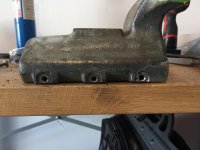
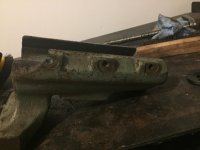
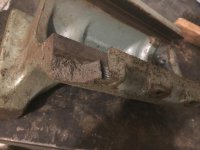
I am restoring an FPU Bison Bial vice. A small corner piece of the vice where the screw that tensions the gib goes is broken. I am planning to add beads of weld to build it up and give that screw some more strength (after welding I will re-drill then tap the hole). The pictures are attached.

I havent welded ductile Iron before so I could use any advice or suggestions I can get. From the research I have done this is my plan:
1. clean up the break with a grinder.
2. heat up the piece to around 500c in the oven
3. use a torch to heat the piece to over 600
4. fill in the screw groove with weld (I have a lb of nickel 55)
5. weld across the length of the break checking the temp after each bead and letting the piece stay between 600 and 700
6. use the torch to keep the piece evenly heated
7. when done cover the part in sand to cool slowly

If anyone has any advice it would be appreciated. Especially as to what order and configuration they would lay the beads and how to avoid making too much of a mess of the adjacent bearing surface.
note: I don't have the piece that broke off.


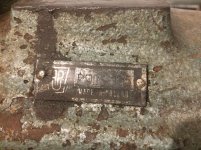
One last thing: anyone know any way to clean up one of these metal plates and make it look good? (see first picture)

Thanks!
 

Attachments

  • IMG_0190.jpg
    IMG_0190.jpg
    158.6 KB · Views: 197
  • IMG_0189.jpg
    IMG_0189.jpg
    100.1 KB · Views: 206
  • IMG_0188.jpg
    IMG_0188.jpg
    122.5 KB · Views: 226
  • IMG_0168.jpg
    IMG_0168.jpg
    147 KB · Views: 206
To avoid these ads, REGISTER NOW!

1foxracing

Well-known member
Joined
May 14, 2014
Messages
1,086
Location
Tuscarawas Co, Ohio
Looks like a pretty significant break, good luck with the repair. I recently acquired 2 of these vises myself and just finished the smaller one.
ThGb8WaWNgbwgV9Ub-TFa_AeZi4xiDY-O87l2qK0O-cJXiRIgvKRvsVLFgYmFs0OGdsvQW_nwO_jp4T33WumpF511hmbRCrLBmhseiR_UhVZl-m_28h1bbixZ_f_urUV4aiqTuZRawEThQeJGbF_kow9JWTJs1WPIMli3aRIMDIu-jrKhIG6JxBmzLCO9VyJ7FtYVMdlhFWafhACUJOT0WFwvUtKRqlTYi_biY2_DbfwFcNTqXzRxLCCKwArFBtICoFzyHuWT4ESDbGYySo7XVcRms5Pn4XcdRlY1NtGvrWk488TSvDbEpX5JRsIILvlVxqhyqB-D76KKAPp7SRo9iQg9DZzWGQJo4WED4pOJIYParOsqpQPpyYWUnQugwjRBeoNVZtNv03MUQJ8vSu30sfuZA57gJk8pC4ipApJFXB_x2Cn_N1pIXPvTAB7US7CxJBVY4i62bWdpPpos9ibLxroUeq-CoBxQc-nertyY5u82x-Ie_LnY683YOSLQXrwuJo_9m1HsKDKn0VbOQEznN7J6btBy5TeLmXtAE1HzTAZpj8fCFLkLL-Sv8JFltXz5wfiw-Of7Vrw0uK1aIBMTO1PUbN4o2yRDkrzoOptBZADIpKKT9hAKg7HWDzm_8p1T4B2-NyD4i2vHskCYsR5WmV0v_OGfrVO1g=w956-h637-no


6" (150mm) model still to do.
gc3n4lRswytvrEYMfazQEpYGIJMZWJp_PJzhDj1dFDDLCGpQEZE2zK0m7uh7TO-_LU7Oe0ilVICDp77X3h_kViTGmdtRvfpK4S3888pTqsmZJm3qDrEqLJI9b8mQ0yZGjrEQbjpXFGD43nhm2sjR1wgkMrPp8Q88X7dGoOAsJ3gIahXMNBwW3d8Xd1yB4LvtB7a6964HDeyRo2x6tGtYETmHor8GV4soX3FQEtRILE3WuRz5NaPmkMNtgRuBuY7W0wSMQVSLwNUZysXRxEOdFWBz78kwl9JEHTuae2V2vnWc0hXgBNJ07kRuV2cCcp02hUStpCtsSItCpeMltnHVAev86LdV9PwU747b6LezpKMg1tyVVdBr7_qkl2Wf6ZRPegbuaygapqlU2mnSin-Zx470RPOrNoj2EAifnetvUF_tG8A0cMgFMqgirH0hTosnR4stqyBtxchs11wxN4LbLutC5W4hipgnfAVBNMko6S20hTvkFtggGfXncoTNTnhUfClkm_2UZd9gEHspAcSrrxBlND4xJHRi4lkK-2ZMHp3l-m9uQuc5KjTyeT7NRSnczJkKgr4ySWOYUR070cpADUQJ__SnNhVaJEhd41EMCOT-QN6fp4yfP4fq2rleoDJh23Tcy77CwKkoQAvMGjQgtGsHTuFyzUoj8g=w956-h637-no
 

Lelandwelds

Well-known member
Joined
Sep 6, 2017
Messages
2,443
Location
Central Texas
There are as many variations of cast iron welding methods as there are variations of cast iron compositions. Cast iron expands only 1 or 2% compared to 25% or more for steel. The trick is to never have it hot in one place and cold in another. Keep it all hot. Or, keep it all cold.

Weld short beads. Weld toward both ends. Wait. Intersperse with some ferronickle on the deeper passes. Alternate with pure nickel. Wait until cold enough to place a bare hands briefly on weld area.


If you need an exact color match, disassemble and hire an industrial electric motor( i.e. 200 hp three phase) rewinder to repair with grey cast and a torch. They have experience repairing the mounting legs of multiple inch thick castings.
 
OP
S

Sparkfarmer

Well-known member
Joined
Jun 11, 2010
Messages
235
Location
Toronto Canada
Fox, Great job it looks great!
What paint did you use? Up here in Canada our paint selection is really pathetic. I ended up choosing a rustoleum gloss blue because I couldn't source a color similar to the original in hammertone (or any other decent hammertone color). :(

Looks like a pretty significant break, good luck with the repair. I recently acquired 2 of these vises myself and just finished the smaller one.
ThGb8WaWNgbwgV9Ub-TFa_AeZi4xiDY-O87l2qK0O-cJXiRIgvKRvsVLFgYmFs0OGdsvQW_nwO_jp4T33WumpF511hmbRCrLBmhseiR_UhVZl-m_28h1bbixZ_f_urUV4aiqTuZRawEThQeJGbF_kow9JWTJs1WPIMli3aRIMDIu-jrKhIG6JxBmzLCO9VyJ7FtYVMdlhFWafhACUJOT0WFwvUtKRqlTYi_biY2_DbfwFcNTqXzRxLCCKwArFBtICoFzyHuWT4ESDbGYySo7XVcRms5Pn4XcdRlY1NtGvrWk488TSvDbEpX5JRsIILvlVxqhyqB-D76KKAPp7SRo9iQg9DZzWGQJo4WED4pOJIYParOsqpQPpyYWUnQugwjRBeoNVZtNv03MUQJ8vSu30sfuZA57gJk8pC4ipApJFXB_x2Cn_N1pIXPvTAB7US7CxJBVY4i62bWdpPpos9ibLxroUeq-CoBxQc-nertyY5u82x-Ie_LnY683YOSLQXrwuJo_9m1HsKDKn0VbOQEznN7J6btBy5TeLmXtAE1HzTAZpj8fCFLkLL-Sv8JFltXz5wfiw-Of7Vrw0uK1aIBMTO1PUbN4o2yRDkrzoOptBZADIpKKT9hAKg7HWDzm_8p1T4B2-NyD4i2vHskCYsR5WmV0v_OGfrVO1g=w956-h637-no


6" (150mm) model still to do.
gc3n4lRswytvrEYMfazQEpYGIJMZWJp_PJzhDj1dFDDLCGpQEZE2zK0m7uh7TO-_LU7Oe0ilVICDp77X3h_kViTGmdtRvfpK4S3888pTqsmZJm3qDrEqLJI9b8mQ0yZGjrEQbjpXFGD43nhm2sjR1wgkMrPp8Q88X7dGoOAsJ3gIahXMNBwW3d8Xd1yB4LvtB7a6964HDeyRo2x6tGtYETmHor8GV4soX3FQEtRILE3WuRz5NaPmkMNtgRuBuY7W0wSMQVSLwNUZysXRxEOdFWBz78kwl9JEHTuae2V2vnWc0hXgBNJ07kRuV2cCcp02hUStpCtsSItCpeMltnHVAev86LdV9PwU747b6LezpKMg1tyVVdBr7_qkl2Wf6ZRPegbuaygapqlU2mnSin-Zx470RPOrNoj2EAifnetvUF_tG8A0cMgFMqgirH0hTosnR4stqyBtxchs11wxN4LbLutC5W4hipgnfAVBNMko6S20hTvkFtggGfXncoTNTnhUfClkm_2UZd9gEHspAcSrrxBlND4xJHRi4lkK-2ZMHp3l-m9uQuc5KjTyeT7NRSnczJkKgr4ySWOYUR070cpADUQJ__SnNhVaJEhd41EMCOT-QN6fp4yfP4fq2rleoDJh23Tcy77CwKkoQAvMGjQgtGsHTuFyzUoj8g=w956-h637-no
 
OP
S

Sparkfarmer

Well-known member
Joined
Jun 11, 2010
Messages
235
Location
Toronto Canada
Thanks for the advice,
So not pre-heating and letting it cool between welds is the best in your opinion? This would be easier but everything I have read says to pre-heat and keep hot while welding.

There are as many variations of cast iron welding methods as there are variations of cast iron compositions. Cast iron expands only 1 or 2% compared to 25% or more for steel. The trick is to never have it hot in one place and cold in another. Keep it all hot. Or, keep it all cold.

Weld short beads. Weld toward both ends. Wait. Intersperse with some ferronickle on the deeper passes. Alternate with pure nickel. Wait until cold enough to place a bare hands briefly on weld area.


If you need an exact color match, disassemble and hire an industrial electric motor( i.e. 200 hp three phase) rewinder to repair with grey cast and a torch. They have experience repairing the mounting legs of multiple inch thick castings.
 

DavidB

Well-known member
Joined
Feb 6, 2010
Messages
734
Location
Navarre, FL
The easiest approach would be to heat it and weld in a single pass. The slower, but still effective approach, is to weld short, separate beads and peen them as they cool. Keep welding short beads until you have it welded up. You might also look into brazing it back together.
 

dnschmidt

Well-known member
Joined
Oct 3, 2014
Messages
7,270
Location
Phoenix, AZ
This guy is a master German welder and has a great video on welding cast iron. This might really help you out as it doesn't include using a forge to keep everything hot.
 

Maui

Well-known member
Joined
Sep 16, 2012
Messages
2,863
Location
Upstate NY
If it were me, I wouldn't weld or braze it. I would repair it by using a milling machine to square off the broken section and then place a new piece in its place using pins and recessed allen head bolts.

Maui
 
To avoid these ads, REGISTER NOW!
OP
S

Sparkfarmer

Well-known member
Joined
Jun 11, 2010
Messages
235
Location
Toronto Canada
If it were me, I wouldn't weld or braze it. I would repair it by using a milling machine to square off the broken section and then place a new piece in its place using pins and recessed allen head bolts.

Maui

Yeah... Hadn't thought of that. Its a good idea. I don't have access to a big enough milling machine unfortunately.
 

Lelandwelds

Well-known member
Joined
Sep 6, 2017
Messages
2,443
Location
Central Texas
Thanks for the advice,
So not pre-heating and letting it cool between welds is the best in your opinion? This would be easier but everything I have read says to pre-heat and keep hot while welding.

My favorite preheat is to where a paper match ignites when held against the part. It works hot or cold. The important thing is to not be hot in one spot and cold in another.

Nickle. Actual cast iron filler made of cast iron. Copper alloy. Stainless. All work on most cast iron. Tig. Stick. Torch. Mig. All work if sized for the job. Skip around. Use extremely short beads. All welds are two or three times stronger than the cast iron base metal. Avoid sharp corners. Avoid sudden temp changes.

Every stupid piece of cast is different from the next. (Each is custom made for a known application. The urge to adjust the composition must be overwhelming.)
 

Lelandwelds

Well-known member
Joined
Sep 6, 2017
Messages
2,443
Location
Central Texas
"everything I have read says to pre-heat and keep hot while welding."

Medium carbon or high alloy steel is pre or post heated to put the different carbides into an austentic state.
Cast iron doesn't have carbides. You can weld it at any temperature your heart desires. Just keep it the same temp all over. If you heat it up, you need to cool slowly. Some larger parts may need a dozen or two hours. The odder the shape the slower the temp change must be. The more heating cycles it has seen, the harder it may be to get your bead to stay on.

Cast iron doesn't grow or bend. It just breaks. Keep same temp all over. Make small or slow changes. Half inch long beads. Weld some 55% Nickle in between the 100% Nickle especially the initial or interior passes. If you cover in sand, heat sand to the same temp and keep it dry. Dry perlite or vermiculite mix works too. Wrapping in a dozen dry fire blankets works.

If it cracks or has porosity, just grind out the top third. Defect free welds are easier to get from Nickle than cast iron. Nickle is far stronger than the original part.
 
Last edited:
OP
S

Sparkfarmer

Well-known member
Joined
Jun 11, 2010
Messages
235
Location
Toronto Canada
My favorite preheat is to where a paper match ignites when held against the part. It works hot or cold. The important thing is to not be hot in one spot and cold in another.

Nickle. Actual cast iron filler made of cast iron. Copper alloy. Stainless. All work on most cast iron. Tig. Stick. Torch. Mig. All work if sized for the job. Skip around. Use extremely short beads. All welds are two or three times stronger than the cast iron base metal. Avoid sharp corners. Avoid sudden temp changes.

Every stupid piece of cast is different from the next. (Each is custom made for a known application. The urge to adjust the composition must be overwhelming.)

Thanks for the great advice.
 

matt_i

Well-known member
Joined
Mar 14, 2008
Messages
10,725
Location
SE Michigan
I knew a guy who had welded every metal known to man. His advice for "cast" was to setup your gas grill with the part, run wide open gas grill temp. Using nickel rod, weld 1" or less and peen that weld while still hot with a ball peen hammer to induce compressive stresses to counteract tensile stresses. Repeat until weld is complete.

Slow cool by dialing down the grill in stages over 30 minutes and shutting off burners.
 

Lelandwelds

Well-known member
Joined
Sep 6, 2017
Messages
2,443
Location
Central Texas
One last thing: anyone know any way to clean up one of these metal plates and make it look good? (see first picture)

Thanks!
I have never cleaned up a nameplate. Naval jelly maybe?

The old fart who used to beat me about the ears over cast iron would cover machined areas and threaded parts with a red refractory clay. It worked like a dam for casting aluminum too. He used it over and over. I have no idea where to get some or how it is different from other clays.

Neat little vise. I hope it cleans up well for you. Welding cast iron can be a fun challenge because lots of people struggle with it.
 

driz

Well-known member
Joined
May 22, 2008
Messages
701
Location
Northern NY
Get your sand ready then park it in the gas grill set it on scrap steel runners so you don’t bend the small wires. Get er hot as you can then open er up some and rosebud it till it’s cherry an do your thing some then rap n tap then close lid wait a while rinse n repeat. Worked fine with my 90s Chinese vise and I just used 7018. When done bury in the sand and yank it out tomorrow


Sent from my iPhone using Tapatalk
 
OP
S

Sparkfarmer

Well-known member
Joined
Jun 11, 2010
Messages
235
Location
Toronto Canada
Thanks for the advice everyone. I ended up going with the cold method. welded a small bead at a time then let the temperature equalize in the piece (around 2-3 minutes depending on the length of bead). I heated the piece up to around 150F before starting so there wouldn't be quite so large a temperature differential because it was pretty cold in my garage. The 3/32 nickel 55 rod got great penetration and was super easy to run. Here's the final product after grinding, drilling, and tapping.

:beer:

IMG_0274.jpg
 

FTG-05

Well-known member
Joined
Oct 11, 2012
Messages
1,527
Location
TN
Hey guys,
I am restoring an FPU Bison Bial vice. A small corner piece of the vice where the screw that tensions the gib goes is broken. I am planning to add beads of weld to build it up and give that screw some more strength (after welding I will re-drill then tap the hole). The pictures are attached.

I havent welded ductile Iron before so I could use any advice or suggestions I can get. From the research I have done this is my plan:
1. clean up the break with a grinder.
2. heat up the piece to around 500c in the oven
3. use a torch to heat the piece to over 600
4. fill in the screw groove with weld (I have a lb of nickel 55)
5. weld across the length of the break checking the temp after each bead and letting the piece stay between 600 and 700
6. use the torch to keep the piece evenly heated
7. when done cover the part in sand to cool slowly

If anyone has any advice it would be appreciated. Especially as to what order and configuration they would lay the beads and how to avoid making too much of a mess of the adjacent bearing surface.
note: I don't have the piece that broke off.


One last thing: anyone know any way to clean up one of these metal plates and make it look good? (see first picture)

Thanks!
About 20 years ago, a coworker gave me a busted up Chinese vise that had cracked and broken in half. I used it as a weight block for something until I went to work for a master welder on Saturdays just so I could, hopefully, learn how to weld.

I took it in one Saturday ad between the two of us we welded the thing back together. All I remember is that we pre-heated it, used an stick welder and hi-nickel rods, then did a post heat. I did the welding under his eye.

Apparently, it worked cause it's been my main shop vise ever since. I have it mounted to my +500 lb welding table.

TL;DR: If *I* can fix a POS china-made **** vise, then yours should be a piece of cake.

Good luck.
 
To avoid these ads, REGISTER NOW!
Top Bottom