To avoid these ads, REGISTER NOW!

Welding in patch panels

MP&C

Well-known member
Joined
Oct 21, 2009
Messages
4,396
Location
Leonardtown, MD
There are plenty of excellent shops in NZ.
Every bit as good as the best in America.
Kiwis are renown for their meticulous work.
Maybe you have just been looking in the wrong place.

Reminds me of " the grass is greener over the fence" :beer:

:thumbup: Mark, if you could find a local Kiwi to show you some O/A welding, then you'll get rid of the Mig headaches..
 
To avoid these ads, REGISTER NOW!

chevouier

Member
Joined
Aug 28, 2015
Messages
10
[emoji106] Mark, if you could find a local Kiwi to show you some O/A welding, then you'll get rid of the Mig headaches..
Thanks looking into to some shops over here but for now I'll keep practicing enjoying these sites everyone so helpful cheers mark

Sent from my SM-G900I using Tapatalk
 

banjopete

Well-known member
Joined
Oct 5, 2014
Messages
300
Location
Edmonton, Alberta, Canada
Boy oh boy, thanks isn't enough to say for this training seminar and all the shared experience but thanks all the same. I've been over the thread a number of times and probably will keep at it.

I know I'm bringing this back from quasi obscurity but I wanted to ask the experts here how best to proceed with this home project. I've got my project 1991 VW Gti here, and I'm in need of advice regarding building back the structure I have to cut.

I have areas of rust at the junction of the strut tower, and the inner fender. They are plug welded together with a small bead as well, and there is rot in the seam, and the metal itself:

from the top


from the wheel well


I have this same issue around the back of the same tower with less access.

from in the wheel well


from the engine bay:


My questions are twofold. Would I be better off drilling out all the plug/spot welds and trying to recreate the same setup? (I'm leery of completely removing the strut tower for alignment issues) Could I just cut out the sections of rust and replace the area with one single patch?

It's tricky because it's also a multi faced area with a cup and curves to it, so I might end up making two pieces anyways to create the shape I need but either way just wanted to seek out expert opinions. Any hints on the patch making would be appreciated as well.


and a huge thank you to all the contributors here, I've scoured the web and this is one of the best patch panel resources without question,
 

MP&C

Well-known member
Joined
Oct 21, 2009
Messages
4,396
Location
Leonardtown, MD
Pete, will add some comments later tonight, but if you look through my shop projects thread it may show some tuck shrinking that would help on that corner flange, or use of a hammer form. What area of the world are you in? Someone local may be generous in inviting you over to show how that is done. Not knowing your location impedes those invites. :lol:
 

banjopete

Well-known member
Joined
Oct 5, 2014
Messages
300
Location
Edmonton, Alberta, Canada
Pete, will add some comments later tonight, but if you look through my shop projects thread it may show some tuck shrinking that would help on that corner flange, or use of a hammer form. What area of the world are you in? Someone local may be generous in inviting you over to show how that is done. Not knowing your location impedes those invites. :lol:

Thanks, I did think those tuck shrinking pliers could come in handy with my torch. I'm definitely in the plan phase of things but I am mostly a learn by doing guy so I figure if I have to make 10 templates so be it. I only need one good one.

I've updated my location and I'll check for your shop project thread to look for ideas.
 

Mr onetwo

Well-known member
Joined
Apr 6, 2011
Messages
2,002
Location
Coastal Maine
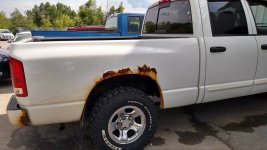
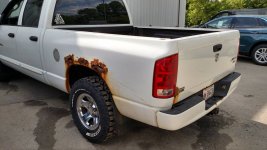
I am looking at this 2005 Ram tomorrow and it's suffering from the typical Dodge bed cancer. I can get eyebrow patch panels for fairly reasonably. http://www.autobodyspecialt.com/cgi-bin/commerce.cgi?preadd=action&key=D-261-LH How would you guys go about cutting in the patches and welding it all up.I don't believe you can access the back side, but I could be wrong. I have a HF151 mig that is OK, but I have never tried it on sheetmetal.I will practice before I dive into this project.Truck is otherwise low miles, 1 owner and rust free.Overall a great buy. And it's a HEMI goddamit!!!:thumbup::beer:
 

Attachments

  • 00V0V_dpwExXf2RaY_1200x900.jpg
    00V0V_dpwExXf2RaY_1200x900.jpg
    92.9 KB · Views: 82
  • 00w0w_gwvanfEW4X5_1200x900.jpg
    00w0w_gwvanfEW4X5_1200x900.jpg
    99.1 KB · Views: 81

cgrutt

Well-known member
Joined
Mar 4, 2016
Messages
8,159
I just did right side of my Ford F150. First shot at bodywork in over 30 years. Came out pretty good and was fairly easy. Ground out rusted area to clean metal. Cut patch panel about size of area that I sanded and used as template to cut fender. After I opened it up found some more rust inside inner wheel well and did same thing. Used a piece of the patch panel to fabricate section I needed on inner wheel well. MIG welded using small 125v welder. Go slow and use random tack welds to keep heat and distortion down. I used Easy Grind 023 wire with 75% AR mix. Grounded welds down and epoxy primed inner wheel well. Then did same for top panel. Followed with light coat of short strand fiberglass, then by normal filler then by putty. Blocked everything flat and epoxy primed the panel. That's as far as I've gotten so far. Still need to do more primer work, topcoat and clear coat. Pretty easy project and came out good enough for my 11 y/o truck. Good luck with the Dodge if you decide to buy it.

24464121630_a8cc7d806d_c.jpg


27149215730_e583374e72_c.jpg
 

Mr onetwo

Well-known member
Joined
Apr 6, 2011
Messages
2,002
Location
Coastal Maine
I just did right side of my Ford F150. First shot at bodywork in over 30 years. Came out pretty good and was fairly easy. Ground out rusted area to clean metal. Cut patch panel about size of area that I sanded and used as template to cut fender. After I opened it up found some more rust inside inner wheel well and did same thing. Used a piece of the patch panel to fabricate section I needed on inner wheel well. MIG welded using small 125v welder. Go slow and use random tack welds to keep heat and distortion down. I used Easy Grind 023 wire with 75% AR mix. Grounded welds down and epoxy primed inner wheel well. Then did same for top panel. Followed with light coat of short strand fiberglass, then by normal filler then by putty. Blocked everything flat and epoxy primed the panel. That's as far as I've gotten so far. Still need to do more primer work, topcoat and clear coat. Pretty easy project and came out good enough for my 11 y/o truck. Good luck with the Dodge if you decide to buy it.
Looks great! Thanks for the tips sir:thumbup: I am keeping my fingers crossed....'05 is the best year for the Ram Hemi IMHO.
 

pi_guy

Well-known member
Joined
Jul 27, 2014
Messages
2,811
Location
N/A
Just a thought use Si bronze wire in the mig gun, melts at lower temp less part distortion. Also easier to grind.
 

MP&C

Well-known member
Joined
Oct 21, 2009
Messages
4,396
Location
Leonardtown, MD
My questions are twofold. Would I be better off drilling out all the plug/spot welds and trying to recreate the same setup? (I'm leery of completely removing the strut tower for alignment issues) Could I just cut out the sections of rust and replace the area with one single patch?

It's tricky because it's also a multi faced area with a cup and curves to it, so I might end up making two pieces anyways to create the shape I need but either way just wanted to seek out expert opinions. Any hints on the patch making would be appreciated as well.


and a huge thank you to all the contributors here, I've scoured the web and this is one of the best patch panel resources without question,


I would suggest drilling the spot welds and trimming per the lines shown in the picture. Any corners should be trimmed using a radius to minimize the panel distortion from welding, discussed in detail in this thread. The factory made this in two pieces, you would likely have better luck doing the same. As it sounds you have limited tooling, the flange could be hammered over a hammer form cut out of a 2x6 (or other size as needed). Some of the bends show a slight radius, bending around appropriate sized piece of pipe may help.
 

Attachments

  • VWGTI.jpg
    VWGTI.jpg
    101.1 KB · Views: 180

ebfabman

Well-known member
Joined
Aug 15, 2009
Messages
85
Not really a patch panel, **** welding with a mig. Pretty close to the same thing.


Attachments

  • bedside1.jpg
    bedside1.jpg
    114.2 KB · Views: 204
Last edited:

banjopete

Well-known member
Joined
Oct 5, 2014
Messages
300
Location
Edmonton, Alberta, Canada
I would suggest drilling the spot welds and trimming per the lines shown in the picture. Any corners should be trimmed using a radius to minimize the panel distortion from welding, discussed in detail in this thread. The factory made this in two pieces, you would likely have better luck doing the same. As it sounds you have limited tooling, the flange could be hammered over a hammer form cut out of a 2x6 (or other size as needed). Some of the bends show a slight radius, bending around appropriate sized piece of pipe may help.

Thanks very much, it's logical to do what they did, and as you thought I'm going to tackle this with basic tools. I've read and seen some good examples of the hammer form so I'll give that a try to get the corner shape as close as I can. Luckily it doesn't need to be pretty, just functional and sound. I'll be sure to post up some step photos and results once I'm done. It's the first of many patches I'll need to complete for this car.
 

banjopete

Well-known member
Joined
Oct 5, 2014
Messages
300
Location
Edmonton, Alberta, Canada
Well MP&C, I made my cut. I referenced your drawing, but as I started to drill out the plug welds I kept seeing more rust in the seam between the tower and the fender so I expanded the scope a little.


After a little review there was a second cap on the top of the strut tower that I wanted to avoid so I changed the cut on the top to avoid it. I realize I've made a much tougher shape, but there were also 2 or 3 layers of panel already involved and I didn't want to involve a 4th. The tower itself is 14ga, the fender is 20ga.


So question time again, I've got this left from cutting out my strut tower


I think I'll be better off patching the patch? then reinstalling it onto the new fender. Here's the other side of it.


Patching this will be easier than trying to recreate this shape. My concern is that in putting it back I think I'll be short of the tight fit you always mentioned for your templates. Would it be worthwhile or possible to add a strip to the edge of this to give myself some material to worth with? or am I likely just adding to my troubles with more welding/shrinking/deformation?

And despite what it appears like I'm listening to advice intently but as you know it requires adaptability for each scenario. :)
 

dougf

Well-known member
Joined
Feb 22, 2013
Messages
402
Location
Missouri
I'm sure much more competent people will chime in, but in my experience, yes, patch the patch and weld it back. I've done this before on a 66 C10 I'm restoring. There's no way I would have been happy with the cobbled up glob of 18 gauge I tried to hammer into shape. So I instead did what you are suggesting and it turned out great. Just needed access to clean rust, paint, repair and replace. As for the gaps, I don't think you will run into any issues as I typically weld with gaps equal to the distance of a cutoff tool. Just my two cents and good luck.
 

yaidunno

Well-known member
Joined
Feb 10, 2011
Messages
1,336
Location
WI
Looks great! Thanks for the tips sir:thumbup: I am keeping my fingers crossed....'05 is the best year for the Ram Hemi IMHO.

You'll be replacing the inner steel fender lip as well. I did this on mine, both sides. You can access about 80-90% of the weld for planishing.

If you live in the rust belt, it is only a band aid, no matter how good the job. Rust is simply inevitable. It will come back on your repair parts, and it will infest everywhere else. I'd bet my next pay check that the bottom of the doors and tailgate are rotting away on it as well. My 06 runs great, drives great, but rest assured, there is no stopping the rust.
 

MP&C

Well-known member
Joined
Oct 21, 2009
Messages
4,396
Location
Leonardtown, MD
Well MP&C, I made my cut. I referenced your drawing, but as I started to drill out the plug welds I kept seeing more rust in the seam between the tower and the fender so I expanded the scope a little.

After a little review there was a second cap on the top of the strut tower that I wanted to avoid so I changed the cut on the top to avoid it. I realize I've made a much tougher shape, but there were also 2 or 3 layers of panel already involved and I didn't want to involve a 4th. The tower itself is 14ga, the fender is 20ga.

So question time again, I've got this left from cutting out my strut tower


I think I'll be better off patching the patch? then reinstalling it onto the new fender. Here's the other side of it.

Patching this will be easier than trying to recreate this shape. My concern is that in putting it back I think I'll be short of the tight fit you always mentioned for your templates. Would it be worthwhile or possible to add a strip to the edge of this to give myself some material to worth with? or am I likely just adding to my troubles with more welding/shrinking/deformation?

And despite what it appears like I'm listening to advice intently but as you know it requires adaptability for each scenario. :)


Seldom is rust repair cut and dry, more often than not the domino effect takes over and you find more damage. Now that you have a piece cut out, if it looks easier to repair that piece, have at it.. If the slice method has left only a slight gap, a copper backer may help in welding the piece back in place. If it's much wider than that, yes a strip can be added, planished to correct any deformity, and then trimmed for a tight fit..
 

gearguy

New member
Joined
Jun 26, 2016
Messages
1
The best way to install inner/outer rockers

I came across this site by accident and was amazed at how helpful it is. After reading half the pages I decided to jump in with a question on my current build. I'm trying to mount a 56 ford hardtop on a 91 Mercury frame. The 56 rockers and body mounts are gone and I need to fabricate frame mounts also. The best way to do this is to remove all these rusted item for the best working access. I started on the left side leaving the doors on but I'm having trouble keeping the body from twisting and causing door gap problems. My questions are, what should I have done to eliminate this problem and are there any good solution besides trial and error? Thanks in advance for any ideas. gearguy
 

Mr onetwo

Well-known member
Joined
Apr 6, 2011
Messages
2,002
Location
Coastal Maine
You'll be replacing the inner steel fender lip as well. I did this on mine, both sides. You can access about 80-90% of the weld for planishing.

If you live in the rust belt, it is only a band aid, no matter how good the job. Rust is simply inevitable. It will come back on your repair parts, and it will infest everywhere else. I'd bet my next pay check that the bottom of the doors and tailgate are rotting away on it as well. My 06 runs great, drives great, but rest assured, there is no stopping the rust.
Yes, they have the inner wheelhouse pieces as well.There is a solution to this problem....Fluid Film http://www.fluid-film.com/applications/automotive/. Also, if you pop out your tailights, you can wash out the area that rots out.If you get rid of the salty mud that accumulates over the wheels, I don't think it would rust out. I pulled the drivers door panel off...clean as a whistle:bounce:, but 1 rocker has a few bubbles:(
 

Attachments

  • fluid_film.jpg
    fluid_film.jpg
    139.4 KB · Views: 51
  • 3 formulas viscosity.jpg
    3 formulas viscosity.jpg
    15 KB · Views: 64

rockwithjason

Well-known member
Joined
Jan 8, 2006
Messages
2,633
Location
Las Vegas
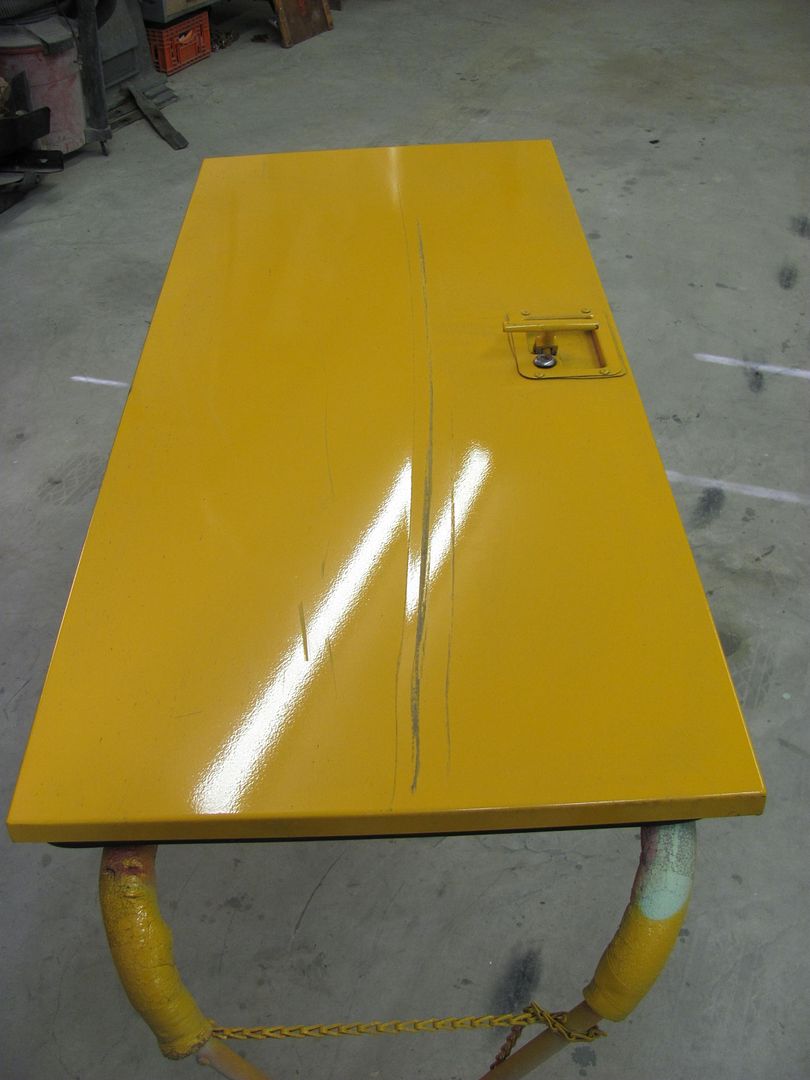
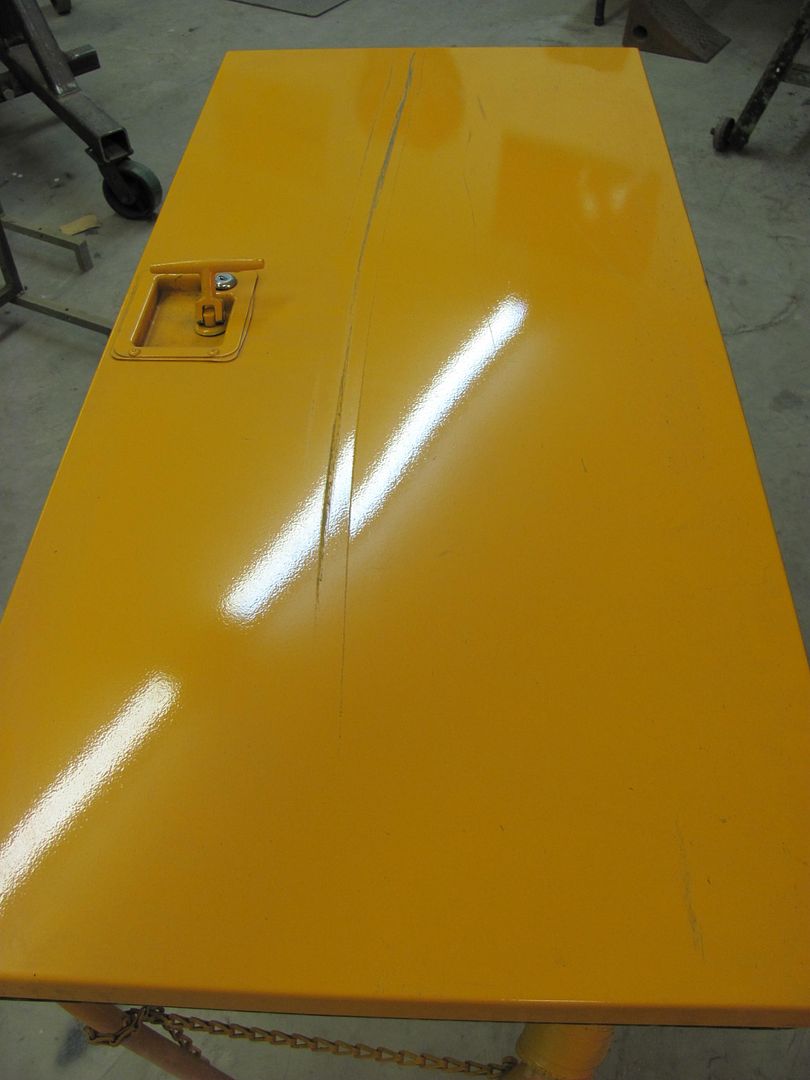
Well I guess it's about time for a sequel. I had a left over door from a bus repair earlier this year, and as it was damaged the least, we thought to keep it as a starting point. New ones in primer go for just under 1K, so I think we can save some money here....

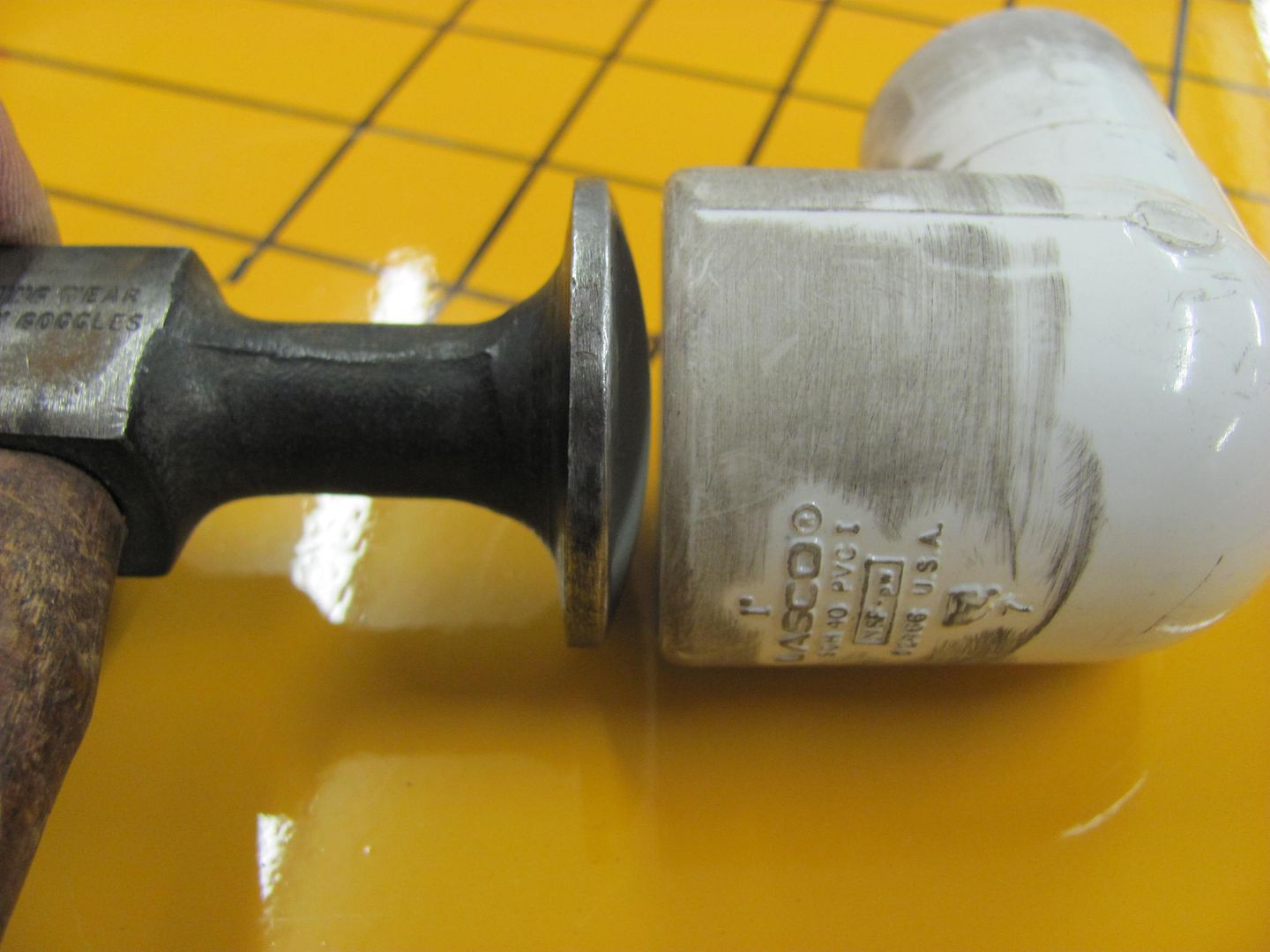
The last time I used the "donut dolly" was with the low crown body hammer (the flat one) but when I tried it on this flat panel, progress seemed to be rather slow. I think the low crown hammer was better matched to a crowned panel, and with this panel being flat, I may have better luck with a crowned face body hammer. So as we're starting with bent metal anyhow, what's a little trial and error going to hurt? I'll just keep my fingers crossed that the hammering force would not be great enough to pound dents in the other direction. (we're looking for consistency and moderation ;) )


Picture095.jpg


Here's our dented sample today, an aluminum door skin with a nice crease that travels just about the full length of the door.


Picture084-1.jpg


Picture085-1.jpg


Picture088-1.jpg


Picture096.jpg


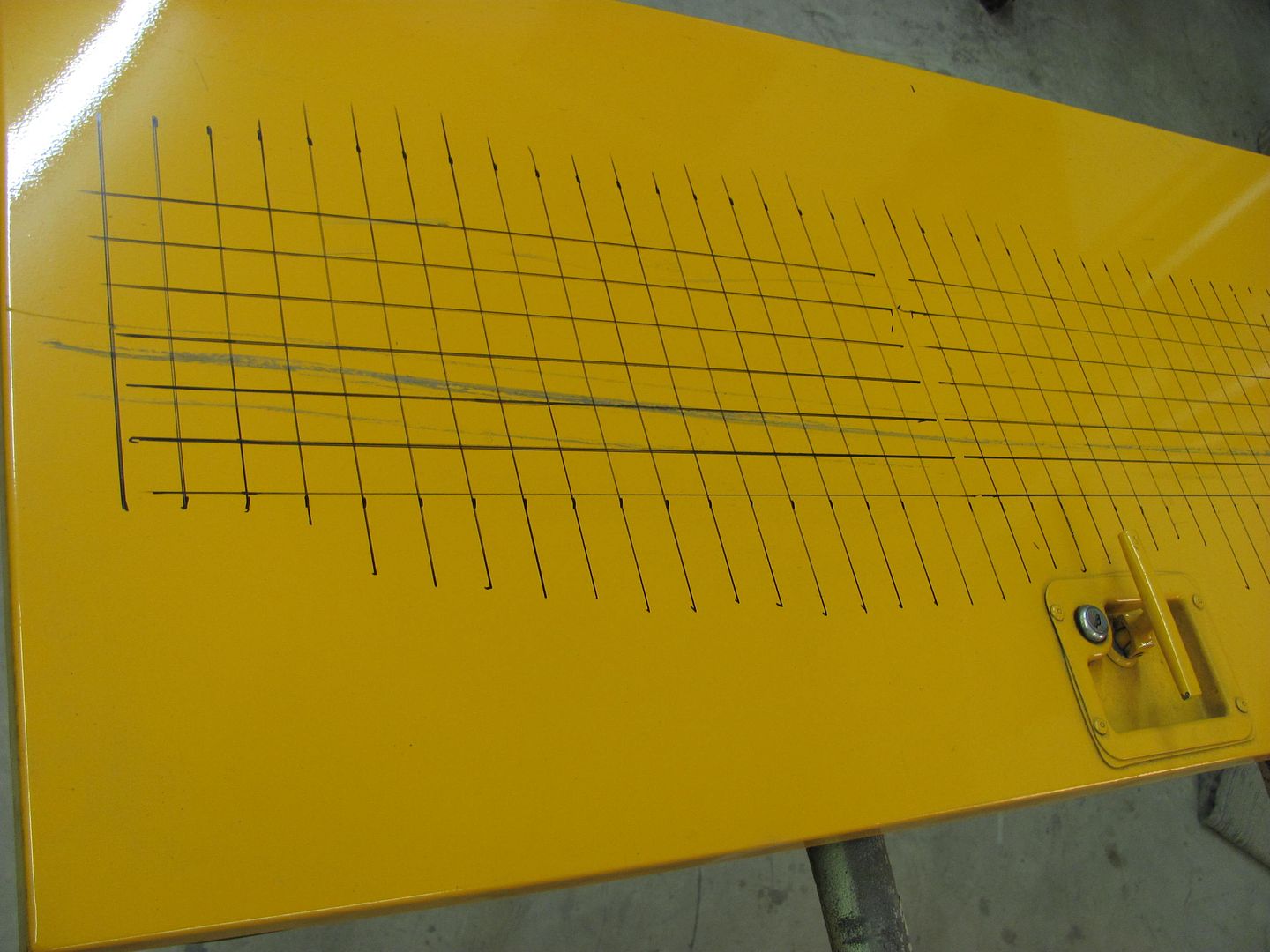
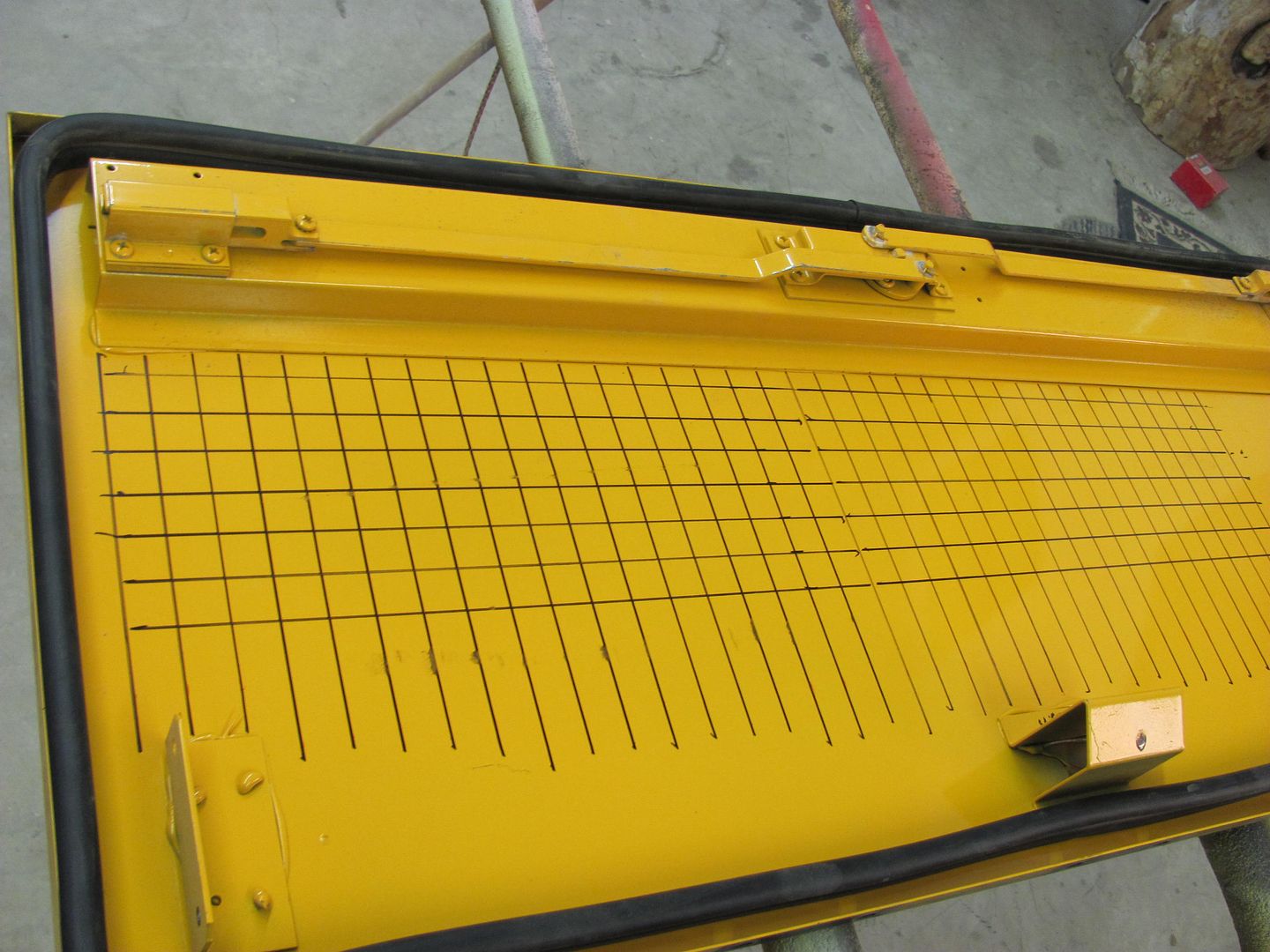
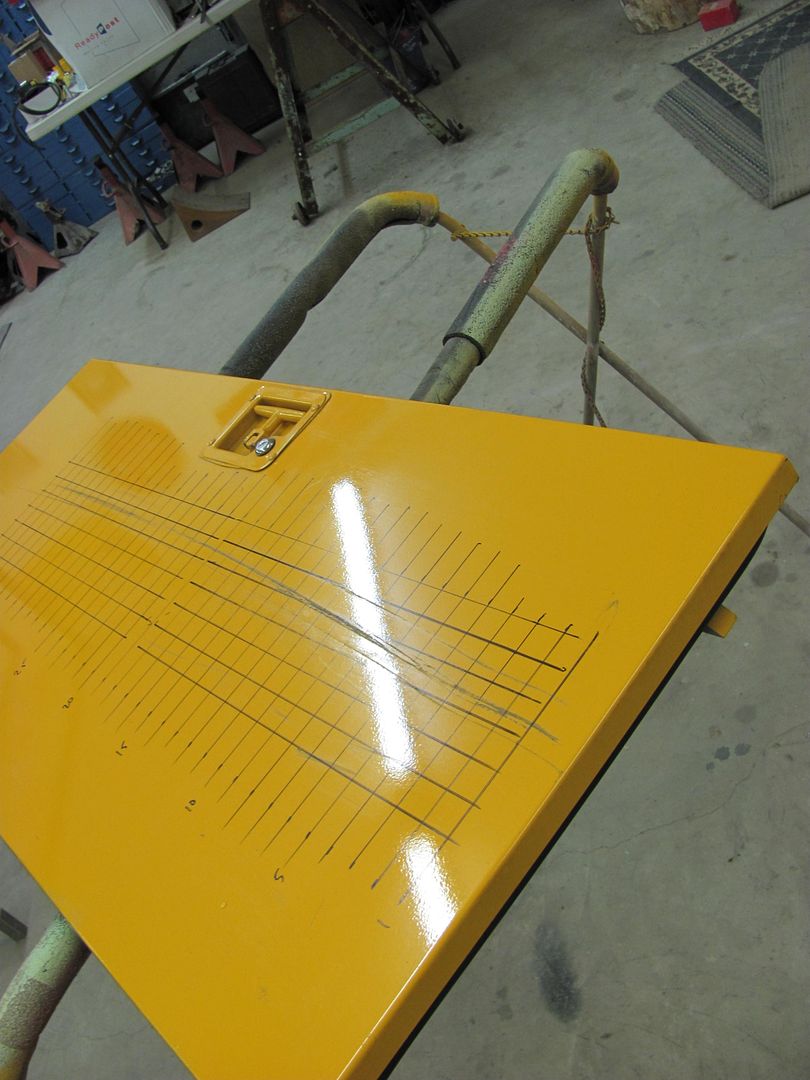
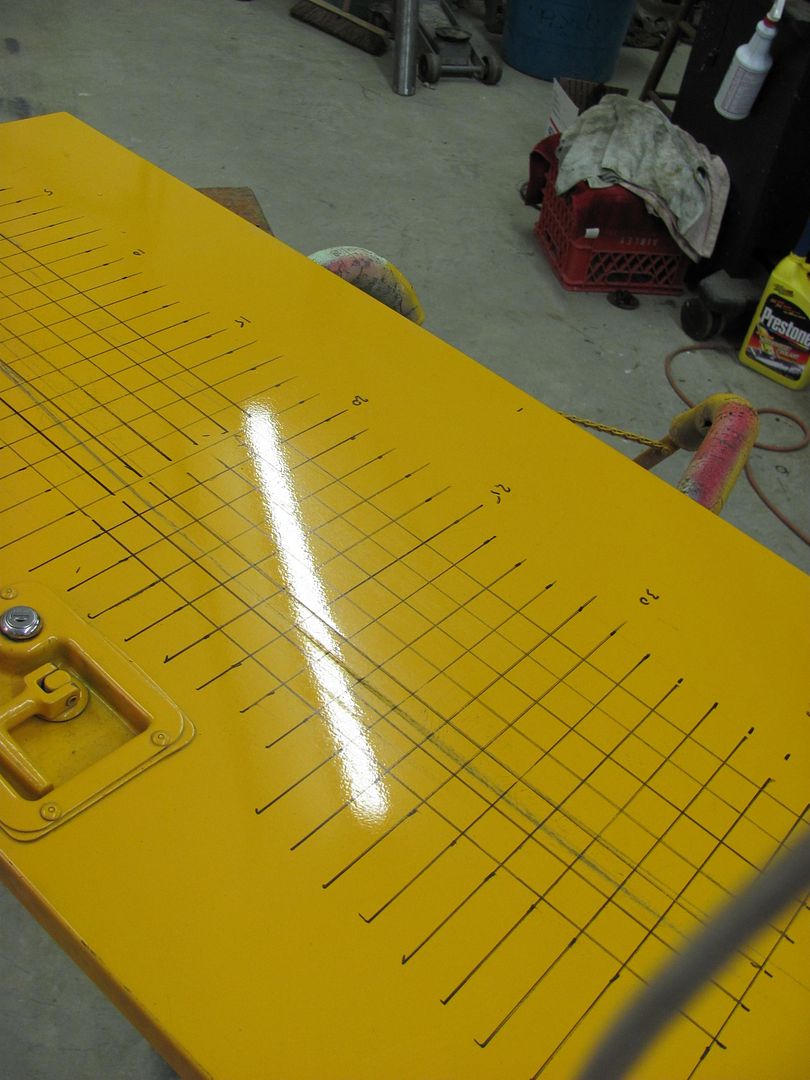
As the donut dolly is very closely matched in size to the hammer diameter, accuracy in locating the devices opposite each other is crucial. Depending on the panel you are repairing, this may be a challenge in itself. To keep the tools properly aligned and thus provide a more efficient shrink, I suggest a grid on either side, matched to identical starting points.


Picture089-1.jpg


Picture090-1.jpg


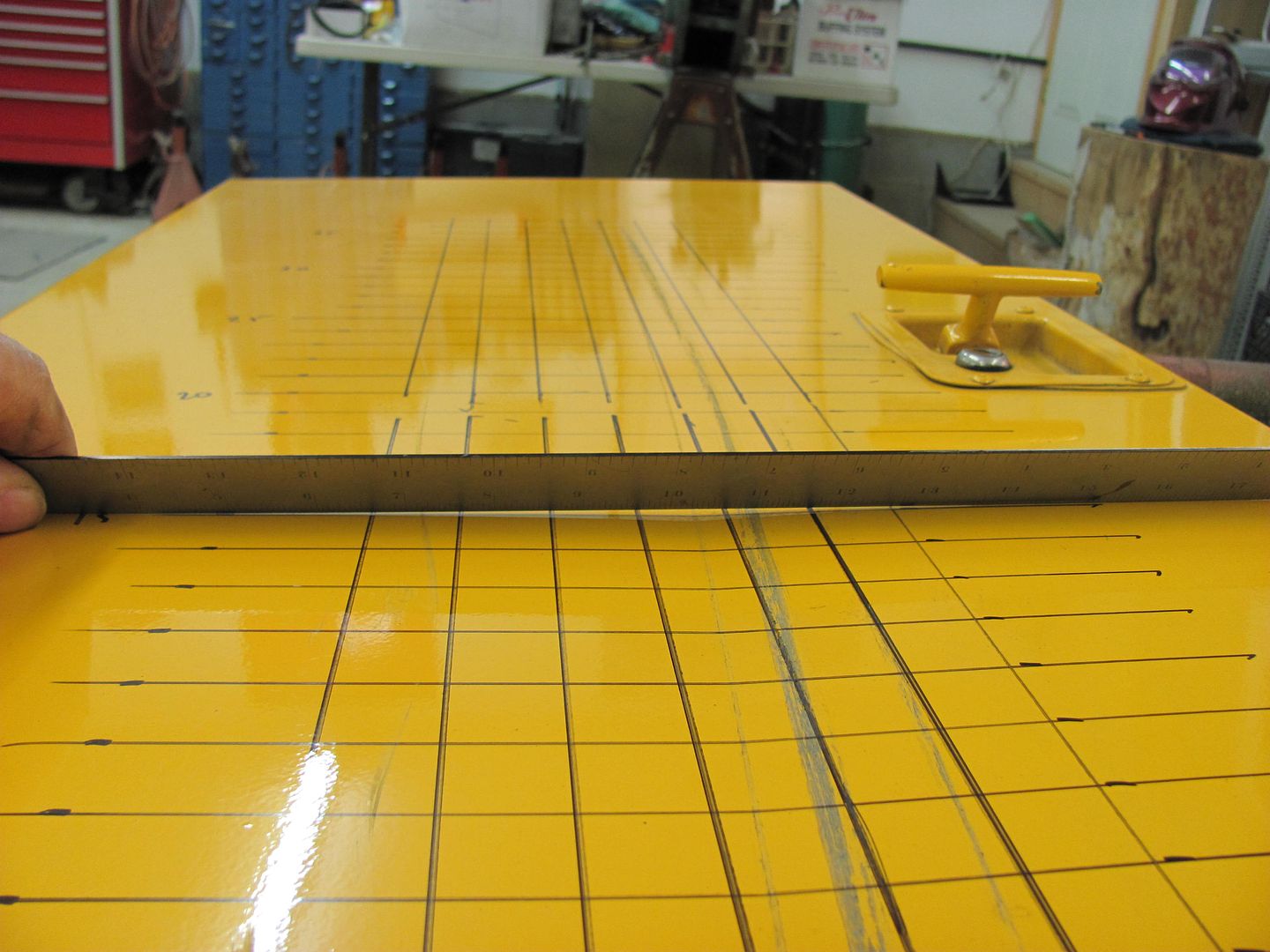
I numbered every fifth one just to keep better track of where I was. Some days you need all the help you can get. Also shown is the damage before starting, located at grid 5, 10, and 15, just for reference of our progress.


Picture091.jpg


Picture092.jpg


Picture093.jpg


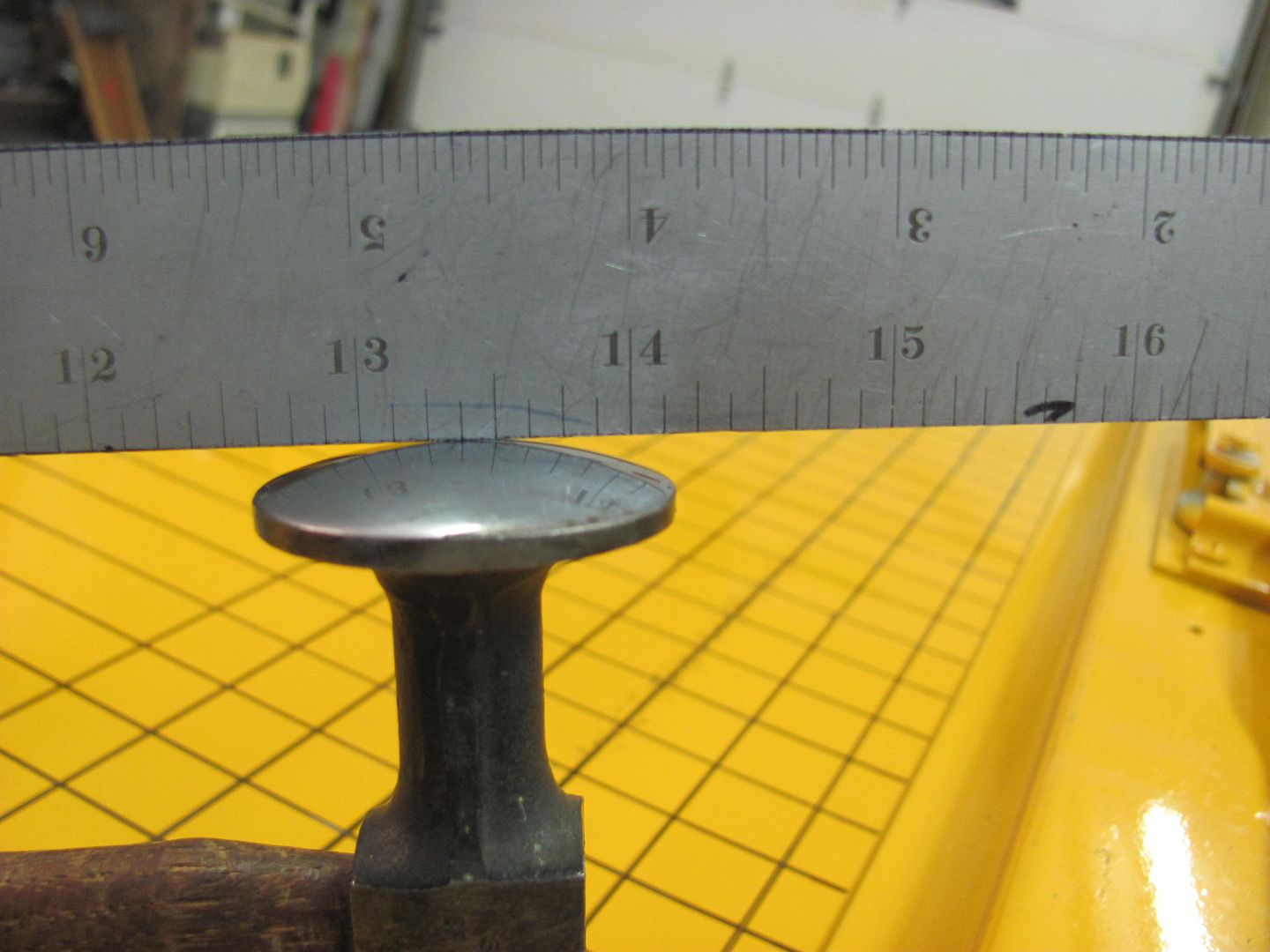
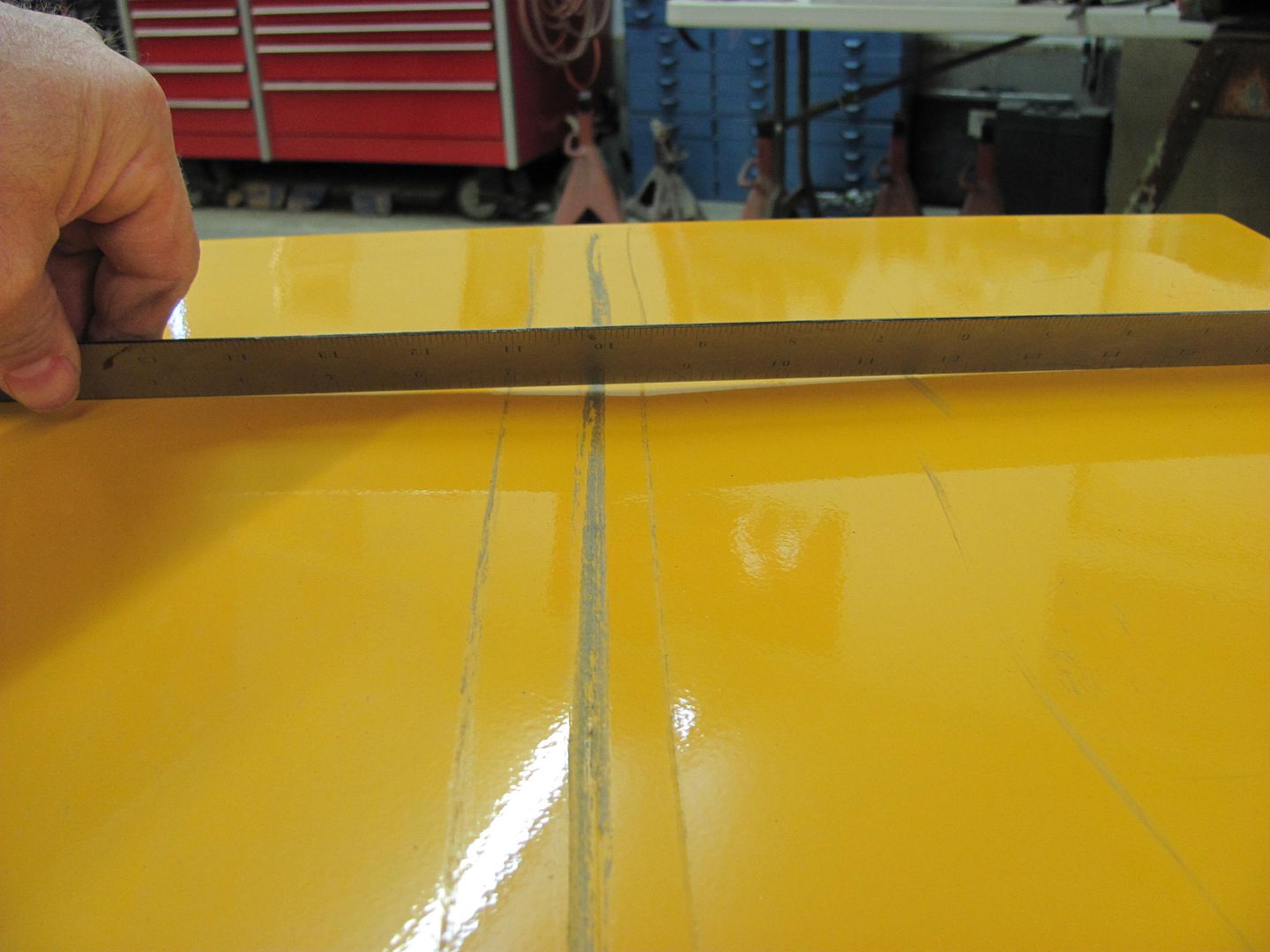
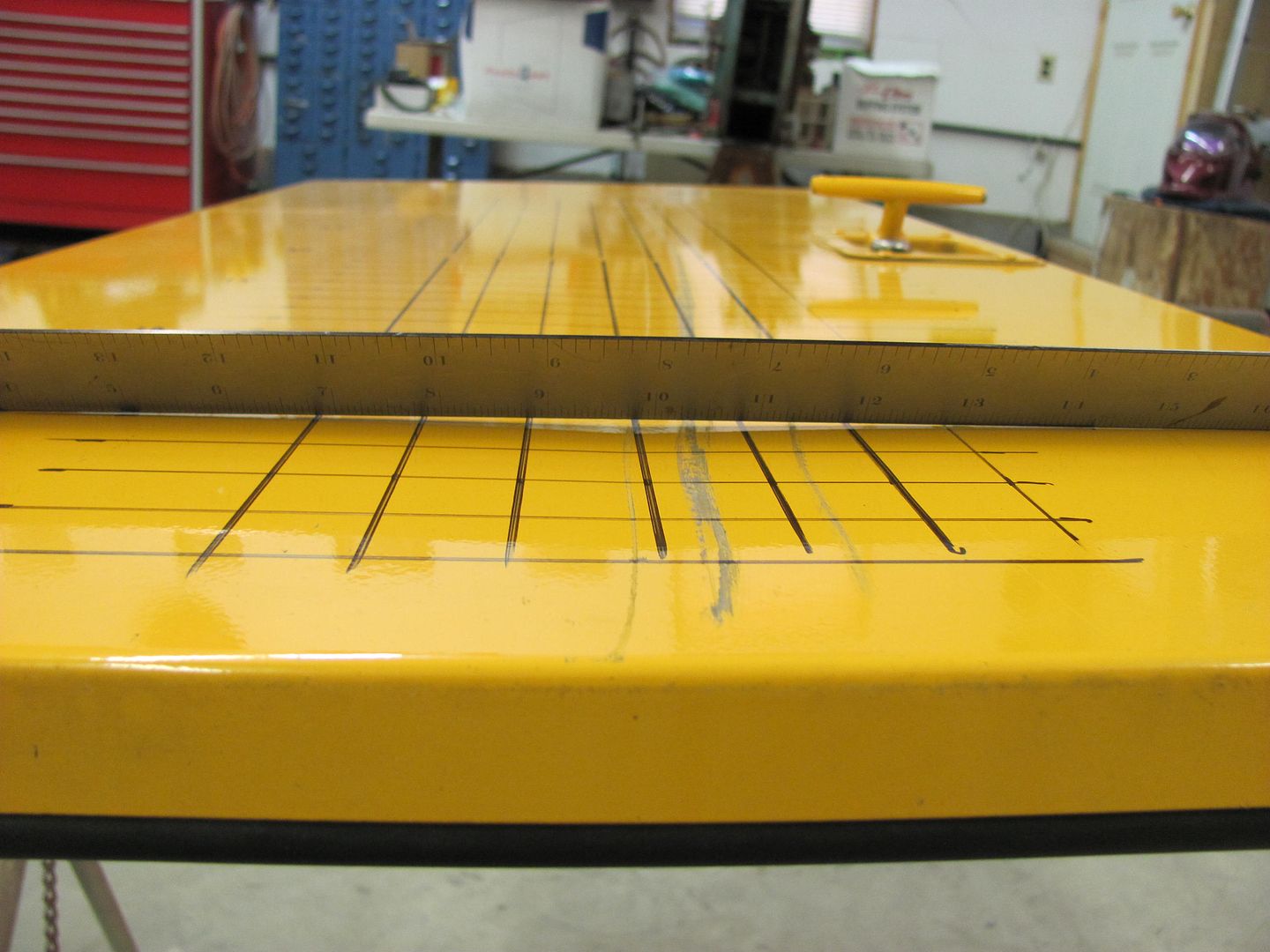
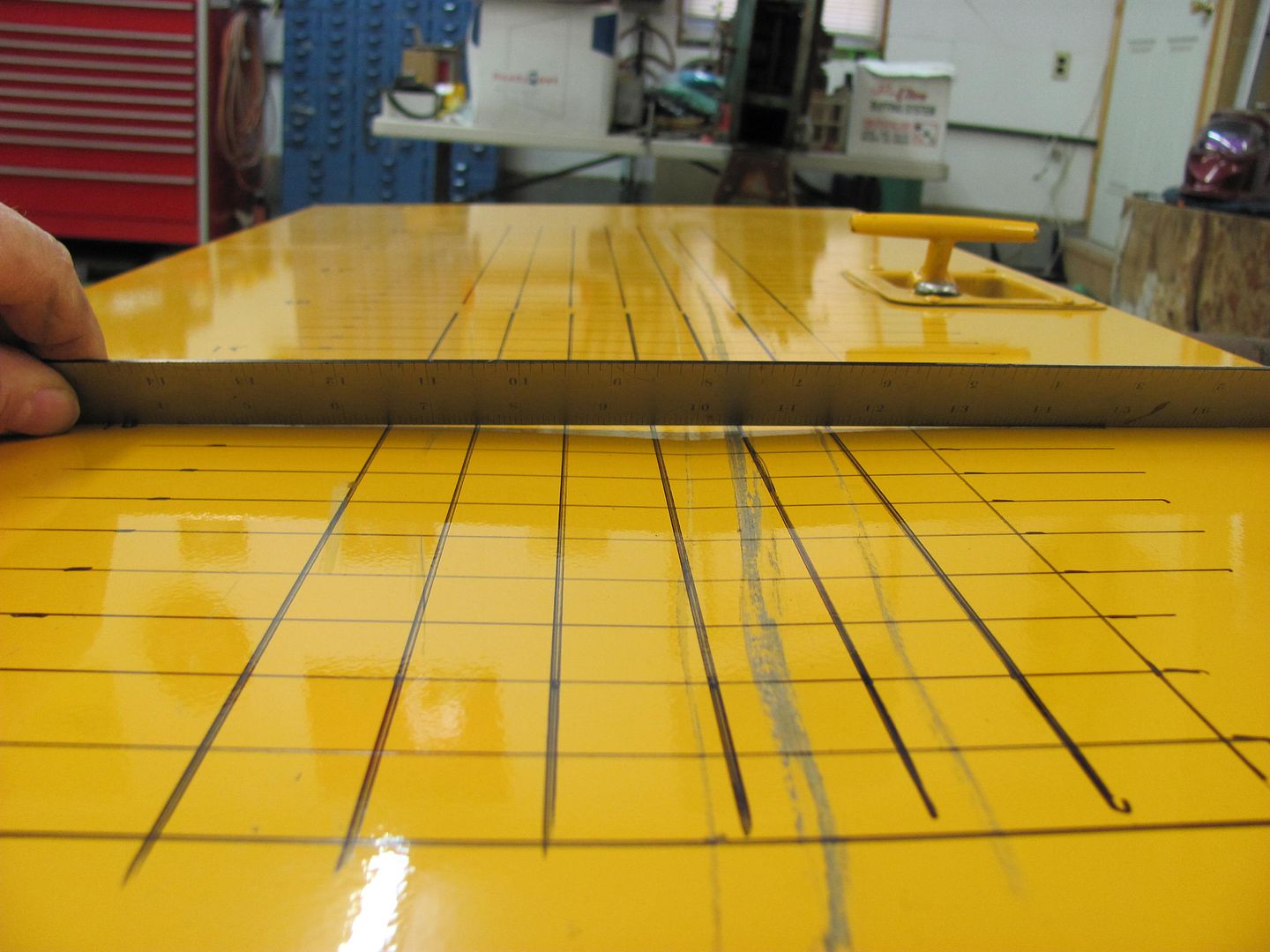
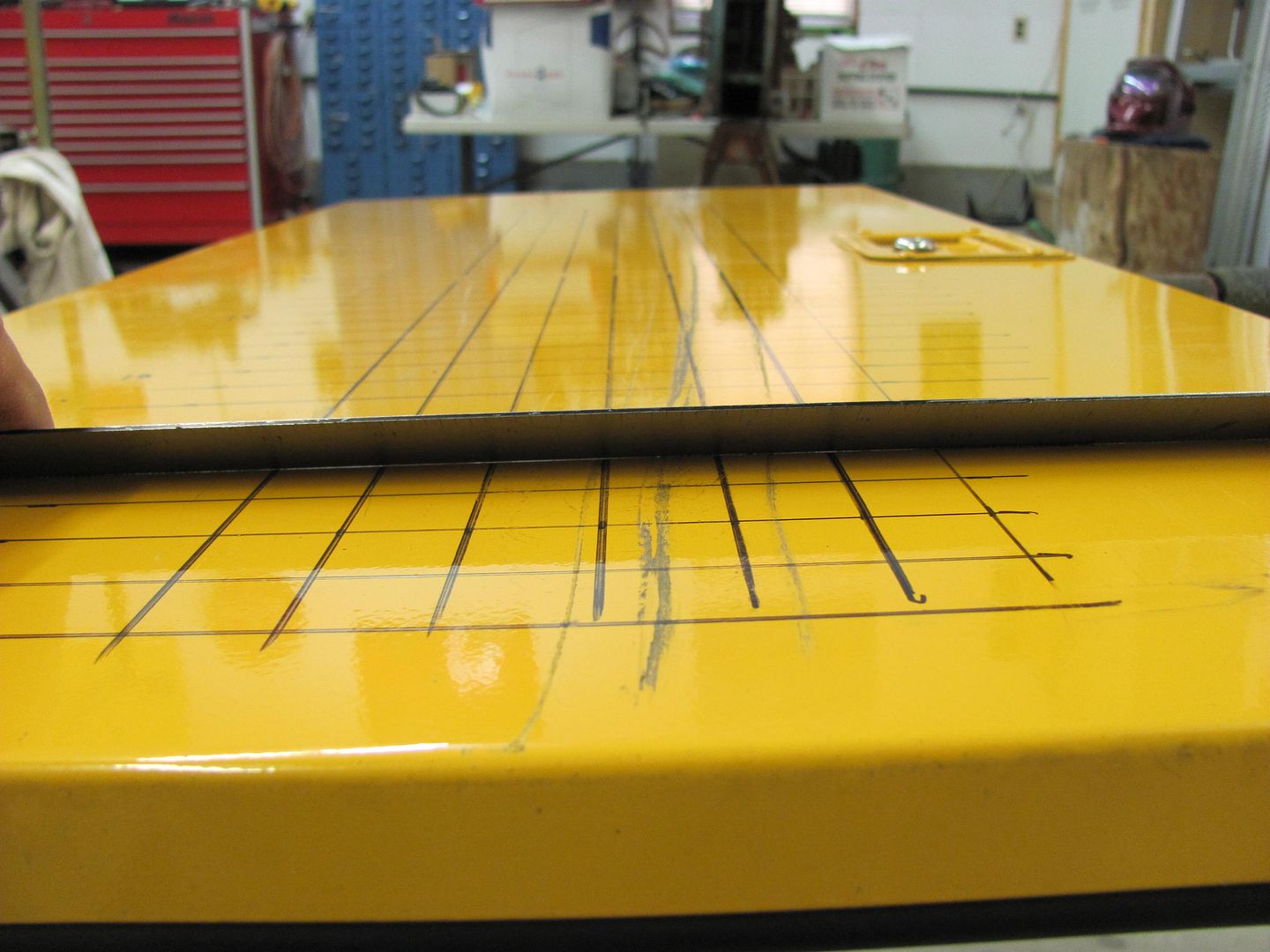
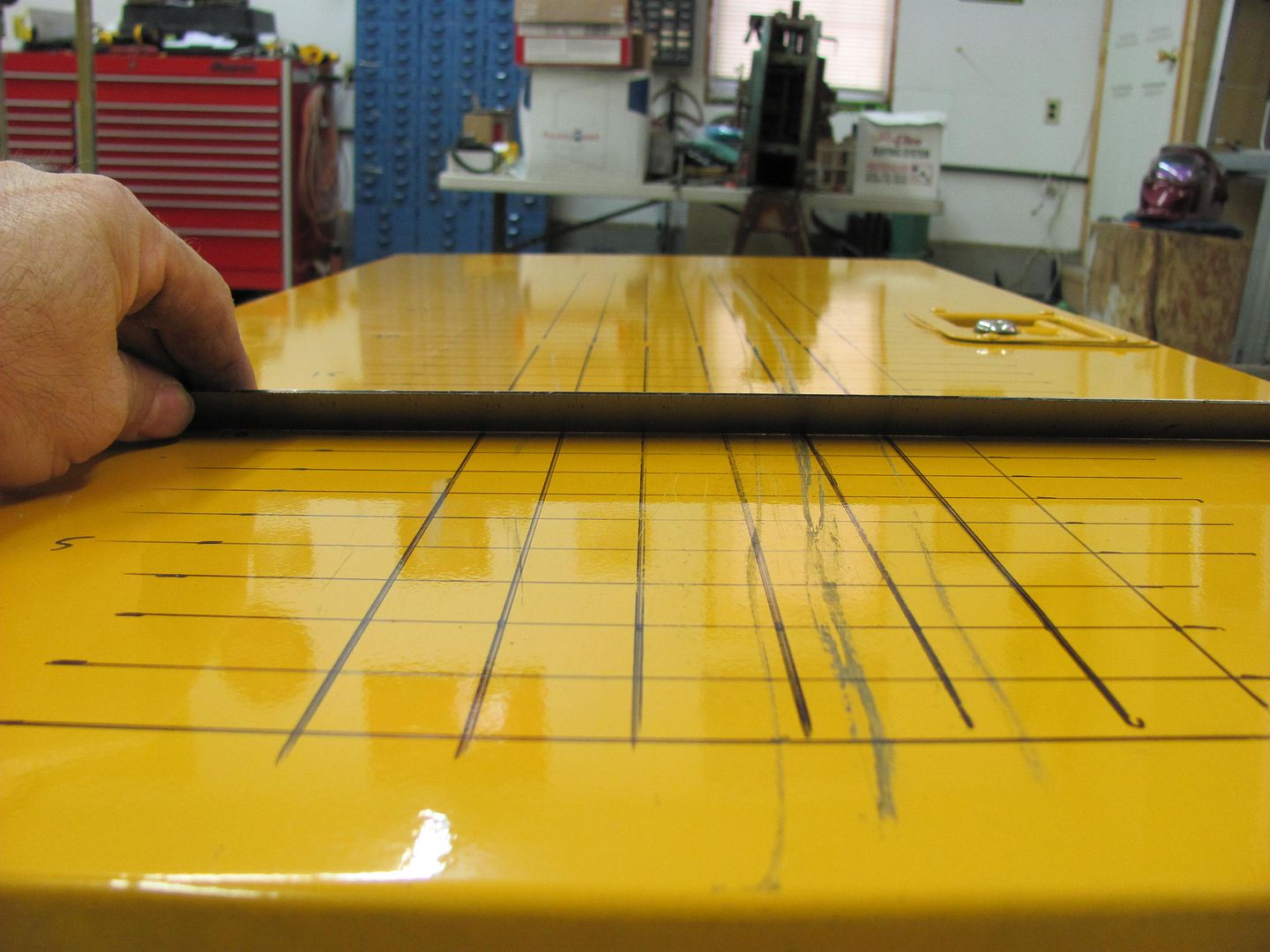
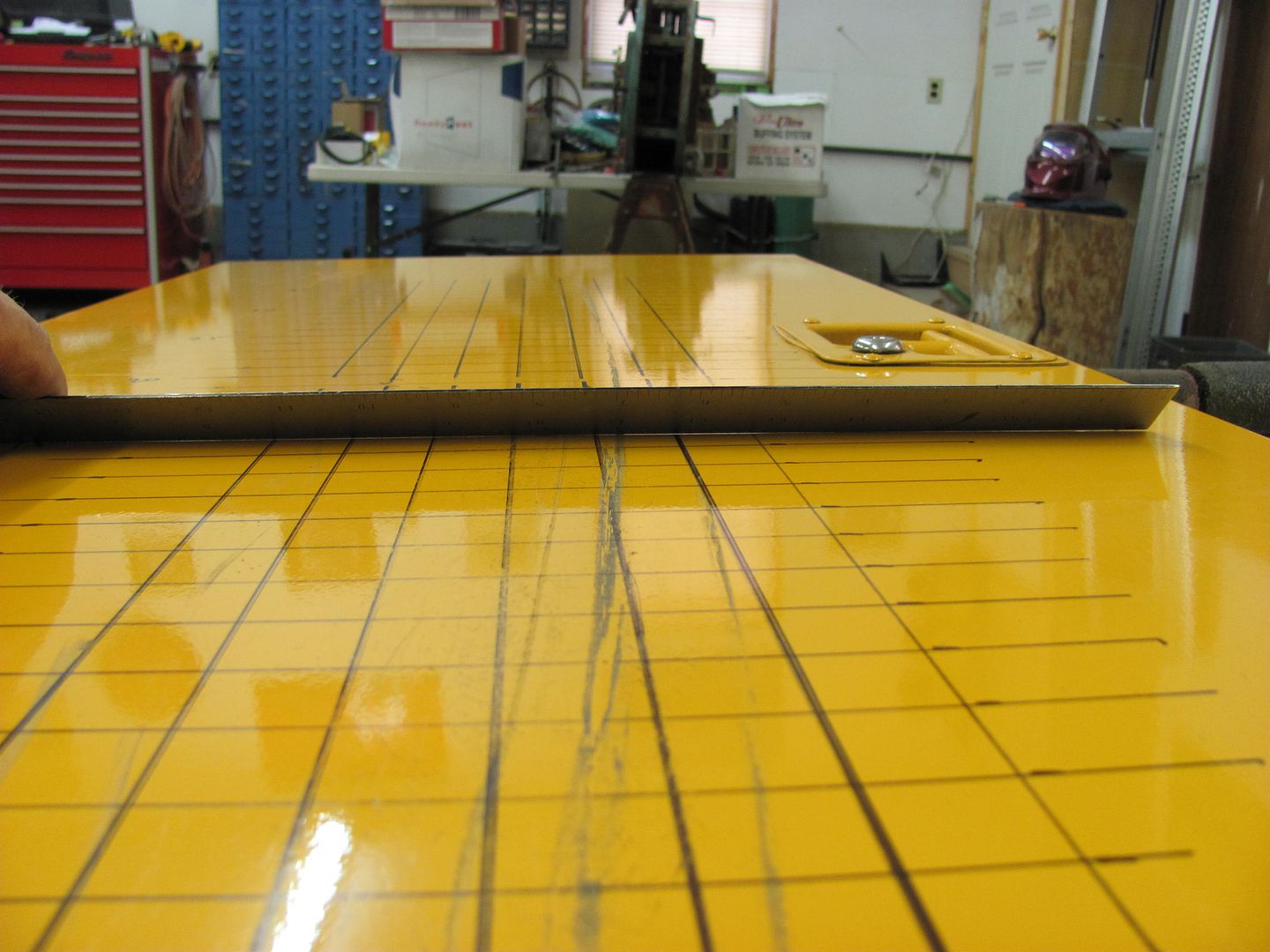
As I am working with a flat panel, I am able to use a straight edge to monitor the progress and see where additional shrinking may be needed. If you are using this process on a crowned panel, I would suggest making a profile template matched to the undamaged side of the car. Also, seldom does the crown on a panel remain consistent from one end of the panel to another, so it is very possible you may need different profile templates to accurately guage different sections along the panel.

After about 30 minutes of work, here are the results, again located at grid 5, 10, and 15.


Picture098.jpg


Picture099.jpg


Picture100.jpg


And the light reflection shows considerable improvement over the first pictures....


Picture102.jpg


Picture103.jpg


This is now at a point we could strip the paint off the door, and any remaining defects would be taken care of with high build primer.

I would love to see a video demonstration of this. I tried my hand at it but it didn't turn out so I am missing something
 

MP&C

Well-known member
Joined
Oct 21, 2009
Messages
4,396
Location
Leonardtown, MD
Jason, the bus luggage door has an aluminum skin to minimize the weight on the gas struts; aluminum is much more responsive to the donut dolly than steel. It will still work with steel, but much more work to get there. Also, note the hammer has a bit of crown to the face. This helps push a slight bit through the donut "trap", and works under the premise that once springback occurs the panel will be flat. Too much swing and you'll leave dents. Using a flat hammer on a flat panel does not provide this effect, so again, it takes forever to accomplish anything using flat on flat.

Torch shrinking or using a heating tip in a dent puller may get it done quicker for a steel panel. Just another method to add to the bag of tricks... never know when you'll need it. Works well on ding removal.
 
To avoid these ads, REGISTER NOW!

MP&C

Well-known member
Joined
Oct 21, 2009
Messages
4,396
Location
Leonardtown, MD
Joe, in many cases, like most "reading exercises", we don't retain the full context without real world application to compare it to. As your skills and experience progress you can then look back at some of the content in this thread and it now makes better sense with a process that you have actually practiced to apply it to. Glad to hear it is helping, glad to hear you are getting your feet wet!
 

fj5gtx

Well-known member
Joined
Oct 26, 2009
Messages
50
This thread is huge! I tried to get through it - but wow there is a lot of content.

Unfortunately I was still unclear on carrying out planishing the "dot" for success... then I found a repost in #402

http://www.garagejournal.com/forum/showpost.php?p=4607191&postcount=402

That post focus is a very well written explanation, including a simple experiment so that the person doing the planishing can get real feedback direct from the metal.

Awesome! Just wanted to say thank you Robert!
 

VDubJoe

Well-known member
Joined
Jan 22, 2006
Messages
319
Location
New Port Richey , Fl
Has anyone tried the Esab Spoolarc esaygrind mig wire. Ive never used it but a friend of mine likes it. He says its softer and easier to planish and grind.
I might give it a try just to see.

Great thread .

joe
 

cgrutt

Well-known member
Joined
Mar 4, 2016
Messages
8,159
I used the easygrind for patch panel on my truck. Worked well and came out great but I'm not a professional and don't have that much experience with other wires. It was a little hard to find and I had to buy a large spool due to availability at time I bought it. Took about 3 weeks to get. Situation might be different now though.
 

bulletpruf

Well-known member
Joined
Nov 28, 2013
Messages
10,914
Location
San Antonio
Not sure how I missed this thread, but glad I found it. About to start welding on my 72 Alfa Romeo with a Miller 211.
 

banjopete

Well-known member
Joined
Oct 5, 2014
Messages
300
Location
Edmonton, Alberta, Canada


So a few more things accomplished, slow progress as I did a huge garage reno and electrical upgrade but back at the patch panel game. Amateur work again compared to the pros here but so far so good with my project. Learning a lot, and jealous of the completely stripped car bodies.

The next area to tackle is the big mess on the seam north east of that last small patch I did. This is all inside the wheel wheel looking towards the firewall. I have next to no access from the top to do anything so this will have to be built back from the bottom up. I think I can layer it back in and just do all the welding from the bottom. Luckily for me this is all getting covered in underbody spray eventually so it doesn't have to be MP&C pretty.
 
Last edited:

lightn95

Well-known member
Joined
Sep 2, 2012
Messages
89
Great thread, I'm half way through it. I've got a question for you. I'm working on a '57 Chevy truck bed for my son's room. The bed box sides are flat and are stretched little and has some ripples. I'm replacing the bottom 6" with new straight metal. What's the best way to get the stretches and ripples out without using heat?
 

MP&C

Well-known member
Joined
Oct 21, 2009
Messages
4,396
Location
Leonardtown, MD
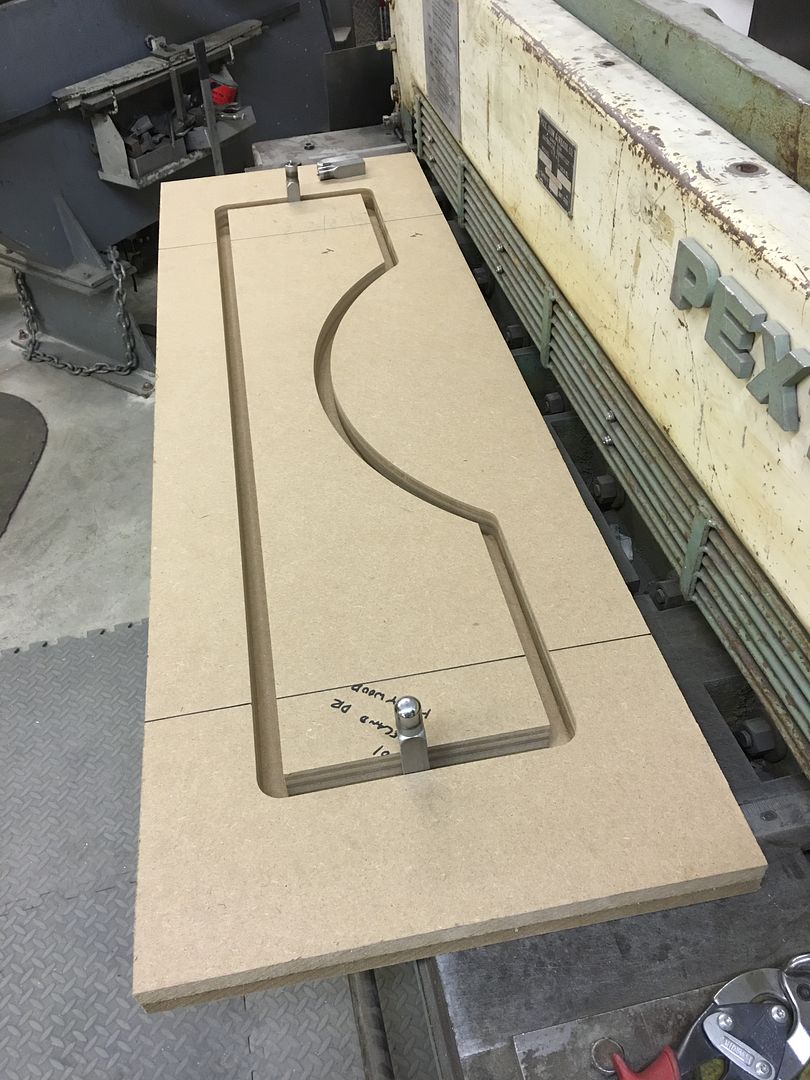
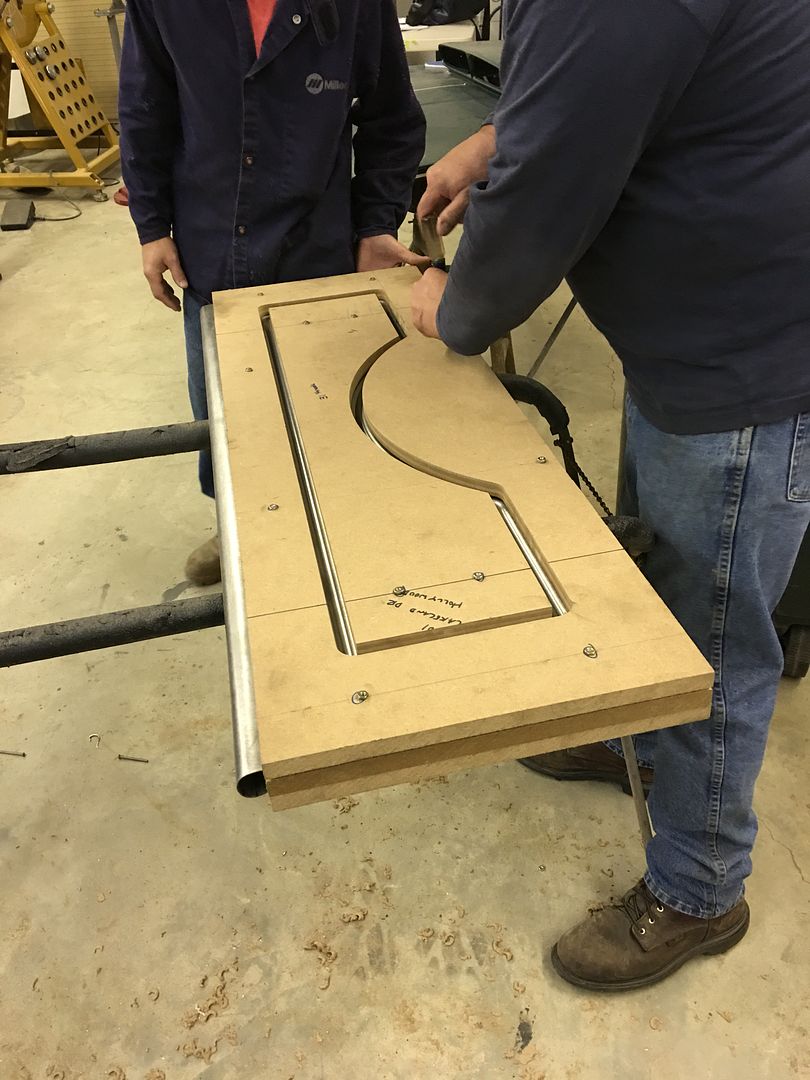
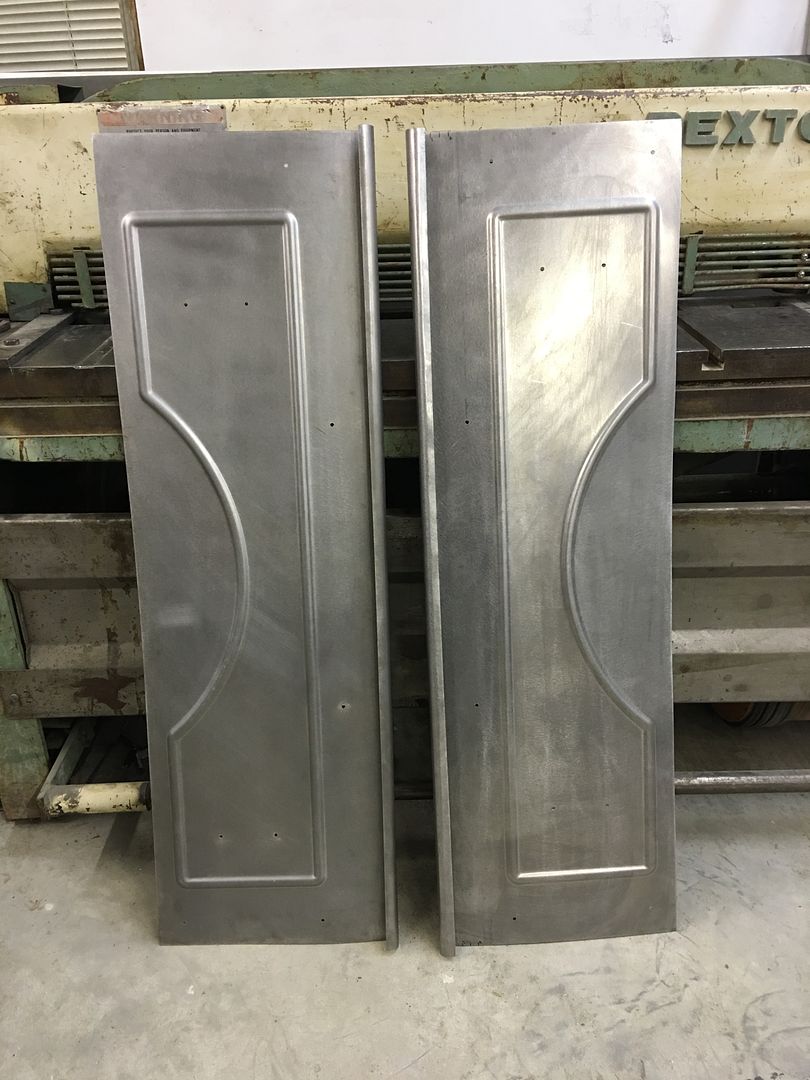
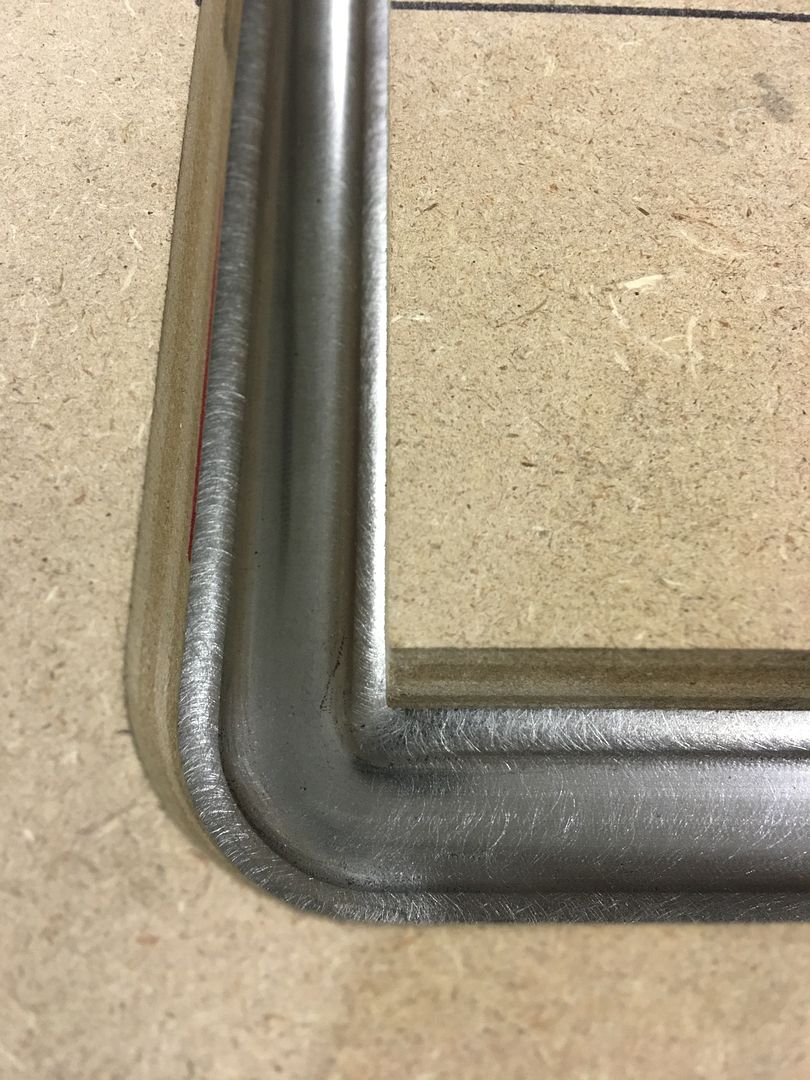
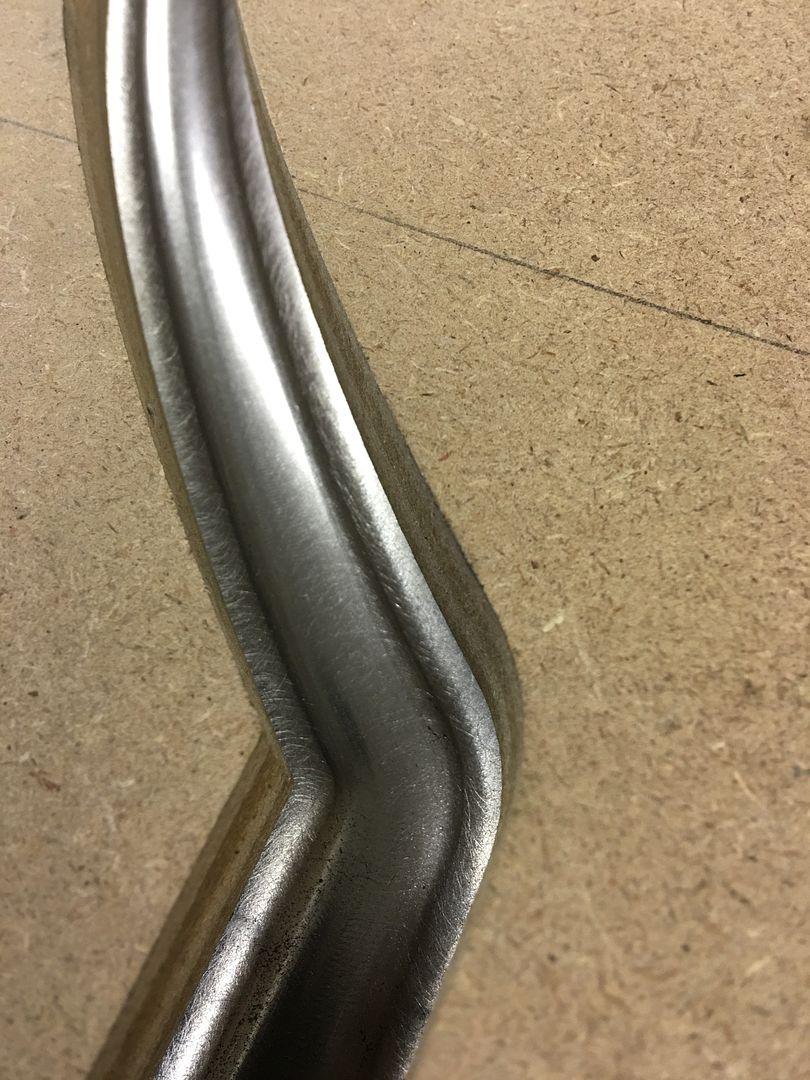
Given it's intended use, I would think you'd find newly built bed sides an easier fit to the mattress size, and you could eliminate all the welding distortion headaches. The top rail of these were bent up using a radius die in an apron brake (thick wall pipe with tabs welded to attach to brake) and the beads done in our recent metalshaping class at the shop..

attachment.php


A local source was used to CNC a template for bead detail on some Model A p/u bedsides....

IMG_1831.jpg


Bead added....

IMG_1836.jpg


Motion picture version:


IMG_1848.jpg


Close-ups of the results...

IMG_1837.jpg


IMG_1838.jpg
If you have your heart set on the vintage version, likely due to patina retention??, you may find the need to use any and all methods of including heat, in the removal of weld distortion and farmer added abuse in the form of dents. To clarify, any ripples that occurred from welding a strip along the bottom is due to shrinking. Anything in the form of dents from past life abuse is stretching. Different methods of repair, and quite a challenge to get things flat again. I'd say there would be less work involved in making a new set, as shown above..
 

Attachments

  • HavlirHouseOfFab.jpg
    HavlirHouseOfFab.jpg
    76 KB · Views: 1,531
Last edited:

lightn95

Well-known member
Joined
Sep 2, 2012
Messages
89
Ok, Thanks. I'd like to keep the originals. I'm not trying to make them perfect. There not terribly stretched, just a little. I'd just like to get one stretch a little smaller. I like em with some character, and history. You can tell they did work and weren't a trailer queen. I bought a repop tailgate that I'm going to narrow so a mattress fits the bed box. (Cause I didn't wanna chop up a good original one) Should some off-site work in the center of the stretch or the perimeter help my cause?
 

lightn95

Well-known member
Joined
Sep 2, 2012
Messages
89
i meant to say "off-dolly", stupid spell check.
ill try to get some pictures in the next couple of nights. it might be kinda hard to see but ill try.
 

lightn95

Well-known member
Joined
Sep 2, 2012
Messages
89
Robert,
i was able to get 2 pictures. the bed side looks worse in the pictures then it really is. the new metal is only a 7" strip at the very bottom of the bed. i am planing on welding the way you described a few pages back about repairing a door skin (post #388).
Thanks for your help!
 

Attachments

  • metal bed.jpg
    metal bed.jpg
    140.3 KB · Views: 182
  • metal bed 2.jpg
    metal bed 2.jpg
    153.4 KB · Views: 168

MP&C

Well-known member
Joined
Oct 21, 2009
Messages
4,396
Location
Leonardtown, MD
Sorry, don't know how I missed that one, Alzheimer's or something..


I see two possible options, there may be others.

1) Shrink the edge containing the wave to match up to the new, flat piece.

2) Stretch the edge on the new, flat piece that will be adjacent to the wavy edge until it matches.


The weld seam and HAZ is going to shrink, so it is possible that the pre-stretched areas before welding will lose their excess during the shrinking process. If this occurs, it is also likely that there will be some residual excess in the middle of the old panel, approx. 3-4 inches down from the HAZ where no shrinking has occurred. You may be able to get this remaining excess out with a shrinking disc, or it may not be that much to be concerned with. One of those try it and see what happens things..

If you shrink the old section first to better match the new flat panel, you will still experience some shrinking, and will need to stretch the weld and HAZ to get the panel flat again.

One word of caution, IMO the first and foremost task here is to get the same amount of material on both sides prior to tacking together. Your tacking should start at one end, go a couple inches, align, tack, go a couple inches, align, tack, etc. Don't skip from one end to the other as you'll likely have a misalignment with more metal on one side than the other. This will trap the excess of one panel between weld tacks and give you a pucker in the middle of the panel where the excess is gathered up, and be more difficult to correct. In the same fashion, having more stretch on one side of the weld (wavy old panel) and none on the other (flat new panel) will likely result in the same excess metal somewhere that is more difficult to remove. Your job now is to figure out which task will be easier, shrinking the old or stretching the edge of the new, in order to get the edges to align. perhaps a combination of each?? Hope my ramblings help make sense of it.... at times I confuse myself. :tard:
 
Last edited:

mopar4don

Well-known member
Joined
Mar 9, 2013
Messages
103
Need a little advise with a patch on a fender. It's from a 69 Charger

y4mTVbodqhLPTpvwVWINpxZ9VO_YdoD7iFj-JKvG9FpQPa10c8aJQ4nbGlyIZgln_Ijn3rb-hD-yC5BtFk9M_EVzxGtVy9g-L9v4aC3u6rgM4k1t8DLvcy3ClskxkBCkgRn-67KY208cLGqpwrGr8fIOGKBua1b7kXQ4lcn-F7hm1WK_7nNNycUEzJwthGEDpvDBMAWrw1QxuZ4rfwPMJv2Aw


I figured I should make a template so I followed Robert's (MP&C's) example.
1st putting cellophane over the area I want a template from (this is another fender with the same area that is good) Then using reinforced tape in a cris-cross pattern right onto the cellophane (tape wont stick to the fender) to lock in the shape


y4mqFECEEOqzTlNfcSRq9EPVrKtfj4GuwxtAndG8NmGM43YfZpr_fqXWwL3UHT33XcKqSMi_c_SkwuDPW2U1uLNCDMjg6stpbWQP3QlBpCQLbmBvc8lLY8PbFDvhqXGpY_RUOsDHMm6x9VL5L6w9D6qCPK3Ay5W5HjeK3-6mvBaizN8_hEeXsxxblAPQ46JtDweS6w9Nyq3URmy03UZMqXgpg


I highlighted the body lines. Turned out pretty good! (robert you are awesome!)

y4ma24wkEwCSdSyCsfGWBzaHCwzM-zz9MMSscn30LE5b8obiv4aR-KdWjyqr1a2bGUDZzRWGy0QNrSPYnNXHHRrKWDP3VQV_--1K3pnY4XVqc1Sc4I2zHlukgshjsSuEGgP68Di0-ooQyCv_Z2_YOFTChdweZ93FD11WkeMKZPm4lypPfdoU8cDUwwa_algUL2g4htNKFGdHv5eXTn0--4UMg


Next I went back to the fender I want to patch and layed out the boundary of the patch
y3mMZsy1wO36AVcGy7ODaQvzYHBBI45myVTeAgEpn1kK8nFKluFUbCfMawyNcYUXtxLZbF6YANRiWnUaIML-D2KejJt-0CSc3sybjCngAP2RW2O42VgXfGni570SfWeZPSbJgAPPYZrFNcwyaw7WEbl8mrRNErWIL_GWrpwmnBA5qs


Then I overlayed the template and using an exacto knife cut out the template patch

y4mup78dR2Bd88a8ilMJIZ57w41npmnY4mTSHr8MjlIfUFRhv0cBp32prs9xhcrskEFbpMzTFPm1wEn0CSUUP2e4dIKqKoWMEqfRwmrnV3am9nVeDMum3bFY5a3ZaucIGCELi4RSCNGO3USPwlauBQjORO8itQM4ydsHtAL2JzMzZNBPx83zuksg5uOCK3_cAgX_1EWJQyPRidbqURwhS1jdw


Here is the template over a piece of metal that had approx the right bend and it had a 90 degree bend
y4mV1B69BgGxceQa-tWtFuAZ9wr6DCLv4eTixDjr0F-rCqBHI0p-SJk-_N_k2HEnhCPpvj9nV-wkkQx7I9zjestVgsZf2Dyh5C3eEt0oKt8SSG8p5TnZz0S-lsu8h-KYSqU5wp55fuY4R0z_eg8ieEc5qMLv-6PUL423SrvfIuTT4euR4nyqSJ0qwXEecr8-kygX6TLzDOgmapxu0g_wMDGgQ


I know I need to shrink the 90 degree bend, this will curve it the other way.
My question is how do I get the body line into it? I dont have a bead roller! Not yet anyway :drool:
 
Last edited:

MP&C

Well-known member
Joined
Oct 21, 2009
Messages
4,396
Location
Leonardtown, MD
Responses in blue....


Need a little advise with a patch on a fender. It's from a 69 Charger

(pic removed)

I figured I should make a template so I followed Robert's (MP&C's) example.
1st putting cellophane over the area I want a template from (this is another fender with the same area that is good) Then using reinforced tape in a cris-cross pattern right onto the celophane (tape wont stick to the fender) to lock in the shape

(pic removed)


I highlighted the body lines. Turned out pretty good! (robert you are awesome!)

y3mZcEEcG9AdK2x56kpUawIYE4RoO6_zVDAYb7YlumDalgiQypTrMFvxj9pDro7J-WODOzoc9FTIXtUm9i_sAavMtYppqpxyohygwEeK04FgabCHXIChjsu7xPOuzKPOHa0Gm12vckQDaf33ax3IJOeX45sIn5cdWw7K8cz-_0J-GQ


Nice job on the Flexible Shape Pattern.

First, One of the nice parts of using the FSP is that it acts as a guide for letting you know if you have enough shape in the part. Looking at your bottom picture with the flexible shape pattern laying on top of the new patch, you should be able to tap on the pattern in any location, and if it is loose, you don't have enough shape in the panel. (yet) You want to be able to tap on it with no "gap" of air under the flexible pattern to the patch. At that point of no voids under the FSP the patch matches the original panel and is ready for installation.

Second, the 90* crease is one of the last things you want to do on a patch, as it locks the shape. In this case it is restricting what you can do to the panel above the crease, where you need much shape put in. IMO the bottom crease should be the last thing done here, start by using a shot bag and adding some shape to a FLAT panel. When your FSP fits snugly, then add any creases.


Next I went back to the fender I want to patch and layed out the boundry of the patch
y3mbhhnko_VC7k85uzNRUpXVIh7yQFfKHy5ErufNd5toolSLCcd2TSQwa92GfLfK0VD3onr2QAppavs0T5hIGpDFsRw3sCRdn3HWRY23Yh65H66Q0s8QrGhEEmlLKbDCgJ0Kpo78jm6VWdJqqlrwc0IrenrdC1fO5RzxBe4mOwBkL8


I know we've discussed at great length to not use sharp corners, and this does have a nice rounded edge for your patch. But the other part to consider in making patches is to insure you have access for a hammer/dolly from the rear side for planishing your weld, and next, to make use of body features that will help to control weld distortion. As shown, the weld will shrink along the mark you have drawn, and as the slight crown (both vertically and horizontally) of the panel shrinks at the weld it will tend to pull the panel into a valley and likely leave a buckle just above the peak of your seam.. Sure you can/will use planishing to reverse the shrinking effect. But the other consideration in weld seam location is body features that help to control distortion. The body crease above will help to hold the panels from wanting to move as much, and if we look further you have a stress crack starting inward from the rear. I would likely perform this patch by cutting the seam about 1" below that upper crease and cut the patch from front to back so you only have one continuous horizontal weld, so you also correct this stress area. The seam should be close enough to the crease that it helps to control any panel movement, and yet just far enough away that the crease stays out of the HAZ. You don't want to shrink the crease, if it turns blue (HAZ indicator) you have shrunk the panel across your "lock", pulling the crown of the panel on both sides of the crease.


Then I overlayed the template and using an exacto knife cut out the template patch
(pic removed)


Here is the template over a piece of metal that had approx the right bend and it had a 90 degree bend
y3mrO9mzevh2YqnBCpmZlO2UK-LAwFZkyvmHVU-xptBCfRl0otpEfGwgl0ql9ZhLep7x5IORo3czECk6_CKBC06OAOdJaNYZ9BBaFDlUj8HN70rayWNz7bbbjRvVBoAh5BiW9gK9WoD4tETNcnNem7MkoQBfrP9WEzPncqug7B3cpA

I know I need to shrink the 90 degree bend, this will curve it the other way.
My question is how do I get the body line into it? I dont have a bead roller! Not yet anyway :drool:


SO let's get a shot bag with sand (try used leather purse or leather pillow or small leather seat cushion from thrift store, fill with sand and duct tape to close up seam and keep sand inside) and use a low crown hammer in a slow, methodical (use a grid pattern that produces results you need) and light hammer blows that don't inflict damage. If you have no bead roller, I would surmise you have no pneumatic planisher. So the hammer hits should be light enough to not inflict "walnuts" in the panel and spaced with enough overlap that the panel remains somewhat smooth. If you find this too time consuming, a large hammer can beat walnuts into the panel and quickly add shape, but you'll need something to act as a large dolly underneath to help smooth these back out. If the thrift store you got the purse from also has a bowling ball, this MAY work to help smooth out walnuts if you choose the "bigger is better" hammer option. But I would try slow and methodical first, and continually monitor your progress using the FSP. Focus your panel stretching on the areas that are the most loose..


I would add, before you start, never cut out the old until the new replacement is done. This helps you have more options, you may want to revert back to a smaller size patch or otherwise have different options available.
 
Last edited:

mopar4don

Well-known member
Joined
Mar 9, 2013
Messages
103
Responses in blue....

Nice job on the Flexible Shape Pattern.

First, One of the nice parts of using the FSP is that it acts as a guide for letting you know if you have enough shape in the part. Looking at your bottom picture with the flexible shape pattern laying on top of the new patch, you should be able to tap on the
pattern in any location, and if it is loose, you don't have enough shape in the panel. (yet) You want to be able to tap on it with no "gap" of air under the flexible pattern to the patch. At that point of no voids under the FSP the patch matches the original
panel and is ready for installation.


My flexible pattern is not quite rigid enough, maybe if I would add a 3rd layer it would help?

Second, the 90* crease is one of the last things you want to do on a patch, as it locks the shape. In this case it is restricting what you can do to the panel above the crease, where you need much shape put in. IMO the bottom crease should be the
last thing done here, start by using a shot bag and adding some shape to a FLAT panel. When your FSP fits snugly, then add any creases.

The patch metal that I currently have has a curve in one direction that is close to the contour, and a 90 degree bend. I have a shrinker stretcher, could'nt I shrink the 90 degree bend and produce a curve the other way

I know we've discussed at great length to not use sharp corners, and this does have a nice rounded edge for your patch. But the other part to consider in making patches is to insure you have access for a hammer/dolly from the rear side for planishing your weld,
and next, to make use of body features that will help to control weld distortion. As shown, the weld will shrink along the mark you have drawn, and as the slight crown (both vertically and horizontally) of the panel shrinks at the weld it will tend to pull the
panel into a valley and likely leave a buckle just above the peak of your seam.. Sure you can/will use planishing to reverse the shrinking effect. But the other consideration in weld seam location is body features that help to control distortion. The body
crease above will help to hold the panels from wanting to move as much, and if we look further you have a stress crack starting inward from the rear. I would likely perform this patch by cutting the seam about 1" below that upper crease and cut the patch from
front to back so you only have one continuous horizontal weld, so you also correct this stress area. The seam should be close enough to the crease that it helps to control any panel movement, and yet just far enough away that the crease stays out of the HAZ.
You don't want to shrink the crease, if it turns blue (HAZ indicator) you have shrunk the panel across your "lock", pulling the crown of the panel on both sides of the crease.

Can you show me wear you would cut the patch


SO let's get a shot bag with sand (try used leather purse or leather pillow or small leather seat cushion from thrift store, fill with sand and duct tape to close up seam and keep sand inside) and use a low crown hammer in a slow, methodical
(use a grid pattern that produces results you need) and light hammer blows that don't inflict damage. If you have no bead roller, I would surmise you have no pneumatic planisher. So the hammer hits should be light enough to not inflict "walnuts" in the panel
and spaced with enough overlap that the panel remains somewhat smooth. If you find this too time consuming, a large hammer can beat walnuts into the panel and quickly add shape, but you'll need something to act as a large dolly underneath to help smooth these back out.
If the thrift store you got the purse from also has a bowling ball, this MAY work to help smooth out walnuts if you choose the "bigger is better" hammer option. But I would try slow and methodical first, and continually monitor your progress using the FSP. Focus your
panel stretching on the areas that are the most loose..


I would add, before you start, never cut out the old until the new replacement is done. This helps you have more options, you may want to revert back to a smaller size patch or otherwise have different options available.

I have a friend that does have an English wheel (it is his son's)... but I have no idea how to use it.
I guess either way I go about getting the shape of the panel (english wheel, or hammer and bag) I will need to get the 90 degree bend, could I just cut it and add it with another piece?

Thank you so much for taking the time to explain things
 

MP&C

Well-known member
Joined
Oct 21, 2009
Messages
4,396
Location
Leonardtown, MD
My responses in Blue...

Don, I know we spoke at length to cover this on the phone, but I thought I'd add those thoughts here that others may benefit as well.

My flexible pattern is not quite rigid enough, maybe if I would add a 3rd layer it would help?

This may be a long response due to the background info. The primary purpose of the FSP is to show the amount of shape in the panel. To further define, shape in the panel as related to a flat sheet of metal is added by either shrinking or stretching. Compare this to form (also know as arrangement) which more equates to a simple roll or fold in the panel. To undo this form, one could simply un-roll back to a flat sheet. With a shrink or stretch that adds shape, any un-doing is much more complex. You need to stretch to undo a shrink, and vice versa.

Next, in many English wheel operations, we'll use motorcycle fenders for instance, a smaller radius lower anvil may put the fender into the sides of the anvil holder. It becomes difficult to wheel if your holder (bracket) is interfering. So if we were to pull the ends of the fender together, and push the sides outward, we would have a smaller diameter fender that was much flatter. This is done to allow us to use a larger radius anvil that does not have the interference issue as it is higher on the edges of the anvil. In relation to shape vs form, the shape (amount of stretching/shrinking) has not changed, but the form/arrangement has. We can simply push the ends of the fender outward, push the sides toward each other, and the fender returns to where it was.

Picture%203328.jpg


Note how flat the fender is at the end hanging down. If we push the ends apart, the radius side to side gets tighter. Pull the ends together, the radius side to side gets flatter. SHAPE never changes, only the form.


So what's the point of all this? Your FSP does not need to be a peel-off exact duplicate of the fender. It is only to show us the shape needed in the panel. Once done, if the fender does not EXACTLY fit, a change of the form/arrangement by bending across your knee or slight twist or ???? should be all that's needed. How does it show if the shape is correct? Place the FSP on top of the patch you are making, and lightly touch in various locations. If there is an air gap in the center, the panel needs more shape/stretch to fill that void. If it touches in the middle of the FSP but is loose around the perimeter, you have too much in the middle, and would either need to stretch the outer areas or shrink the area touching. This helps us to get the amount of SHAPE correct.

The patch metal that I currently have has a curve in one direction that is close to the contour, and a 90 degree bend. I have a shrinker stretcher, could'nt I shrink the 90 degree bend and produce a curve the other way

Any sharp crease acts as a lock on the panel. If you were to try and duplicate the crown of the lower part of that fender on a flat panel I think you'll find that the shape flows better. If you try that same feat with a 90* bend to one side, I think you'll lose that flow, have many other issues in duplicating the shape, and perhaps wind up throwing it away in desperation. A crease can be added at any time, the crown is more easily shaped without the restriction of a lock on one side. The shape will also likely be the toughest part to get right, so make that part of the job easier on yourself.


Can you show me wear you would cut the patch


For most fenders, doors, and quarter panels, you see a rather flat area in the middle, perhaps a crease or higher crown area at the top, and the bottom normally has a body line/crease that separates the flatter middle area from a higher crown area that rolls under. Referring to the welding through body features tutorial:


http://www.garagejournal.com/forum/showpost.php?p=6137723&postcount=2151


You can see the dramatic effect body features have on controlling weld distortion. Based on those results and the panel you have, I would locate the weld seam just below the body crease into the crown that starts to roll under. The crease does the most to control distortion, but don't get so close that the weld and HAZ (heat affected zone....noted by blue color) ever touch or cross that crease, as now you have shrunk the "lock" which affects both sides of the crease. Any shrinking of the crease and you will add a buckle to the other side. SO as in anything, a practice piece is recommended to see what your consistent HAZ width is, to insure you can locate the weld seam so that the HAZ stays a good 1/2" below the crease. That doesn't give you a finite answer in location, because it needs to be based on your results in HAZ width. But I would cut the seam below the crease into the lower crown of the panel based on your HAZ width results.


I have a friend that does have an English wheel (it is his son's)... but I have no idea how to use it.
I guess either way I go about getting the shape of the panel (english wheel, or hammer and bag) I will need to get the 90 degree bend, could I just cut it and add it with another piece?

Thank you so much for taking the time to explain things

Does his son have the proficiency that he could help using the wheel to clean things up afterward or has it not been used because he doesn't? Someone not knowing what they're doing could quickly add too much shape to all your hard work... Try and get in that local class we discussed. :thumbup:
 

mopar4don

Well-known member
Joined
Mar 9, 2013
Messages
103
WOW I never thought metal forming was so invloved.
EVERYTHING you say makes sense It is just a lot to take in!

My next question concerning hammering out a form
because the original FSP has the bends in it. I cant lay it down over a shape (the bends suspend it over the panel)


y4moivdBsWA3iUc-CJZOAFcAKaxuG52VYVuKJ3JiPculgb4S4k5o9Fdjhm5MrdviFNDDXmEBlCQmq7OhlQhw7e6Kpw_P-15rEKYmffZcVK_LTUMLb66_khLZS8cdd_Mb8skZMQsLWtxB13vlgoUlIgUqouwcZgNjj9d25eFcYJR-O-0UoskLvj3nHkA-gB68ps7X9qf9g0dMMYBSSo_PfJYkg


I went ahead and made another form then trimmed off any areas that would hold it away. now as I get my metal patch close I can overlay lay the form and check the contour which will continue running out past the form, then I can start bending the edges.
(that was my idea anyway)(I'm not sure how accurate it will be as it almost lays flat)

y4mqKSg4-4hz-hQL67_HdmTKwmpffZsKHS_AFIiA9_BX06QBrFWTGTx5GJXNIvMS3k14E-7cNsO_yZ8tJoKk4EDlab6qfrCVaVpmYK3jgJsN3nnYn1joRmE0NRh6RXHCGPmKPY5EZZc8e5UpSMkol7fvijq_sLNk0AwbvKaAA8Yyql6KEPFYf7s27q7zYqMOl7QwcbzkJRAbWartkWT6H-TMQ


y4mdoGLr4o01raCeAAIY7pfeDulBiaUsHN2TSTrKHnNJ936jEQAY-3ihlXW79hdNlj3Sbga7g73o7gQWjIV7TRqCC7GhytYpLkivc1XFUaZDawDW8ViAzNQgT6X9tqK4vHKK9xbxWaUECLge_6HVod0sK5J0vve69B1dYe3RQjDKC1T2Az6xaj7fCzJ6XG1nlsOV8icRMZthUYg0AAaLToYyA


My problem.. when I overlay it on the original metal, I have one end that lifts off of the metal (1/8- 3/16 of an inch)

y4mCpWEvGGc4uOFh1dK1e18lz4mYcxE2EXxJO_8fcmkLBdzMDOVp21i7stQXy2gom2N2Heh3hXtNmRHhmUIXoBtAYFyC_RtjIam_30W0T-IpPZr0zY3K7R9vsHz4pVqfFDlpjTudb3tAbVS5Mjqx35ZyWk9rvp3IyfUE6EayMPH6QBhUEMDb8lJuTy4I16B8tJm2giG_fYq4NsKjpsBb7ZmtA


So it looks like when I trimmed the bends from the form it let it relax and now its not quite perfect (as I am typing this I am hearing you say these exact words about metal and their forms):lol:
So what would you advise? (forgive me I am a tool and die maker by trade and we like things really close)
 
Last edited:
To avoid these ads, REGISTER NOW!
Top Bottom