To avoid these ads, REGISTER NOW!

Welding Problem

L&M Garage

Well-known member
Joined
Jun 27, 2013
Messages
57
Location
Hibbing ,Minnesota
i have a ? about Welding Sheet Metal I'm Working on a 62 Chevy truck it needs a small patch put in the rear door i have a Lincoln Mig welder it's on the lowest setting but it's still burning holes in the sheet metal an im not sure what i should do to fix this any tips / idea's comment away ?
 
To avoid these ads, REGISTER NOW!

Capstone

Well-known member
Joined
Aug 19, 2012
Messages
111
Location
Northern VA, DC Area
Best advise... go on youtube and look at videos on the subject. Here's one good example I found in about 2mins. I put a time shift right the part of the video showing the actual welding technique


Good Luck

Phil Caplinger

ps. I'm not compensated for hits on Eastwoods videos, I just find their videos to be helpful and professionally done and I happen to have the MIG135 welder they sell.
 
Last edited:

MP&C

Well-known member
Joined
Oct 21, 2009
Messages
4,403
Location
Leonardtown, MD
i have a ? about Welding Sheet Metal I'm Working on a 62 Chevy truck it needs a small patch put in the rear door i have a Lincoln Mig welder it's on the lowest setting but it's still burning holes in the sheet metal an im not sure what i should do to fix this any tips / idea's comment away ?


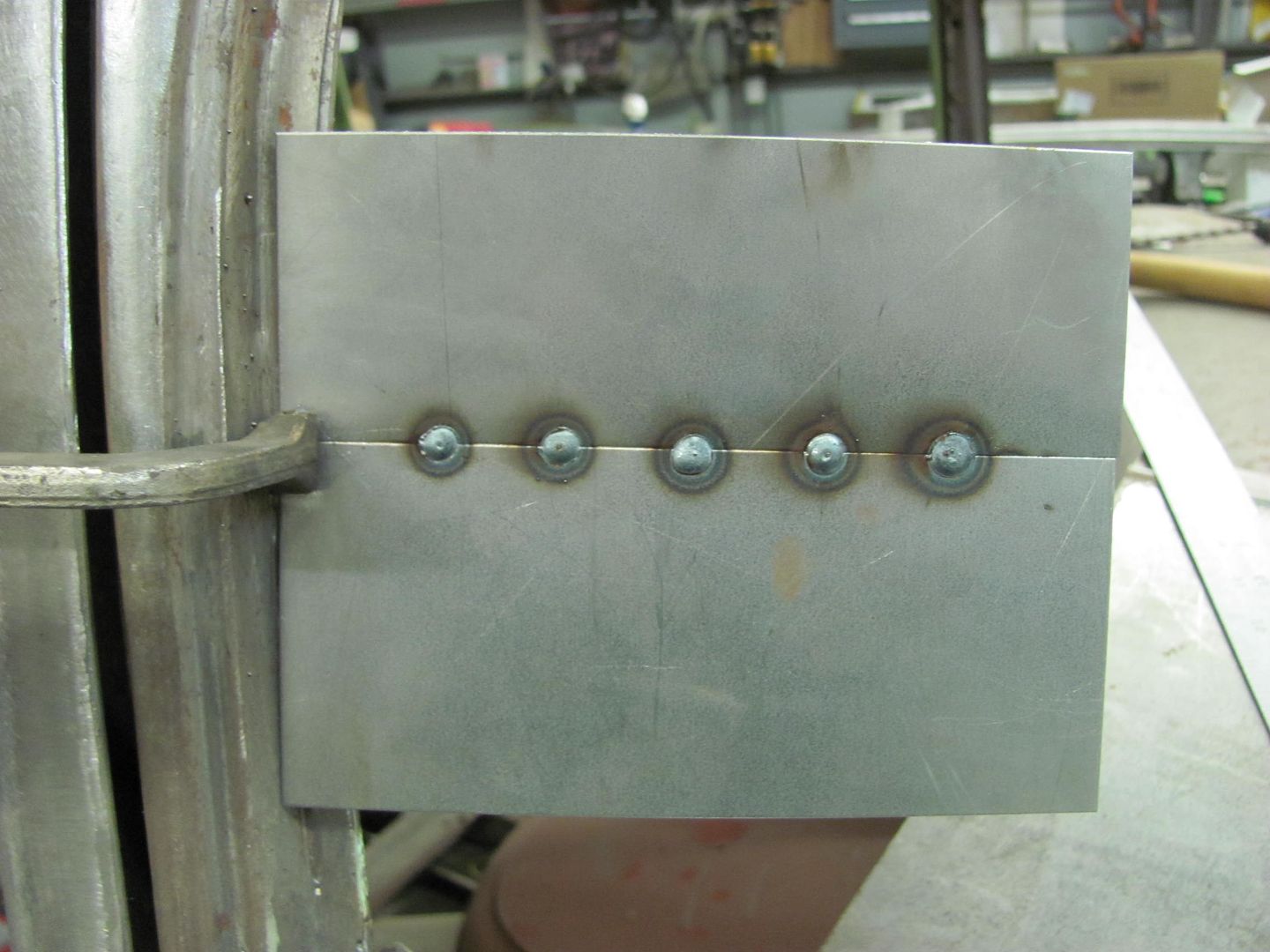
First and foremost, I always set my welder's heat for a full penetration weld when working with sheet metal. It will help if your patches are trimmed for a nice tight fit. You're blowing holes now, why add to the problem in trying to weld in an open gap? Next, burning holes shows that you have good heat, what you don't have is sufficient filler going into the weld puddle, hence it is burning away at the parent metal. So the next step would be to increase the feed speed a little at a time until the machine stops blowing holes. I would suggest to practice on some scraps the same thickness to try and get your machine dialed in, and insure your scraps are held in free air and not laying on a steel welding table. The table will act as a heat sink and will require a change to your welder's settings. If we're practicing, conditions should duplicate what is on the vehicle as much as possible, so clamp your practice pieces in free air in a vice or similar as shown here:

Picture648.jpg


Be sure to post up some pictures if you're still having issue, and we can critique what is going on. If this is a patch for a door skin, that is a nice low-crown panel that will require some planishing as you go to keep any heat distortion in check. Here are a couple threads that discuss welder set up for sheet metal, planishing, etc and may give you a few other pointers as well..


http://www.garagejournal.com/forum/showthread.php?t=182565


http://www.garagejournal.com/forum/showthread.php?t=53534
 

lotsoftools

Well-known member
Joined
Oct 22, 2011
Messages
1,317
Location
Inland Empire
What size wire are you using? .023 is great for sheet metal, .030 works with some care, and .035 is difficult to use on thin metal.
 

MP&C

Well-known member
Joined
Oct 21, 2009
Messages
4,403
Location
Leonardtown, MD
What size wire are you using? .023 is great for sheet metal, .030 works with some care, and .035 is difficult to use on thin metal.


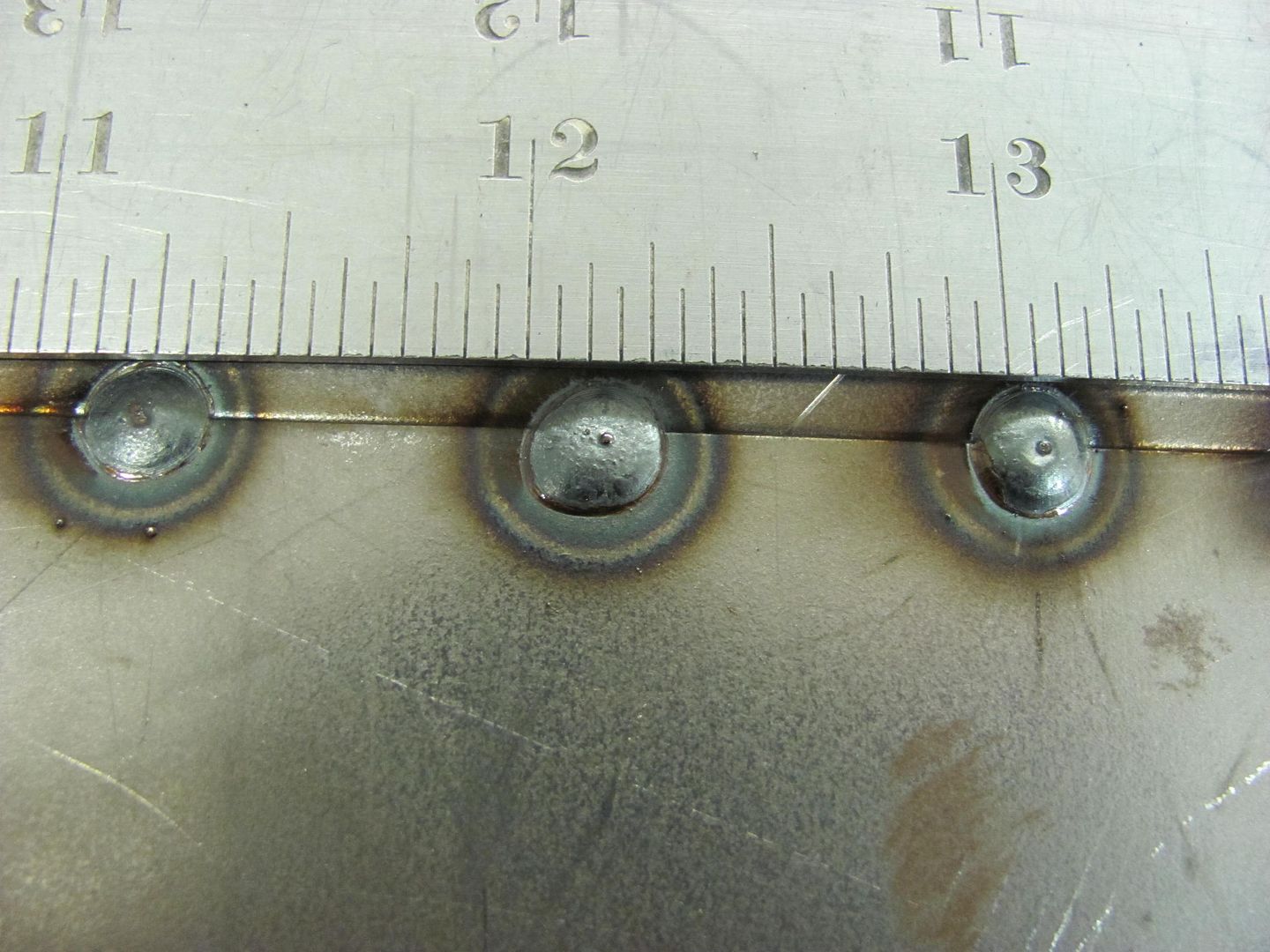
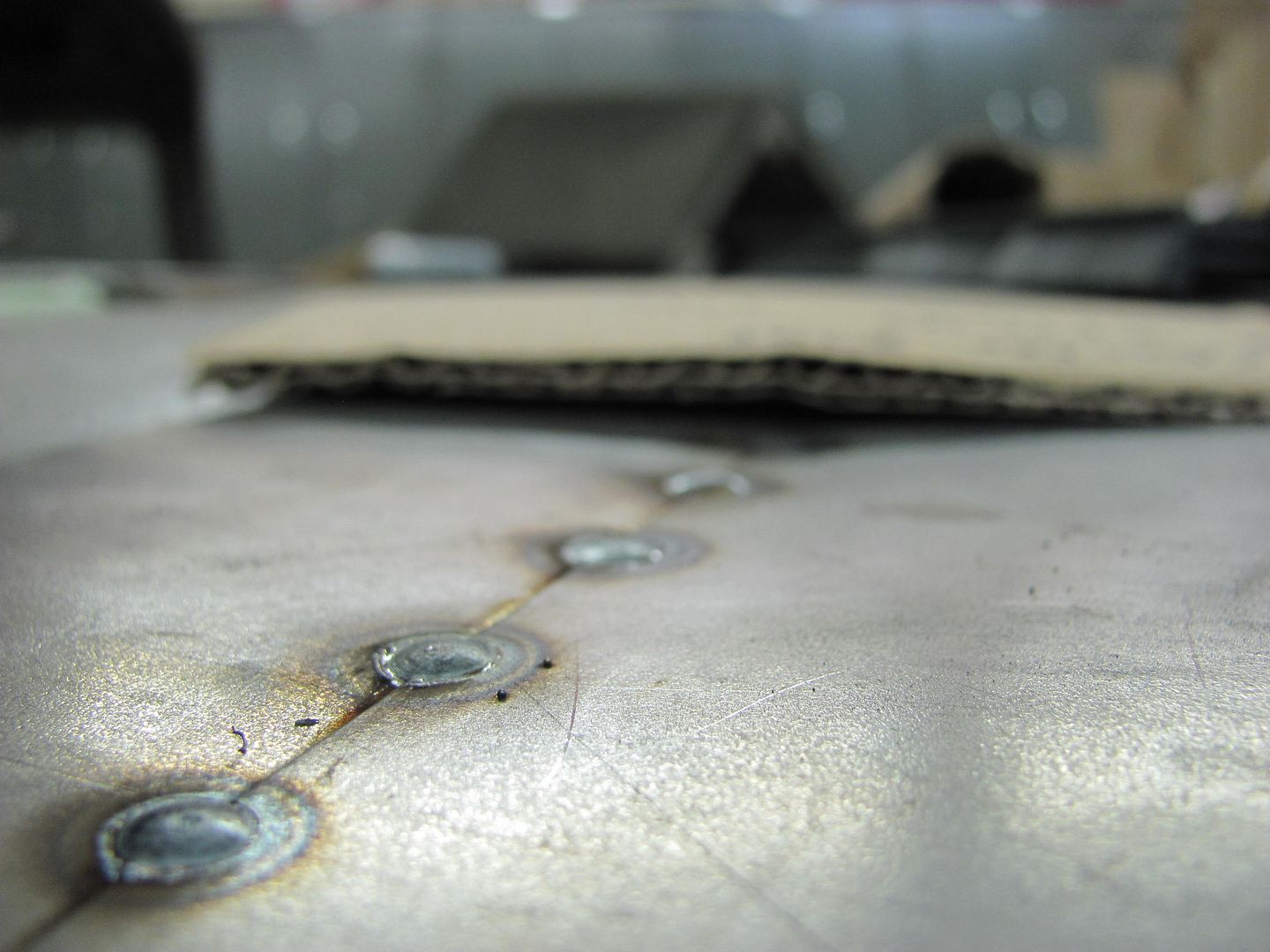
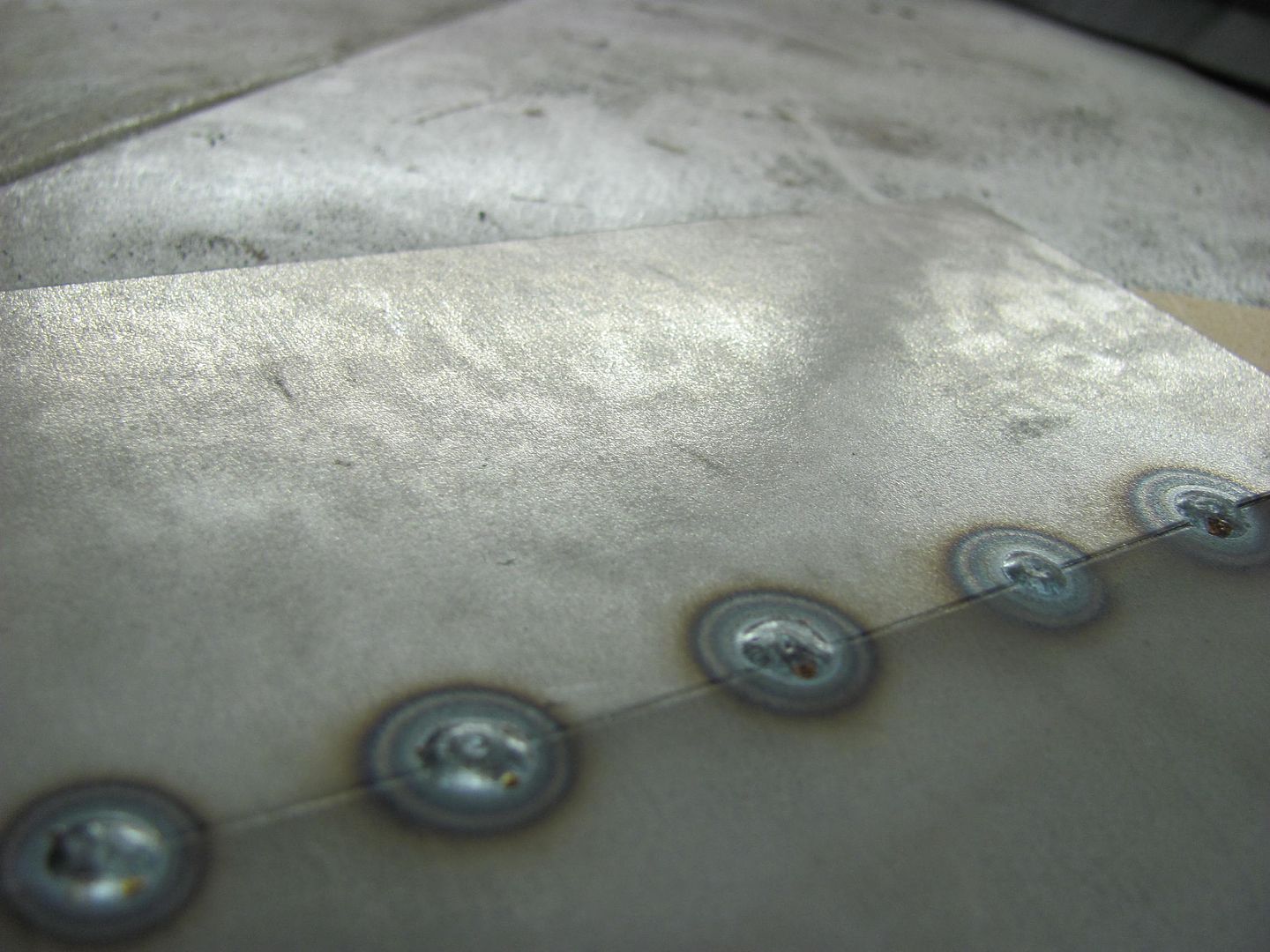
All depends on the welder, all depends on welder setup, all depends on the technique used. Believe what you will, the picture shown below uses .035 wire and the machine's settings are for 3/16 steel and uses about 1/2 second duration on the weld to control the amount of heat the panel "sees". Panel is 19 ga, measures out to .039 thick. You should be able to use any of the three sizes you indicate above with success, given the proper machine and operator tweaking.... But a person needs to step out of the box and experiment with their machine to see what its capable of. Don't rush out and get a roll of .023 wire just because Joe Smith uses it in his, which btw, is likely a different machine from yours. Get out of your comfort zone and see what the machine will do with the wire that's in it, try various different heat settings and elapsed time for control, so you can dial it in to find that sweet spot...


Put the .035 ER70S-7 back in, dialed in the settings for 3/16 thick steel, and ran some test welds...

Picture648.jpg


Front side....

Picture645.jpg


Picture646.jpg


Rear side....

Picture647.jpg
Plenty of heat for full penetration welds (note consistency of size from front to back) which make them ideal for planishing, minimal size of HAZ due to quick in, quick out. People who weld cold and then sit there trying to fill a plug weld still in the end have a cold weld joint with minimal weld penetration that is susceptible to failure. If it starts as a cold joint it always is a cold joint. Don't be afraid of the heat.
 
Last edited:
To avoid these ads, REGISTER NOW!

creativecars

Well-known member
Joined
Nov 15, 2010
Messages
4,300
Location
Indiana- where horse and buggies still roam
First, are you using flux core or solid core wire? Second, are you blowing holes in the old metal or new patch? The thing is rust is not just in one spot when it eats through metal (from the backside). You are seeing the holes that are completely through, but just next to the holes the metal is still very thin, so you will need to make sure you have made your patch big enough to get to good metal. You may practice on some of the new patch metal, it is much easier to make welds on new metal.
 

APEowner

Well-known member
Joined
Oct 2, 2009
Messages
4,164
Location
Sunny, New Mexico
MP&C has pretty much nailed it (and obviously knows what he's doing). I only have a couple of things to add.

While a agree that you should be able to weld sheet metal with thicker wire there's a much wider tolerance on settings if you use one of the smaller gauge wires.

He didn't explicitly say it (or I skimmed to quickly and missed it) but you should be connecting a series of tacks as he demonstrated in the pictures. It is possible to get the welder setup so you can run a bead on sheetmetal it's difficult and it'll distort the heck out of the panel so you don't want to do it anyway.

If the liner is getting worn in your whip the wire won't feed smoothly and that'll be much more evident with sheetmetal. You also want to make sure that the whip isn't twisted or bent excessively for the same reason.
 

rsanter

Well-known member
Joined
Dec 22, 2007
Messages
18,514
Location
visalia ca
Don't be offended...but
It sounds like the metal you are trying to weld is too thin from rust, and you don't know enough about welding and metal work.

Solution. Get a free damaged fender or something and practice your patch work there before doing your project. And read up on how other people have done it

Bob
 

kkroger

Well-known member
Joined
Apr 21, 2013
Messages
1,143
Tack Tack Tack, Grind your tacks with the edge of a cutoff wheel...
Make sure you trim back to viable material before you start.
Practice a weld with your scrap cut edge to your patch before you start on the vehicle.
get your welder set to THAT before you try on the actual vehicle.
Dolly all your seams in before you continue and do this on every round of tacks.
Good Luck!
 

Vegaman_Dan

Well-known member
Joined
Jun 1, 2012
Messages
2,453
Location
Pacific, WA
I've been down this road and it turned out to be simply too thin of metal that I was working on. What I thought was sound good material where I had cut back on was also compromised. I cut back another inch and found solid good sheetmetal to attach to. That made a huge difference.
 
To avoid these ads, REGISTER NOW!
Top Bottom