To avoid these ads, REGISTER NOW!

What a weekend

Ryland

Well-known member
Joined
Jan 14, 2010
Messages
294
Location
Rhode Island
So I was hoping to finish the high voltage wiring on the 1st floor of my addition and get at least 1/2 way through the low voltage wiring over the weekend.

Saturday I finish the high voltage on the 1st floor and start unpacking stuff for the low voltage along with some cleanup. I drill for speaker wire for one side and start running it. My brother starts drilling for the speaker wire coming from the other side and then see's a spark at which point my son goes "oh ****". My brother took out the basement lights and one rooms worth of lights and outlets by shorting a wire. Due to inclement weather it was too dark to continue working since I was using THAT ROOMS outlets for power tools/lights in the addition. Breaker is off so all is good.

Sunday I start by breaking into the ceiling of the room that had the cable which takes awhile since it is awkward to get at. I finally dig the cable out of the wherever the electirician had put it and find that luckily he hadn't broken the cable so I electrical taped the hot and neutral lines and tested the circuit then taped the whole thing together for safety (I am going to eventually rerun this cable but don't have time right now). We goto some friends and when we get home I find that the thermstat on the 1st floor decided that the house should be a sauna and kicked the temp to 80 (luckily I had the 2 thermostats for the addition to use.

Sigh...
 
To avoid these ads, REGISTER NOW!
OP
R

Ryland

Well-known member
Joined
Jan 14, 2010
Messages
294
Location
Rhode Island
What I am considering "low voltage is:

Speaker wire
network
telephone
cable tv

I wanted to get the high voltage out of the way so that I would know where to route the low voltage around it.
 

Nostraquedeo

Well-known member
Joined
Oct 23, 2009
Messages
501
Any wiring 600 volts or less is low voltage.

He is just being literal.

2005 National Electrical Code (NEC), high voltage is any voltage over 600 V nominal (article 490.2).

IEEE considers 600 volts and below as Low Voltage. 600-100,000 as Medium Voltage, 100,000-250,000 as High Voltage, 250,000-1,000,000 as extra High Voltage, and anything over that is Ultra-High Voltage

The general public may consider household mains circuits (100–250 V AC), which carry the highest voltages they normally encounter, to be high voltage.
 
OP
R

Ryland

Well-known member
Joined
Jan 14, 2010
Messages
294
Location
Rhode Island
Ahh, ok. SO I guess I should say I wanted to get the high-low voltage done before running the low-low voltage :)

Hey, in that case then does the rule of keeping CAT-6 at least 6" away from 14/2 not apply since they are both technically "low voltage"?
 
OP
R

Ryland

Well-known member
Joined
Jan 14, 2010
Messages
294
Location
Rhode Island
Would the electrical taping of the hot and neutral wires then electrical taping the whole section be enough of a repair or must I replace the length of 14/2?
 

mrb

Well-known member
Joined
Dec 31, 2008
Messages
3,734
Would the electrical taping of the hot and neutral wires then electrical taping the whole section be enough of a repair or must I replace the length of 14/2?

the cable was hit with a drill bit and shorted out, the resulting arc damaged the conductors. The cable should be replaced.
 
OP
R

Ryland

Well-known member
Joined
Jan 14, 2010
Messages
294
Location
Rhode Island
the cable was hit with a drill bit and shorted out, the resulting arc damaged the conductors. The cable should be replaced.

I kind of assumed I should swap it out. I guess I need to rip that ceiling fully open and do it the right way. I think I know what is at either end of that cable and wanted to reroute it anyway due to routing speaker wire near it.
 

Plump

Well-known member
Joined
Dec 22, 2009
Messages
537
Location
SE Wisconsin
Ahh, ok. SO I guess I should say I wanted to get the high-low voltage done before running the low-low voltage :)

Hey, in that case then does the rule of keeping CAT-6 at least 6" away from 14/2 not apply since they are both technically "low voltage"?

Not an expert but my buddy who is says for best performance that you should definitely separate the two and at worst, only have the wires cross each other perpendicularly.
 
OP
R

Ryland

Well-known member
Joined
Jan 14, 2010
Messages
294
Location
Rhode Island
That is my plan. I actually have a route through the ceiling that avoids all of the 110v wires to get to each speaker location. Its a bit roundabout for one of the speakers but workable. My biggest issue will be network and coax running between floors. There isn't any kind of an easy path for all wires to stay away from the 110v.

Funny how the NEC can't stay consitent on what makes up high voltage.
 
To avoid these ads, REGISTER NOW!

Norcal

Well-known member
Joined
Mar 16, 2008
Messages
13,752
Simplest way to describe the wiring is low voltage & line voltage, and taping knicked conductors is asking for trouble, safe practice means replacing the NM cable.
 

JustBob

Well-known member
Joined
Feb 10, 2010
Messages
183
Location
Mobile, Alabama
Ahh, ok. SO I guess I should say I wanted to get the high-low voltage done before running the low-low voltage :)

Hey, in that case then does the rule of keeping CAT-6 at least 6" away from 14/2 not apply since they are both technically "low voltage"?

If you are doing a home run for a/v, cat5e/6, and telephone... just call it structured wiring. A/V wiring works as well as low distribution voltage if wiring in the old star/series patern.

I hope you meant cat5e instead of cat6?
 
OP
R

Ryland

Well-known member
Joined
Jan 14, 2010
Messages
294
Location
Rhode Island
I hope you meant cat5e instead of cat6?

Yes I did and they will all be homeruns to a point in the basement.

and taping knicked conductors is asking for trouble, safe practice means replacing the NM cable.

I am also going to pull a new run of NM through to replace the nicked NM. I am hoping I won't have to pull the entire ceiling out to do it since it may run between outlets that are on either side of the hole.
 

elett

Member
Joined
Mar 6, 2010
Messages
11
If it's accessable, you can put a j-box in, provided you can get some slack.
 
OP
R

Ryland

Well-known member
Joined
Jan 14, 2010
Messages
294
Location
Rhode Island
If it's accessable, you can put a j-box in, provided you can get some slack.

I probably could get enough slack to do one but would prefer not having a box in the ceiling. I think I should be able to pull the cable through since the other side of the wall is mostly open.

Does anybody know if there is something I could use as shielding for speaker cable that is near this section of 14/2? There isn't really anywhere I can run it to avoid the speaker wire but luckily it passes it at a 90° angle.
 

JustBob

Well-known member
Joined
Feb 10, 2010
Messages
183
Location
Mobile, Alabama
I probably could get enough slack to do one but would prefer not having a box in the ceiling. I think I should be able to pull the cable through since the other side of the wall is mostly open.

Does anybody know if there is something I could use as shielding for speaker cable that is near this section of 14/2? There isn't really anywhere I can run it to avoid the speaker wire but luckily it passes it at a 90° angle.

We run all data/communications, speaker, and A/V cables a minimum of 12", if possible, away from electrical cables. It is ok to cross an electrical cable at 90 deg, the main thing is not to run structured wiring and electrical wiring parallel.

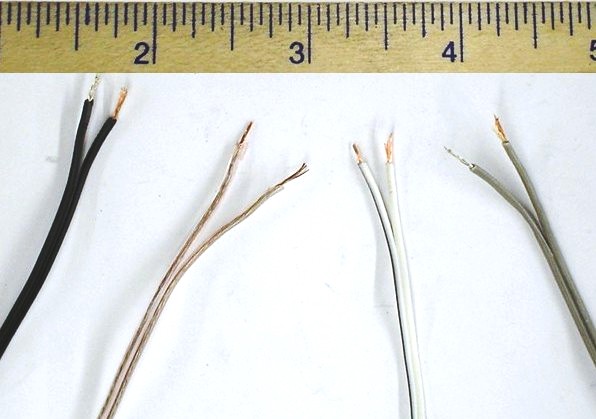
Is it this kind of speaker wire? What gauge is it?
2110-100.jpg


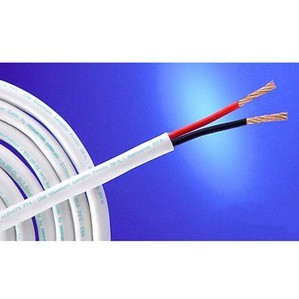
Or is it this kind? This is the kind we run for speakers, in-wall rated CL-2, CL-3 14 gauge min for whole house(room) speakers. 12 gauge min, 2 conductor for Home Theater. The jacket gives it the in-wall rating, being a twisted pair cable helps with interference.

Monster%20Cable%2014-Gauge.jpg
 
Last edited:
OP
R

Ryland

Well-known member
Joined
Jan 14, 2010
Messages
294
Location
Rhode Island
The speaker cable is CL-2 in wall rated 14 gauge twisted pair. This is specific http://www.monoprice.com/products/p...=10239&cs_id=1023902&p_id=2821&seq=1&format=2. Im going to make the separation as great as possible but I doubt I will get 12" away without ripping out a lot more of the ceiling than I want to. My only other option would be to go through the floor and way around so that I don't cross the electric cable. Thats why I was asking about shielding.
 

mrb

Well-known member
Joined
Dec 31, 2008
Messages
3,734
interferance isnt a problem with speaker wire, you dont need shielded speaker wire. (heck, in concert touring speaker cables are run in the same cable bundle with cables carrying 1200 amps of noisy lighting power) it is potentially an issue with low level signal wires (coax, network, etc) which is where you want to maintain seperation where possible. Biggest thing is keep the network and phone wires away from flourescent lights.
 
OP
R

Ryland

Well-known member
Joined
Jan 14, 2010
Messages
294
Location
Rhode Island
interferance isnt a problem with speaker wire, you dont need shielded speaker wire. (heck, in concert touring speaker cables are run in the same cable bundle with cables carrying 1200 amps of noisy lighting power) it is potentially an issue with low level signal wires (coax, network, etc) which is where you want to maintain seperation where possible. Biggest thing is keep the network and phone wires away from flourescent lights.

That's great to hear. I will make sure that the network cable is run well away from fluorescent lights and the coax is quad shielded so hopefully that will help somewhat.
 
To avoid these ads, REGISTER NOW!
Top Bottom