
You are using an out of date browser. It may not display this or other websites correctly.
You should upgrade or use an alternative browser.
You should upgrade or use an alternative browser.
What are some must have diagnostic tools?
- Thread starter stioc
- Start date
krusty the clown
Member Emeritus
cyl leakage tester, inductive ammeter, dvom, backpressure tester........
garfunkle24
Well-known member
A good quality digital multimeter would be #1 for me.
cyl leakage tester, inductive ammeter, dvom, backpressure tester........
Krusty, what's a cyl leakage tester? Is it the one that plugs in the radiator cap, you pump it up to pressurize and then watch the gauge for leakage?
What's a backpressure tester? How expesnive are these tools?
I have 3 DVOMs (though none automotive type that usually have RPM/dwell). Any recommendations? I was thinking more along the lines of a handheld sensor and electonic module tester etc but I'll look into to some of the other recommendations. You can only have so many ratchets...unless you're Merkava

krusty the clown
Member Emeritus
Krusty, what's a cyl leakage tester? Is it the one that plugs in the radiator cap, you pump it up to pressurize and then watch the gauge for leakage?
What's a backpressure tester? How expesnive are these tools?
I have 3 DVOMs (though none automotive type that usually have RPM/dwell). Any recommendations? I was thinking more along the lines of a handheld sensor and electonic module tester etc but I'll look into to some of the other recommendations. You can only have so many ratchets...unless you're Merkava
a cly leakage tester shows the % of leakage of a cyl, is screws into the plug port. it's great for checking headgasket leakage and will help pinpoint whether you have a bad valve or rings if you have low compression.
the backpressure tester tests backpressure in the exhaust. that way you arent just guessing whether you have a plugged catalytic convertor.
expect about $90 for the CLT and $40 for the backpressure tester.
sammerdog
Banned
A good quality digital multimeter would be #1 for me.
Amen. 99% of car breakdowns seem to be related more to electrical issues rather than bad rings / head gasket / etc. Engines seem to go and go nowadays. It's tracing the nickel and dime electrical hiccups that gives me fits.
malibu101
Well-known member
Don't forget a vacuum gauge too.
Thanks Krusty. Of course, the 'leak down tester' as I'm used to hearing it.
I for some reason had a mental image of this:
http://www.autozone.com/in_our_stores/loan_a_tool/heating_cooling/coolant_pressure_tester.htm - although like on my E36 there's no cap on the radiator, only on the recovery tank so I don't think this will work. Damn new cars, they take all the fun out for the DIYers.
Malibu, you're right the venerable vacuum gauge, I have one but I'm not good at reading it...as well as finding a vacuum source on newer cars since everything is digimatic nowadays.
I for some reason had a mental image of this:
http://www.autozone.com/in_our_stores/loan_a_tool/heating_cooling/coolant_pressure_tester.htm - although like on my E36 there's no cap on the radiator, only on the recovery tank so I don't think this will work. Damn new cars, they take all the fun out for the DIYers.
Malibu, you're right the venerable vacuum gauge, I have one but I'm not good at reading it...as well as finding a vacuum source on newer cars since everything is digimatic nowadays.
Moose-LandTran
Well-known member
How come no-one has mentioned a test light yet?
A test light!
A test light!
garfunkle24
Well-known member
How come no-one has mentioned a test light yet?
A test light!
Screw the test light. Get a digital meter and get used to using it. That way you never accidently kill an electronic system with the draw of a test light or analog meter. 12v systems are few and far between on modern vehicles and that's the only thing a test light is good for.
Here's a few others:
Power Probe III
OTC OBDII readiness tool. This is smaller than a pack of cigarettes and plugs into the port, and signals when the car has gone through enough cycles to pass inspection after a code reset. Car can be driven with it plugged in.
Power Probe III
OTC OBDII readiness tool. This is smaller than a pack of cigarettes and plugs into the port, and signals when the car has gone through enough cycles to pass inspection after a code reset. Car can be driven with it plugged in.
Fedwrench
ALLIANCE MEMBER
Knowlege. If you don't know how the system you're testing is supposed to work, you'll never know what wrong looks like.
A word of caution on test lights, DVOMs, and the Powerprobe. The worst thing you want to do is make a problem worse, damage a module or other electronic device that was ok, or let the smoke out. The wrong type of test light or DVOM used on the wrong circuit can create havoc on late model cars. The Powerprobe can be a handy tool but, I have also seen many techs in a hurry and not following the wiring diagram correctly, smoke modules by applying voltage where you shouldn't. That would be expensive modules. I would not recommend a Powerprobe to anyone.
Your best friend is a Fluke or ESI meter with 10 megaohm impedence to protect electronic circuits. You can also cause alot of damage to connectors by shoving the test leads into them. Flexprobes are exxpensive but, will prevent alot of damage to delicate connectors.
A couple of my favorite quick test tool are the Waekon coil on plug tester, and injector tester. They're non evasive and can tell you real quick if you have a dead injector or coil.
As others have posted, the vacuum gauge is a great little aid if you know how to interpet the readings. The coolant pressure tester can pinpoint coolant leaks easily and test your radiator cap. The adapters can get pricy though. I haven't found a universal type that I like yet.
In my opinion, you can have alot of tools and still not be able to fix a sandwich. I saw a sign on the wall in class I took once, It read Knowlege is the only tool that doesn't wear out.
A word of caution on test lights, DVOMs, and the Powerprobe. The worst thing you want to do is make a problem worse, damage a module or other electronic device that was ok, or let the smoke out. The wrong type of test light or DVOM used on the wrong circuit can create havoc on late model cars. The Powerprobe can be a handy tool but, I have also seen many techs in a hurry and not following the wiring diagram correctly, smoke modules by applying voltage where you shouldn't. That would be expensive modules. I would not recommend a Powerprobe to anyone.
Your best friend is a Fluke or ESI meter with 10 megaohm impedence to protect electronic circuits. You can also cause alot of damage to connectors by shoving the test leads into them. Flexprobes are exxpensive but, will prevent alot of damage to delicate connectors.
A couple of my favorite quick test tool are the Waekon coil on plug tester, and injector tester. They're non evasive and can tell you real quick if you have a dead injector or coil.
As others have posted, the vacuum gauge is a great little aid if you know how to interpet the readings. The coolant pressure tester can pinpoint coolant leaks easily and test your radiator cap. The adapters can get pricy though. I haven't found a universal type that I like yet.
In my opinion, you can have alot of tools and still not be able to fix a sandwich. I saw a sign on the wall in class I took once, It read Knowlege is the only tool that doesn't wear out.
You're right, even the DVOMs can damage computer modules. Best is to use a logic probe for that stuff.
I'll have to look into the coil-on-plug tester since most new cars use those now. I imagine it's like a logic probe but uses inductive pickup like the timing lights. You could detect a misfire using timing light aimed at you hand or face.
I'll have to look into the coil-on-plug tester since most new cars use those now. I imagine it's like a logic probe but uses inductive pickup like the timing lights. You could detect a misfire using timing light aimed at you hand or face.
Anyone have any experience with Actron CP9087
http://www.amazon.com/dp/B0006V2BJ6/?tag=atomicindus08-20
and CP7677
http://www.amazon.com/dp/B0002LZU7K/?tag=atomicindus08-20
http://www.amazon.com/dp/B0006V2BJ6/?tag=atomicindus08-20
and CP7677
http://www.amazon.com/dp/B0002LZU7K/?tag=atomicindus08-20
terabyte
Well-known member
i think this is one of the best diag tools 

garfunkle24
Well-known member
i think this is one of the best diag tools
I just use a length of 1/4" fuel hose rammed in my ear....
Screw the test light. Get a digital meter and get used to using it. That way you never accidently kill an electronic system with the draw of a test light or analog meter. 12v systems are few and far between on modern vehicles and that's the only thing a test light is good for.
When I worked on cars I liked a test light for checking fuses, other than that, maybe a few other things I can't think of at the moment. Power probes are a waste.
bushhawg73
Well-known member
A good handheld infrared thermometer is also a good tool to have around.
I'll add an oscilloscope and exhaust gas analyzer to this list.
My scope is a Sun LS2000.
My exhaust analyzer is a KAL R-89 CO meter. It's old school, but it works for mixture adjustments.
Dang, those gotta be expensive. Especially the gas analyzer.
Gregster
Well-known member
One of those little ODB2 code readers. Why lug around a giant scanner when a customer asks quickly to check his engine light when it's just going to be a P0400.
goodfellow
Well-known member
I'd add a name brand digital VOM with a temperature probe.
Oh, almost forgot, ---- THE most important tool is a small flat blade screwdriver with a magnet on the back. Usually "freebies" from the tool truck.
Oh, almost forgot, ---- THE most important tool is a small flat blade screwdriver with a magnet on the back. Usually "freebies" from the tool truck.
A test light is good for placing a load on a circuit. A lighting system for example can be checked with a multimeter and everything will look good. Place a test light on it and there wouldn't be enough amperage to light the light.
Digital multimeters can have issues with readings that might be missleading. Example a 36v. forklift sitting on rubber tires, one probe on the positive battery cable and the other touching the concrete 10 feet away from the forklift can read 2-13v. Also resistance checking transistors (mosfet) with a digital meter can show continuity when an analog won't.
There are 12v. systems on cars, not " few and far between"--starting, charging, lighting ect.
Backprobing a system is good for checking voltages while the system is operating.
The biggest thing is to know what your testing and how to test it properly.
Digital multimeters can have issues with readings that might be missleading. Example a 36v. forklift sitting on rubber tires, one probe on the positive battery cable and the other touching the concrete 10 feet away from the forklift can read 2-13v. Also resistance checking transistors (mosfet) with a digital meter can show continuity when an analog won't.
There are 12v. systems on cars, not " few and far between"--starting, charging, lighting ect.
Backprobing a system is good for checking voltages while the system is operating.
The biggest thing is to know what your testing and how to test it properly.
volvo
Well-known member
Don't forget a vacuum gauge too.
Ding..Ding..Ding... Also add a cheapie stethoscope...H
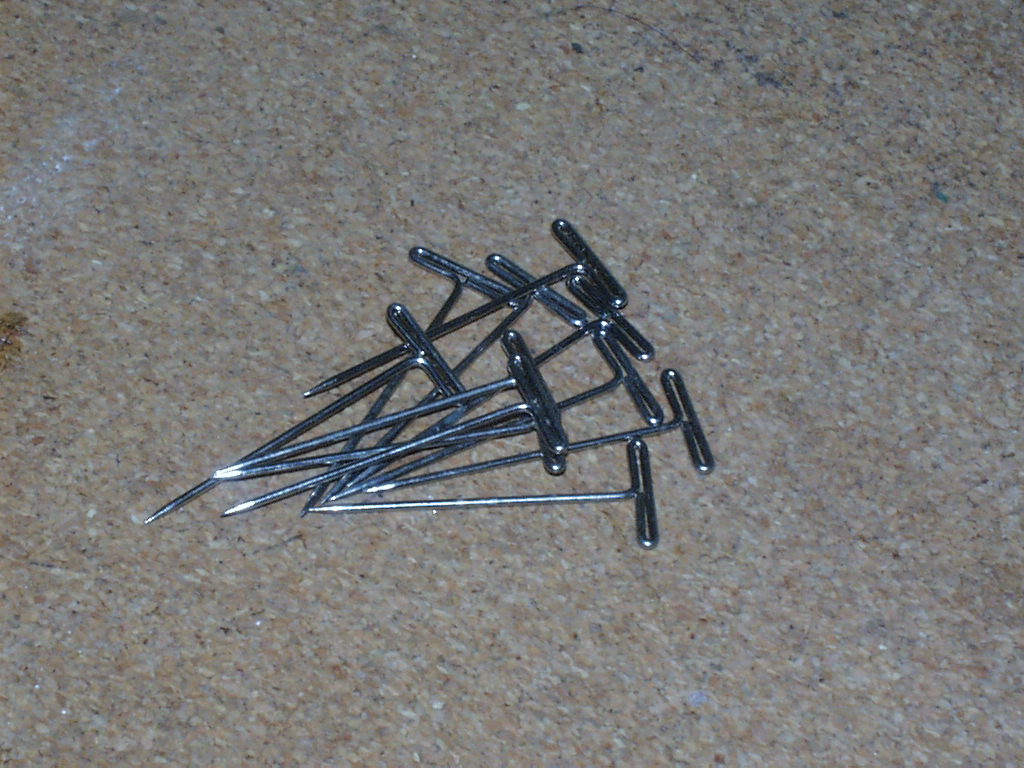
gofastman said:(T-Pin) Great for back-probing connectors, however they can reduce the weather resistance of the connector
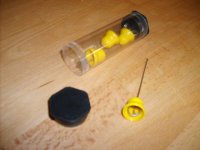
I have the proper tool for this...
Attachments
krusty the clown
Member Emeritus
has anyone else used one of these?

charlie_nj
Well-known member
For the home mechanic, which is what I am, a cheap used older laptop, ALDL cable, and software such as that available at obd-2.com can be had for a total cost of around $200. I've had this setup for years and used it on numerous vehicles. Not quite a Tech II, but its amazing the amount of data you can obtain from your post-1996 vehicle with a setup like this.
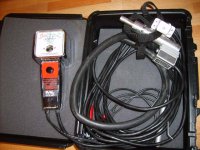
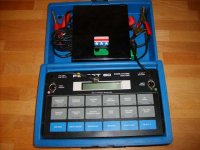
krusty the clown said:Has anyone else used one of these?
I'm not familiar with that, but it did remind me of another piece of test equipment I have.
This tool works excellent for vehicles that have a distributor type ignition system.
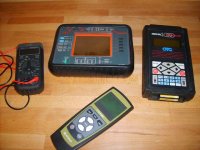
A Ferret 60 analyzer...
Attachments
jhn9840
Well-known member
Battery load tester. Don't know what these do on the new cars but on old stuff they are worth their weight.
jhn9840
John
jhn9840
John
buening
Well-known member
Well, what "era" of vehicles do you work on? A timing light is crucial for all older cars and some/most newer cars. I agree with the multimeter, vac guage, compression test guage, fuel pressure guage (can get combo vac/fuel guage), leakdown tester, and obviously a good OBD scanner tool. If you are into super/turbo charging then a good broadband O2 sensor and datalogger w/laptop is a good idea
OK can anyone ssssplain to me how to read the vacuum gauge readings? I've seen pics of erratic needles that are supposed to tell you different things like sticking valves or blown rings but in the pics the readings look the same. I understand a healthy engine should produce 16Hg with a constant reading. Fluctuating needle means somewhere there's a problem because not all cylinders are working equally and that's about all I know.
In regard to the back pressure tester, it looks like it plugs into the O2 bung except on a car like mine if it senses the o2 unplugged or not giving the correct reading it'll throw a code if you're lucky or put the car in open loop mode or limp home mode. Is there a pass-thru method of connecting it so the O2 reading doesn't get affected?
AutoTech, those are all cool except way out of the DIYer range I would think, I'd love to have access to a gas analyzer.
So far the must have list looks like this, I added some items after doing some research on Google too:
1. DVOM that's built around automotive work (tach/dwell etc)
2. Vacuum gauge
3. Leakdown tester
4. Back pressure tester
5. Stethescope
6. COP tester
7. Actron sensor tester (I added it)
8. Logic probe (I added it)
9. Injector noid light set (I added this too)
10. OBDII Scan tool or equivalent
11. Refractometer/hydrometer (yes/no??)
12. Infrared thermometer
13. Wide band O2 meter (yes/no?)
Did I miss anything else that'll be useful to an advanced DIYer?
In regard to the back pressure tester, it looks like it plugs into the O2 bung except on a car like mine if it senses the o2 unplugged or not giving the correct reading it'll throw a code if you're lucky or put the car in open loop mode or limp home mode. Is there a pass-thru method of connecting it so the O2 reading doesn't get affected?
AutoTech, those are all cool except way out of the DIYer range I would think, I'd love to have access to a gas analyzer.
So far the must have list looks like this, I added some items after doing some research on Google too:
1. DVOM that's built around automotive work (tach/dwell etc)
2. Vacuum gauge
3. Leakdown tester
4. Back pressure tester
5. Stethescope
6. COP tester
7. Actron sensor tester (I added it)
8. Logic probe (I added it)
9. Injector noid light set (I added this too)
10. OBDII Scan tool or equivalent
11. Refractometer/hydrometer (yes/no??)
12. Infrared thermometer
13. Wide band O2 meter (yes/no?)
Did I miss anything else that'll be useful to an advanced DIYer?
Well, what "era" of vehicles do you work on? A timing light is crucial for all older cars and some/most newer cars. I agree with the multimeter, vac guage, compression test guage, fuel pressure guage (can get combo vac/fuel guage), leakdown tester, and obviously a good OBD scanner tool. If you are into super/turbo charging then a good broadband O2 sensor and datalogger w/laptop is a good idea
Well I have cars from the early 90s to 2004 and they change as often as my mind some days I want a 70s car and some days I want a brand new car so it's unpredictable but the point was that since I consider myself an advanced DIYer or at least trying to be one I'd like to have some good basic diagnostic tools at my disposal. Besides, being a computer geek I like logic probes and scopes and such

Fedwrench
ALLIANCE MEMBER
http://www.secondchancegarage.com/public/186.cfm
This link may help you with the vacuum gauge reading.
This link may help you with the vacuum gauge reading.